
Reviewed · PASTA MAKING CLASSES
Rome: Fresh Pasta-Making Class with Italian Chef and Wine
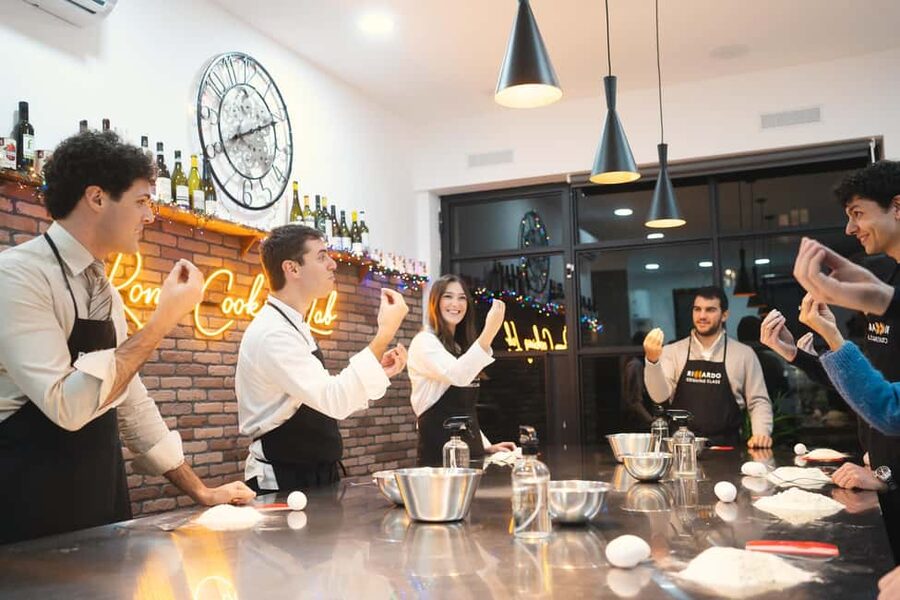
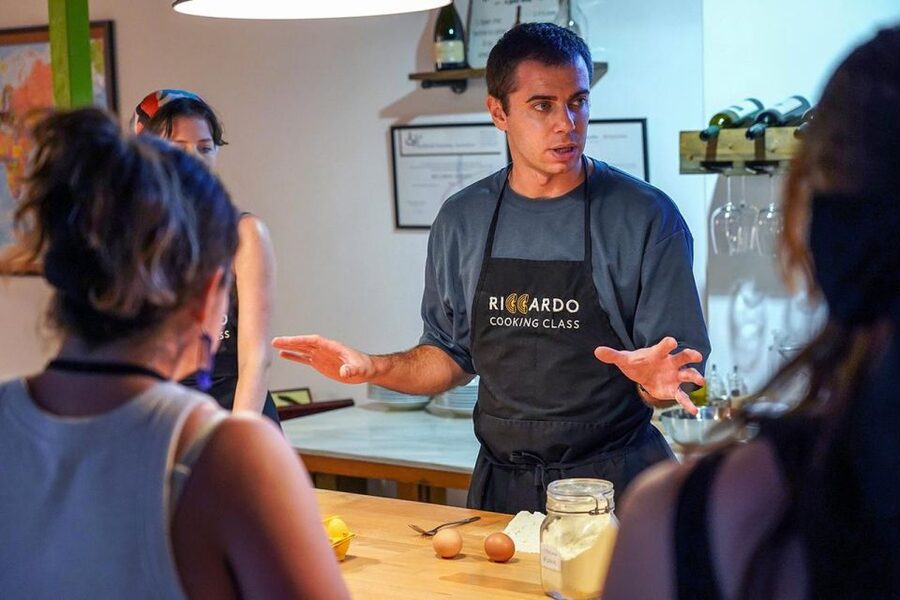
A Rome pasta class is usually about eating, but this one is about making. You work with Chef Riccardo and his team to form fresh dough, shape pasta, and cook Roman sauces in a small group in a local studio or a home-style kitchen setting.
I especially love the hands-on focus, with instructors like Leo and William guiding you step by step so you understand what to do and why. I also like the payoff: a 3-course meal made from what you just learned, paired with selected wine and tasting along the way. The one possible drawback to consider is language flow, because in small groups the chef may adjust to the languages spoken by everyone in the class.
Key takeaways before you book
- Small group up to 10 so you get real attention while you work the dough
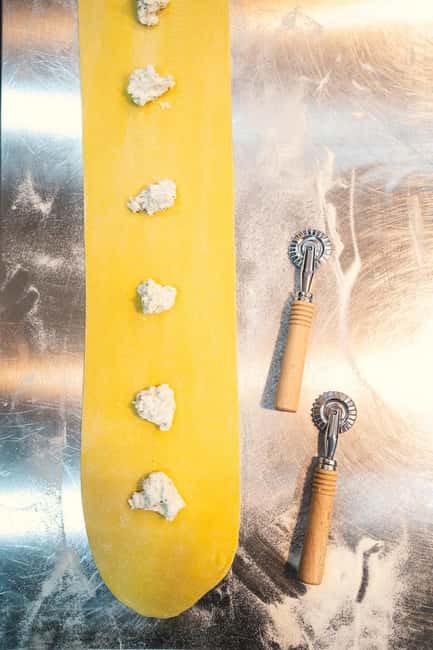
- Hands-on skills for both long pastas and stuffed shapes, not just one simple form
- Roman sauce techniques including carbonara and cacio e pepe methods
- Wine included with the meal so you can taste and cook with a true local rhythm
- Chefs like Riccardo, Leo, and William keep the class lively and interactive
Fresh pasta in a Roman kitchen: what you actually learn
This class is interesting because it teaches you how to build pasta from the ground up, not just how to copy a finished dish. You start with the dough and learn the mechanics of fresh pasta, then you move into sauces that make Roman cooking feel both simple and exacting.
What I like most is that the teaching is practical. You do the work, and the chef explains what matters, like dough texture, resting, and how sauce should cling to pasta rather than slide off. If you have ever tried to make pasta at home and felt like it turned out fine but not right, this is the kind of class that gives you the fixes.
You will also come away with more than one style of pasta. The menu can include shapes like ravioli, fettuccine, tortellini, cappelletti, and spaghetti alla chitarra, plus stuffed pastas and long pasta techniques. Pair that with sauces that often include carbonara and cacio e pepe, and you get a Rome-specific skill set you can use for years.
More pasta making classes in Rome:
- 3 in 1 Cooking Class near Navona: Fettuccine, Ravioli & Tiramisu
★ 5.0 · 7,376 reviews - Rome: Pasta Making Class with Wine, Limoncello, and Dessert
★ 4.9 · 3,177 reviews - Rome: 3-in-1 Fettuccine, Ravioli, and Tiramisu Cooking Class
★ 4.9 · 2,704 reviews
Where you meet in Rome: Circonvallazione Gianicolense 418
The meeting point is The Cooking Lab on Circonvallazione Gianicolense 418, 00152 in Roma, close to a café. In some cases, you may meet the chefs at Chef Riccardo’s grandmother home or at The Cooking Lab, but the address above is your anchor.
Location matters here because you do not just attend the class, you live inside it for three hours. You will want an easy start so you can focus on the dough, the sauce, and the timing. Based on how easy it is for people to reach the studio with public transport, you likely will not need a taxi plan just to get there.
Tip: wear comfortable shoes and plan for a kitchen experience. Even with aprons provided, fresh pasta work is hands-on, flour happens, and you should treat this like cooking, not like a museum stop.
The 3-hour class flow: from dough to a full Roman meal
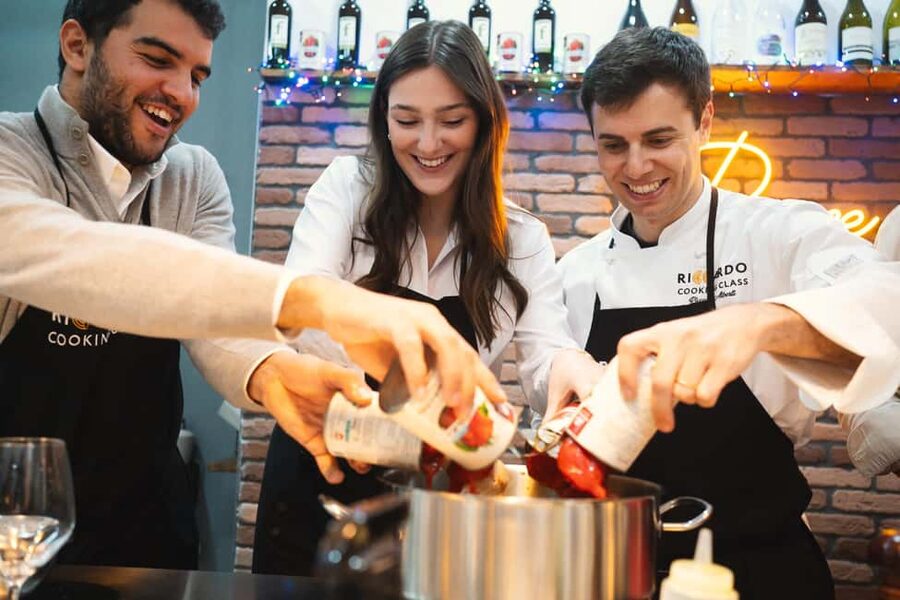
The session runs about three hours. You will likely spend that time moving through a “make, learn, cook, eat” loop, where the instructor shows techniques, then you repeat them with guidance.
A big part of the value is the pace. In a small group of up to 10, the chef can correct your pressing, folding, or rolling method while you still have time to apply the feedback. That is one reason the class earns so many five-star comments. People are not just leaving with a meal, they leave feeling like they learned the process.
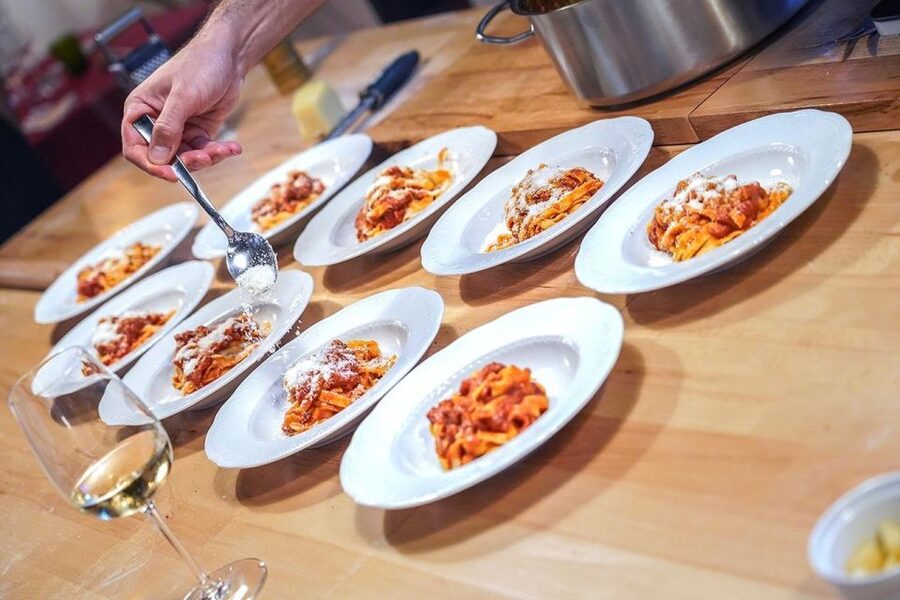
And yes, you will eat what you make. The experience includes a meal that is described as a 3-course setup, along with wine tasting. Since the portions are enough that some people take extra food home, you do not need to plan a full dinner immediately afterward.
Hands-on pasta-making: long pastas and stuffed shapes
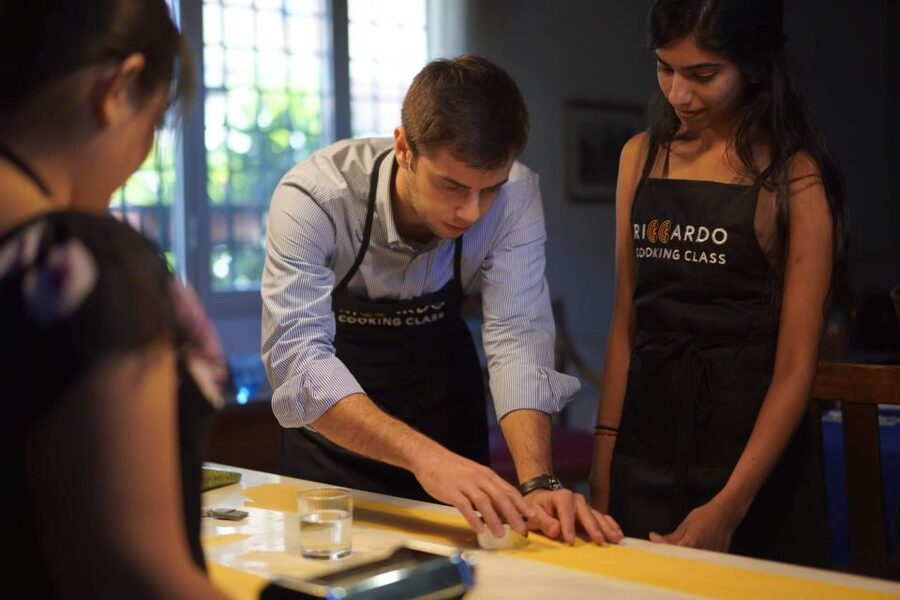
The class is built around two key skills: forming long pasta and shaping stuffed pasta. That is a smart choice for home cooks because it gives you a range of textures and techniques, not just one dough roll.
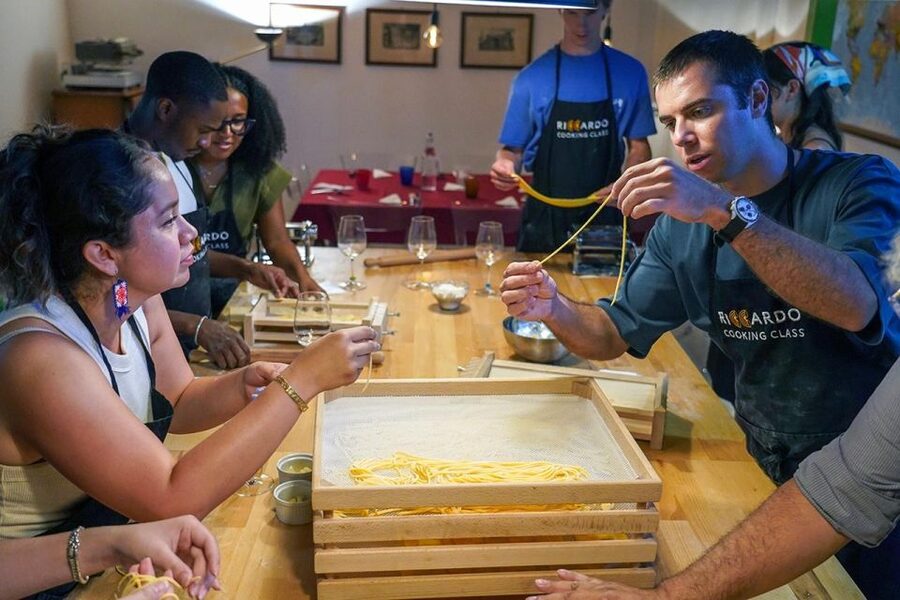
You may work on long pasta types such as fettuccine, and you may also make other shapes like spaghetti alla chitarra. Spaghetti alla chitarra is distinctive because it is cut using a rack, which creates a specific texture that helps sauces hold on.
For stuffed pasta, you will practice forming shapes such as ravioli and similar filled options like tortellini or cappelletti, depending on what your class session covers. Stuffed pasta is where technique matters most, because you are balancing filling, sealing, and thickness so the pasta cooks evenly without leaking.
One of the most praised parts of the experience is the step-by-step coaching. In multiple class stories, chefs like Leo, William, Mattia, Bruno, and Marco are credited with explaining what to do, adjusting as you go, and teaching the logic behind the method. That is exactly what you want, especially if you are the type who gets nervous when the instructions are too vague.
Practical tip for your own success: keep your attention on the dough feel. Fresh dough changes as it rests, and the chef will usually show you what “right” looks like. When you match that texture, rolling and shaping get easier fast.
More wine tastings around Rome:
- Rome: Tuscany & Montepulciano Day Trip with Lunch & Wine Tasting
★ 4.5 · 5,232 reviews - Rome: Pasta & Tiramisu Class with Fine Wine by the Vatican
★ 4.9 · 4,852 reviews - Rome Food Tour: Unlimited Tastings with Fine Wine & Barolo
★ 5.0 · 3,365 reviews - Rome: Trastevere Food tour with Free-Flowing Fine Wine
★ 5.0 · 2,853 reviews
Roman sauces: carbonara and cacio e pepe techniques
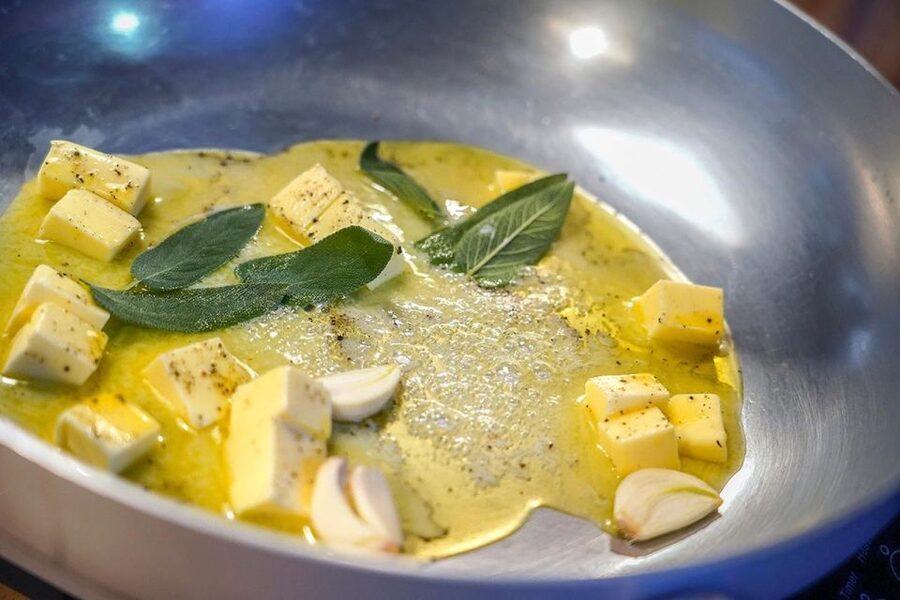
Roman sauces are where this class turns from fun cooking to genuinely useful cooking. You learn that sauce is not just flavor, it is timing and chemistry.
Carbonara is often included, and the way it is taught is the point. If you are used to a version that tastes similar but not quite right, you will probably notice differences in ingredients and technique. One reviewer specifically called out the guanciale and described it as delicious, which matters because guanciale brings its own richness to the sauce.
Cacio e pepe is another Roman favorite that focuses on a different kind of precision. It is largely about how cheese and pepper combine so you get a glossy sauce rather than a grainy mess. The chef instruction tends to emphasize when to add ingredients and how to achieve that proper coating on the pasta.
You may also see sauces like arrabbiata paired with certain pastas. That gives you variety, because arrabbiata is heat-forward, while carbonara and cacio e pepe lean on fat and emulsification skills.
What I like about these sauce lessons is that they teach you principles. Once you understand how these sauces get their texture, you can adapt them later with better results than the usual “follow the recipe and hope” approach.
Wine, tasting, and the meal you make
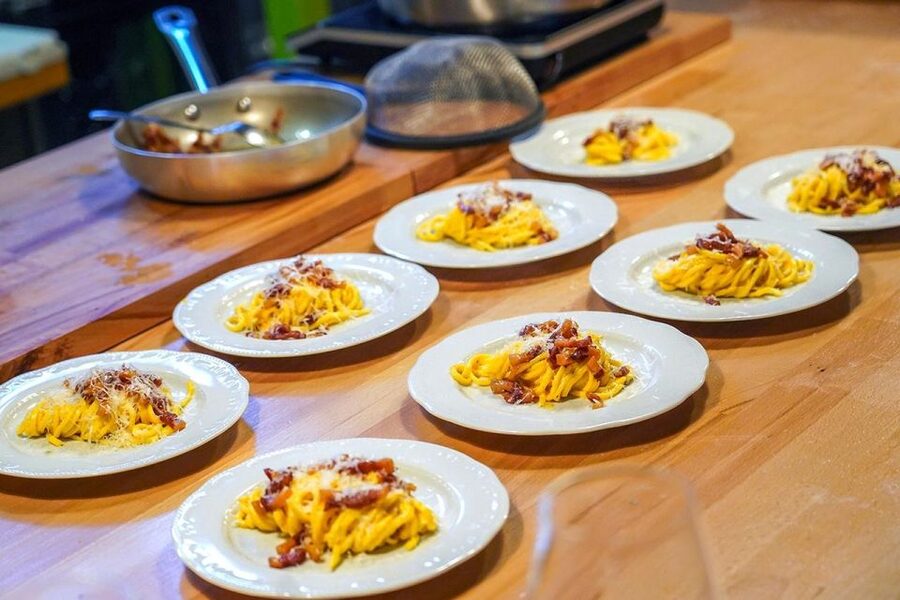
This class includes selected wine with your meal, and many sessions include prosecco or a steady flow of wine through the experience. People describe it as plenty of wine, plus laughs, plus a social atmosphere that still feels focused on cooking.
Why does this matter for value? Because wine is part of how the meal is framed. It is not just a free drink ticket. You taste while you cook and then eat what you made, so the flavors connect to the techniques you practiced.
You will sit down together and enjoy the meal as a group. That “eat together” portion is a key ingredient for a memorable class. You get to compare how different people handled the dough and shaped their pasta, and then you all get the same honest reward, a plate of Roman comfort food.
If you are someone who likes to go beyond eating and understand how flavors come together, the pairing also helps you pick up seasoning judgment. You will likely notice that the chefs encourage balance, not just loud flavors.
Vegetarian options and special diets: what is possible
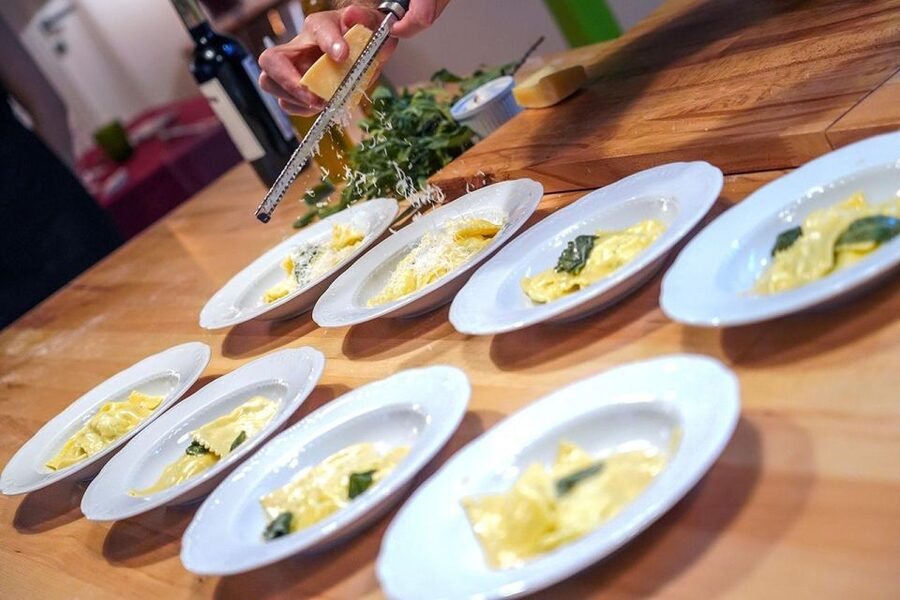
The class includes a vegetarian option. If you eat vegetarian, this is not an afterthought menu. The experience mentions a special menu for vegetarian guests, which makes it easier to book without worrying you will be stuck with a plain alternative.
For more specific needs like gluten-free, dairy-free, or vegan, the information says special recipes can be arranged for private classes. That matters because it suggests the main group class menu may not be built around full substitutions on the fly.
If you have allergies or strong dietary restrictions, communicate them ahead of time. The experience is explicit that you should inform the team about allergies, intolerance, and ingredients you cannot eat. That is the responsible move, and it also helps the chefs plan your pasta and sauce options.
What the $97 price buys in real terms
At $97 per person, you are paying for three things at once: labor, instruction, and ingredients. A simple take-a-class cooking experience could be cheaper, but the ingredient costs and the time from a chef matter here, especially with fresh pasta and multiple sauces.
You also get a full tasting meal, described as 3 courses, plus wine. Since the class runs about three hours and includes hands-on teaching in a small group, it often compares well to other cooking experiences that focus only on one dish.
The best value signal in the class is not the price tag, it is the structure. You practice multiple pasta skills and learn Roman sauces like carbonara and cacio e pepe, then you eat what you made. That is how you end up with both a memory and a usable skill.
If you are visiting Rome and you want to bring something home that is not just photos, this class is one of the few food tours that can translate into something you cook again next month.
Logistics that affect your enjoyment
A few details can make or break a hands-on class day.
First, accept that you will be in a working kitchen environment. Flour and raw dough are part of the deal, and even with aprons provided, you might want to wear clothes you feel okay with getting a little messy.
Second, the class is in a studio close to a café, and it is set up for small groups. That usually means you can get there without a big travel puzzle, and you can focus on the cooking.
Third, aprons are provided and can be kept for an extra cost. That is optional, but it is also a little souvenir that feels more practical than a magnet.
Finally, consider group language. One experience described a situation where the chef spoke mostly French when other participants in the group were French speakers. If you strongly prefer English throughout, you can still have a great time, but it is smart to go in knowing that small groups can affect the flow.
Who this pasta class is best for
This experience fits well if you want real instruction, not just entertainment. It is ideal for couples, friends, and solo travelers who like to learn and cook, and who want a Rome-specific menu rather than a generic Italian food show.
It also suits home cooks who want to improve technique. If you already cook, you will appreciate the sauce guidance and the pasta shaping practice because those are the parts most home recipes gloss over.
It might be less ideal if you want a quiet, observational experience. This is hands-on and lively, and you will be working with dough and getting guided in real time.
Should you book Chef Riccardo’s Rome fresh pasta class?
Book it if you want a small-group, hands-on pasta lesson in Rome with Roman sauce techniques and a meal that uses what you make. At $97 for about three hours, the value makes sense because you get multiple skills, selected wine, and a full 3-course eating moment.
Skip it only if you know you want a purely passive activity or you have very complex dietary needs that require custom substitutions. For vegetarian diets, you are covered in the main class. For gluten-free, dairy-free, or vegan needs, a private class route may be the better match based on what is stated.
If you can, schedule this earlier in your trip. Then you can use what you learn to order better pasta and sauce back in the city, and not just enjoy another plate as a guess.
FAQ
How long is the Rome fresh pasta-making class?
The class lasts 3 hours.
How many people are in the class?
It is a small group limited to 10 participants.
What is included with the class?
You get hands-on pasta-making, top-quality organic ingredients, selected wine, and a meal included. Aprons are provided for use during the class.
Is wine tasting included?
Yes. The experience includes selected wine, and the meal includes wine tasting.
Do they offer vegetarian options?
Yes. There is a special vegetarian menu.
Where is the meeting point?
The cooking lab is at Circonvallazione Gianicolense 418, 00152, Roma.
Are lessons offered in English and Italian?
The instructor languages are English and Italian, and the experience is wheelchair accessible.
More Workshops in Rome
- Rome: Fettuccine Pasta Cooking Class in Rome’s City Center
★ 4.8 · 2,414 reviews - Rome: Traditional Pasta with Cocktails Cooking Class
★ 5.0 · 2,374 reviews - Become a Masterchef in Rome: Pasta, Ravioli and Tiramisù Class
★ 5.0 · 2,156 reviews - Rome: Fettuccine and Tiramisu Cooking Class with Wine
★ 4.8 · 2,013 reviews
Recently reviewed around Rome
- Rome: Castelli Romani Hop-on and Hop-off Tour★ 4.9 · 32 reviews
- Rome: Food Tour near Vatican City with Wine★ 4.8 · 100 reviews
- Rome: Scavenger Hunt Self-Guided Tour★ 4.6 · 15 reviews
- Hidden Rome: Small Group E-Bike Tour with Street Food Stops★ 4.9 · 144 reviews
- Rome: Highlights Tour in Golf Cart★ 4.9 · 28 reviews
- Rome: Hop-on Hop-off Bus Tour and Colosseum Experience★ 3.4 · 163 reviews
- Rome: Guided Haunted Rome Ghost Tour with Dowsing Rods★ 4.8 · 63 reviews
- Rome: Highlights Photo Shoot for Memorable Moments★ 5.0 · 32 reviews
Pasta Making Classes, compared.
3 in 1 Cooking Class near Navona: Fettuccine, Ravioli & Tiramisu
Read our review →
Pasta Making Class with Wine, Limoncello, and Dessert
Read our review →
3-in-1 Fettuccine, Ravioli, and Tiramisu Cooking Class
Read our review →
Fettuccine Pasta Cooking Class in Rome’s City Center
Read our review →
Become a Masterchef in Rome: Pasta, Ravioli and Tiramisù Class
Read our review →
Fettuccine and Tiramisu Cooking Class with Wine
Read our review →
Pasta Cooking Class Near the Colosseum with 3 Spritz Cocktails
Read our review →
Enjoy Spritz and Pasta Making in Piazza Navona
Read our review →Browse the lists this tour appears in