
Reviewed · CATACOMBS TOURS
Rome: Bone Crypts Express – Tour in ENGLISH with tickets
Rome has plenty of famous sights, but the Capuchin Crypts hit a different nerve, part spirituality, part strange art project, all in the center of the city. I love the small-group feel, limited to 10, because it keeps the stories clear and the pace human. I also love that you get skip-the-line ticket access, so you spend your limited time seeing the crypts instead of waiting.
One consideration: this is a sacred burial ground with rules. Shoulders and knees must be covered, and it is not a good fit if you are pregnant, traveling with children under 10, or using a wheelchair.
What ties it together is the guiding style, often with humor and strong storytelling. On this route, you might end up with guides such as Mike, Alessandra, or Heather, who tend to make the facts easy to follow while you face some pretty unforgettable imagery.
Key things to know before you go
- Piazza Barberini start makes it easy to connect with the rest of your Rome day
- Skip-the-line entry helps you keep your schedule tight for a 1-hour express stop
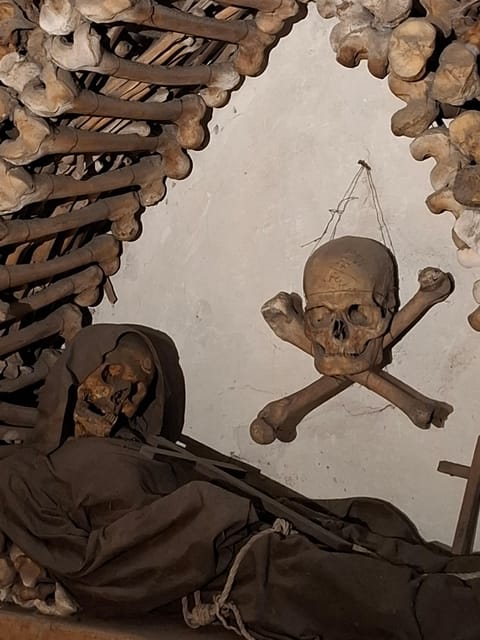
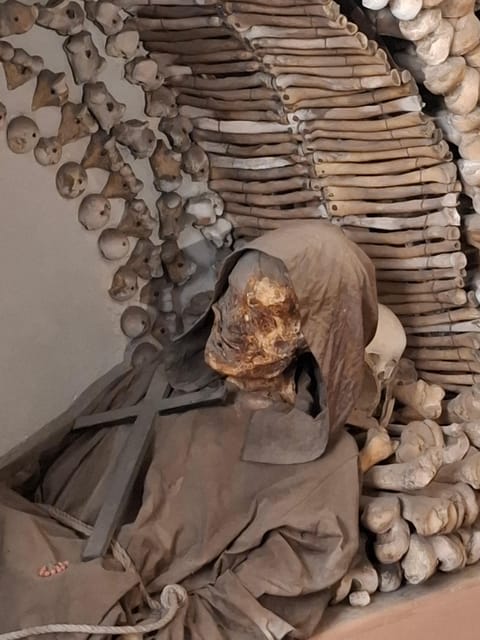
- Six bone-decorated chapels focus on specific body parts, from skeleton displays to skull symbolism
- Franciscan and Capuchin context explains why the remains are arranged the way they are
- Caravaggio context adds an art layer beyond the bones
- Sacred-site etiquette means clothing rules matter, and the visit asks for a respectful tone
From Piazza Barberini to the crypts, a quick shift underground
Your tour begins at Piazza Barberini, in front of the Triton Fountain. It is a central meeting point, and the group does not include hotel pickup, so you will want to arrive on foot or by bus/metro and then meet your guide right there.
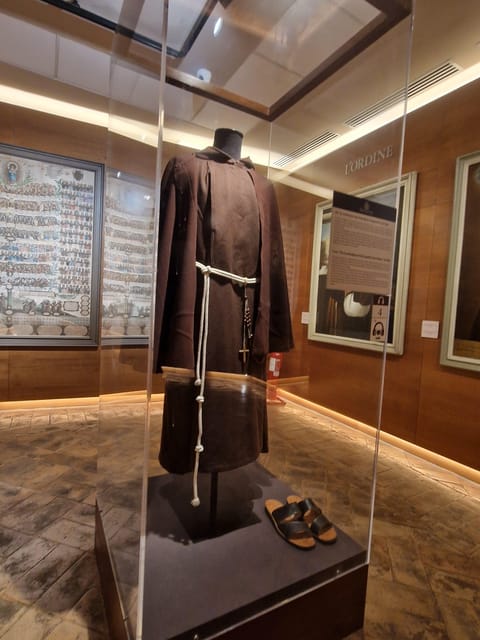
From the start, this feels like a focused, no-waste outing. You walk to the Capuchin Museum first, where the guide frames the story of the Franciscan and Capuchin orders that shaped this burial tradition.
This is also where you set expectations. Even though you are going to “crypts,” your time is not spent in a long, deep-catacomb maze. One practical note that helps: some people feel surprised by how the displays are presented in multiple rooms at closer-to-ground level than they imagined, even though the overall mood is still underground and eerie.
More catacombs and crypts under Rome:
- Rome: Crypts and Catacombs Underground Tour with Transfers
★ 4.6 · 5,341 reviews - The Original Roman Crypts and Catacombs Tour with Transfers
★ 4.5 · 4,896 reviews - Rome: Catacombs of St. Callixtus Entry Ticket & Guided Tour
★ 4.6 · 3,037 reviews
Capuchin Crypts 101: why bones became chapels
The Capuchin Crypts are not just a scary photo stop. They are a sacred burial space that grew out of the Capuchin approach to death and faith, supported by burial practices that led to the creation of an underground cemetery.
Your visit starts by learning the “why” before you absorb the visuals. The guide connects the Capuchin order to the broader Franciscan order, then ties those beliefs to the way remains were relocated and arranged over time. You will hear about the dramatic move of the monks’ remains from an older friary near the Trevi Fountain area, and how Capuchin burial rules influenced what you see today.
That context matters because otherwise the rooms feel like just a macabre art installation. With the background, the symbolism clicks. The bone arrangements become a visual way to talk about mortality, reflection, and the spiritual meaning of life and death, all within a Christian setting.
As you move through the site, sections are supported with an audio guide in the experience. The audio guide is listed as not included, so if you want that extra layer, you may need to arrange it on site and plan for a little flexibility.
Six bone chapels and the body-part symbols you will see
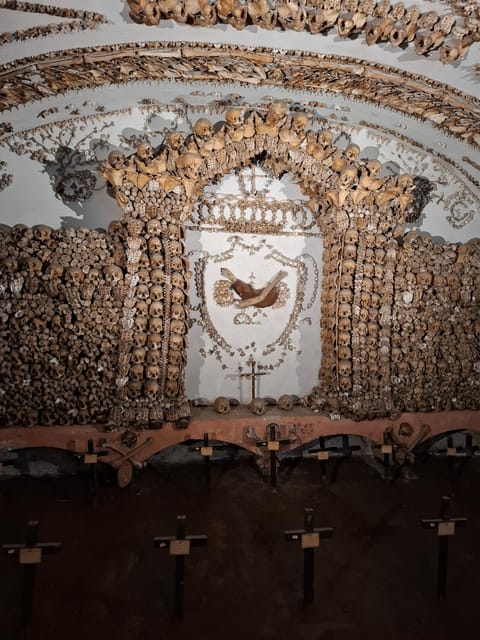
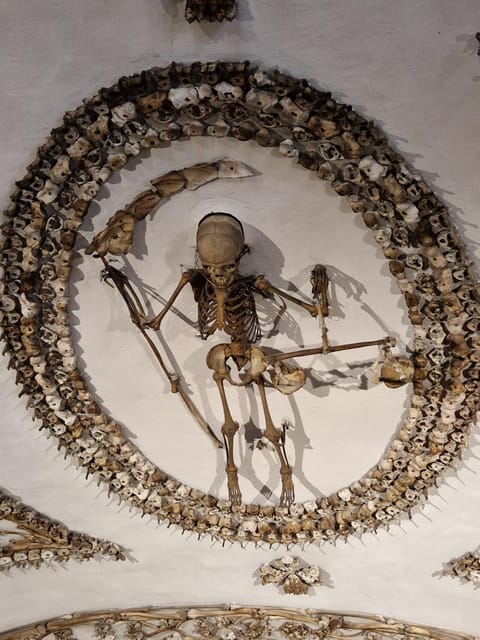
This tour is built around the standout rooms. You will visit six chapels decorated with the bones of nearly 4,000 Capuchin monks, and each one has a different “headline” visual.
Here are the specific rooms you should look for as you follow the guide:
The Crypt of the Three Skeletons
This is the room people often picture first. You are looking at human remains arranged to create a striking, almost theatrical display. It is one of the best places to slow down mentally, because the guide can help you read the scene as symbolism rather than shock value.
A few more Rome tours worth comparing
- Rome:Hop-On Hop-Off Panoramic Open Bus Ticket 3 Circuits x 1
★ 4.0 · 15,405 reviews - Vatican Museums & Sistine Chapel Skip-the-Line Entry Ticket
★ 4.4 · 13,838 reviews - Vatican Museums & Sistine Chapel Skip-the-Ticket-Line Tour
★ 4.3 · 10,486 reviews - Rome: St. Peter’s Basilica & Dome Entry Ticket & Audio Tour
★ 4.2 · 7,537 reviews
Crypt of the Leg Bones and Thigh Bones
This one is more anatomical in focus, with prominent arrangements that emphasize certain parts of the body. If you prefer your spooky sights to be clear and structured, this room does that. It also helps you notice how intentionally the remains are displayed as forms, not just scattered material.
Crypt of Pelvises and the friars in arches
Another memorable room highlights the pelvis and uses arches made from remains. The result is surprisingly orderly. It is the kind of setup where the guide’s explanations can change your emotional reaction from fear to quiet contemplation.
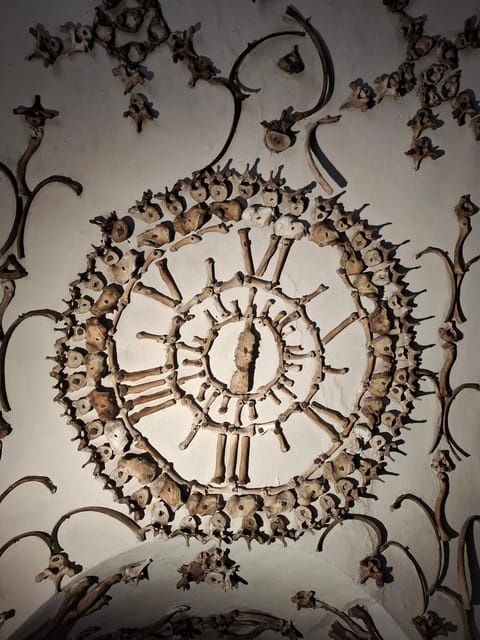
The Crypt of the Skulls, with the hourglass symbolism
This is the iconic one, topped by a symbolic hourglass motif. The hourglass theme reinforces what the site is really communicating: time runs, death comes, and faith offers a way to think about both.
Crosses on the floor, marking final resting places
While you are focusing on the bone displays, keep your eyes on the ground. Crosses embedded in the floor mark the final resting places of seven monks, giving the visit a direct, grounding reminder that this is burial space, not museum theater.
The remaining two chapels
You will also pass through two additional bone-decorated chapels along the route. The best approach here is to go in ready to notice the theme of each room, even if the exact labels are not what you expect. The point is the pattern: each chapel emphasizes a specific way to visualize mortality.
One helpful practical mindset: go slow. Even if the rooms look like they belong in a horror movie, the experience asks for respect, because the site is sacred and the guide will usually cue quieter behavior in the more reflective sections.
The guide’s role: art talk, humor, and Caravaggio context
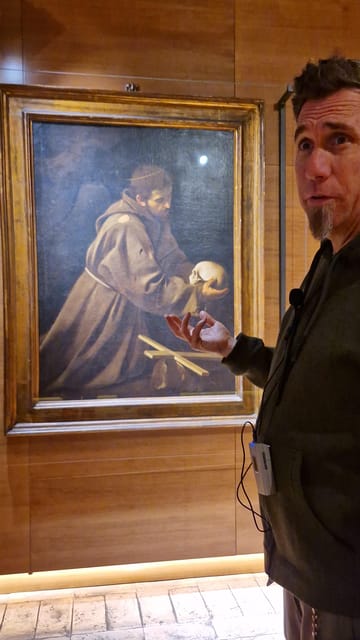
If you are doing a short tour in Rome, the guide can make or break the experience. This one has a strong reputation for storytelling, and several guides have been praised for a style that mixes facts with humor.
You may encounter guides like Mike, Alessandra, Heather, or Angela, and the best thing they tend to do is keep you oriented. They explain why the Capuchins acted the way they did, why the relocation happened, and what the different arrangements are trying to communicate.
Then comes the art thread. Your highlights include Caravaggio, described in the experience notes as the Baroque master, and as the rebellious kind of artist Rome loved to talk about. You do not need to be an art expert to get value here. Even a quick connection to Caravaggio’s era helps you place the crypts in a broader atmosphere of religious storytelling, dramatic symbolism, and emotional expression.
What I like about this structure is that it prevents the tour from feeling one-note. You see bones, yes. But you also get a reason to pay attention to symbols, Christian art thinking, and the Franciscan world that made this unusual site possible.
And if your brain is the type that keeps asking questions, a good guide tends to answer them clearly, including practical questions about your Rome day. That kind of add-on value can be surprisingly useful after the tour ends, when you are walking back up toward street life.
What the 1-hour express pacing feels like in real life
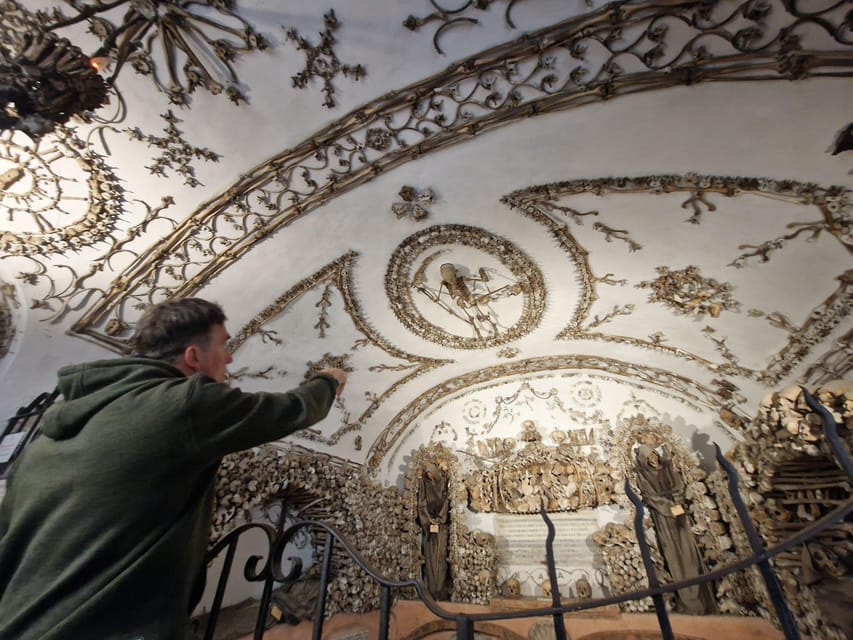
This is a 70-minute guided tour inside about a 1-hour block. It is short enough to fit into a busy Rome schedule, but long enough to feel like more than a quick peek.
The pacing usually works like this:
- meet at Piazza Barberini
- walk to the Capuchin Museum
- get the story that frames the crypts
- descend into the bone-decorated chapels
- wrap up back at Piazza Barberini
The express format is a plus if you are trying to do multiple Rome priorities in one day. It also means you should plan your expectations: you are not doing an all-day deep study. You are doing a strong, curated introduction to a specific place that you remember because it leaves an emotional impression.
Because the group is limited to 10, you get a little breathing room for questions, and the guide can correct misunderstandings. That matters here, since some first-time visitors assume the bones are displayed in a more typical underground-catacomb setup.
Dress code and comfort tips for a respectful visit
This one is practical, because the site has rules. Shorts and skirts are not allowed, and you need shoulders and knees covered to enter. Cargo shorts are acceptable, which makes it easier than you might think if you prefer pockets and movement.
Plan on comfortable clothes anyway. You will be walking in central Rome to reach the museum, and then you will spend time in enclosed spaces with a reflective, quiet tone. Comfortable shoes help, even though the tour itself is short.
Who might find this tour stressful?
- If you strongly dislike human remains, go in with honesty about that.
- If you want something more lighthearted, this is not it. The experience is built around mortality and faith, so the mood is serious even when the guide is funny.
Who should skip it?
The experience is listed as not suitable for children under 10, pregnant women, and wheelchair users. If any of those apply to you, you will save yourself time by choosing a different Rome stop.
Price and value for a $35 Rome stop
At $35 per person for about 1 hour, the price lands in the mid-range for Rome tours that include a guided component plus special ticket access. What you get that makes it feel worth it is the combination of:
- skip-the-line ticket access, which protects your schedule
- a live English guide who explains the story behind what you see
- coverage of multiple chapels, not just one room
If you try to do this on your own, you might save money, but you would likely lose the connective tissue: why the Capuchin burial approach created this site, why the remains were relocated, and what symbols like the hourglass are meant to communicate.
The one trade-off is that it is brief. You are paying for a focused introduction, not a slow, long museum-style study. If you love to linger and read every detail without moving, consider whether this kind of “express” approach matches your style.
Overall, I think the value is strongest if you want a respectful, guided orientation and you are trying to see Rome efficiently without wasting time in lines.
Should you book the Bone Crypts Express tour?
Book it if you want:
- a short, guided, English introduction to one of Rome’s most unusual sacred sites
- skip-the-line entry so your day stays on track
- a guide-driven explanation of how the Capuchin burial tradition led to the bone chapels
- a mix of religious symbolism and Caravaggio-era context, not just a quick photo stop
Skip it if you:
- are not comfortable with human remains, even if they are arranged in artistic and symbolic ways
- need wheelchair access, because the tour is listed as not suitable
- are traveling with a child under 10, because it is listed as not suitable
- want a light, carefree activity, because the tone is reflective and serious
If you fit the first group, you will likely come away with a strong sense of place, plus the kind of story you can retell later at dinner.
FAQ
Where is the meeting point for the tour?
Your English mother-tongue guide meets you in Piazza Barberini, in front of the Triton Fountain.
How long is the Bone Crypts Express tour?
The guided tour lasts about 70 minutes, and the overall experience is described as 1 hour.
Is skip-the-line entry included?
Yes. The tour includes exclusive skip-the-line ticket access to the Capuchin Crypts.
What language is the tour offered in?
The tour is offered in English, with an English mother-tongue speaking guide.
What can I expect to see inside the crypts?
You will visit six chapels decorated with bones, including well-known rooms such as the Crypt of the Three Skeletons, the Crypt of the Leg Bones and Thigh Bones, the Crypt of Pelvises, and the Crypt of the Skulls with the hourglass symbolism.
What should I wear to enter?
You must cover your shoulders and knees. Shorts and skirts are not allowed. Comfortable clothes are recommended, and cargo shorts are acceptable.
Is an audio guide included?
An audio guide is mentioned as part of some sections of the visit, but it is listed as not included in the tour.
Is the tour refundable if I cancel?
Yes, free cancellation is available up to 24 hours in advance for a full refund.
Who is the tour not suitable for?
The experience is not suitable for children under 10, pregnant women, or wheelchair users.
Recently reviewed around Rome
- Rome: Castelli Romani Hop-on and Hop-off Tour★ 4.9 · 32 reviews
- Rome: Food Tour near Vatican City with Wine★ 4.8 · 100 reviews
- Rome: Scavenger Hunt Self-Guided Tour★ 4.6 · 15 reviews
- Hidden Rome: Small Group E-Bike Tour with Street Food Stops★ 4.9 · 144 reviews
- Rome: Highlights Tour in Golf Cart★ 4.9 · 28 reviews
- Rome: Hop-on Hop-off Bus Tour and Colosseum Experience★ 3.4 · 163 reviews
- Rome: Guided Haunted Rome Ghost Tour with Dowsing Rods★ 4.8 · 63 reviews
- Rome: Highlights Photo Shoot for Memorable Moments★ 5.0 · 32 reviews
Catacombs Tours, compared.
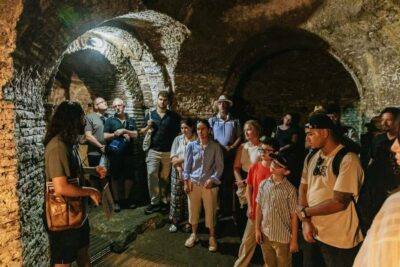
Crypts and Catacombs Underground Tour with Transfers
Read our review →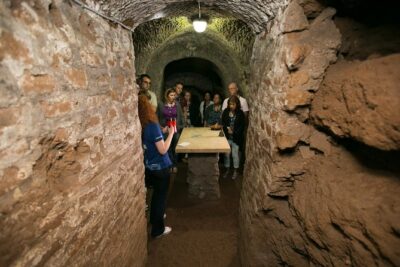
The Original Roman Crypts and Catacombs Tour with Transfers
Read our review →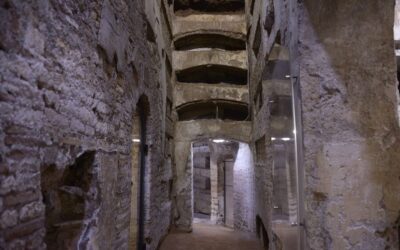
Catacombs of St. Callixtus Entry Ticket & Guided Tour
Read our review →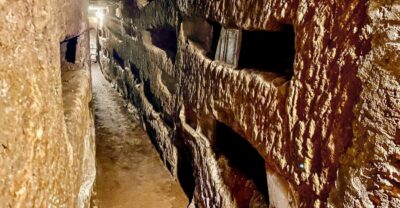

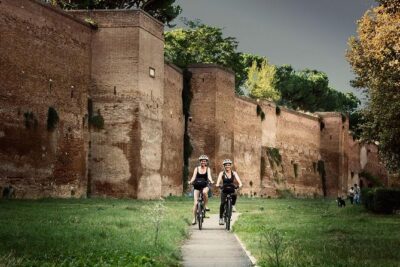
Rome EBike Tour: Appian Way, Catacombs & Roman Aqueducts
Read our review →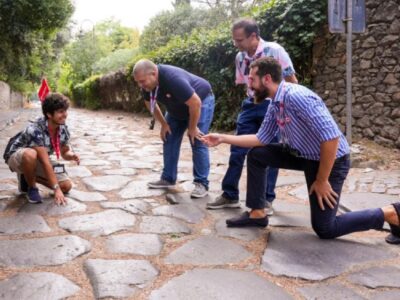
Catacombs and Capuchin Crypt Guided Tour with Transfer
Read our review →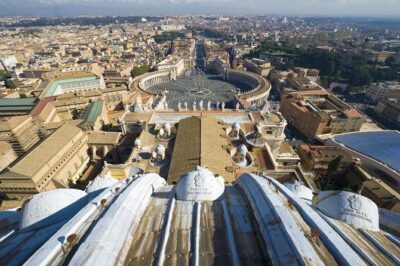
St. Peter’s Basilica Priority Access Tour with Dome & Crypt
Read our review →Browse the lists this tour appears in