
Reviewed · DAY TRIPS FROM ROME
From Rome: Pompeii and Herculaneum by High-Speed Train
Pompeii and Herculaneum are the kind of places that make ancient history feel painfully real. This day trip is interesting because you see the aftermath of Vesuvius through two different Roman towns, not just one, and you do it with an archaeologist-led plan that keeps the story moving. I like the structure that gets you out of Rome fast and into the ruins before the crowds fully take over, with the high-speed train doing the heavy lifting.
What I really like is how the tour mixes big-name highlights with details you can only catch in the right order. In Pompeii, you cover major sights and the unforgettable plaster casts of victims, then you finish with Herculaneum’s preserved streets and houses, including stops like the House of Neptune and Amphitrite and the beach area where skeletons are preserved. Guides such as Michele, Raphael, Diego, and Sergio are repeatedly praised for turning the site into a clear, human story, not a pile of stones.
One thing to consider: it is a long day packed with walking, and Pompeii time can feel tight if you want slow photos, a long museum stop, or a leisurely lunch. The pace depends on your group and conditions, and the walking is on uneven ground, so shoes matter.
Key highlights you will actually care about
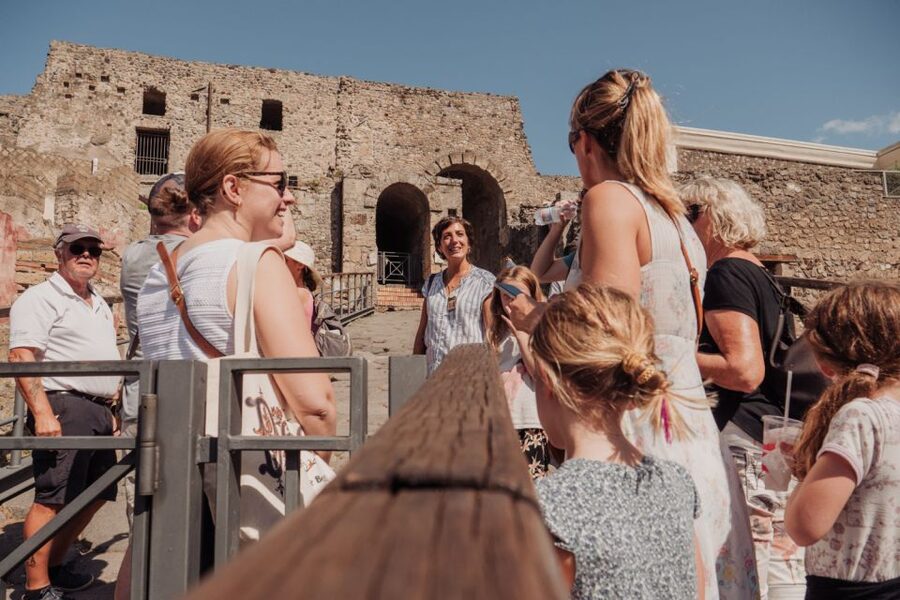
- Archaeologist guides who explain what you are seeing, including human details behind the eruption story
- Two towns in one day so you can compare Pompeii’s urban sprawl with Herculaneum’s more intimate, preserved layout
- Plaster casts in Pompeii that make the victims’ story easier to picture
- Herculaneum preservation including the House of Neptune and Amphitrite and the preserved beach area
- Headsets for all participants so you can hear the guide without crowd noise ruining the experience
- A timed logistics plan using fast trains and minibus transfers to keep the day on track
Why seeing both Pompeii and Herculaneum in one day makes sense
If you are short on time, this format is a smart deal. Pompeii and Herculaneum both relate to the same catastrophe, but they feel different on the ground. Pompeii is large and dramatic, with ruins that spread out like a city, while Herculaneum is smaller, and the preservation gives you a clearer look at everyday domestic life.
That contrast is why the combined day works. When you leave Pompeii and then walk Herculaneum, you start noticing patterns: how people lived, how space was used, and how the eruption’s effects changed what survived. The tour is built around that comparison, which is more useful than bouncing between tours that each cover only one site.
You also get a clear narrative thread. The archaeologist guides focus on the people buried by the eruption, how the disaster unfolded, and what later excavations have taught us. If your goal is understanding, this itinerary is designed to support that.
More day trips out of Rome:
- From Rome: Pompeii, Amalfi Coast, and Sorrento Day Trip
★ 4.6 · 7,031 reviews - From Rome: Pompeii, Amalfi Coast and Positano Day Trip
★ 4.6 · 6,620 reviews - Pompeii, Amalfi Coast and Positano Day Trip from Rome
★ 4.5 · 6,250 reviews
Getting from Rome to Naples quickly and without stress
The day starts at Roma Termini, and you travel independently by high-speed train to Naples Central Station, with pre-booked tickets provided by the tour. Train time is about 70 minutes, which is the difference between having a real day in the ruins and losing half your time to slow transit.
When you arrive in Naples, you meet the group outside a specific landmark: in front of the STARHOTEL TERMINUS entrance, which is opposite the station. The guide is holding an ASKOS TOURS sign. That detail matters because Termini-style stations can be confusing when you arrive hungry and slightly jet-lagged.
Then the tour moves you to the ruins area by minibus or van. The transfer to Pompeii is about 30 minutes, so you are not waiting around in the city. This is a big part of the value of a day trip like this: you trade some comfort for time, but you keep the day efficient.
Pompeii walkthrough: what you will see and why the order matters
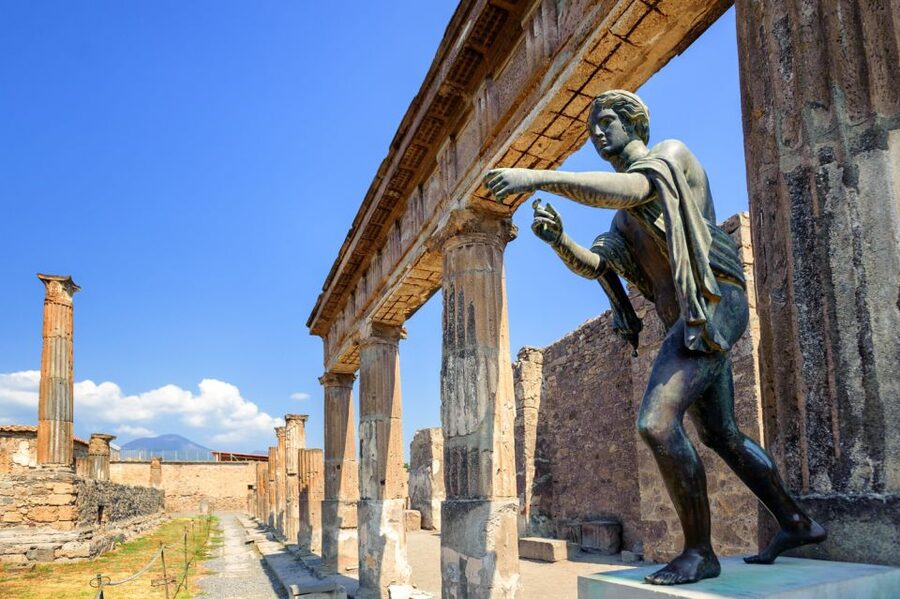
Pompeii is where the tour gives you the most recognizable “greatest hits,” plus enough context to make them stick. Expect a guided portion of about 2 hours in the Pompeii archaeological area, followed by a short window for your own wandering.
You will visit highlights that include newly-opened houses, a look at the brothel, and key city spaces. You also get the plaster casts of victims, including animals and people. That part is emotionally heavy, but it helps your brain understand what the eruption did in physical terms, not just in a textbook paragraph.
The benefit of a guided route here is simple: Pompeii is huge. Even if you have a map, you can easily wander to the wrong blocks and miss the places that explain how daily life worked. With an archaeologist guide, you tend to see more of what you came for, in fewer steps.
Practical note: Pompeii involves about one mile of walking during your time there. The ground can be uneven and cobbled, so plan on real walking shoes, not just comfortable flats.
Pompeii free time: useful, but plan around the pace
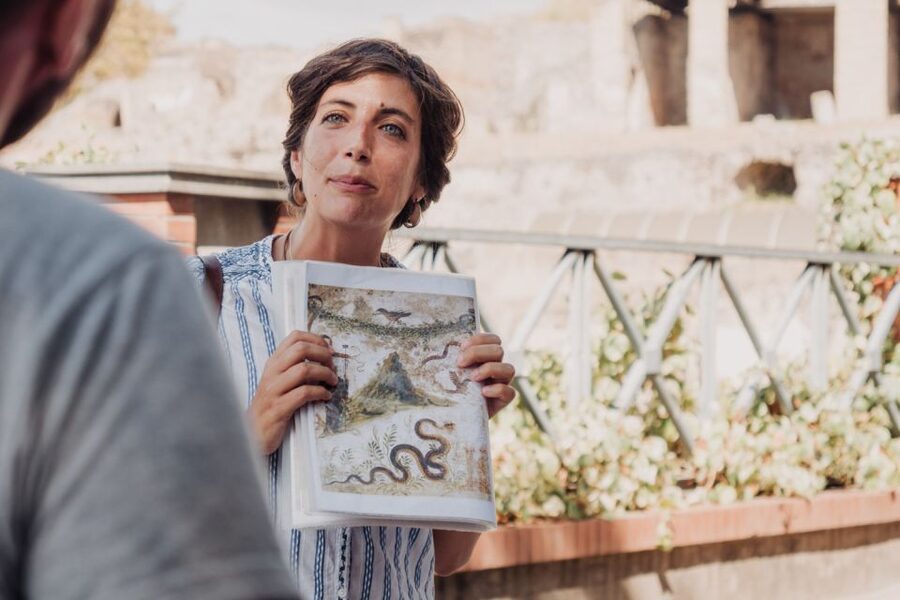
After the guided portion, you get about 30 minutes of free time in Pompeii. This is enough to take photos, use the restroom, or pop into a shop, but it is not enough for a long sit-down meal or a deep extra museum detour.
Some people feel the Pompeii portion can be rushed. The most common complaint is that the lunch break and the distribution of free time can leave you wanting more time for photos, especially around the forum area and museum-like stops. That does not mean the tour is poorly run, but it does mean you should manage expectations.
If your priority is photos, arrive with a plan for what you want most. Pick your “must photo” zones in advance so you can move quickly when free time appears. If you are more interested in information and atmosphere, the pace is usually easier to enjoy, because you are not forced to choose between learning and sightseeing.
More trips by train from Rome:
- Rome to Pompeii Guided Tour with Wine & Lunch by High Speed Train
★ 5.0 · 1,379 reviews - Ancient Ostia Antica Semi-Private Day Trip from Rome by Train with Guide
★ 4.5 · 579 reviews - From Rome: Ostia Antica Guided Half-Day Trip by Train
★ 4.8 · 486 reviews - Rome: Pompeii Tour with Wine and Lunch by High Speed Train
★ 4.8 · 485 reviews
Herculaneum in two hours: smaller site, sharper preservation
Herculaneum is the counterpoint to Pompeii, and the tour makes sure you get there in a single, focused block. The visit is about 2 hours with a guided tour, and it is followed by the return transfer.
Herculaneum’s big advantage is how preserved it can feel. You are in a place where the streets and buildings give you a more intimate sense of daily living. The guide stops include the House of Neptune and Amphitrite, and you also visit the beach area where many skeletons are preserved.
You will also walk about half a mile in Herculaneum, which is less than Pompeii but still on uneven stone surfaces. The payoff is that the site can feel easier to read. When Pompeii feels like an open-air city puzzle, Herculaneum can feel like you are stepping into a smaller, more coherent snapshot of life.
The guides often emphasize the earthquake and eruption sequence and how that affected what people experienced and what was preserved. With the right guide, the “why” becomes clearer, and you stop treating the remains as a horror exhibit and start seeing them as evidence.
The return to Naples and catching the train back to Rome
After Herculaneum, you ride back toward Naples and then catch the high-speed train back to Rome. The train back takes about 70 minutes, and you return to Roma Termini at the end of the experience.
This logistics flow is a big part of what people praise: it is organized enough that you are not stuck negotiating buses or guessing meeting points. The drivers and coordination described in reviews often focus on getting people through Naples traffic smoothly, which matters because traffic can be the real wild card on a day trip.
One timing tip: in general, I like building a buffer when I am connecting back to my train. One review noted that train information came later than expected, which can be stressful if you are trying to coordinate other plans. Even if you do not have a tight connection, plan your day so you are not cutting it down to the last minute.
What the archaeologist guides add (and why names keep showing up)
This tour is not just a guided walk with audio. It is guided by archaeologists at both sites, and that tends to change what you notice.
From the names that repeatedly show up in feedback, guides like Michele, Mikel, Raphael, Jasmine/Jasmi, Sergio, Diego, Paolo, Julia, Gennaro, and Giulia are singled out for turning the ruins into a coherent story. People highlight that these guides explain the archaeology and the disaster scenario in a way that stays interesting for the full day, not just the first hour.
If you have done tours with standard audio devices, you know the problem: you can hear facts, but you still do not know what you should be looking at next. Here, the guide’s direction helps you connect the dots between buildings, city planning, and the human impact. You also get practical narration that makes specific stops like the brothel in Pompeii or the preserved beach area in Herculaneum feel relevant instead of random.
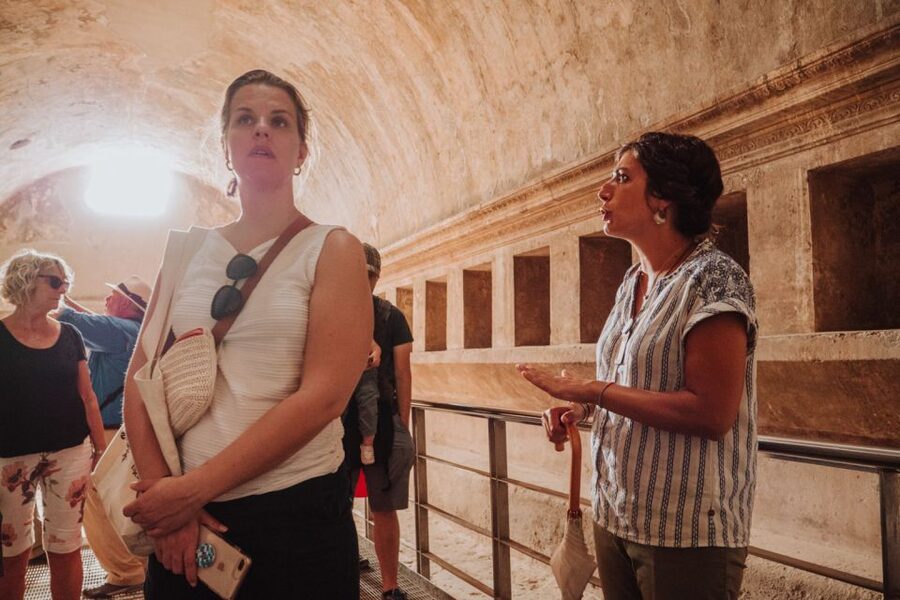
Also, headsets for all participants help a lot. In busy zones, it is the difference between hearing nothing or hearing the guide clearly while you look where you are supposed to.
Price and value: what you are paying for at $222.77
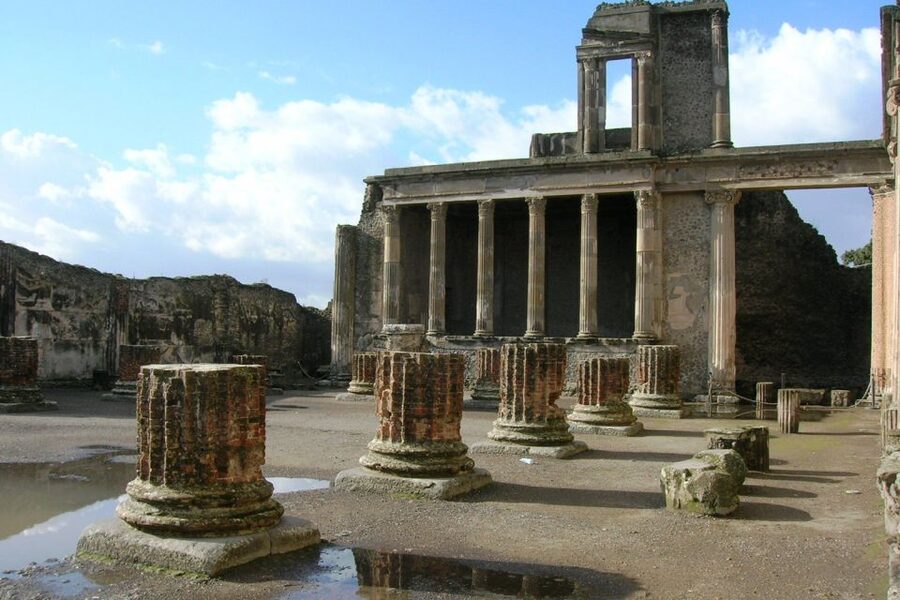
At $222.77 per person, this is not a budget day trip, but it also is not trying to be one. You are paying for a bundle of things that would be annoying and time-consuming to piece together yourself: round-trip high-speed train, site tickets, transportation between sites, and live guided tours with an archaeologist at both locations.
The tour includes Pompeii Express entry tickets and Herculaneum entry tickets listed at 16.00 euros each, plus round-trip fast-train tickets. You also get headsets, which is a small line item that makes a noticeable difference in comfort.
Meals are not included, so you need to budget for lunch separately. That is where value can feel better or worse depending on how you use your free time. If you treat Pompeii’s free window as a quick meal and photo moment, this tour can feel like a great deal. If you want a long, leisurely lunch and plenty of extra time, you may feel the tour is optimized for seeing the sites efficiently rather than for slowing down.
What to bring, and the footwear rule you should not ignore
This tour takes place rain or shine, and the instruction is simple: bring a raincoat if needed. Pompeii and Herculaneum are both outdoor walking experiences, and wet stone can be slippery.
Bring your passport or ID card. You will be walking on uneven surfaces, and you should follow the footwear rules: no sandals or flip flops and no high-heeled shoes. Also avoid luggage or large bags, since they are not allowed on the tour.
If you are the type who carries a lot, go light. You will be moving between train station and minibus, then into Pompeii and Herculaneum, and you do not want your day turning into a shoulder workout.
Who should book this tour, and who should skip it
This is ideal if you want an informed day and you care about seeing both sites without organizing transit yourself. It is also a good match if you enjoy learning from a guide who can connect the facts to what you see, like the archaeologists named earlier.
This tour is not recommended for people with limited mobility, and it is not suitable for wheelchair users. There is about one mile of walking in Pompeii plus about half a mile in Herculaneum, and the terrain is not set up for easy mobility.
It is also not a great choice if you are looking for a slow, leisurely day. Between the train ride, the transfers, and the timed site visits, you will be moving. If your idea of fun is spending extra time browsing museum rooms or lingering for long lunches, plan to compensate with your own schedule in Naples after the tour.
Quick decision guide: should you book?
Book it if:
- You want both Pompeii and Herculaneum in one day with live archaeologist guidance
- You like structured time, clear stops, and explanations that keep you from wandering aimlessly
- You are comfortable with outdoor walking and uneven stone
Consider a different option if:
- You need a low-walking day or step-free access
- You strongly prefer long free time at Pompeii, especially for lunch or museum browsing
- Your plans are extremely tight and you cannot absorb small timing changes
If you fit the first group, this is the kind of trip that pays off quickly. The combination of fast rail, guided archaeology at both sites, and unforgettable visual evidence like Pompeii’s plaster casts is a powerful way to understand what Vesuvius did to this region.
FAQ
How long is the tour from start to finish?
The duration is about 8.5 hours, but the exact starting time depends on availability.
Where do I meet the guide in Naples?
After the train ride to Naples Central Station, meet in front of the STARHOTEL TERMINUS entrance, opposite the station. Look for the guide holding an ASKOS TOURS sign.
Do I need to buy entry tickets for Pompeii and Herculaneum?
No. The tour includes entry tickets for Pompeii and Herculaneum, and it also includes Pompeii Express entry tickets.
Is lunch included?
Meals are not included. You will have a free time window in Pompeii, but you should plan to purchase food on your own.
What language is the tour guide?
The live tour guide speaks English.
Is there walking involved, and what shoes should I wear?
Yes. You should expect about one mile of walking in Pompeii and about half a mile in Herculaneum. Do not wear sandals, flip flops, or high-heeled shoes.
Recently reviewed around Rome
- Rome: Castelli Romani Hop-on and Hop-off Tour★ 4.9 · 32 reviews
- Rome: Food Tour near Vatican City with Wine★ 4.8 · 100 reviews
- Rome: Scavenger Hunt Self-Guided Tour★ 4.6 · 15 reviews
- Hidden Rome: Small Group E-Bike Tour with Street Food Stops★ 4.9 · 144 reviews
- Rome: Highlights Tour in Golf Cart★ 4.9 · 28 reviews
- Rome: Hop-on Hop-off Bus Tour and Colosseum Experience★ 3.4 · 163 reviews
- Rome: Guided Haunted Rome Ghost Tour with Dowsing Rods★ 4.8 · 63 reviews
- Rome: Highlights Photo Shoot for Memorable Moments★ 5.0 · 32 reviews
Day Trips from Rome, compared.

Pompeii, Amalfi Coast and Positano Day Trip from Rome
Read our review →
Pompeii and Mount Vesuvius Day Trip from Rome with Pizza Lunch
Read our review →
Tuscany & Montepulciano Day Trip with Lunch & Wine Tasting
Read our review →
Pompeii Day Trip with Optional Vesuvius and Lunch
Read our review →
Amalfi Coast & Positano Day Trip with Coastal Cruise
Read our review →
Villa D’Este and Hadrian’s Villa Tivoli Day Tour
Read our review →Browse the lists this tour appears in