
Reviewed · GLADIATOR EXPERIENCES
Roman Gladiator School: Learn How to Become a Gladiator
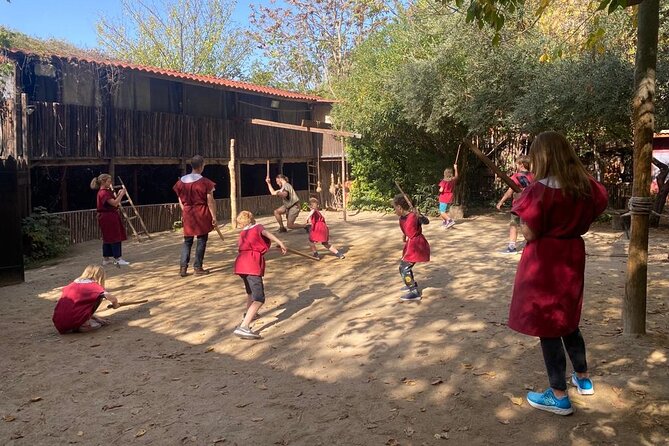
Roman gladiator training in Rome sounds like a movie scene, but this is more hands-on. You start with costume and a real, guided session at the Gladiator School near the Colosseum area, then you move into practical sword fighting drills and arena style bouts.
I especially love the mix of museum time plus active training. You also get instruction from the Historic Group of Rome, and your guide can bring the details to life, including names like Mirkos, Ivan, Flama, and Patricio from past sessions. One thing to consider: the included drink is listed, but you should not assume it will fix your hydration, since one group reported no drink on arrival.
Key things to know before you go
- Small group size (up to 15) means more personal attention during the drills
- Costume and weapons hire are part of the experience, so you do not show up in “just a T-shirt”
- Museum admission is included, with weapons and artifacts you can see up close
- Sword and shield basics, plus warm-ups and practice rounds before the arena
- Optional tournament with a prize for the victor (you can opt in)
- Friends and family can watch from a viewing platform while you train
Gladiator training on the Appian Way, not inside the Colosseum

The Roman Gladiator School experience is set near the Colosseum, but the location feels more like you left the tourist crush behind. The meet point is Via Appia Antica, 18, 00179 Roma RM, which puts you on the historic Appian Way corridor. That matters because it changes the vibe: you get a focused, themed training session rather than squeezing gladiator fun into a sightseeing day sprint.
Another plus for planning: there are lesson times throughout the day, so you can usually fit it around Colosseum hours and your other must-dos. The session is about 2 hours total, so this is not a half-day commitment.
More gladiator experiences in Rome:
- Rome: Colosseum Tour with Access to the Gladiator Arena
★ 4.3 · 6,690 reviews - Gladiator’s Gate: Special Access Colosseum Tour with Arena Floor
★ 4.5 · 4,037 reviews - Rome: Gladiator’s Gate and Arena Special Colosseum Access
★ 4.7 · 796 reviews
What you get for your money, and why it feels fair
At about $108.16 per person for a 2-hour class, you are not just buying “a show.” You are paying for a structured, instructor-led experience with three big value parts:
1) Museum entrance included
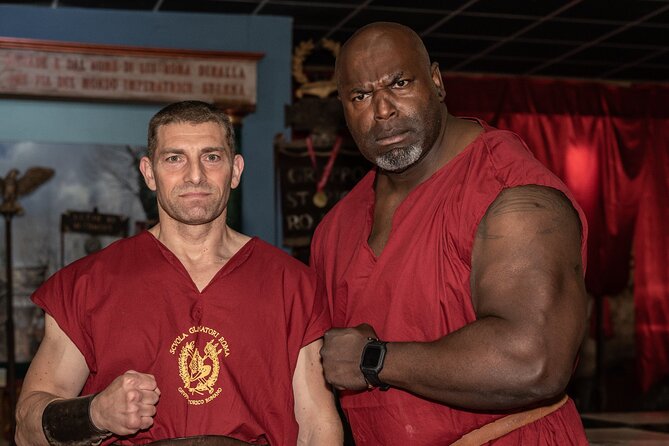
You get admission to the Gladiator School of Rome Museum. This is where you see helmets, weapons, and artifacts connected to Roman and gladiator life.
2) Costume and weapons hire for the lesson
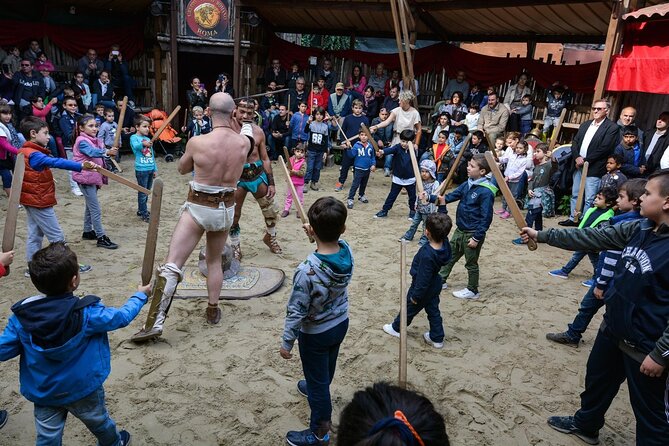
During your training you wear gladiator costume pieces, including a traditional belt and tunic, plus leather gloves and a training sword called a rudis. You are also given the right gear for the session instead of trying to rent swords and helmets on your own.
3) Guided practice, not just posing
The training portion includes basic sword fighting skills and sparring style bouts in an arena-like setup. You get a certificate at the end too, which is a small touch but a fun way to mark the experience.
Is it expensive for Rome? Sure, it is a specialty activity. But compared to “admission-only” attractions, the gear hire, museum time, and hands-on instruction help it feel like a real purchase, not a ticket into a room.
Step by step: from dressing like a gladiator to first combat drills

Your lesson takes place at the Gladiator School of Rome. The instructors are associated with the Historic Group of Rome, and that shows in how the class is paced.
1) Suit up first, then learn what you are wearing
You begin by donning costume gear. You start with the belt and tunic, then add leather gloves and the training sword, the rudis. This is more than dressing up. It sets the mental stage, so the later drills feel like part of a system, not random fighting with props.
Same city, a completely different kind of day:
- Vatican Museums & Sistine Chapel Tour with Optional Basilica
★ 4.3 · 67,413 reviews - Vatican Museums, Sistine Chapel & St Peter’s Basilica Guided Tour
★ 4.5 · 39,149 reviews - Rome: Colosseum, Palatine Hill and Roman Forum Guided Tour
★ 4.8 · 32,814 reviews - Rome: Guided Tour of Colosseum, Roman Forum & Palatine Hill
★ 4.7 · 27,897 reviews
2) Learn the basic moves with a sword fighting mindset
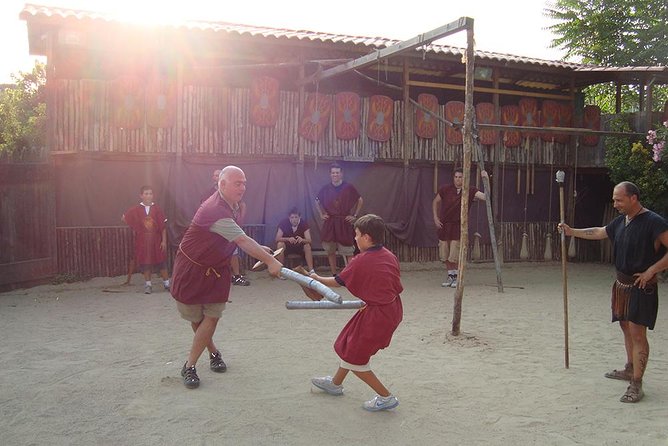
Then you learn basic skills of gladiator sword fighting. This usually includes offense and defense basics, and you do practice rounds before the more intense rounds. In real terms, you are learning things like stance, distance, and how to move your sword safely while following instructor cues.
Many sessions also include warm-ups and agility-style practice. You should expect to move your body. Even if you are not athletic, you can usually keep up with the pacing, because the class is set up for mixed ages and skill levels.
3) Lions in the imagination, battles in the action
The training is described as reenactment-style, so the instruction uses storytelling to help you “channel” what a Roman fighter might do. You may get moments where the instructor calls out mock scenarios, like fighting off lions, then you reset and practice against sword-wielding opponents.
This is one of those experiences where the comedy helps. Guides in past sessions like Mirkos and Flama are known for humor and energy, which helps if you feel awkward swinging a sword at first.
The arena portion: matches, optional tournament, and your certificate
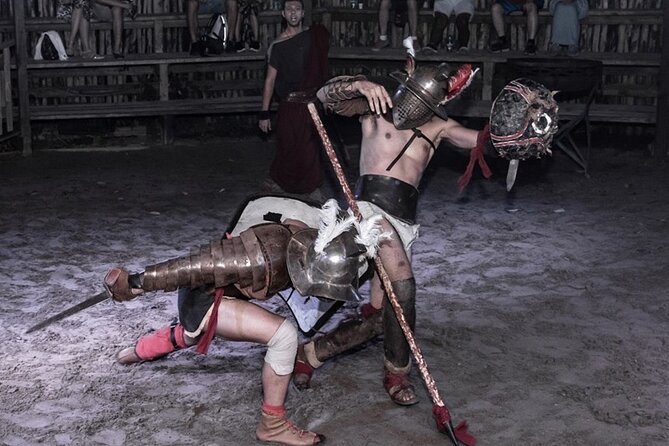
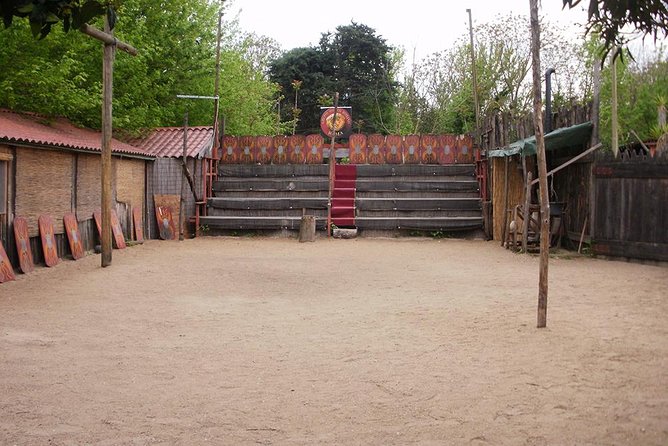
The best part for most people is the moment you step into the arena and do your actual matches. The format is built around a safe, guided environment where you practice what you learned.
You can also choose an optional tournament. The setup includes a prize for the victor, which turns the session from “training” into “friendly competition.” If you like the idea of winning something, ask for the tournament when you arrive, or pick a lesson time that gives you space for it.
At the end, everyone receives a certificate of accomplishment. It is not life-changing, but it is a nice keepsake, especially if you are traveling with kids.
Watching is part of the fun
Friends and family are allowed on a viewing platform. That matters if you want your group to participate together but you do not want the non-participants to feel like they are just waiting outside. It turns the experience into something you can share.
The museum stop: helmets and weapons you can actually see

The experience includes admission to the Gladiator School of Rome Museum. This part is not just a quick glance. It is designed to give you context before you start training.
You can see gladiator weapons and other artifacts, and there are dioramas and display elements that help explain how soldiers and gladiators lived and fought. In past sessions, guides like Patricio have done engaging museum walkthroughs with plenty of questions, which helps kids connect the training to real objects.
If you like history, this is a key reason the experience earns such strong ratings. You get the background first, then you get the physical practice second. Without the museum piece, the training could feel like “swinging swords for fun.” With it, you understand what you are doing and why certain moves matter.
Small-group energy, and why it matters for kids and adults
The maximum group size is 15 travelers. That is a big deal for a sword training activity. It means instructors can correct posture, spacing, and technique without you standing in line for too long.
You will also likely get more attention than you would with a giant crowd tour. Even in mixed groups, an instructor can usually spot who needs a slower pace or an extra demonstration.
This is especially good for families. Several sessions have been described as a top highlight for kids, including children as young as 7. The energy is usually high, and guides tend to keep it playful, like they are hosting an interactive class rather than running a drill.
Timing, meeting point, and getting there from central Rome
The meet point is Via Appia Antica, 18, 00179 Roma RM. The location is near public transportation. It is also a bit outside central sights, so plan for transit.
A practical option I like for visitors who want less stress is to use a cab, especially if you are arriving right after Colosseum time. One review notes the taxi ride can be pricey, and another guide tip says buses can work if you are comfortable using local routes. The 118 bus on Via Appia is mentioned as a workable route in past sessions.
You may also walk from the Colosseum area. One visitor estimated it as about a 45-minute walk if you are up for it. For a 2-hour tour, that is doable, but you have to keep your energy for the training, not for getting lost.
A small navigation warning
Some people found it tricky to locate at first, since it can be at the end of a long driveway, which is not obvious from some maps. Give yourself extra time to get there, and use your map app’s street view if you can.
Practical tips that make a difference on training day
This is an active class, so the small details matter.
Wear proper shoes and clothes that move
Bring comfortable clothes and wear shoes with grip. You will be doing warm-ups and drills, plus the arena segment.
Bring bug spray
Mosquitoes are mentioned directly in multiple experiences. If you book in warmer months, do not assume Rome is mosquito-free. A simple repellent plan can save you from an itchy surprise.
Consider food and water
The experience includes a drink, but one group reported no drink at all during their session. Since your comfort matters more than the paperwork, I suggest you bring water anyway.
Also, there are limited food options nearby in the area. If you want a smoother day, eat before you go. If you are relying on snacks only, you might find timing is tight before training starts.
If you can, pair it with a Colosseum day
One neat strategy: do this after visiting the Colosseum so you have the context fresh in your mind. If you visit the day before, it can also work well as a “follow-up chapter” to what you saw.
Who should book Roman Gladiator School, and who might not?
This experience is best for people who want something physical, guided, and different from the usual Rome checklist.
It fits you if:
- you are traveling with kids who like hands-on activities
- you want a mix of museum objects plus real training
- you enjoy humor and storytelling in a history setting
- you are okay with standing, moving, and following safety instructions
It might be less satisfying if:
- you want a mostly passive viewing experience
- you get frustrated when you must participate actively
- you hate insect bites and forgot bug spray
- you are expecting a long museum-only visit, since the session is built around training within about 2 hours
One more point: there are accounts of kids crying when they got hurt in partner play during younger-group sessions. That does not mean the experience is unsafe, but it does mean age and group composition can affect the emotional tone. If your child is sensitive to physical play, consider choosing a lesson time with the broader age mix you prefer, and talk to the instructor on site about how they handle first timers.
Should you book? My quick decision guide
Book it if you want a Rome activity that is not just looking, but doing. The combination of museum admission, full gear hire, and a guided sword-and-shield lesson gives you something tangible by the end of the 2 hours.
Skip or rethink it if you are mainly seeking a quiet history visit, or if you are so tight on budget that $108.16 per person feels hard to justify for a short, activity-focused outing.
If you do book, arrive on time, wear good shoes, bring mosquito repellent, and plan to eat before you train. You will get the most out of it when you show up ready to move and play.
FAQ
How long is the gladiator class?
The experience lasts about 2 hours.
What is the minimum age to participate?
The minimum age is 6 years old.
Is the class offered in English?
Yes, it is offered in English.
How big are the groups?
The experience has a maximum of 15 travelers.
Does the ticket include museum entry and training gear?
Yes. It includes entrance to the Gladiator School of Rome Museum, and gladiator clothing and weapons hire for the duration of your lesson.
Is there an optional tournament?
Yes, there is an optional tournament option, and it includes a prize for the victor.
Can friends and family watch the class?
Yes. Friends and family can watch from the viewing platform.
Can I cancel for a full refund?
Yes. You can cancel up to 24 hours in advance of the experience for a full refund. Cancellation less than 24 hours before the start time is not refunded.
Recently reviewed around Rome
- Rome: Castelli Romani Hop-on and Hop-off Tour★ 4.9 · 32 reviews
- Rome: Food Tour near Vatican City with Wine★ 4.8 · 100 reviews
- Rome: Scavenger Hunt Self-Guided Tour★ 4.6 · 15 reviews
- Hidden Rome: Small Group E-Bike Tour with Street Food Stops★ 4.9 · 144 reviews
- Rome: Highlights Tour in Golf Cart★ 4.9 · 28 reviews
- Rome: Hop-on Hop-off Bus Tour and Colosseum Experience★ 3.4 · 163 reviews
- Rome: Guided Haunted Rome Ghost Tour with Dowsing Rods★ 4.8 · 63 reviews
- Rome: Highlights Photo Shoot for Memorable Moments★ 5.0 · 32 reviews
Gladiator Experiences, compared.
Colosseum Tour with Access to the Gladiator Arena
Read our review →
Gladiator’s Gate: Special Access Colosseum Tour with Arena Floor
Read our review →
Gladiator’s Gate and Arena Special Colosseum Access
Read our review →
Colosseum Gladiator’s Arena and Roman Forum Tour
Read our review →
Colosseum: Gladiator’s Gate & Arena Floor Experience
Read our review →Browse the lists this tour appears in