
Reviewed · JEWISH GHETTO TOURS
Rome: Traditional Cooking Class in the Jewish Ghetto
Rome’s Jewish Ghetto turns a cooking class into a neighborhood experience. You roll up your sleeves in the quarter, cook with a chef, and hear the food stories that connect local traditions to everyday life. The class centers on fresh pasta and a traditional Roman menu.
I love that the night is genuinely hands-on, from making dough to working with seasonal ingredients you can actually picture cooking at home. I also love the way the menu changes by season, so you might tackle artichokes in winter or zucchini blossoms in summer and learn how they become Roman fritto.
One thing to think about first: this is not a kosher experience, and the pasta is not gluten-free (though gluten-free packaged pasta may be available). If those points matter to you, it is worth planning ahead.
Key points before you go
- Up to 10 people means you get attention, not just a crowd vibe.
- Seasonal Roman menu changes the ingredients and techniques each time of year.
- Kitchen access with the chef keeps it real, not staged for photos.
- Wine and tastings are part of the flow, especially while you cook and sit down to eat.
- Recipes plus practical follow-up tips help you repeat the dishes later.
- Dietary flexibility has limits: vegetarian and vegan options can be accommodated, but it is not kosher and not fully gluten-free.
Rome’s Jewish Ghetto Kitchen Night: why this class feels different
If you have had it with lining up for yet another monument, this is the kind of Rome night that actually changes your skills. You are not just watching someone cook. You are making pasta dough, tasting what you build, and ending with a full meal inside a real restaurant setting.
The setting matters. Meeting in the Jewish Quarter puts you in the same streets where the local food identity has developed over time. During the class, you also get history and legend tied to the district and its unique food style. It gives the cooking something to hang onto, not just a checklist of steps.
And then there is the team. You meet a local foodie host in English and a chef who guides the cooking process. In several sessions, hosts and translators like Asia or Andy are mentioned as the helpful link between English speakers and the chef’s Italian. It is a small detail, but it is also why the class stays fun instead of confusing.
More Jewish Ghetto tours in Rome:
- Rome: Trastevere or Jewish Quarter Street Food Tour
★ 4.8 · 3,839 reviews - Jewish Ghetto and Trastevere Tour Rome
★ 4.5 · 1,729 reviews - Jewish Ghetto and Synagogues with Jewish Roman Guide 3 Hours
★ 5.0 · 907 reviews
Price and value: $94 for 3 hours, pasta skills, and a real meal
At $94 per person for about 3 hours, you are paying for more than ingredients. You are paying for three things that are hard to get on your own in Rome:
- Instruction with a real kitchen setup, not a demo in the corner.
- A 3-course meal you helped prepare, including wine and bottled water.
- Take-home recipes and tips so you can try again later without guessing.
The value is strongest if you like learning through doing. If you want a quick taste of Rome food culture, a long workshop might feel like too much. But if you want one evening where you leave able to make fresh pasta dough again, this tends to land well.
Also, the small group size helps. Limited to 10 participants, the energy stays relaxed and interactive. That is where the price starts to make sense.
Where you meet and how you start in the Jewish Quarter
You meet your guide at Restaurant Taverna del Ghetto, outside the door. That is important because the area is walkable and a little maze-like. If you arrive a few minutes early, you will have time to check you are at the right entrance.
Once you meet, expect an easy-going start. The vibe is meant to slow you down from tourist mode. You get a break from the usual Rome rhythm by spending time with local people and learning how a typical Roman dinner menu comes together from scratch.
During this early part, your host typically gives context about the Jewish district and its food culture. The point is not to turn it into a lecture. It is to make the ingredients feel personal.
The 3-course flow: pasta first, seasonal main second, dessert last
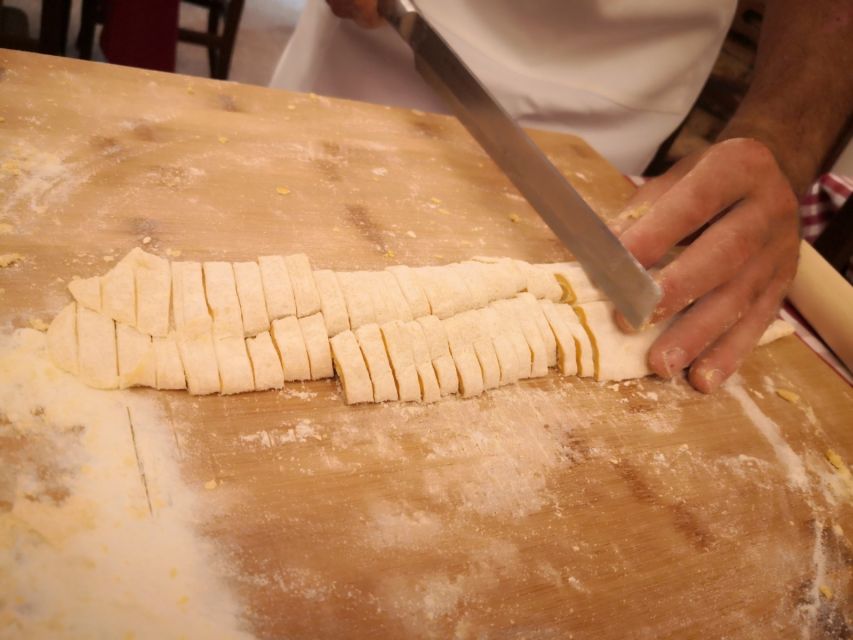
The class is designed around a traditional Roman menu with three parts. Even though the exact dishes shift with the season, the structure stays similar: you make pasta, you cook a seasonal main, and you finish with a traditional dessert.
More cooking classes in Rome:
- 3 in 1 Cooking Class near Navona: Fettuccine, Ravioli & Tiramisu
★ 5.0 · 7,376 reviews - Rome: Pasta Making Class with Wine, Limoncello, and Dessert
★ 4.9 · 3,177 reviews - Rome: 3-in-1 Fettuccine, Ravioli, and Tiramisu Cooking Class
★ 4.9 · 2,704 reviews - Rome: Fettuccine Pasta Cooking Class in Rome’s City Center
★ 4.8 · 2,414 reviews
Fresh pasta from scratch
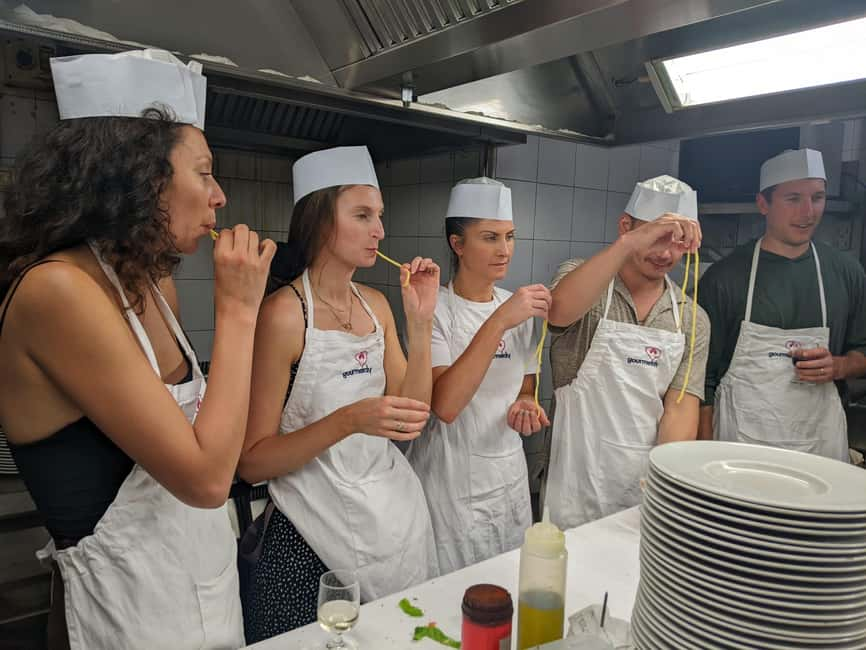
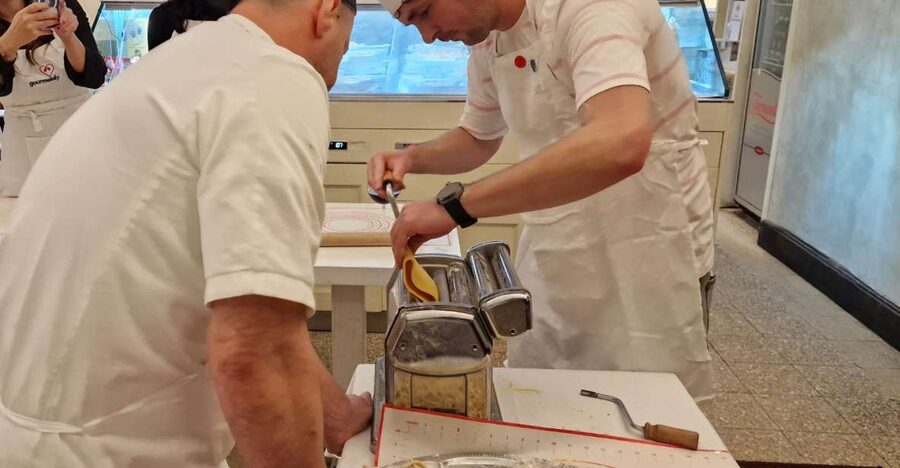
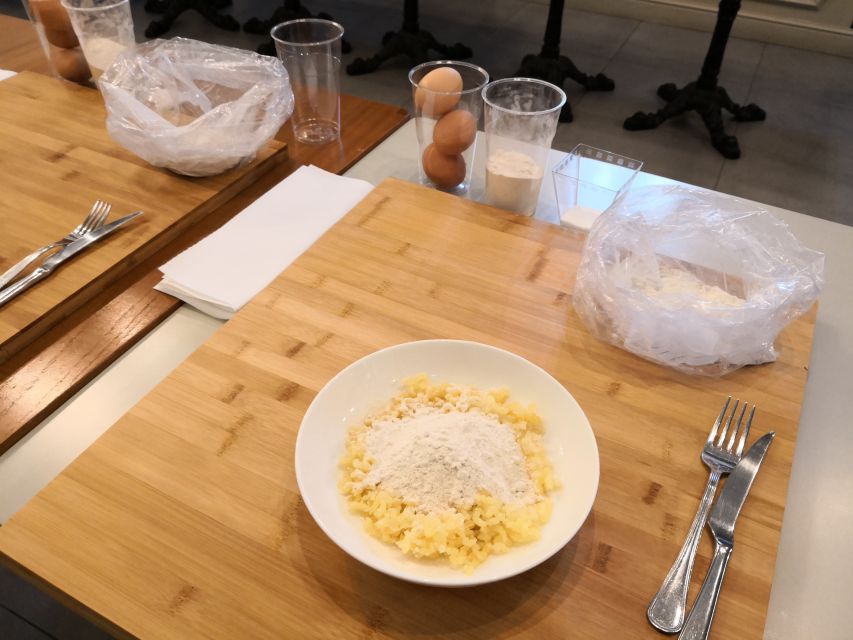
The centerpiece is fresh pasta from scratch. You start by making the dough and learning the right texture and handling. You might use an old-style crank machine as part of the process, depending on how the kitchen runs that evening. The hands-on element is the main attraction here, and most people leave feeling confident enough to attempt the dough again back home.
You also get guidance on the small choices that make a difference: flour choice, working the dough, and how to keep things moving without overthinking it. Since the class is English-led, you should not get stuck on instructions you cannot follow.
Seasonal main course with vegetables
After pasta, the class turns to seasonal cooking. This is where the experience gets specific to the time of year.
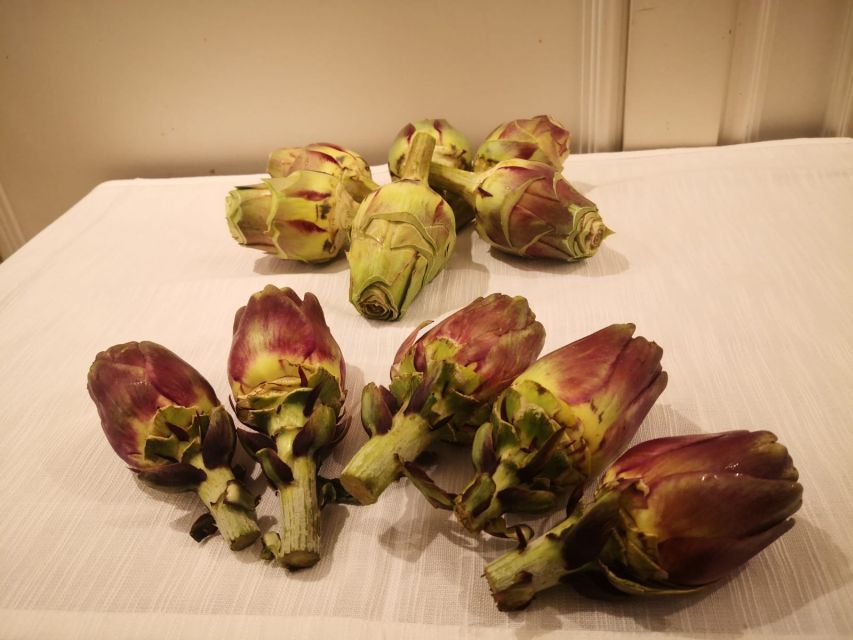
- In winter, you may peel artichokes for Jewish-style preparation.
- In summer, you may work with zucchini flowers to make the original fritto romano.
Either way, you are not just eating vegetables. You are learning a Roman technique for turning seasonal produce into a dish that feels like part of local daily life.
If you are the type who loves the practical parts, this is the section where you can feel most involved. If you prefer to watch rather than touch everything, you can do that too, because spectator viewing is possible during parts of the cooking.
Dessert finale: torta di ricotta e visciola
You end with a dessert that is easy to remember because it tastes like comfort. The class finishes with torta di ricotta e visciola, described as a famous ricotta cheesecake made with simple ingredients.
Dessert is not just a sweet ending. It is also how the class reinforces the local idea that good food does not require fancy gear, just solid technique and the right ingredients.
Making pasta in a working restaurant kitchen (not a classroom)
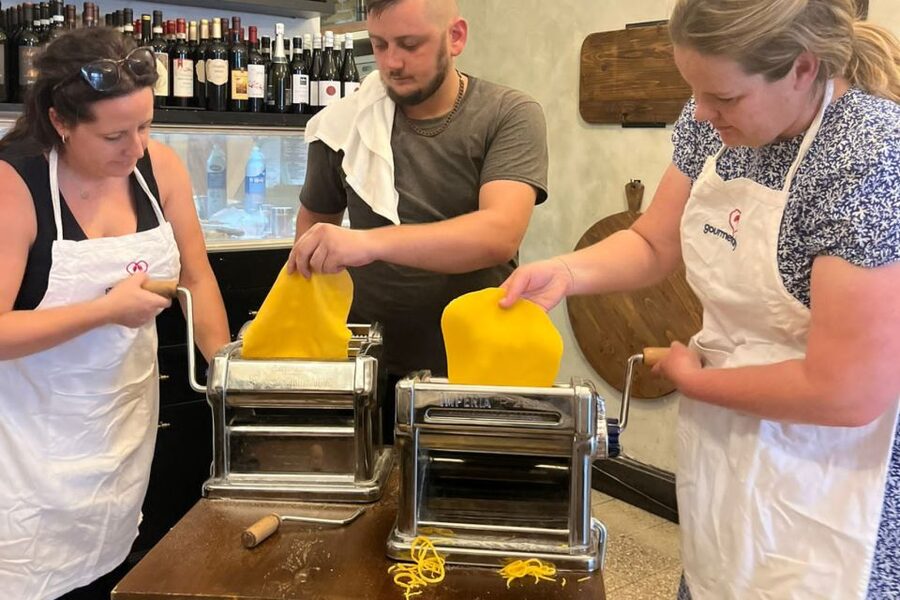
The biggest reason to book this class is the kitchen access. This is not an off-site studio where everything feels temporary. You head into the restaurant kitchen, meet the chef, and cook there.
For many people, that changes the whole feel. A professional kitchen has rhythm. It has tools that actually work. It also has the kind of calm, focused energy that makes learning less stressful.
You will get hands-on work, but it is not forced intensity. If you want to be a participant, you can be. If you just want to learn by watching sometimes, you can relax. Either way, you will have something to sip while you watch and work, since wine and beverages are part of the experience.
One extra detail worth noting: some classes include time where you can go into the kitchen area after the main service. It depends on timing, but the setup is meant to give you more than a quick peek.
Pasta lessons that you can actually repeat at home
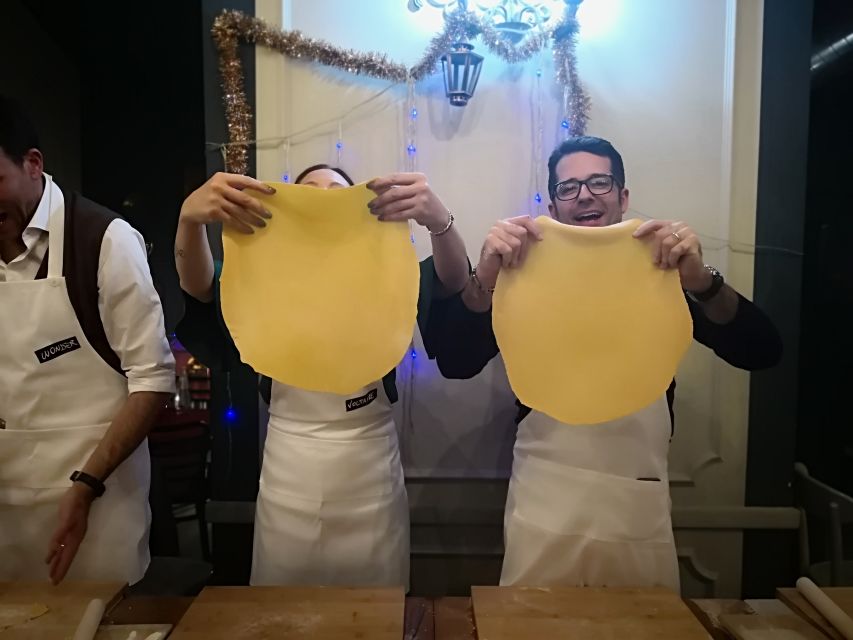
The class is designed around the idea that you should be able to reproduce the dishes later. You leave with recipes and you also receive a list of tips and recommendations for the following days.
That take-home part matters more than people expect. Most cooking classes give you a memory, not a method. Here, the recipes and tips are meant to turn the memory into a plan.
Expect to learn things like:
- how the dough should feel as you work it
- how to handle fresh pasta before it goes into the next step
- how classic Roman flavors are used, and sometimes specific pairings such as cacio e pepe come up during instruction
If you are worried you will forget everything, do not. The combination of tasting during the class and having written recipes at the end makes it easier to recreate.
Seasonal technique shifts: what changes between winter and summer
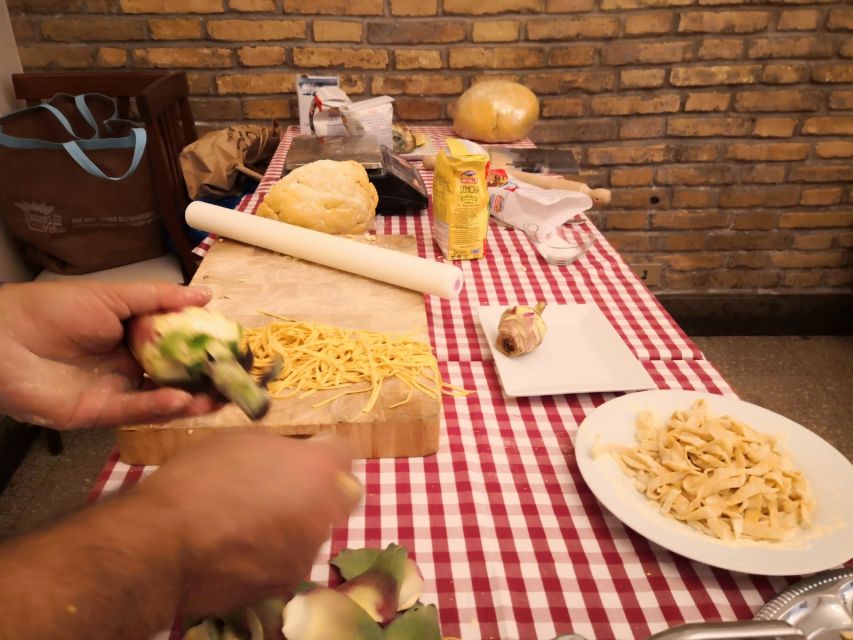
Seasonal food is not treated as a slogan here. It directly changes what you cook.
Winter: artichokes and classic Roman prep
In winter sessions, peeling artichokes is singled out as a highlight. If you have never worked with artichokes, this is a hands-on way to learn why the prep matters. You see how seasonal vegetables become part of Jewish-style Roman cooking.
Summer: zucchini blossoms and fritto romano
In summer sessions, the class may focus on zucchini flowers and making fritto romano. Zucchini flowers are one of those ingredients that feel special without being complicated. You learn how to prep them so they stay delicate, then you get to eat what you made.
The practical takeaway
Even if you forget the exact dish name later, you will remember the technique and the ingredient logic: seasonal produce drives Roman cooking choices. That is the kind of lesson that keeps paying off after your trip.
Wine, beverages, and the meal you earn
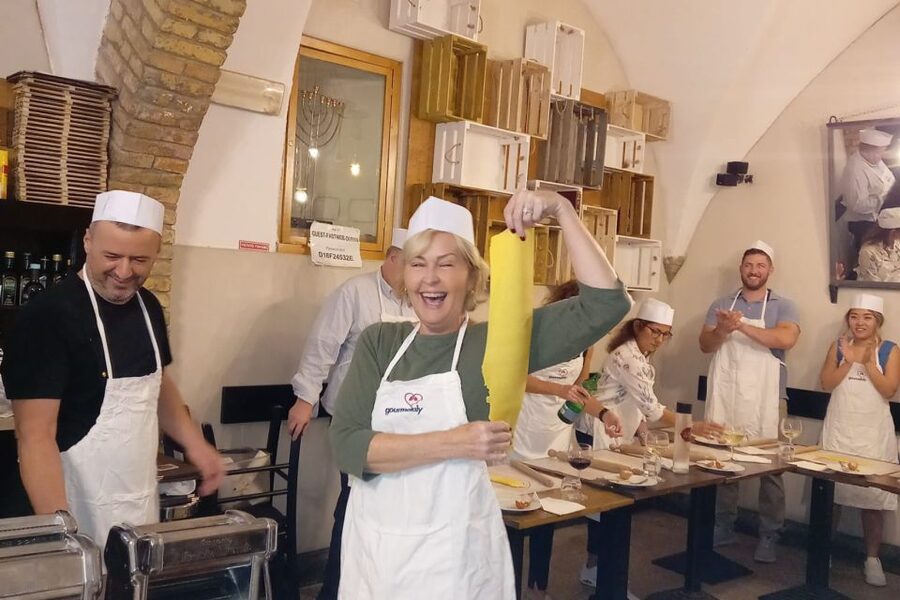
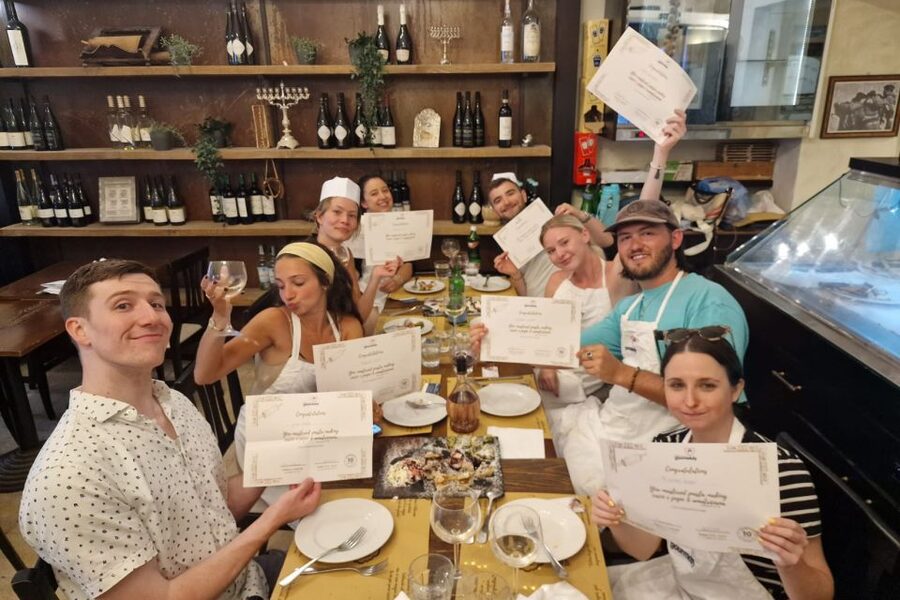
Wine and bottled water are included. You typically taste along the way, and you sit down for the full 3-course meal at the end of your cooking efforts.
This is not a rushed cafeteria setup. It is timed to match the cooking flow. That matters because when you eat right after making something, your brain actually learns the cause and effect. You taste what good dough or a correctly prepped vegetable feels like.
If you want to be social, you will have chances to talk during the cooking and while you eat. The small group size makes conversation easy, and the class is designed to be fun, not stiff.
How hands-on is it, really?
The short answer: it is hands-on by design, with a built-in option to watch.
Most participants get real involvement in the pasta dough and seasonal steps. If you really want maximum participation, you should know there can be moments where frying or quicker steps happen faster, with the chef and staff helping you along. In other words, you might not do every single micro-step without assistance.
That said, the overall tone is supportive. The chef checks in, gives feedback, and keeps you moving. If you have cooking confidence, you will still learn something. If you are a beginner, you will not feel lost.
Dietary needs and what to know before you go
Here are the key facts you should plan around.
Not kosher
The restaurant is not kosher, and the cooking class is not kosher. If kosher laws are part of your travel needs, this is a clear deciding point.
Gluten
The pasta made in the class is not gluten-free. However, the information also states that you can join even if you can touch flour with no problem, and you can eat gluten-free pasta that may be packaged. That means you should expect an option, not a fully gluten-free kitchen.
Vegan and vegetarian
Vegetarians are welcome, and vegan people are welcome. The class is described as suitable for everyone, but the included meal still contains dairy and typical Italian baking ingredients in many desserts. If you are strictly vegan, ask ahead about what can be adjusted in the pasta and dessert components.
Allergens to watch
Allergens that can be present in tastings include milk, eggs, soya, mustard, nuts, and gluten. If you have serious allergies, you should treat this as a heads-up and plan accordingly.
Family-friendly, English-guided, and not for everyone
This experience can work for families. Several notes highlight it as a great fit for kids, mainly because it is active and social, and you get to eat what you make.
You get an English live tour guide, and the guide is there to explain the cooking and the local context. In at least some sessions, you also have a translator support role so the chef can explain clearly even if they are speaking Italian.
Two more practical points:
- This experience is not suitable for wheelchair users.
- Pets are not allowed.
If mobility is an issue, you should plan on stairs or standing time in a restaurant setup.
Should you book this Jewish Ghetto cooking class in Rome?
Book it if you want one unforgettable Rome night that teaches you something you can repeat. The best fit is:
- you like hands-on learning, not just eating
- you enjoy food history stories tied to local neighborhoods
- you want a small group evening meal, with wine and recipes included
Skip it or choose another option if:
- you need a kosher experience
- gluten-free is a must and you need more certainty than a packaged gluten-free pasta option
- you expect a long, multi-technique cooking curriculum beyond pasta plus one seasonal main and dessert
If your goal is to leave Rome with fresh pasta skills, a full meal in your belly, and a handful of practical tips you can use later, this is one of the more satisfying ways to spend a few hours in the city.
FAQ
How long is the cooking class?
It runs for 3 hours.
What do I get to eat during the class?
You’ll have a 3-course meal including fresh homemade pasta, a seasonal main course, and a traditional dessert. Wine and bottled water are included.
Do I get recipes to take home?
Yes. You receive recipes at the end of the class, plus a list of tips and recommendations for the following days.
Where do I meet the guide?
You meet your foodie guide at Restaurant Taverna del Ghetto, outside the door.
Is this experience kosher?
No. The restaurant is not kosher, and the cooking class is not kosher.
Is the pasta gluten-free?
No. The pasta made in the class is not gluten-free. The information also notes that gluten-free pasta may be available in packaged form if you can handle flour.
Can vegetarians or vegans join?
Yes. The experience states that vegetarians are welcome and vegan people can join as well.
Are there common allergens I should know about?
Yes. Allergens that can be present in the tastings include milk, eggs, soya, mustard, nuts, and gluten.
Is it wheelchair accessible?
No. It is not suitable for wheelchair users.
More Workshops in Rome
- Rome: Pasta & Tiramisu Class with Fine Wine by the Vatican
★ 4.9 · 4,852 reviews - Rome: Traditional Pasta with Cocktails Cooking Class
★ 5.0 · 2,374 reviews - Become a Masterchef in Rome: Pasta, Ravioli and Tiramisù Class
★ 5.0 · 2,156 reviews - Rome: Fettuccine and Tiramisu Cooking Class with Wine
★ 4.8 · 2,013 reviews
Recently reviewed around Rome
- Ancient Etruscan Civilization Tour from Rome★ 5.0 · 16 reviews
- Colosseum with Arena Floor Express Guided Tour★ 3.5 · 22 reviews
- Private Tour – Ancient Ostia★ 5.0 · 42 reviews
- PRIVATE Appian Way and Lake Albano Ebike Tour with Italian Lunch★ 5.0 · 12 reviews
- Ancient Appian Way and Roman Countryside E-Bike Tour★ 4.5 · 13 reviews
- Catacombs and Hidden Underground Rome: Small Group Max 6 People★ 5.0 · 293 reviews
- Ancient Appian Way PRIVATE Bike Tour★ 5.0 · 89 reviews
- Amalfi Coast Day Trip from Rome by High-Speed Train★ 4.5 · 162 reviews
Jewish Ghetto Tours, compared.
Trastevere or Jewish Quarter Street Food Tour
Read our review →
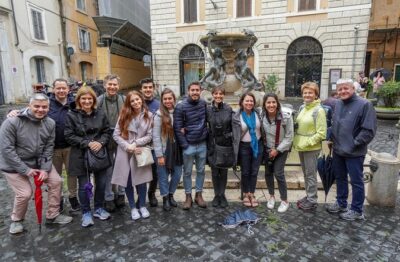
Jewish Ghetto and Synagogues with Jewish Roman Guide 3 Hours
Read our review →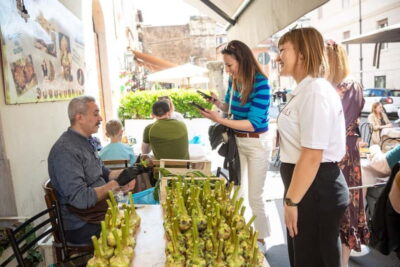
Eat Like a Roman Ghetto & Campo de’ Fiori Food Tour
Read our review →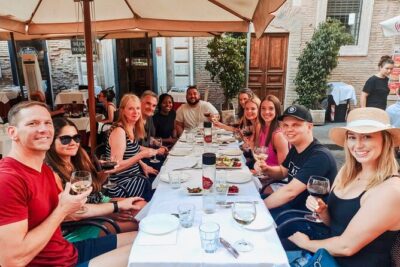
Jewish Ghetto & Piazza Navona: Food, Wine & Sightseeing Rome Tour
Read our review →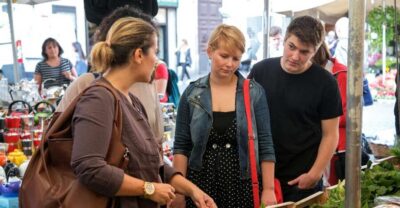
Food & Wine Tour of Campo de Fiori, Ghetto, Trastevere
Read our review →
Jewish Ghetto & Campo de Fiori by Night Food Wine Tour
Read our review →Browse the lists this tour appears in