
Reviewed · AUDIO TOURS
Rome: Castel Sant’Angelo Skip-the-Line Ticket & Audio Guide
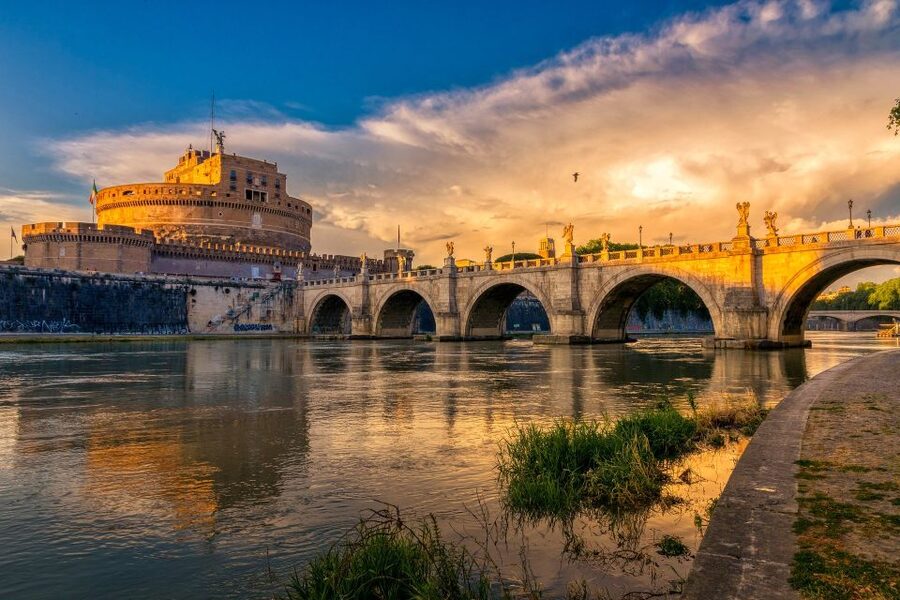
Castel Sant’Angelo is interesting because it’s not just a castle. It’s a Roman mausoleum turned fortress, with a famous story tied to Archangel Michael and the plague of 590.
I especially like two things about this setup. First, the skip-the-line ticket can save real time when the entrance is crowded. Second, the optional smartphone audio guide lets you move at your own pace, which matters a lot in a place like this where you’ll want to stop for stairs, signs, and photos.
One thing to keep in mind: Castel Sant’Angelo is stair-heavy and not suitable for wheelchair users or people with mobility impairments. Also, punctuality is essential, entry is only allowed at your scheduled time.
Key highlights I’d focus on
- Skip-the-line entry so you can go in without waiting in the snaking queue
- Hadrian’s tomb plus the fortress layers that turn Roman power into later control
- Papal corridors and corridors you can feel walking through, not just reading about
- Archangel Michael legend tied to the plague of 590, which explains why the site’s name stuck
- Terrace views with sweeping panoramas over the Tiber and the city
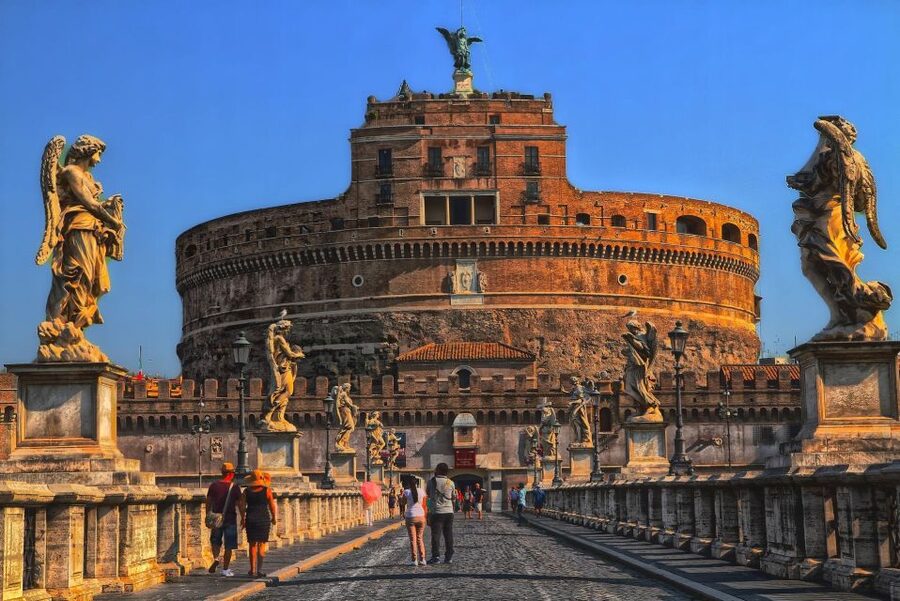
- Photo moments for Sant’Angelo Bridge, also called the Bridge of Angels
Castel Sant’Angelo in plain terms, from Hadrian’s tomb to the Papal world
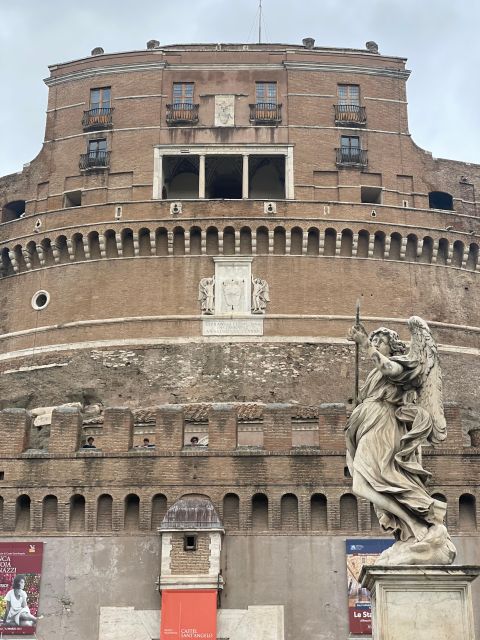
Think of Castel Sant’Angelo as three different trips in one: Roman engineering, medieval fortress life, and a later chapter that belongs to the Papacy. You’ll start at the old Mausoleum of Hadrian, often called Hadrian’s Mole. From there, the building’s purpose shifts over centuries, but the scale and the walls keep the same “big deal” vibe.
The Roman core is the star. You’re seeing the tomb area linked to Hadrian, the emperor whose story is literally built into the site. Then you move into areas known for the papal corridors, the passageways that connect the castle’s role to the world of the Vatican. Even if you’re not a history buff, the site makes it easy to feel how power moved through space.
And yes, there’s a legend that gives the whole place a layer beyond stone. The story of Archangel Michael appears at the top of the mausoleum, sheathing his sword, marking the end of the plague of 590. That legend is part of why the castle is so famous, and it’s tied directly to the name you’ll hear again and again.
A few more Rome tours worth comparing
- Rome: Colosseum & Forum with Audio Guide App -Optional Arena
★ 4.2 · 24,770 reviews - Rome: St. Peter’s Basilica & Dome Entry Ticket & Audio Tour
★ 4.2 · 7,537 reviews - Vatican & Sistine Chapel Ticket with Optional Audio Guide
★ 4.1 · 5,405 reviews
Timed skip-the-line entry, and why it can be worth it in Rome
This ticket is set up to get you through faster. Instead of joining the general lines, you use a reserved skip-the-line entry ticket and go straight in at your scheduled time. In practice, that’s most valuable when lines are long, like hot afternoons or peak seasons.
Here’s the key detail for your planning: your access is time-specific, entry is only allowed at the scheduled time. Late arrivals may be denied entry without a refund. So even if you’re tempted to “just show up,” this is the type of attraction where being a little early can be smart, and being late is the risk.
You also have a hard stop to remember. The last entry is 6:30 PM. If you’re touring later in the day, build in time for climbing to the terrace and for wandering at a relaxed pace.
One more practical note: you don’t need a physical meeting point. Your tickets are sent by email (and also on WhatsApp in some cases) in the late afternoon of the day before, and you’ll receive them again in the 24 hours before your visit. That’s great for last-minute planning, as long as your phone actually has service and your email isn’t doing weird spam things.
The smartphone audio guide, what you get and the headphone reality
The audio guide is optional. If you select it, it’s delivered through a smartphone app. You’ll have to download the app before you arrive, and you’ll need free storage of about 100 to 150 MB for the download.
Languages listed include English, Italian, French, Spanish, German, and Chinese. You can listen as you walk, and you can also use the text option (helpful if the wind is loud or you want to read while standing still).
Important catch: headphones are not included. The listing expects you to bring your own. If you forget, you’ll still be able to follow via on-screen text, but your experience will be less smooth. Pack earbuds in your day bag. It’s the easiest fix.
Also, compatibility matters. The app is compatible with Android (version 5.0 and up) and iOS, but it is not compatible with Windows phones, and older iPhone models like iPhone 5/5C, plus older iPods and some older iPads. If you’re traveling with an older device, double-check before you rely on the audio.
Finally, don’t count on the audio to be “one more thing to rush through.” The best use is to treat it like guided pacing. Even people who skip audio still find the signage and self-exploration strong, but audio helps you understand what you’re looking at without stopping every five seconds to Google.
Walking in, you’ll feel the fortress layout fast

When you enter, Castel Sant’Angelo doesn’t waste time. You quickly see why it’s been used for so many roles: thick structure, layers of space, and routes that guide you upward and outward.
A helpful way to think about the flow is this. You’re moving from “what this building is” to “how it served different owners,” and then to “the view it was built to control.” The Roman tomb is the anchor. The later corridors connect the castle’s strategic purpose to the Papal era. Then the upper levels and terrace shift your focus to Rome itself.
As you walk, pay attention to two types of content. First, the areas connected to Hadrian’s tomb. Second, the corridors and passages tied to the Papacy. Even if you’re not reading every sign, those sections help you understand the castle as a living tool, not a static museum piece.
Same city, a completely different kind of day:
- Vatican Museums & Sistine Chapel Tour with Optional Basilica
★ 4.3 · 67,413 reviews - Vatican Museums, Sistine Chapel & St Peter’s Basilica Guided Tour
★ 4.5 · 39,149 reviews - Rome: Colosseum, Palatine Hill and Roman Forum Guided Tour
★ 4.8 · 32,814 reviews - Rome: Guided Tour of Colosseum, Roman Forum & Palatine Hill
★ 4.7 · 27,897 reviews
Hadrian’s tomb: the Roman centerpiece you shouldn’t skim
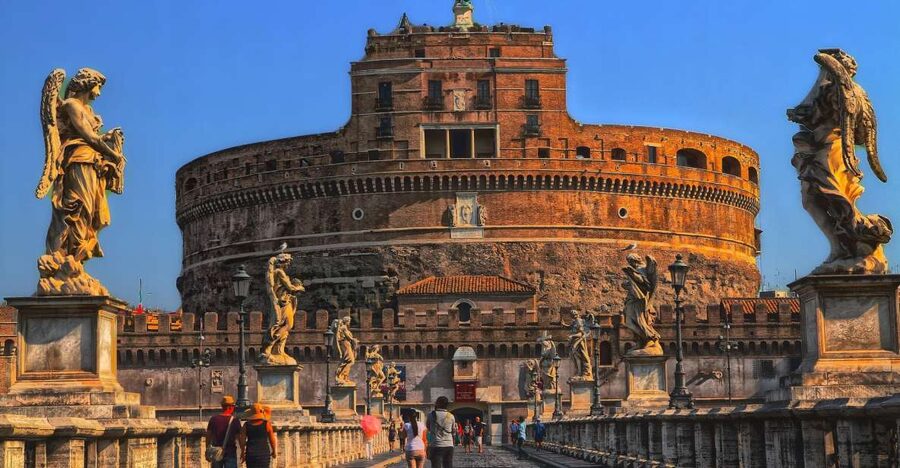
Hadrian’s tomb area is the moment where Castel Sant’Angelo becomes more than a viewpoint. The site is commonly known as Castel Sant’Angelo, but the “Mausoleum of Hadrian” identity is what makes it special.
You’ll be able to see and interpret the Roman logic behind the building: monumental scale, a sense of permanence, and a structure that holds meaning long after the emperor is gone. If you’ve visited Roman ruins before, the vibe is different here. It’s not open-air collapse. It’s preserved enough that you can walk through the story.
Spend time here. I know it’s tempting to rush to the terrace, because Rome views are the payoff. But if you want this visit to feel complete, give the tomb section enough attention so the later corridors and walls make sense. The audio guide, when selected, is designed to help with that pacing.
Papal corridors: the castle’s “connector” role in the centuries after Rome changed
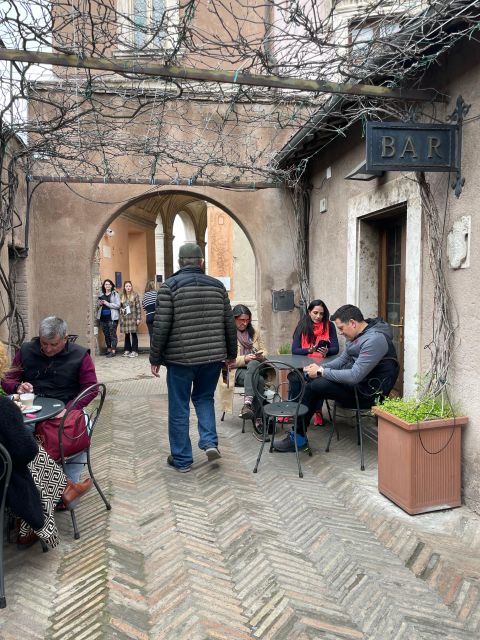
One of the biggest reasons people love Castel Sant’Angelo is the mix of identities. The Roman mausoleum is one identity. The papal corridors are another.
These corridors matter because they show how the castle functioned after Rome shifted. They connect different spaces and roles, turning a tomb fortress into a political and protective structure. You don’t just learn this as trivia. You physically move through the building, which makes the transitions feel real.
If you’re using the audio guide, this is a good zone to lean on it. Corridors and passageways are easy to walk through without processing much, but the commentary helps you notice what you’re passing and why it was built that way. If you’re skipping audio, you can still follow signs and read as you go, and that self-led approach can be satisfying too.
Archangel Michael and the plague of 590, the legend that explains the name
There’s a reason this site is so memorable even for non-history tourists. The legend of Archangel Michael is built into the identity of the castle.
The story goes that Michael appears atop the mausoleum and sheaths his sword, signaling the end of the plague of 590. When you understand that thread, the name stops being just a label. It becomes a clue to what people believed about the place, and why the top of the building gets attention.
If you’ve got the audio guide, this is the kind of moment where listening can help. It’s not just “a story.” It’s a framework for why you keep hearing references to the angel imagery as you move through the site.
The terrace and “Rome by the Tiber” photo payoff
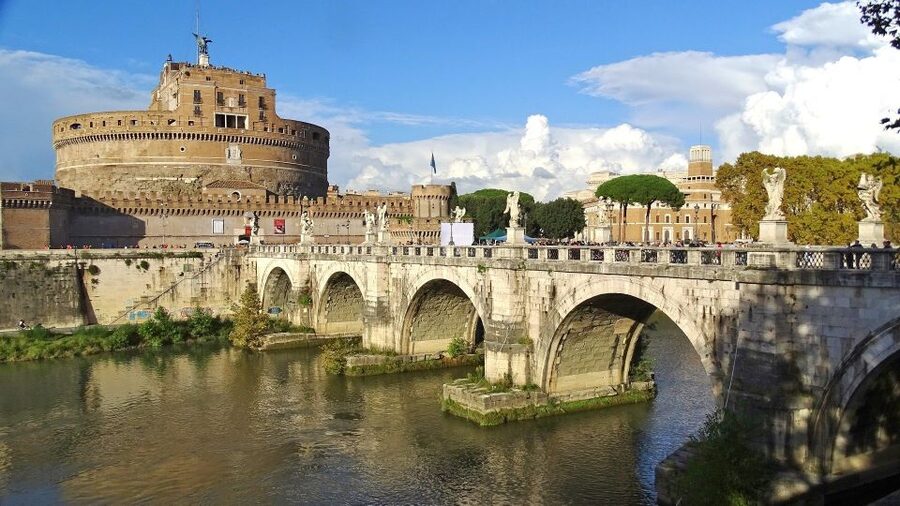
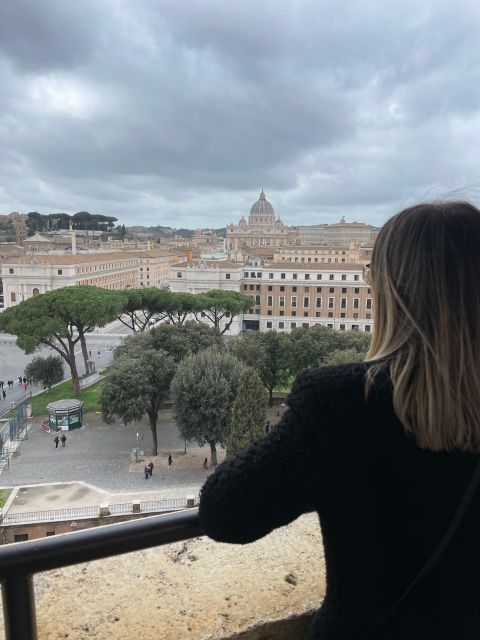
The best part for most people is the views, and they’re not subtle. Castel Sant’Angelo’s terrace gives sweeping panoramas over Rome and the River Tiber. You’ll also get standout photo angles of Ponte Sant’Angelo, often called the Bridge of Angels.
This is where you’ll want to slow down. The terrace is the payoff after the walking and the reading. Bring your camera or phone, and if you’re photographing, take a minute to step back before shooting. Rome is photogenic, but it’s easy to capture the bridge at weird angles if you’re too close.
Also, remember there’s a climb. You need to go up stairs to reach the panoramic terrace, and there’s no way around that. If stairs are an issue, you should rethink whether this visit will be comfortable.
One more detail that can improve your visit: there’s a cafe spot mid-visit with views toward the Vatican area. If your legs are getting tired, stopping for a drink here can make the whole experience feel less like a sprint and more like a proper pause.
Timing your visit for comfort, and how to actually enjoy the castle

Rome can be hot, and Castel Sant’Angelo involves walking and climbing. The practical move is to plan a time when you can handle stairs and crowds.
The ticket is valid for the day of your entry time, and last entry is 6:30 PM, so you’ll want to fit it into a reasonable afternoon or early evening block. If you go too late, you’ll rush the terrace because you’ll be thinking about closing time.
Pacing is part of the value here. With skip-the-line, you’re not spending your energy stuck at the ticket window. That freedom is what lets you actually enjoy the castle. People often love it most when they use the time to read signs at their own pace and listen to audio in chunks rather than all at once.
A small planning tip: aim to arrive with a buffer so you’re not stressed at the entrance. Since late arrival can mean denied access without refund, you want your brain calm, not calculating.
Price and value: what you pay, what you get, and why it can feel fair

The listed price is $20 per person, and the official ticket price is 16 €. On paper, you’re paying the difference for what you gain: a reserved entry slot that helps you avoid long waits, plus the option of an audio guide on your phone.
So the real question is whether skip-the-line and audio convenience are worth it for your day. If you’re visiting in peak hours, on a hot day, or during busy weeks, the skip-the-line can easily feel worth the extra cost just by getting you through faster.
If you’re visiting in a quieter month and there’s no meaningful line, the price feels a bit harder to justify. Still, even then, having a timed, reserved way in reduces stress. And the audio guide option is a strong add-on if you like to learn without hiring a live guide.
Also, no headphones are included. So factor the cost of earbuds or plan to use wireless earbuds you already own. That small “gotcha” is the only likely disappointment I’d prepare for.
Small rules that affect real life at the entrance
This is practical stuff, but it matters. Pets are not allowed. Weapons or sharp objects are not allowed. Luggage or large bags are not allowed either.
If you’re traveling light, you’re fine. If you’re the kind of person dragging a big backpack around Rome, consider leaving larger items at your accommodation before you head over. A smoother entrance means more time enjoying the building and less time dealing with restrictions.
For the same reason, bring:
- Passport or ID card
- Comfortable shoes
- Charged smartphone
And if you want the audio, plan to bring working headphones.
Who this fits best, and who should choose a different plan
This experience is not suitable for people with mobility impairments and not suitable for wheelchair users. The stairs to the terrace and the overall layout make it a poor match if you need step-free access.
It does suit a lot of other people:
- If you want a self-paced visit with time savings
- If you enjoy “walk and learn” more than sitting in a tour bus
- If you like photo stops, especially of Ponte Sant’Angelo
- If you prefer learning through an app rather than a live guide
If you’re traveling with kids, it can work well because you can pause and move at your own rhythm. If you’re a “read every sign” type, you’ll enjoy Castel Sant’Angelo even without the audio guide. If you’re more of a “hit the highlights fast” type, the audio guide helps you pick what to focus on so you don’t miss the big story beats.
Should you book the Castel Sant’Angelo skip-the-line ticket with audio?
Yes, I’d usually book it if your goal is a smooth visit and you care about spending time inside instead of standing in line. The combination of reserved skip-the-line entry and an optional smartphone audio guide is a practical way to make this iconic Rome stop feel relaxed.
Book it confidently if:
- You’re visiting during busy hours or a hot season
- You want help understanding what you’re seeing without scheduling a full guided tour
- You want the terrace and photo angles to be part of a comfortable plan
Skip the audio add-on only if:
- You’re happy reading signs and walking slowly on your own
- You know you won’t use headphones or the app on your device
Either way, plan for stairs, arrive on time, and bring a charged phone. If you do that, Castel Sant’Angelo is the kind of place that feels worth the effort, not just because of the views, but because you can follow the building’s shifting roles from emperor to fortress to angels and legends.
FAQ
Do I need to meet anyone in person?
No. There is no required meeting. Your entrance tickets are sent to you by email in the late afternoon of the day before your entry date.
How do I get the audio guide, and do I need to download anything?
If you choose the audio option, you must download the application on your smartphone before the tour begins. You’ll receive instructions to download it after booking.
Are headphones included with the audio guide?
No. Headphones are not included, so you’ll need to bring your own.
What languages are available for the audio guide?
The smartphone audio guide is available in English, Italian, French, Spanish, German, and Chinese.
What time is the last entry to Castel Sant’Angelo?
Last entry is at 6:30 PM.
Is this experience suitable for wheelchair users or mobility impairments?
No. It is not suitable for people with mobility impairments and it is not suitable for wheelchair users.
Recently reviewed around Rome
- Rome: Castelli Romani Hop-on and Hop-off Tour★ 4.9 · 32 reviews
- Rome: Food Tour near Vatican City with Wine★ 4.8 · 100 reviews
- Rome: Scavenger Hunt Self-Guided Tour★ 4.6 · 15 reviews
- Hidden Rome: Small Group E-Bike Tour with Street Food Stops★ 4.9 · 144 reviews
- Rome: Highlights Tour in Golf Cart★ 4.9 · 28 reviews
- Rome: Hop-on Hop-off Bus Tour and Colosseum Experience★ 3.4 · 163 reviews
- Rome: Guided Haunted Rome Ghost Tour with Dowsing Rods★ 4.8 · 63 reviews
- Rome: Highlights Photo Shoot for Memorable Moments★ 5.0 · 32 reviews
Audio Tours, compared.

Colosseum & Forum with Audio Guide App -Optional Arena
Read our review →
Pantheon Fast-Track Ticket and Official Audio Guide
Read our review →
St. Peter’s Basilica & Dome Entry Ticket & Audio Tour
Read our review →
Vatican & Sistine Chapel Ticket with Optional Audio Guide
Read our review →
Colosseum, Forum, & Palatine Hill with Audio Guide
Read our review →
Pantheon Reserved Entry Ticket with Audio Guide
Read our review →
Skip the Line: Vatican & Sistine Chapel Ticket with Audio Guide
Read our review →
Pantheon Priority Entry Ticket & Audio Guide App
Read our review →Browse the lists this tour appears in