
Reviewed · ROME
Taste of Testaccio: Special 15 Year Anniversary Edition
If you want Rome food without the usual clumping near the Colosseum, this Testaccio walk hits the sweet spot. You get classic street eats, local market culture, and a visit to the city’s only pyramid, plus other lesser-known sights tucked into everyday neighborhoods.
I especially like two things. First, the hands-on bruschetta moment at Testaccio Market feels like you are cooking along with the Romans, not just watching. Second, the gelato finale at a longtime shop teaches you how to spot the real deal, with guides like Valentina, Katherine, and Luca known for making the food stops feel personal and fun.
One thing to consider: this tour is not a match if you have severe or life-threatening food allergies, because tastings are a core part of the experience and the operator cannot guarantee safety in that situation.
Key Highlights Worth Marking on Your Map
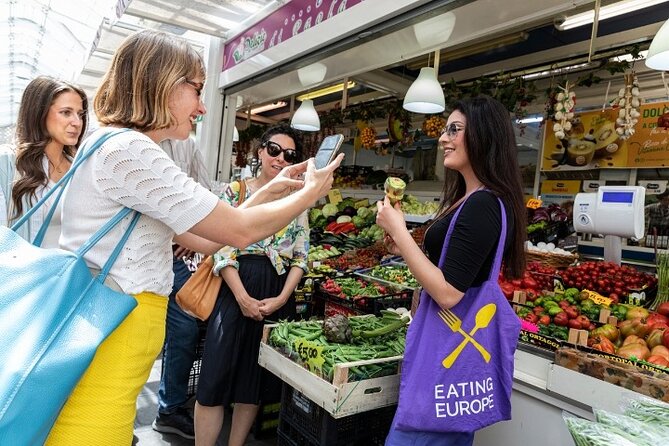
- Hands-on bruschetta at Testaccio Market with fresh tomatoes sourced on-site
- Ancient Egyptian-style pyramid in the city center at Piramide Cestia
- Real Roman comfort food like supplì, carbonara, amatriciana, and cacio e pepe
- Quinto quarto and slaughterhouse history tied to how Romans actually ate
- Monte Testaccio, the amphorae hill made from centuries of olive oil containers
- Gelato expertise at a 105-year-old shop plus tips for separating the real from the fake
Why Testaccio Works Better Than a Usual Rome Food Tour
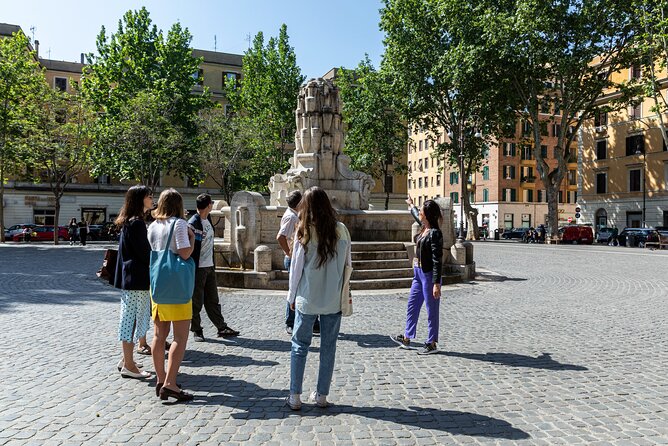
Testaccio is one of those Rome neighborhoods where you can see daily life happening around you. It is not trying to impress you with museum lights or souvenir shops. Instead, you walk through working streets, food shops, and markets, and the cooking traditions show up right where people buy lunch.
The tour leans hard into that local rhythm. You start near Piazza Testaccio and then keep moving, stopping at places Romans actually rely on for cured meats, cheeses, pastries, and the kinds of snacks you grab while chatting with vendors. It also helps that the group stays small, with a maximum of 12 people, so questions do not get lost in a crowd.
You also get something most food tours do not: weird history you can actually picture. The star is the pyramid, but the walk also touches sites tied to Rome’s food economy, like the former slaughterhouse complex and Monte Testaccio, the man-made hill built from amphora fragments.
Other things people book around Rome:
- Vatican Museums & Sistine Chapel Tour with Optional Basilica
★ 4.3 · 67,413 reviews - Vatican Museums, Sistine Chapel & St Peter’s Basilica Guided Tour
★ 4.5 · 39,149 reviews - Rome: Colosseum, Palatine Hill and Roman Forum Guided Tour
★ 4.8 · 32,814 reviews
The Food Focus: What You’ll Eat (and Why It’s the Point)
This is not just a list of bites. It is a tour built around how Roman food tastes in real life: simple ingredients, bold flavors, and classics that have stuck around for decades.
From the start, you get a “Roman shop crawl” vibe. You begin with cured meats and artisanal cheeses, plus an olive oil and balsamic vinegar tasting and a celebratory toast with crisp Prosecco. It is a good warm-up because it sets your palate for what comes next: salty, fatty, tangy flavors that lead naturally to street food and pasta.
Then the tour becomes more hands-on. At Testaccio Market, you make bruschetta with fresh tomatoes from vendors, and you follow that up with typical Roman street food and a caprese-style plate featuring buffalo mozzarella. You are not just tasting ingredients, you are learning how Romans build a snack or light meal without overcomplicating things.
Later, you hit the comfort zone with supplì, the fried rice ball, plus Trapizzino, a street food concept that matches Roman flavors with a handheld format. And near the end, you sit down for the pastas: carbonara, amatriciana, and cacio e pepe paired with local wine. It feels like a full arc, street food to table, and then dessert.
Finally, you finish at a historic gelateria where you learn the difference between real gelato and the fake stuff. That matters because Rome has plenty of sweet shops. You want the one that actually respects ingredients and technique.
The Walk Begins at Piazza Testaccio, Then Keeps It Tight
You meet at Piazza Testaccio, 39 (near public transportation), and the tour ends on Via Amerigo Vespucci, 35, just a couple of blocks from the start. That means less backtracking and more time actually eating and seeing the neighborhood up close.
The total time is about 3 hours 30 minutes, which is long enough to feel like you covered Testaccio properly, but not so long that it turns into a grind. The pacing also tends to land well because the stops are varied: market, shops, a major sight, then food again. You are not stuck only in museums or only in lines.
Also, it is offered in English with a local guide. A big theme from guides like Valentina, Katherine, Luca, Edma, and Francesca in the experience feedback is energy without rushing. You get explanations that connect food to place, not speeches that run past the tasting.
Salumeria Volpetti and the First Taste That Sets the Tone
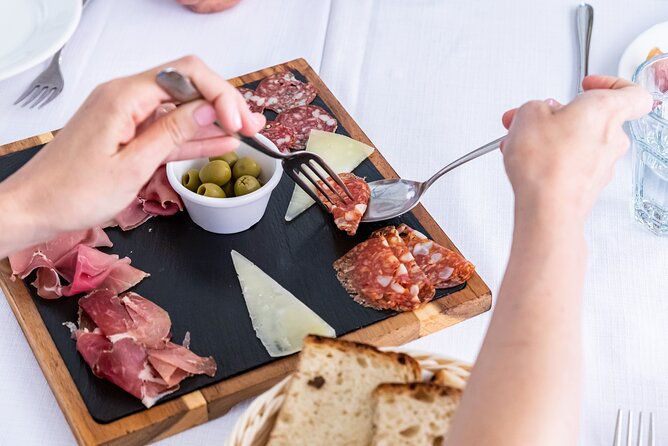
Your first stop is Salumeria Volpetti, where you get welcomed with fine cured meats and artisanal cheeses. This is paired with an olive oil and balsamic vinegar tasting, plus a toast with crisp Prosecco.
Why this works: cured meats and cheese give you a baseline flavor map. If you have never tasted Italian olive oil and balsamic properly side by side, this quick start helps you notice what later foods are doing. It also gives you a “shop culture” introduction. You see how specialized Roman places are, then you build from there into the market and street food.
It also lasts around 40 minutes, long enough that you can slow down and actually talk with your guide about what you are eating. If you are someone who likes learning why certain ingredients taste the way they do, this first stop is a strong start.
Same city, a completely different kind of day:
- Rome: Guided Tour of Colosseum, Roman Forum & Palatine Hill
★ 4.7 · 27,897 reviews - Rome: Colosseum & Forum with Audio Guide App -Optional Arena
★ 4.2 · 24,770 reviews - Rome: Colosseum, Roman Forum and Palatine Hill Guided Tour
★ 4.5 · 23,903 reviews - Rome: City Sightseeing Hop-on Hop-off Bus with Audioguide
★ 4.0 · 16,045 reviews
Piramide Cestia, John Keats, and the Fun Side of Roman Oddness
Next comes Piramide Cestia, one of Rome’s most bizarre and stunning landmarks, an authentic Egyptian-style pyramid around 2,000 years old. The stop is about 15 minutes, which is just right for getting a clear look without dragging out.
What I like here is that it is not a random detour. The pyramid is surrounded by everyday neighborhood life, which makes it feel even stranger in the best way. You get a sense of how Rome mixes the monumental with the normal.
Your guide also points out other lesser-known history along the route, including the Protestant Cemetery where John Keats is buried. Even if the pyramid is the headline, the smaller history stops are often what makes the tour feel more like a local stroll than a sightseeing loop.
Testaccio Market: Bruschetta, Buffalo Mozzarella, and Real Vendor Energy
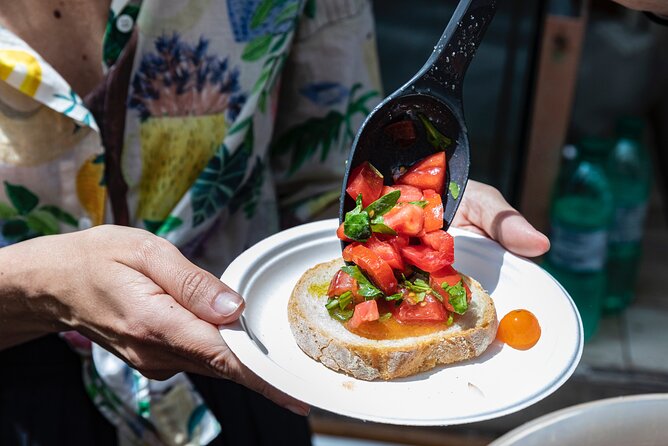
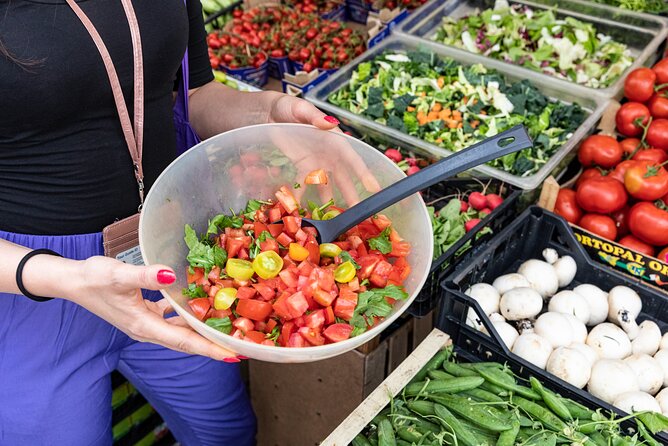
Testaccio Market is where the tour shifts into hands-on mode. You make your own bruschetta using fresh tomatoes pulled from the market’s vendor stalls. After that, you continue tasting with classic fried street food and a fresh caprese salad featuring buffalo mozzarella.
This is one of the best parts of the experience because it teaches by doing. You get to understand what “fresh” means in practice, not just in theory. Tomatoes taste different when you are close to where they are handled and sold, and that difference lands fast.
You also get the vendor conversation element. You are not just walking past stalls. You stop, ask questions, and hear how locals think about quality produce and the kinds of small choices that change flavor.
Practical note: market stops can mean you stand and walk a bit indoors, so wear comfortable shoes. If you come with a big appetite, this is the right time to do it.
The Former Slaughterhouse and Quinto Quarto Cooking Logic
Between market time and the next major food stop, you get a look at one of Testaccio’s most important historical food connections, the former city slaughterhouse complex.
This is where the tour explains the famous idea of quinto quarto cuisine. In plain terms, it ties back to how Romans used every part of animals and built dishes from parts that outsiders might overlook. It is not just trivia. It explains why certain flavors and food traditions show up in the neighborhood’s identity.
This part also makes the area make sense. Testaccio was a food powerhouse, and seeing the slaughterhouse connection helps you connect today’s snacks and pastas to yesterday’s kitchen reality.
Monte Testaccio: The Amphora Hill That Explains Rome’s Appetite
You also visit the man-made hill built entirely from fragments of millions of ancient Roman olive oil jars, amphorae. The site is called Monte Testaccio, and it is one of those places where one visual tells a whole story.
Here’s what makes it worth your time: it turns Rome’s food history into something physical. You are not just reading about trade or agriculture. You are standing near the accumulated leftovers of a massive imperial food system.
Your guide ties this to Rome’s immense appetite, and once you understand that, you start to notice how much food is woven into the city’s growth. It is not just about what people ate, it is about how they moved, stored, and processed food at scale.
Flavio al Velavevodetto: Carbonara, Amatriciana, and Cacio e Pepe
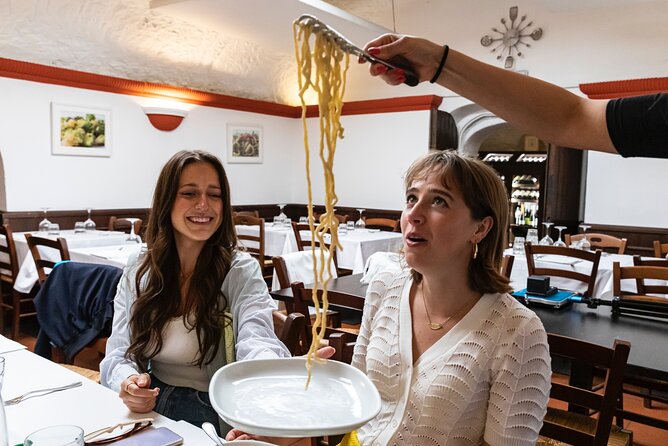
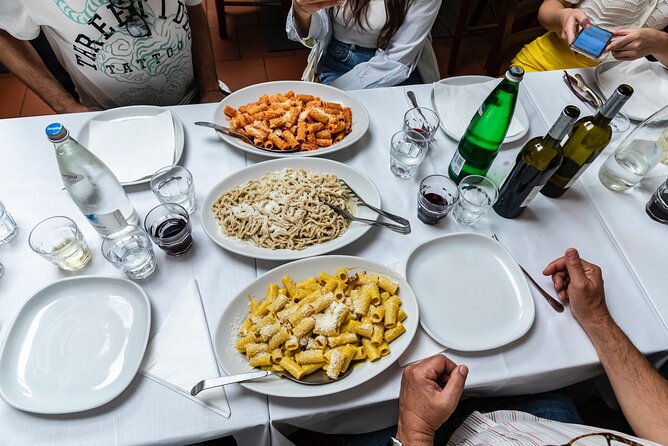
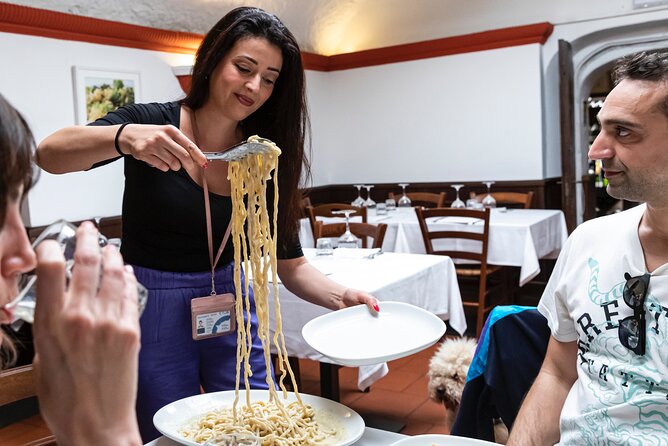
When you reach Flavio al Velavevodetto, the tour shifts into classic Roman pasta territory. You sample three iconic pastas: creamy carbonara, rich amatriciana, and cheesy cacio e pepe, paired with local wine.
This stop works for two reasons. First, these dishes are not “generic Italian pasta.” They are Rome’s signatures, and they reward careful attention. Second, pairing with wine gives you a cleaner sense of how locals balance salt, fat, and peppery flavors.
Drawback to flag: because it is such a food-heavy route, you will want to manage your pace. If you are sensitive to long sitting or you want to avoid overeating, go slow at this stop. But if you love food and want a real Roman meal feel, this is a highlight.
Giolitti Gelato: How to Spot the Real Stuff and Finish Strong
Your final stop is Giolitti Caffe and Gelateria, a shop known for artisan gelato made for more than 100 years. You get the chance to try the gelato and learn the difference between real gelato and fake gelato.
Finishing with gelato is smart after pastas and fried snacks. Your palate resets, and the tour closes on a sweet note that also teaches. The “how to spot it” part is especially useful after the tour. You will have a quick checklist for your next gelato stop around Rome.
If you need one takeaway, it is this: the best gelato is not just sweet. It has texture, aroma, and a clean ingredient profile. Your guide helps you notice it.
Price, Time, and Value for Money
The price is $131.81 per person for about 3 hours 30 minutes, with a small group size (up to 12). On paper, it looks like a lot until you map what is included.
You are not only tasting one food item at a single stop. You get tastings that cover cured meats, artisanal cheeses, olive oil and balsamic, a Prosecco toast, hands-on bruschetta, buffalo mozzarella and caprese, fried street food like supplì, Trapizzino with hunter style chicken, three Roman pastas paired with wine, and gelato. You also include insider tips, plus the guide is local and English-speaking.
So for value, the logic is simple: you are paying for guided access to multiple quality places plus enough food to cover a proper eating plan for the evening or day. Reviews consistently emphasize there is plenty to eat, and the pacing does not feel like you are being pushed out the door.
One more practical point: this tour is often booked about 62 days in advance on average. That tells me it sells out sometimes, likely around weekends and peak travel periods. If you have your heart set on it, book earlier rather than waiting.
Who Should Book This Testaccio Food Walk
This tour fits best if you:
- Want a Rome food experience in a local neighborhood like Testaccio, not just a central sightseeing circuit
- Love market energy and want at least one hands-on stop, like making bruschetta
- Want Roman classics explained in context, including quinto quarto and Monte Testaccio
- Enjoy a guided walk where you get both food and lesser-known sights
It is also a good choice if you like small group travel. A maximum of 12 people keeps things from feeling like a factory line.
Who might skip it:
- If you have severe or life-threatening food allergies. The tour notes it is not suitable for those cases.
- If you prefer very light walking and minimal food. This is a full tasting route, and you should come hungry.
Families can join, with children under 4 not needing a ticket, but food is not included for kids aged 3 and under. If you are traveling with little ones, plan snacks accordingly.
Should You Book Taste of Testaccio (15-Year Anniversary Edition)?
I think you should book it if you want real Testaccio life plus a guided food route that ends in gelato and leaves you feeling like you learned how Romans eat, not just what to eat. The itinerary makes sense as a story, shop to market to historic food sites to pasta to dessert, and the small group size helps keep it friendly.
If you are the type who loves market stops, you will likely feel happy here. If you care about learning how to spot good gelato, you also get more than just a taste.
Just be honest about one thing: the tour is built around tastings. If you can safely eat everything on the menu and you do not mind a couple hours of walking and standing, it is a strong way to spend a Rome afternoon or morning.
FAQ
How long is the Taste of Testaccio tour?
It lasts about 3 hours 30 minutes.
What is the group size for this food tour?
The tour has a maximum of 12 travelers, and it requires at least 2 guests to run.
Is the tour offered in English?
Yes, it is offered in English.
What tastings and foods are included?
You make bruschetta at Testaccio Market, try Roman pastas including carbonara, amatriciana, and cacio e pepe, and stop at a long-running gelateria to taste gelato and learn how to tell the real version from fake gelato. The route also includes tastings such as cured meats and cheeses, buffalo mozzarella, caprese salad, supplì, and Trapizzino.
Can children join, and what about food for kids?
Children under 4 do not need a ticket and can join for free. However, food is not included for children aged 3 and under. Tickets with food included are available for ages 4 and up.
Can I get a refund if I need to cancel?
Yes. You can cancel for a full refund up to 24 hours before the experience starts. If you cancel less than 24 hours before, the amount paid will not be refunded.
Recently reviewed around Rome
- Rome: Castelli Romani Hop-on and Hop-off Tour★ 4.9 · 32 reviews
- Rome: Food Tour near Vatican City with Wine★ 4.8 · 100 reviews
- Rome: Scavenger Hunt Self-Guided Tour★ 4.6 · 15 reviews
- Rome: Hop-on Hop-off Bus Tour and Colosseum Experience★ 3.4 · 163 reviews
- Hidden Rome: Small Group E-Bike Tour with Street Food Stops★ 4.9 · 144 reviews
- Rome: Highlights Tour in Golf Cart★ 4.9 · 28 reviews
- Rome: Guided Haunted Rome Ghost Tour with Dowsing Rods★ 4.8 · 63 reviews
- Rome: Highlights Photo Shoot for Memorable Moments★ 5.0 · 32 reviews