
Reviewed · SISTINE CHAPEL TOURS
Rome: Vatican, Sistine Chapel, St. Peter’s Small-Group Tour
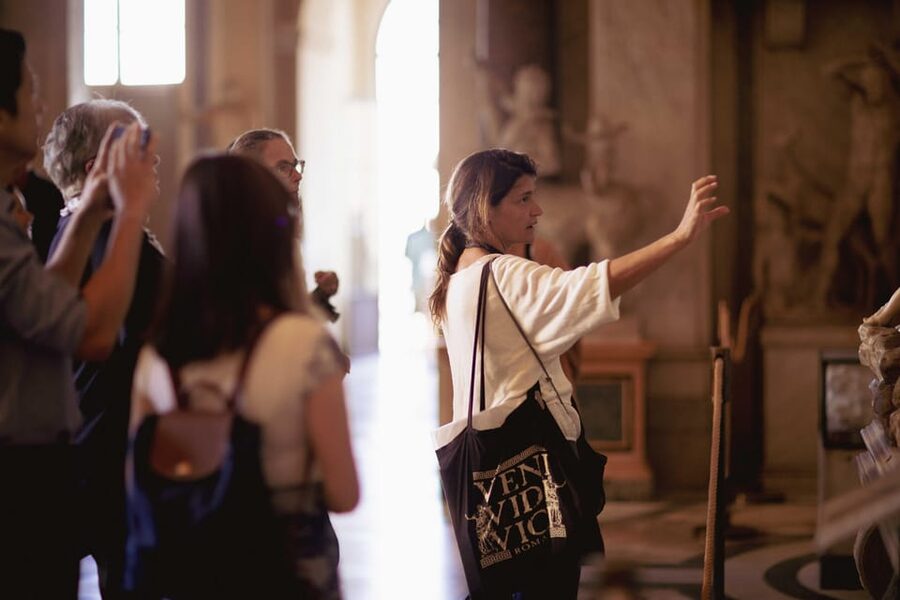
The Vatican can feel like a museum the size of a city. This tour is interesting because it pairs reserved entrance with a guided route through the exact rooms that most people miss when they go on their own. You get a focused look at the Vatican Museums, then the Sistine Chapel, then St. Peter’s Basilica.
I especially like the small group size. When your group is capped at 6, the pace stays human, questions get answered, and you spend less time herding or waiting. I also love how the route builds momentum, starting with iconic sculpture courts and moving into the Raphael Rooms before you step into the Sistine Chapel.
One drawback to plan around: it’s still a Vatican visit with security and crowd limits. Airport-style security can mean waits in high season, and access to the Raphael Rooms can shift depending on crowd levels and guard routes.
Key highlights worth planning around
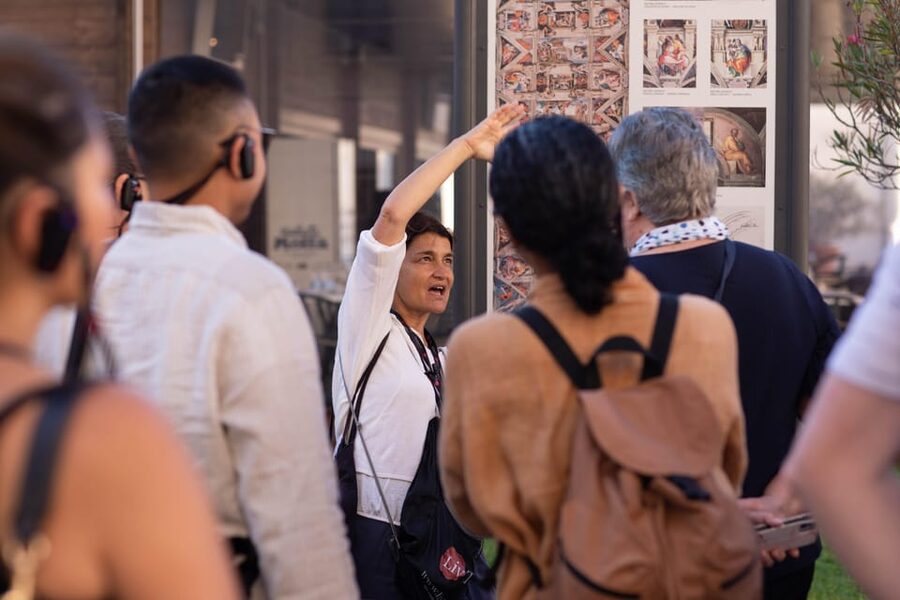
- Semi-private group of max 6 means a calmer, more personal Vatican Museums experience
- Reserved entrance with direct access helps you skip the worst of the ticket line problem
- Raphael Rooms + School of Athens gives you the story behind the painted masterpieces
- Sistine Chapel focus on the Michelangelo ceiling and Last Judgement, in a timed visit
- St. Peter’s Basilica time inside to see major works like Pietà and Bernini’s altar canopy
- Security and dress rules can affect comfort, so show up ready
Why this Vatican highlights route feels faster than going solo
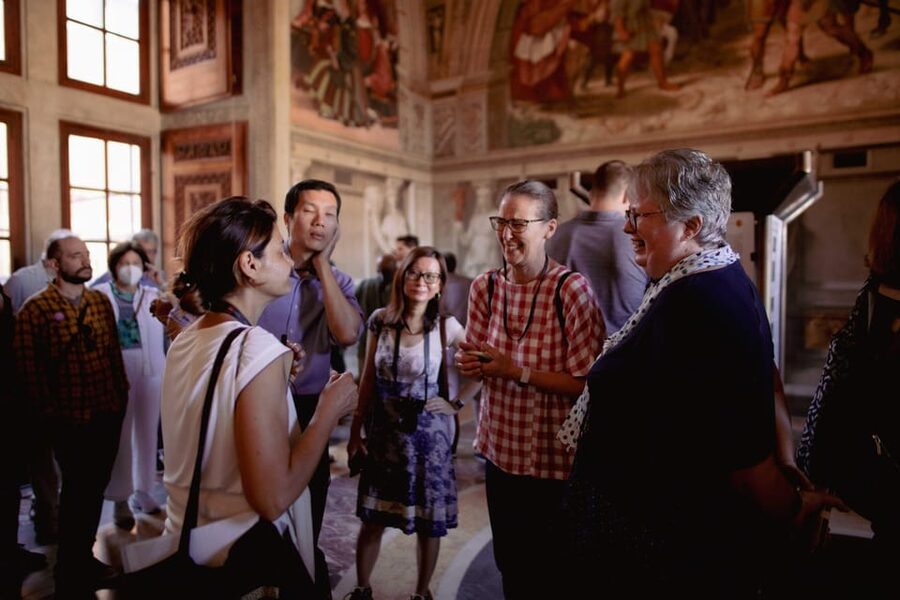
The Vatican Museums alone can swallow half a day, and figuring out what to prioritize is its own job. This tour is designed around a tight, high-impact route. You still see the headline stops, but you also get the “this room matters because…” context that makes the art feel more connected.
The group cap of 6 is not a small detail. It changes how the visit feels. You move efficiently, your guide can adjust when something catches your interest, and you are less likely to get separated in bottlenecks.
Timing also matters. The tour runs about 195 minutes, which is long enough to cover major galleries and arrive in the Sistine Chapel with your brain turned on. It is short enough that you should still feel energized afterward, not hollowed out.
Other Sistine Chapel tours worth comparing:
- Vatican Museums & Sistine Chapel Tour with Optional Basilica
★ 4.3 · 67,413 reviews - Vatican Museums, Sistine Chapel & St Peter’s Basilica Guided Tour
★ 4.5 · 39,149 reviews - Rome: Vatican Museums, Sistine Chapel & Basilica Tour
★ 4.3 · 13,872 reviews
Meeting at Cafe Vaticano and the security reality check
The meeting point is in front of Café Vaticano, Viale Vaticano 100, across from the Museum entrance. That location is practical because you are already positioned for the flow into the Vatican grounds.
Expect airport-style security. The data you need is simple: in high season, waits may reach 30 minutes. That is one reason the reserved entrance part is so valuable, because it reduces the time you spend in line after security and keeps the visit on track.
Bring a plan for the simplest “gotchas”:
- Wear clothing that meets the rules: no shorts, no short skirts, and no sleeveless shirts
- Have water awareness. You may have chances to do water refill stops during the tour
- If you rely on museum audio, note that museum-provided audio can be hit-or-miss, but still usable
Courtyard of the Pigna, Pinecone, and the sculptures that set the tone
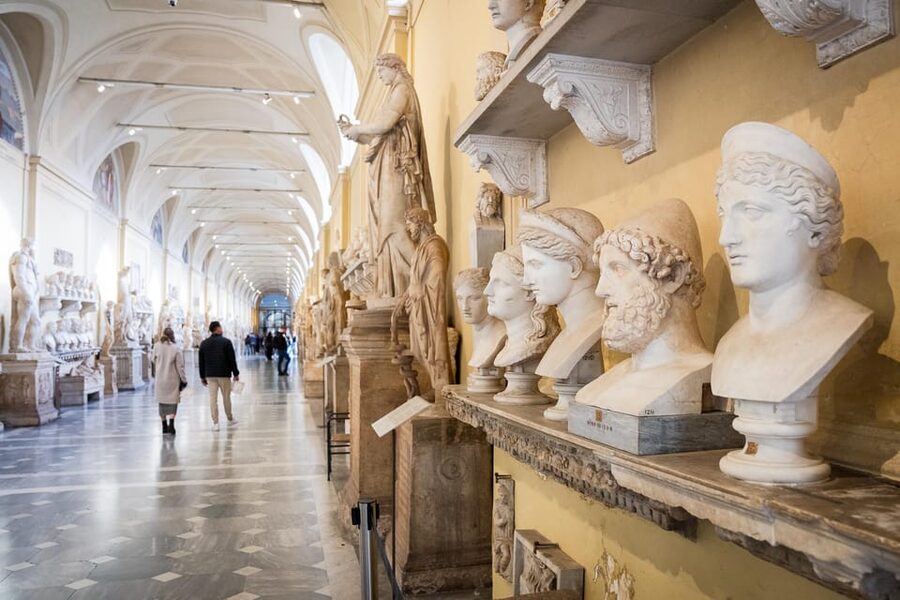
The tour begins with direct access to the Vatican Museums, so you get into the highlights before you waste time. One early stop is the Courtyard of the Pigna, where the famous Pinecone is a quick “wow” moment. It is the kind of landmark that tells you, yes, this place was built to impress.
From there, you also pass through stops tied to key early visual anchors in the museums. You will see the Octagonal Courtyard and the Belvedere Torso, then continue toward the Round Room. These are not just pretty rooms. They function like a warm-up act, showing you different styles of ancient sculpture and how the Vatican Museums curated the past into a readable flow.
One detail I like in this part of the route is the Constantine coffins in the Greek room. It gives you a sense of how religion, empire, and collecting all got braided together here.
Gallery of Tapestries and Maps: the lesson hidden in decoration
After the sculpture focus, the tour shifts into rooms that feel almost like storybooks. The Gallery of Tapestries is one of those places where you look longer once you understand what you are seeing.
You will learn about the handcrafted tapestries created from drawings connected to Raphael’s pupils, produced by Pieter van Aelst’s School. This is where the art becomes less about “big names” and more about process. The Vatican often dazzles with objects, but here you get a clearer sense of how those objects were made and why they mattered.
Next comes the Gallery of Maps, and the payoff is immediate. You are facing wall-to-wall, hand-painted maps from the 16th century. Even if cartography is not your hobby, this room changes how you think about the Renaissance. These maps are not just geography. They are a snapshot of what Europe thought it knew, and how it imagined the world.
If you like art that carries a message, this is a strong turning point. You go from admiring surface beauty to appreciating the worldview behind it.
More St Peter’s Basilica tours and dome climbs:
- Skip-the-Line Group Tour of the Vatican, Sistine Chapel & St. Peter’s Basilica
★ 4.5 · 12,779 reviews - Rome: St. Peter’s Basilica, Papal Tombs, and Dome Climb Tour
★ 4.6 · 9,652 reviews - Rome: Vatican, Sistine Chapel & St. Peter’s Basilica Tour
★ 4.2 · 9,089 reviews - Vatican Museums, Sistine Chapel and St. Peter’s Basilica Tour
★ 4.0 · 8,768 reviews
Raphael Rooms and School of Athens: where the tour earns its time
The Raphael Rooms are a major reason to book a guided route instead of just wandering. Access can depend on crowd levels and guard routes, but when the plan holds, this stop is a highlight.
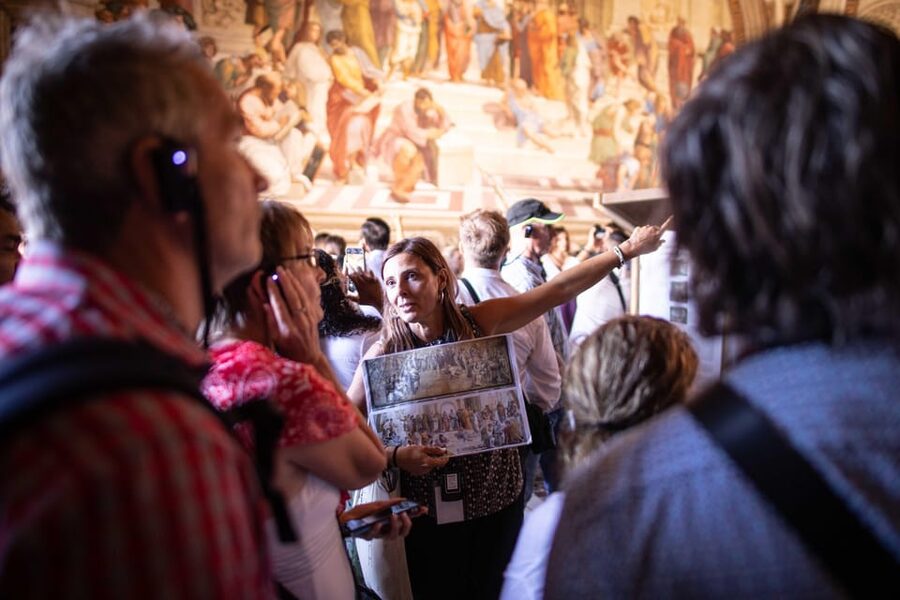
The guide brings you to The School of Athens, a painting you might recognize by name even if you have never really studied it. What makes it land in a guided visit is the way the guide helps you notice relationships inside the composition. You learn about the historic greats and also how Raphael placed contemporaries within the scene.
That “spot the connections” approach matters, because these rooms can otherwise feel like a blur of painted walls. With a guide, you get a map inside the painting. Suddenly the room is not just impressive, it is understandable.
Also, if the route needs to adjust due to crowd control, the guide is expected to work around the guard routes. That flexibility is a practical benefit in the Vatican, where plans can change without warning.
Entering the Sistine Chapel with the right expectations
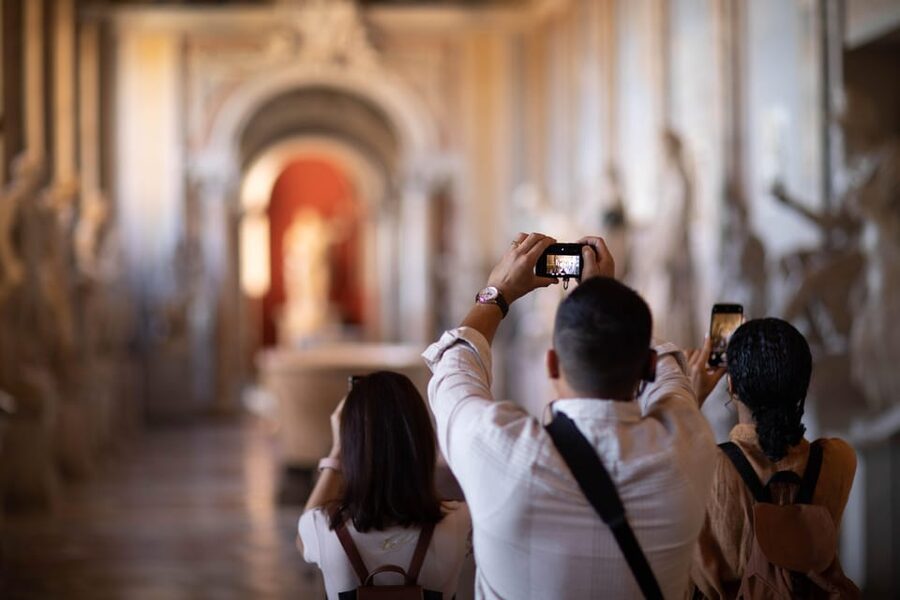
The Sistine Chapel is where the tour earns its dramatic payoff. The visit is focused on Michelangelo’s Sistine ceiling and the Last Judgement. The chapel measures about 8,000 square feet, and it is designed so your eyes keep trying to climb upward.
Here is the practical tip: do not treat it like a casual museum stop. You are in a working sacred space, and the way the visit is timed matters. Your guide sets up key context before you go inside, which helps because talking is discouraged in the chapel. So you get the meaning first, then the quiet looking.
What I like about this tour’s approach is that it does not rush you into the chapel like a traffic stop. Because the group is small, you can actually pause when something catches your eye. You also get help identifying what you are seeing, so you leave with clearer mental images instead of vague impressions.
St. Peter’s Basilica: Pietà, Bernini canopy, and time to keep exploring
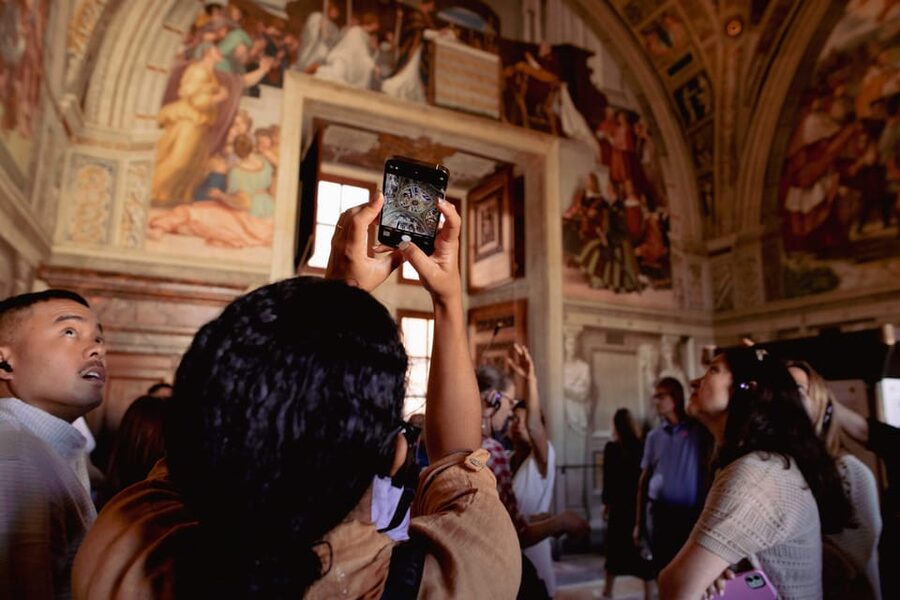
After the Sistine Chapel, you head to St. Peter’s Basilica for a strong final sequence. You are not just looking from the doorway. You get exclusive access, and the tour ends with you being left inside Saint Peter’s Basilica, with time to continue exploring on your own.
Two artworks anchor the experience:
- Michelangelo’s Pietà, where the Virgin Mary holds her dying child
- Bernini’s altar canopy, made of 100,000 pounds of gilded bronze
These are not minor “extras.” They are major works that represent two different ways of understanding Catholic art, one more sculptural and human, the other theatrical and immersive.
One reason I think this structure works so well is that you get guided highlights, then you are released with time. That helps you shift from hearing to noticing. You can spend that time on the Papal Tombs, and if you want to add the dome experience, you have time to consider the climb to the top of the Dome if it is available during your visit.
There is one important real-world consideration: the Basilica may close without notice for private events, and tours then continue with extended visits elsewhere. That is rare, but it is a real operational factor in Rome, so build a little flexibility into your day.
Price and value: what you really get for $214.11
At $214.11 per person for about 195 minutes, the biggest value driver is not the art itself. It is how the tour reduces friction.
Here is what you are paying for, in plain terms:
- Reserved Vatican entrance tickets
- Direct access that helps you avoid the worst of the ticket line time
- A live English guide
- A route that hits major rooms and connects them with context
- A group size capped at 6, which keeps the visit from feeling chaotic
If you tried to do this on your own, you would still need tickets, then you would need to figure out which rooms to prioritize, and you would be trying to do it while fighting crowds. Even if you manage the logistics, you would lose the “here is what to look for and why it matters” benefit.
For many people, that guide-led focus is the difference between seeing the Vatican and experiencing it. And based on the guide styles that are commonly praised, the best tours tend to have both pacing and personality.
You may see guides mentioned such as Selenia, Ilaria, Lucy, Elisabetta, Fabrizio, Alessia, and Pam. The recurring theme is consistent: these guides keep the pace steady, answer questions without rushing, and do a strong job preparing you for the Sistine Chapel so you can enjoy it quietly.
Who this tour suits best, and who may want a different plan
This is a great fit for adults and older teens who want the core Vatican highlights without turning the day into a logistics project. The timeline is long enough to feel rewarding, and the route is structured enough that you do not spend your energy lost.
It can also work well for families, but you should think in terms of attention span. One note from the details you provided is that a child in the group timed out partway through, even though the guide maintained the pace for everyone. If you are traveling with younger kids, you might want to consider whether three-plus hours is realistic for them.
The tour is not suitable for wheelchair users. That is stated clearly, so if mobility access is a priority, look for a different offering designed for accessibility.
A few last practical tips to make the day smoother
- Wear compliant clothing up front. It is easier than making last-minute changes inside the city.
- Take the security wait seriously. If you arrive stressed, the Vatican will feel bigger and slower.
- Pace yourself in the Sistine Chapel. The ceiling and Last Judgement deserve quiet time, not constant movement.
- If you like buying water or snacks, plan that around the guided breaks, since the tour keeps a schedule.
If you are the type who loves maps, this route has a strong payoff in the Gallery of Maps. If you care more about painting technique and composition, The School of Athens and the Raphael Rooms are the stops that tend to click fastest.
Should you book this Vatican and Sistine Small-Group tour?
I would book it if your goal is a high-accuracy highlights day: Vatican Museums to Raphael Rooms, Sistine Chapel, and St. Peter’s Basilica, all with less wandering and less line pain. The small group cap of 6 is a major part of the value, because it keeps the experience personal and paced.
I would hesitate only if you need step-free access or wheelchair support, since the tour is stated as not suitable for wheelchair users. I would also go in with flexible expectations for the Basilica and Raphael Rooms, because crowd levels and private closures can cause changes.
If that fits your travel style, this is a strong way to see the Vatican’s biggest hits without turning your day into a test of stamina.
More Vatican Tours in Rome
- Vatican Museums & Sistine Chapel Skip-the-Line Entry Ticket
★ 4.4 · 13,838 reviews - Rome: Vatican Museums, Sistine Chapel & Basilica Tour
★ 4.7 · 13,217 reviews - Rome: Vatican Museums & Sistine Chapel Guided Tour
★ 4.3 · 12,117 reviews - Vatican Museums & Sistine Chapel Skip-the-Ticket-Line Tour
★ 4.3 · 10,486 reviews
Recently reviewed around Rome
- Ancient Etruscan Civilization Tour from Rome★ 5.0 · 16 reviews
- Colosseum with Arena Floor Express Guided Tour★ 3.5 · 22 reviews
- Private Tour – Ancient Ostia★ 5.0 · 42 reviews
- PRIVATE Appian Way and Lake Albano Ebike Tour with Italian Lunch★ 5.0 · 12 reviews
- Ancient Appian Way and Roman Countryside E-Bike Tour★ 4.5 · 13 reviews
- Ancient Appian Way PRIVATE Bike Tour★ 5.0 · 89 reviews
- Catacombs and Hidden Underground Rome: Small Group Max 6 People★ 5.0 · 293 reviews
- Amalfi Coast Day Trip from Rome by High-Speed Train★ 4.5 · 162 reviews
Sistine Chapel Tours, compared.
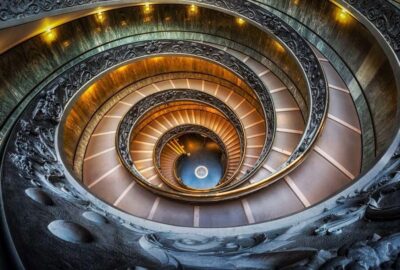
Vatican Museums & Sistine Chapel Tour with Optional Basilica
Read our review →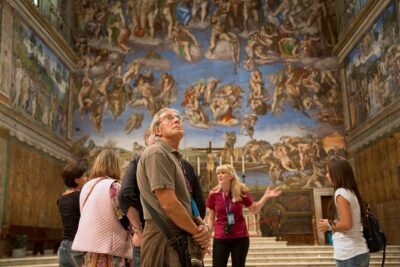
Vatican Museums, Sistine Chapel & St Peter’s Basilica Guided Tour
Read our review →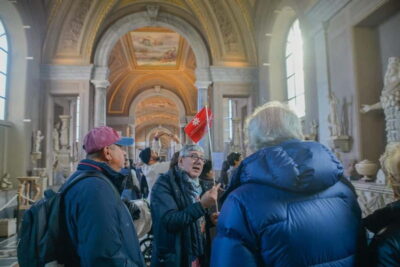
Vatican Museums, Sistine Chapel & Basilica Tour
Read our review →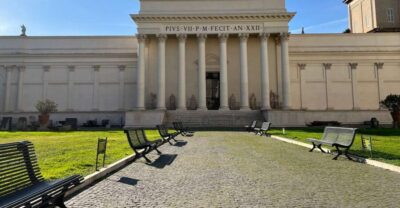
Vatican Museums & Sistine Chapel Skip-the-Line Entry Ticket
Read our review →Vatican Museums, Sistine Chapel & Basilica Tour
Read our review →
Skip-the-Line Group Tour of the Vatican, Sistine Chapel & St. Peter’s Basilica
Read our review →
Vatican Museums & Sistine Chapel Guided Tour
Read our review →Browse the lists this tour appears in