Reviewed · TOURS
Rome: Trevi Fountain Underground Small Group Tour
Rome’s Trevi Fountain is already a show. What makes this tour different is that you step into the story under the stone, where Roman water infrastructure still shows through. The fountain’s fame comes from above ground, but the mechanics of how water got there are right under your feet.
I love that you get a guided look at the underground archaeological site (not just a quick peek), with official English commentary and headsets to keep everything clear. I also like that the tour connects the big Trevi legends to real structures, including the aqueduct system tied to Aqua Virgo and the later water storage approach under Hadrian.
One thing to consider: the Trevi Fountain part is brief, so don’t expect a long linger above ground. Also, the tour is not suitable for wheelchair users, and comfortable shoes matter because you’ll be walking and standing in an archaeological setting.
Key highlights I think you will care about

- Vicus Caprarius under Trevi: You see the City of Water archaeological area beneath the fountain.
- Aqua Virgo explained clearly: You learn why the aqueduct is linked to pure water, plus the naming legend.
- Multiple time periods in one place: Imperial, medieval, and Hadrian-era water works appear in the same underground layers.
- Skip-the-line entry: A separate entrance helps you start faster at the site.
- Headsets and live English guide: You hear every detail without leaning in or guessing.
Trevi Fountain, but the story runs underground

Trevi is one of those places that can feel like a postcard trap if you only look at what’s on the surface. This experience flips the angle. You still get Trevi, but you also get the logic behind it, how the Romans carried water to the exact spot where the fountain later became famous.
The Trevi Fountain you know is tied to pop culture too. Federico Fellini’s La Dolce Vita put Trevi in the spotlight, including that unforgettable Anita Ekberg moment splashing into the fountain waters. And yes, people still toss coins for good luck and a return trip. The tour doesn’t replace any of that charm, it adds the missing engineering chapter.
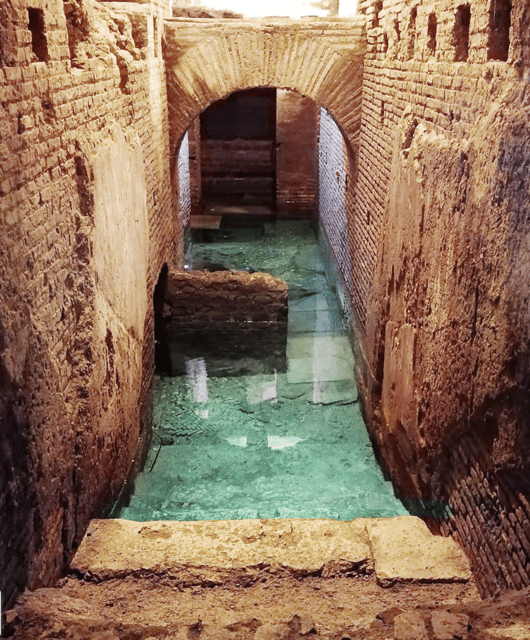
The underground site is called Vicus Caprarius, nicknamed the City of Water. It’s the kind of place where you can almost see Rome thinking in layers: build, expand, repurpose, and keep using the water system over time.
Other things people book around Rome:
- Vatican Museums & Sistine Chapel Tour with Optional Basilica
★ 4.3 · 67,413 reviews - Vatican Museums, Sistine Chapel & St Peter’s Basilica Guided Tour
★ 4.5 · 39,149 reviews - Rome: Colosseum, Palatine Hill and Roman Forum Guided Tour
★ 4.8 · 32,814 reviews
Meeting at Piazza dei Crociferi, and why timing matters
You meet at Piazza dei Crociferi, a tiny square close to Trevi Fountain. Your guide is recognizable by a sign with the Rome with Silvia logo, so you don’t have to wander the streets guessing who you should follow.
One practical rule is huge here: do not wait for your guide at the archaeological site entrance. The meeting point is the square, and your guide will lead you from there. If you show up confused, you waste time. And when a tour is only about 45 minutes for the guided underground portion, time is the one thing you cannot buy back.
Bring ID (passport or card). Wear comfortable shoes. This tour runs rain or shine, so bring weather-appropriate clothing. Underground spaces can feel cooler and damp, and you’ll appreciate shoes that grip.
Entering Vicus Caprarius: the Roman aqueduct still in view

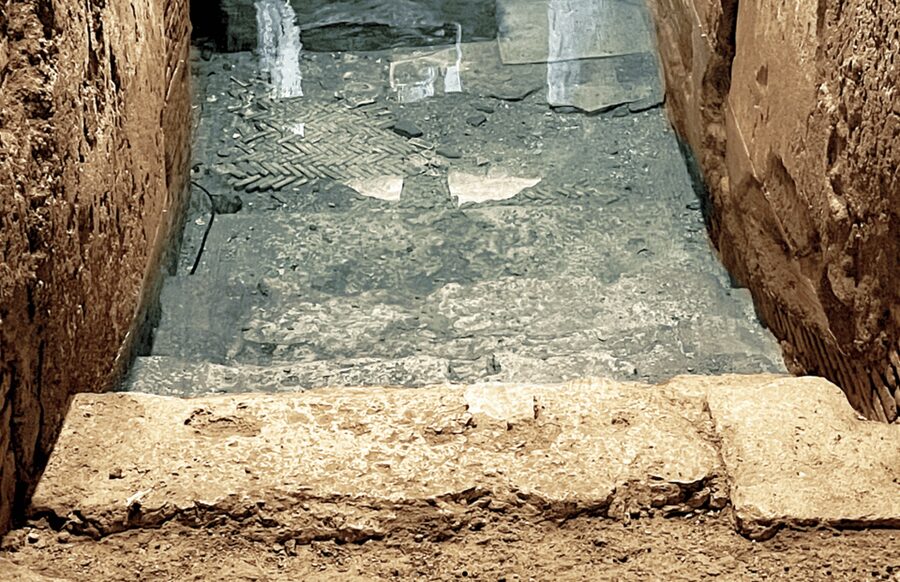
The main attraction is the guided visit through Vicus Caprarius, where you see remains connected to one of Rome’s aqueduct networks. The tour focuses on the remains of the ancient Roman aqueduct under the fountain, the system associated with Aqua Virgo.
Aqua Virgo has a poetic name. The meaning is pure water, a reference to how clear and clean the water was. There is also a romantic legend tied to the name: thirsty Roman soldiers were led to a spring by a young woman, virgo in Latin. The aqueduct then took that name.
What you gain from this stop is context. It’s easy to admire Trevi Fountain as art. Under the surface, you can appreciate it as infrastructure. Rome built water like a citywide service, and the “City of Water” helps you understand why the fountain became possible and why it was placed where it was.
This area also reflects Rome’s famous historical stratification. Vicus Caprarius came to light during renovation works of the former Cinema Trevi in 1999, and it opened in 2004. That timeline matters because it explains why what you see underground is not just a random ruin, it is evidence of how the city layered itself over centuries.
More than one era: domus, medieval houses, and Hadrian’s water tank
A lot of underground tours stop at one time period and call it a day. This one adds structure. Along the underground visit, you also get a look at an Imperial-era domus, medieval houses, and the castellum aquae associated with Aqua Virgo.
Here’s why that matters for you. Rome is not one era. It’s many eras sitting on top of each other. Seeing an Imperial residence in the same underground space as later medieval homes and water infrastructure makes the city feel like a living timeline, not a museum with labeled corners.
Then comes the Hadrian connection. The tour includes the castellum aquae, a monumental water tank built by Emperor Hadrian. The purpose was to optimize water supplies for Campo Marzio. That detail helps you connect two big ideas: water delivery to Rome and water storage planning. The aqueduct brought water in, and tanks made it usable and reliable.
If you like architecture, this stop will reward you. If you like city planning, it will click fast. Water systems are Rome’s quiet superpower, and this tour puts them right where you can see the proof.
Same city, a completely different kind of day:
- Rome: Guided Tour of Colosseum, Roman Forum & Palatine Hill
★ 4.7 · 27,897 reviews - Rome: Colosseum & Forum with Audio Guide App -Optional Arena
★ 4.2 · 24,770 reviews - Rome: Colosseum, Roman Forum and Palatine Hill Guided Tour
★ 4.5 · 23,903 reviews - Rome: City Sightseeing Hop-on Hop-off Bus with Audioguide
★ 4.0 · 16,045 reviews
The short Trevi Fountain stop: what to do above ground
After the underground portion, you return to the Trevi Fountain area for a photo stop and a guided moment, about 15 minutes. This is the part where you should recalibrate expectations. You are not on a long, slow hangout at the fountain. You’re pairing the street-level icon with the underground engineering story you just saw.
Use this time for practical things. Get your photos early if the area is crowded. Also, try to notice the fountain as a final destination, not just a sculpture. Now that you’ve seen the water system beneath, the surface becomes the “front of house” for the infrastructure you toured.
One of the common frustrations with tours like this is expectation mismatch. Some people think they will be physically under the fountain the whole time. In reality, you get substantial time underground at Vicus Caprarius, then you come back out for Trevi. That mix is usually perfect if you want both, but it can feel confusing if you expected a longer, all-underground experience.
Guides, headsets, and what makes the experience feel smooth
The biggest quality factor here is the guide. The tour includes an official English-speaking guide plus headsets to hear clearly. That setup matters more in Rome than you’d think. Stone corridors and busy areas can muffle voices, and headsets keep the tour from turning into guesswork.
In past departures, guides have included Silvia, Sylvia, and Virginia. If you land with a strong communicator, you’ll pick up the story beats fast: Aqua Virgo, Vicus Caprarius as the City of Water, the Hadrian water tank, and how the underground layers show Rome over time. If the guide delivery is off, the content can feel repetitive, because the site is not huge and there are only so many places for you to physically react.
That’s why I like this tour’s structure. Even when you only have one stop underground, a good guide keeps it moving. And the headsets help you stay oriented without craning your neck or missing key points.
Skip-the-line entry and why it affects value
Trevi Fountain is busy, always. One smart piece here is the ability to skip the line through a separate entrance. When you’re short on time in Rome, shaving off that “waiting around” chunk is real value.
This matters because the tour duration is not long. The core underground visit is guided around 45 minutes, then there’s the short Trevi photo stop. You want that time to count, and skip-the-line access helps you spend less time stalled and more time learning.
There’s also an emotional value to not rushing. Underground ruins can be fragile, and guided tours often run in a tight time window. Getting in smoothly helps the tour feel organized rather than chaotic.
Price in plain terms: is $71 worth it?
The price is listed at about $71 per person for a small group tour. For that money, you’re paying for three things: a live guide, entry to the archaeological area, and headsets for clear audio.
If you were to do this yourself, you could read about Aqua Virgo and Vicus Caprarius online, but you would not get the guided connections between the aqueduct remains, the domus, the medieval houses, and Hadrian’s castellum aquae. The underground spaces also make it harder to spot what’s important without someone pointing it out.
So is it worth $71? For me, yes if you like guided interpretation and you want to make Trevi more than a photo stop. If your goal is only to stand under the fountain’s spray and take pictures, you might feel the price is too high for how brief the above-ground portion is.
A good rule: spend on tours when you expect context, not when you just want access. This one sells context, and it does deliver it.
Who this tour fits best
This is a strong match if you:
- Like Roman engineering and want water systems explained in a real setting
- Enjoy archaeology that shows multiple time periods in one place
- Want an English guide with headsets so you don’t miss key details
It is not a great match if you:
- Need wheelchair access (this tour is not suitable for wheelchair users)
- Want a long, unhurried experience above ground at Trevi
- Dislike tight schedules, because the stop times are compact
Also, keep it in mind if you travel with kids. The tour is English-speaking and headset assisted, but it still relies on a live narrative. If you know your kids struggle with listening to explanations, you may need to manage attention during the underground portion.
A couple of realistic drawbacks to watch for
No tour is perfect, and this one has a few practical friction points.
First, the tour blends two experiences: underground archaeology plus a short Trevi Fountain stop. If you’re expecting a mainly underground time with lots of Trevi viewing, you may feel it is slightly tilted toward explanation rather than “wow, I’m at the fountain all the time.”
Second, underground spaces and short time windows mean you should follow the meeting instructions closely. Arriving late can create stress and disrupt the start, and that can color how the whole experience feels.
Finally, the quality depends heavily on guide delivery. Most accounts highlight guides as very nice and informative. Still, if you’re sensitive to how a guide speaks, arrive with patience, put the focus on the site itself, and use the headsets to stay engaged.
Should you book? My call
Book this tour if you want Trevi Fountain with real substance behind it. It’s one of the more efficient ways to turn an icon into an understanding of how Rome worked, especially when it comes to water.
Skip it if your trip priorities are mostly about photos, shopping, and long strolling around famous squares. In that case, Trevi itself might be enough without paying for interpretation.
If you do book, do two things that make the experience smoother: show up at Piazza dei Crociferi and don’t wait at the archaeological entrance. Then wear comfortable shoes and let the underground story change how you see the fountain above.
FAQ
How long is the Trevi Fountain Underground small group tour?
The guided underground experience is listed as 45 minutes.
Where is the meeting point?
You meet at Piazza dei Crociferi, a tiny square near Trevi Fountain.
Do I need to wait at the archaeological site entrance?
No. You should not wait at the entrance of the archaeological site. Meet at Piazza dei Crociferi.
Is the tour wheelchair accessible?
No, it is not suitable for wheelchair users.
Will the tour run if it rains?
Yes, the tour takes place rain or shine.
What language is the tour guide?
The tour includes an official English-speaking guide, and headsets are provided so you can hear clearly.
What will I see underground?
You will visit Vicus Caprarius, see remains of the ancient Roman aqueduct under Trevi Fountain, and also visit an Imperial-era domus, medieval houses, and the castellum aquae of the Aqua Virgo aqueduct.
Is there a stop at Trevi Fountain itself?
Yes, there is a photo stop and a guided tour portion at Trevi Fountain.
How do refunds work if I cancel?
Free cancellation is available up to 24 hours in advance for a full refund.
If you want, tell me your travel dates and whether you prefer history or photos, and I’ll help you decide if this fits well with your Rome plan around Trevi.
Recently reviewed around Rome
- Ancient Etruscan Civilization Tour from Rome★ 5.0 · 16 reviews
- Colosseum with Arena Floor Express Guided Tour★ 3.5 · 22 reviews
- Private Tour – Ancient Ostia★ 5.0 · 42 reviews
- PRIVATE Appian Way and Lake Albano Ebike Tour with Italian Lunch★ 5.0 · 12 reviews
- Ancient Appian Way and Roman Countryside E-Bike Tour★ 4.5 · 13 reviews
- Catacombs and Hidden Underground Rome: Small Group Max 6 People★ 5.0 · 293 reviews
- Ancient Appian Way PRIVATE Bike Tour★ 5.0 · 89 reviews
- Amalfi Coast Day Trip from Rome by High-Speed Train★ 4.5 · 162 reviews
Tours, compared.

Vatican Museums & Sistine Chapel Tour with Optional Basilica
Read our review →
Colosseum, Roman Forum & Palatine Guided Tour
Read our review →
Vatican Museums, Sistine Chapel & St Peter’s Basilica Guided Tour
Read our review →
Colosseum, Palatine Hill and Roman Forum Guided Tour
Read our review →
Guided Tour of Colosseum, Roman Forum & Palatine Hill
Read our review →
Colosseum, Roman Forum and Palatine Hill Guided Tour
Read our review →
Vatican Museums, Sistine Chapel & Basilica Tour
Read our review →