
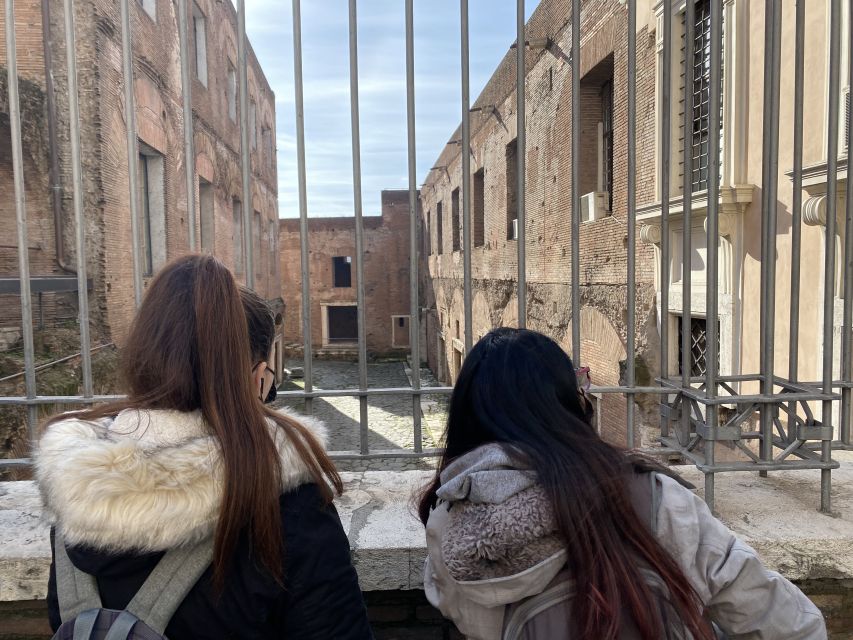
Reviewed · ROME
Rome: Trajan Markets Experience with Multimedia Video
If you want Roman ruins with a practical angle, this is a strong pick. Trajan Markets were the Empire’s commercial hub, so you’re not just staring at columns. I also like that the experience connects the spaces to everyday life, especially through the Fori Imperiali Museum artifacts that show what people actually bought, carried, and reused.
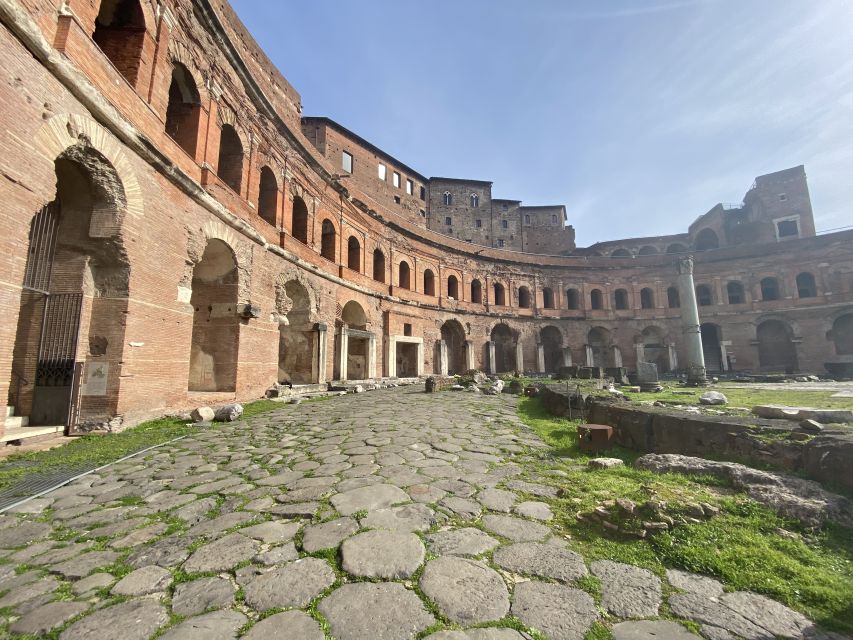
Two other things I really appreciate: the semi-circle architecture of the Trajan Market complex, and how the museum section highlights objects that feel grounded in real trade. One possible drawback to plan for is ticket handling. If the ticket print or swap process feels slow when you arrive, you will want a little extra buffer in your morning so you do not rush the start.
Key points to know before you go
- A 25-minute multimedia Rome video helps you place monuments in context before you walk the site
- Smartphone app audioguide includes 170+ points, useful beyond just this visit
- Forum and trading spaces you can connect to named areas like Caesar’s Forum, Augustus’ Forum, Nerva’s Forum, and the Templum Pacis
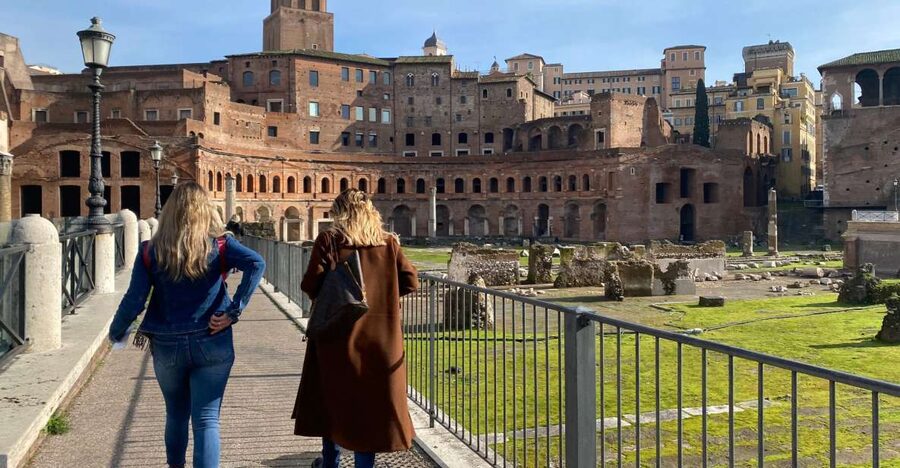
- Trajan Markets architecture includes that memorable semi-circle feel, plus ruins that show changing uses over time
- Fori Imperiali Museum focuses on artifacts and amphorae, so trade becomes tangible
Trajan Markets and the Imperial trade world: why this site hits
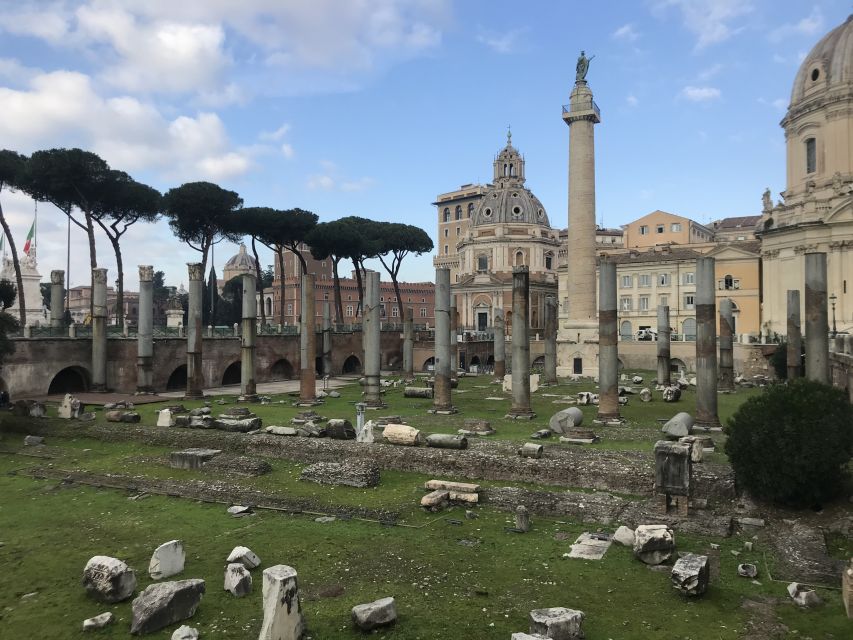
Trajan’s Markets can be a strange kind of Rome. Instead of a forum square where everyone gathers for politics, you get a place built for commerce. It’s a reminder that the Roman Empire ran on supply chains and daily buying and selling, not just speeches and ceremonies.
What makes this experience especially valuable for you is the way it frames the site. You’re not walking through ruins as disconnected stones. You’re learning how the complex worked as a shopping and trading center, then backing that up with museum objects that show the kinds of goods that moved through Rome.
And if you like architecture, you will probably enjoy the way the complex’s form guides your attention. The semi-circle shape is a big visual clue, and it gives you an easy mental map even when you are surrounded by remains.
Other things people book around Rome:
- Vatican Museums & Sistine Chapel Tour with Optional Basilica
★ 4.3 · 67,413 reviews - Vatican Museums, Sistine Chapel & St Peter’s Basilica Guided Tour
★ 4.5 · 39,149 reviews - Rome: Colosseum, Palatine Hill and Roman Forum Guided Tour
★ 4.8 · 32,814 reviews
Start with the 25-minute Ancient Rome video and the 170+ point app
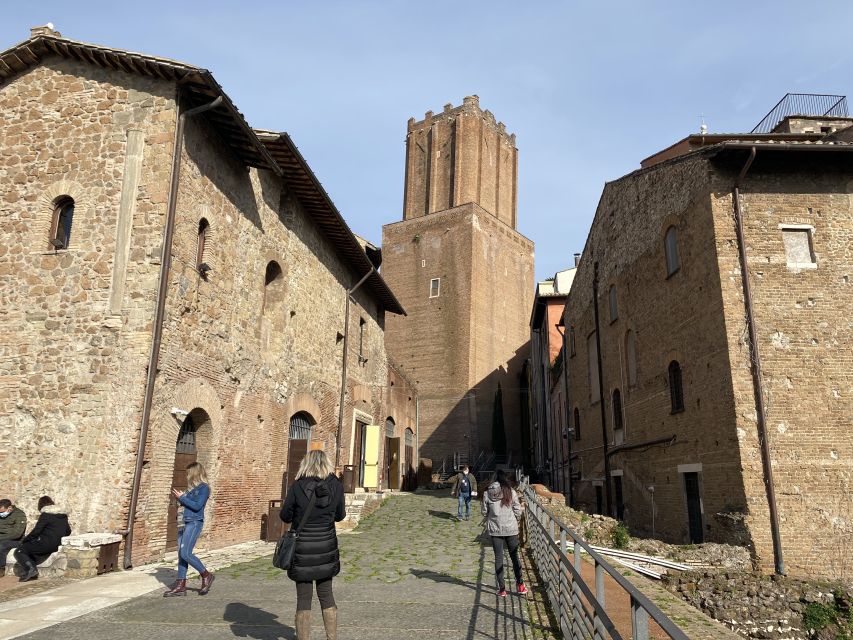
Before you hit the archaeological complex, you begin with a 25-minute multimedia video on Ancient Rome. This matters more than it sounds. The video uses reconstructions of major monuments, which helps you understand what you are seeing later. When you return to the real site, the scale and layout feel less random.
Then there’s the phone audioguide, delivered through an interactive app you download to your smartphone. The app includes more than 170 points of interest across the city. You do not have to rely only on what you hear inside the tour. You can keep using it while you roam around Rome that day or even later.
Practical tip: bring headphones and make sure your phone has enough battery for the day. You want the audio to work the moment you reach each stop. Also, if you tend to lose signal in crowded areas, save the day by keeping screen brightness moderate and skipping heavy power-draining apps while you use the audioguide.
Visiting Trajan Markets: the Empire’s commercial center in ruins
Once the intro is done, you move into the Trajan Markets archaeological complex. This is the core of the experience: exploring what used to be a commercial center during the Roman Imperial Age.
What you’ll focus on in the markets complex
You will spend your time looking at the relationships between spaces, not just individual wall sections. The experience highlights trading and meeting points tied to named parts of the Imperial forums, including:
- Caesar’s Forum
- Augustus’ Forum
- Nerva’s Forum
- Templum Pacis
Those names are not trivia for a quiz. They give you a way to connect different phases of the city to specific areas of the complex. Even if you are not a total Roman-architecture nerd, the naming makes the site easier to understand. You can start to see Rome as something that changed over time, with each ruler adding or reshaping the urban machine.
Same city, a completely different kind of day:
- Rome: Guided Tour of Colosseum, Roman Forum & Palatine Hill
★ 4.7 · 27,897 reviews - Rome: Colosseum & Forum with Audio Guide App -Optional Arena
★ 4.2 · 24,770 reviews - Rome: Colosseum, Roman Forum and Palatine Hill Guided Tour
★ 4.5 · 23,903 reviews - Rome: City Sightseeing Hop-on Hop-off Bus with Audioguide
★ 4.0 · 16,045 reviews
The 17th-century cistern reminder: the site kept getting used
One of the cooler “wait, what?” moments is seeing ruins of a 17th-century cistern. That detail is a quiet lesson: these spaces did not freeze in time after the Roman Empire. They were reused, adapted, and repurposed as the centuries passed.
When you notice evidence like that cistern, you start reading the area differently. Instead of thinking you are only looking at the ancient layer, you realize you are looking at a stack of history where older structures influence later ones.
A note on visibility from street level
A practical consideration: you might find that a good portion of the site looks visible from the street. That can be good for orientation, but it also means some of what you see outside does not replace actually entering and moving through the archaeological complex. If you want full value, plan to spend real time inside the areas you are allowed to access.
Fori Imperiali Museum: amphorae and artifacts that make trade feel real
After exploring the ruins, you go to the Fori Imperiali Museum, which brings the story into focus with artifacts from ancient cultures. This is where the tour becomes less abstract.
The experience includes seeing a collection of artifacts, including amphorae. Amphorae are a big deal because they connect archaeology to ordinary daily life. These were storage containers used for transported goods, so they help you picture commerce as something physical: moving liquids and dry goods across the city and beyond.
I also like that the museum approach supports multiple angles. One part of the experience leans into craft and production, including a highlighted museum section associated with artificers. Even if you are not sure what you are looking at at first, the objects help you move from “I saw ruins” to “I understand how goods and work fit into the city.”
How to get more out of the museum visit
Give yourself permission to slow down for a few items. You do not need to read every label, but you should pick a small set of objects and follow the logic: what it is, how it would have been used, and what that suggests about daily trade.
If you like museums, you will probably appreciate that this one does not rely only on big monuments. It uses smaller evidence to tell a larger story.
One day flow that works, and how to avoid feeling rushed
This is a one-day experience, and the structure is straightforward: start with the multimedia video, move through Trajan Markets, then finish with the Fori Imperiali Museum.
What makes that flow work is pacing. You get context first, then you walk the spaces, then you confirm what you learned with objects. If you’re the type who usually gets lost in Rome ruins because you do not know what you are looking at, the video and app help you connect dots fast.
Timing tip: plan your arrival so you are ready at the meeting point and can start without stress. The meeting point is near the action, but ticket swapping and printing steps can feel slow when the process is busy. If you hate delays, show up a bit earlier than your strict start time so you do not spend your energy in a line.
Price and value: what $37 buys you in practice
At $37 per person for a 1-day experience, you are paying for a compact package of three things:
- a 25-minute Ancient Rome video presentation
- entry to Trajan Markets
- entry to Fori Imperiali Museum
Plus, you get access to the city app audioguide on your smartphone and meeting point assistance.
What you are not paying for is also clear. Food and drinks are not included, and there is no hotel transfer. Also, this is not described as a guided tour with a live guide walking you through everything. The “guide” component is mainly through the multimedia video and the smartphone app.
So the value depends on your style. If you enjoy self-paced history with audio support, this pricing can feel fair. If you want a staff member explaining every room in real time, you may end up feeling like you are doing homework on your phone. Still, the combination of video plus app is a smart way to fill in the gaps without paying for an intensive guide.
Meeting point and on-the-ground logistics at Piazza d’Aracoeli
Your meeting point is the Touristation Aracoeli Office at Piazza d’Aracoeli 16, near Piazza Venezia. Look for the orange Touristation flags, and there is a fountain in front of the office entrance.
This area is busy, so make it easy on yourself:
- Take a quick look at the flags and fountain before you fully commit to the location
- Have your ID ready
- Keep your phone charged and the audioguide app ready to use
The experience also has a few rules you should respect. No pets. No weapons or sharp objects. No luggage or large bags. No drones. And no alcohol, drugs, sprays, or aerosols. If you travel with a bulky bag, check storage elsewhere before you come.
Also note: it is not suitable for wheelchair users. If mobility is a factor for you or your group, look for a different visit format.
What to bring so the experience goes smoothly
Bring a passport or ID card. Wear comfortable shoes. Roman sites tend to involve uneven ground, walking, and stairs.
And do not forget:
- Headphones for the smartphone audioguide
- A charged smartphone so you can use the app and not lose the audio at the exact moment you need it
If you use your phone for navigation too, keep the audioguide as your priority. Otherwise, you risk switching back and forth and losing your place in the story.
Who should book this Trajan Markets experience, and who should skip
Book this if you want a day focused on commerce in Ancient Rome, not just famous temples and arenas. You’ll likely enjoy it if you like architectural form, appreciate how places connect to named forums, and want object-based museum evidence like amphorae.
You should also consider it if you prefer self-paced learning with audio support, because this experience includes a multimedia video and a phone app with 170+ points.
You might skip it if you need an in-person guide to translate everything, or if you cannot handle smartphone audio due to access, battery life, or comfort. And if wheelchair accessibility is required, this one is not suitable.
Should you book Trajan Markets with the multimedia video?
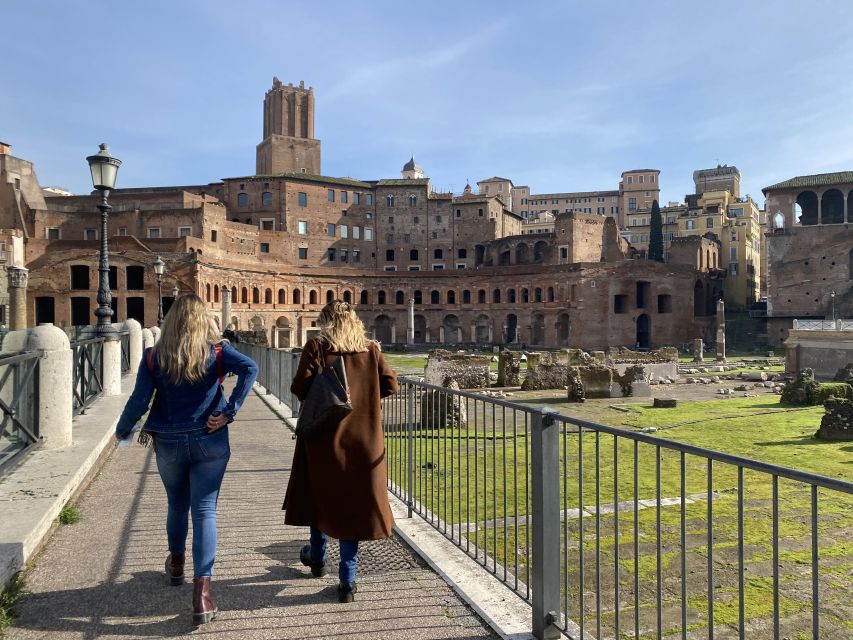
If you like understanding how Rome worked day to day, this is an easy yes. The combination of a short Ancient Rome video, a structured walk through the Trajan Markets complex, and then the Fori Imperiali Museum artifacts gives you more than just a pretty ruin circuit.
My main caution is logistics at the start. Give yourself time at the meeting point so you are not stressed by ticket handling. If you arrive with your basics ready, you’ll get a solid, thoughtful introduction to Roman commerce, plus museum objects that make trade feel tangible.
FAQ
How long is the Rome Trajan Markets experience?
It lasts 1 day.
What happens at the beginning of the experience?
You start with a 25-minute multimedia video presentation about Ancient Rome.
What entrances are included?
You get entrance to the Trajan Markets and entrance to the Fori Imperiali Museum.
Is there an audio guide?
Yes. You can download a city app audioguide to your smartphone, with more than 170 points of interest.
Where is the meeting point?
Meet at the Touristation Aracoeli Office at Piazza d’Aracoeli 16, near Piazza Venezia. Look for the orange Touristation flags, and there is a fountain in front of the office entrance.
What do I need to bring?
Bring a passport or ID card, comfortable shoes, headphones, and a charged smartphone.
Are food and drinks included?
No, food and drinks are not included.
Is hotel transfer included?
No, hotel transfer is not included.
Is this activity suitable for wheelchair users?
No, it is not suitable for wheelchair users.
What items are not allowed?
Pets, weapons or sharp objects, luggage or large bags, drones, alcohol and drugs, and sprays or aerosols are not allowed.
Recently reviewed around Rome
- Rome: Castelli Romani Hop-on and Hop-off Tour★ 4.9 · 32 reviews
- Rome: Food Tour near Vatican City with Wine★ 4.8 · 100 reviews
- Rome: Scavenger Hunt Self-Guided Tour★ 4.6 · 15 reviews
- Hidden Rome: Small Group E-Bike Tour with Street Food Stops★ 4.9 · 144 reviews
- Rome: Highlights Tour in Golf Cart★ 4.9 · 28 reviews
- Rome: Hop-on Hop-off Bus Tour and Colosseum Experience★ 3.4 · 163 reviews
- Rome: Guided Haunted Rome Ghost Tour with Dowsing Rods★ 4.8 · 63 reviews
- Rome: Highlights Photo Shoot for Memorable Moments★ 5.0 · 32 reviews