
Reviewed · WALKING TOURS
Rome: Relics from the Passion of the Christ Walking Tour
This tour is interesting because it focuses on the physical objects of the Passion of Jesus, the kind that turn faith and history into something you can hold in your imagination while you stand in real Roman basilicas. I like the small-group size (up to 10), which keeps the pace human in church after church. I also love that the route is built around specific relics tied to Christ’s suffering, including items brought from Jerusalem to Rome centuries ago. One thing to consider: it moves fast. With multiple major stops in just 3 hours, you will need to stay ready for a lot of standing and a tight schedule inside churches.
The tour also has a nice rhythm for people who want more than sightseeing. You start at the oldest, Marian-leaning grandeur of Santa Maria Maggiore, then you work through famous interiors and famous collections of relics, ending at the Holy Cross in Jerusalem. In the guide stories, names like Paul, Daniel, Tim, and Tom come up again and again, and the common thread is that they explain what you are seeing with both religious meaning and Roman context.
Key highlights to look for
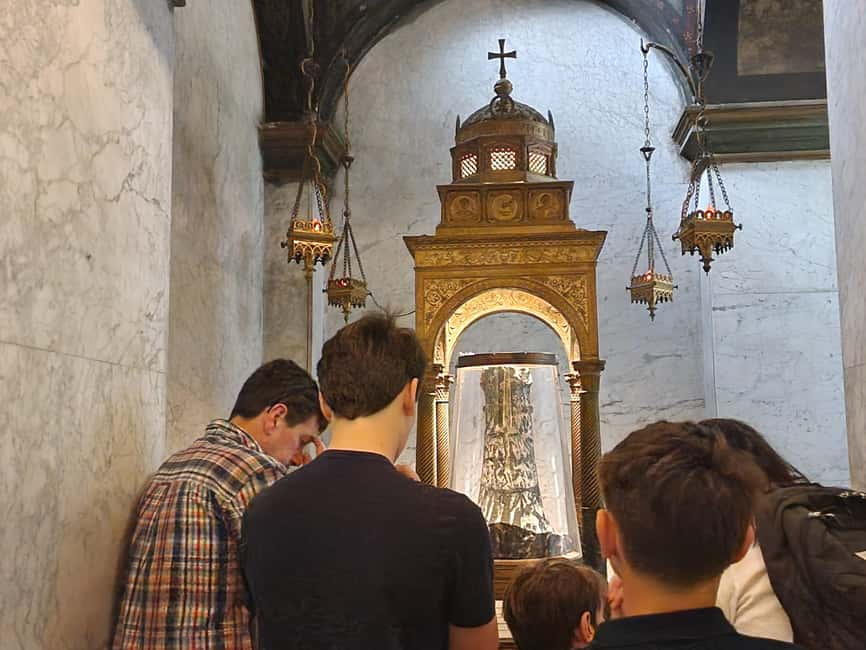
- Passion relics in Rome, including a Nail of the Crucifixion, Thorns of the Crown, fragments connected to the Holy Sepulcher, and wood of the Cross
- St Helena and Jerusalem to Rome, a through-line that explains why these objects ended up in the city that once persecuted Christians
- Santa Prassede’s 9th-century mosaics, plus the stone pillar associated with the scourging
- Scala Sancta (Holy Steps), with a chance to peer into the “Holy of Holies” area and see the St Luke icon
- San Giovanni in Laterano details, including the Peter and Paul skull location above the high altar
- Built for prayer time, not just a photo stop, so you are given moments to reflect
A 3-Hour Walk With Real Passion Relics in Rome
If you want a Roman pilgrimage that feels focused, this is a strong choice. Instead of doing a “greatest hits” Rome circuit, you walk through a chain of churches where Christians have long gathered to honor the memory of Christ’s Passion through relics tied to the Gospels and early church tradition.
You will see why Rome mattered so much after Christianity went from persecuted faith to state-supported religion. When the Roman Empire accepted the faith it used to suppress, interest in sacred history exploded. Objects connected to the life of Jesus and early Christian memory became both spiritual anchors and symbols of legitimacy. Rome, with its power and reach, became a magnet. That is the big story behind why so many Passion-related items were brought from Jerusalem in the early centuries, especially associated with St Helena in the 4th century.
And yes, you will get the art and architecture too. But the goal here is reverence with context. The sites are famous, yet the tour’s power comes from the way the guide connects each place to the sequence of suffering, judgement, and crucifixion.
More walking tours in Rome:
- Rome: Trastevere & Campo de Fiori Street Food Walking Tour
★ 4.9 · 2,768 reviews - Rome: Paranormal Night Walking Tour & Secret Backstreets
★ 4.9 · 1,921 reviews - Rome by Night Walking Tour – Legends & Criminal Stories
★ 4.5 · 1,003 reviews
Starting at Piazza di Santa Maria Maggiore, With a Small-Group Pace
The tour begins at Piazza di Santa Maria Maggiore, at the fountain in the piazza in front of the basilica entrance. The guide holds an orange sign with a lion head, so you will not spend your first five minutes playing church-bingo.
This is a walking tour in central Rome. You are in and out of big interiors, so wear comfortable shoes and expect some stairs and uneven ground outside. The group is capped at 10 participants, which matters more than you might think. In a route like this, crowds can turn prayer moments into a loud squeeze. A small group helps you keep your focus.
English is the tour language, and the schedule is designed to hit multiple basilicas with guided time at each stop. The duration is 3 hours, so plan for a concentrated experience rather than a slow amble.
Santa Maria Maggiore: Manger Wood and Bernini’s Presence
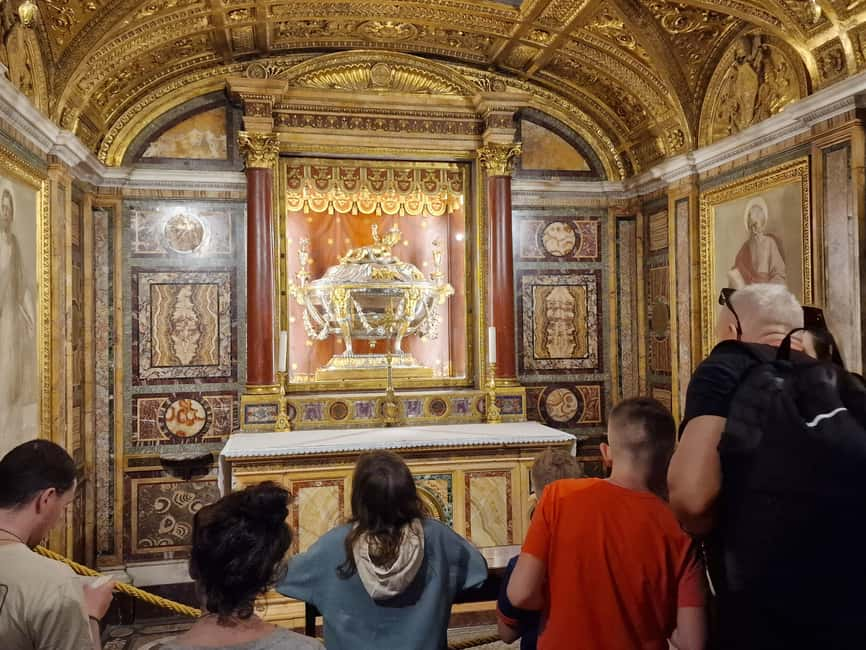
You start at Basilica Papale di Santa Maria Maggiore, one of the city’s most important Marian churches. The key detail here is what sits beneath the main altar: wood from the manger where the baby Jesus once lay. That connection to the Incarnation sets a tone before the tour moves into the Passion story.
Santa Maria Maggiore is also one of those Rome churches that gives you immediate visual rewards. Different eras of Italian art show up inside, which is a reminder that relic devotion in Rome was never only about one time period. It kept getting re-framed by later generations.
One detail that adds personality is that the church holds the body of the devout Baroque master Gian Lorenzo Bernini. Even if you are not a hardcore art history person, it helps you see the continuity: sacred memory, then centuries of artists shaping how that memory looks and feels.
Practical note: church dress rules apply. Shoulders and knees must be covered, and the tour guidance specifically says no shorts, short skirts, or sleeveless shirts. It is not picky for its own sake. It is how you get respectful access inside.
Santa Prassede: 9th-Century Mosaics and the Scourging Pillar
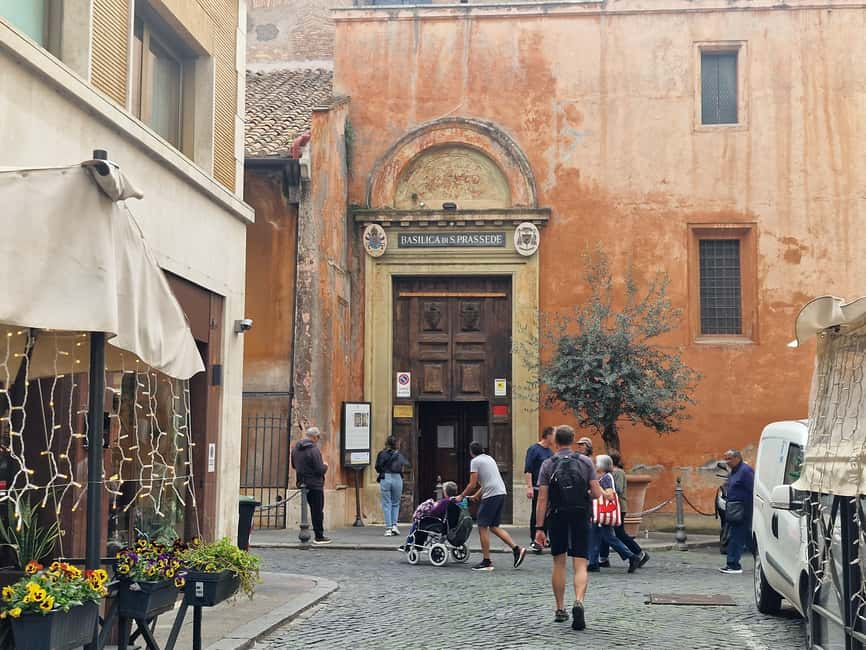
Next comes Santa Prassede, famous for its 9th-century mosaics. This is one of the best kinds of stops because mosaics are not just decoration. In many Roman churches, mosaic programs act like visual theology, teaching doctrine through light, color, and sacred figures.
But this stop is also a relic stop. You will be guided to the stone pillar on which Jesus was scourged, traditionally connected to the Praetorium in Jerusalem. The tour frames it as an object brought to Rome in the 13th century, which is a useful detail for understanding how relics were not only “found” once. They were moved, authenticated through tradition, and then woven into Roman devotion over time.
Here is what I think makes Santa Prassede especially valuable for you: you get the contrast. Santa Maria Maggiore gives you a big, communal foundation. Santa Prassede brings you closer to the Passion scene in a way that feels concrete, especially once you understand the location claim behind the scourging pillar.
Same city, a completely different kind of day:
- Vatican Museums & Sistine Chapel Tour with Optional Basilica
★ 4.3 · 67,413 reviews - Vatican Museums, Sistine Chapel & St Peter’s Basilica Guided Tour
★ 4.5 · 39,149 reviews - Rome: Colosseum, Palatine Hill and Roman Forum Guided Tour
★ 4.8 · 32,814 reviews - Rome: Guided Tour of Colosseum, Roman Forum & Palatine Hill
★ 4.7 · 27,897 reviews
Scala Sancta: The Holy Steps and the St Luke Icon
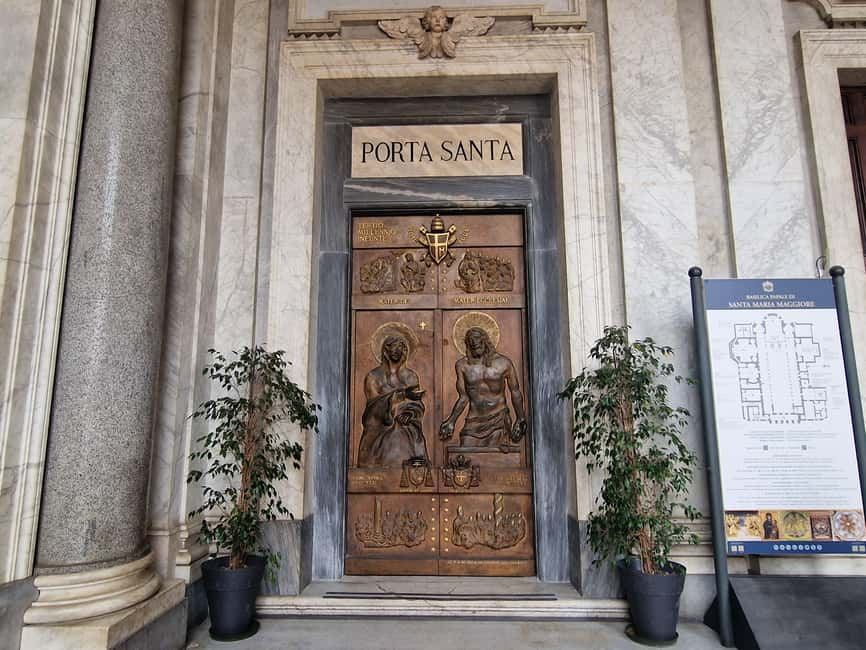
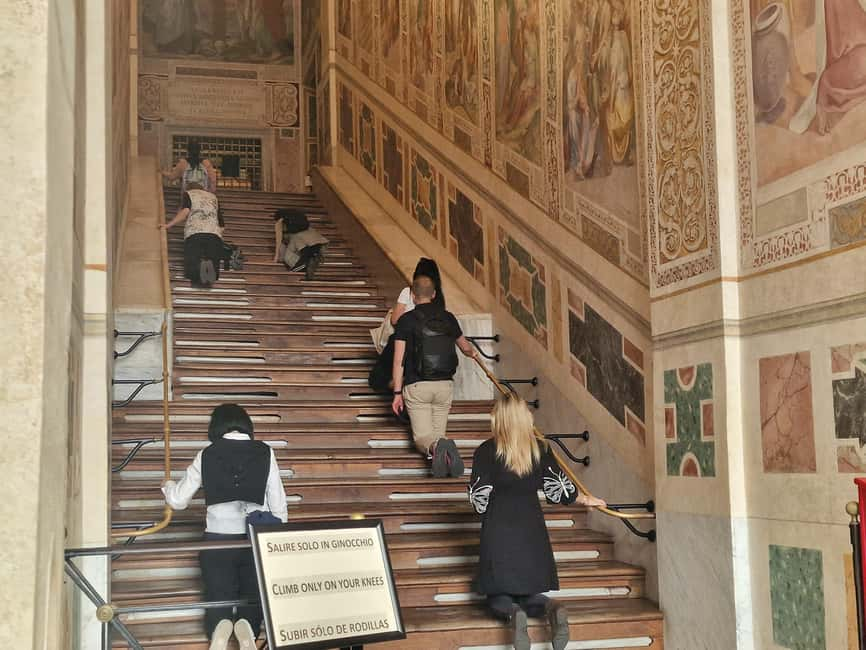
Then you reach Scala Sancta (Holy Steps), associated with Jesus being judged by Pontius Pilate and transported to Rome in the 4th century by St Helena. The emotional weight of these steps is famous because pilgrimage tradition often includes ascending them on your knees. This tour does not promise that full tradition, so you should go in expecting a guided look rather than a full knees-up ordeal.
What you will still get is the chance to peer into the Holy of Holies area at the top and see the icon painted by the Gospel writer St Luke. That piece matters. It turns the visit from only “here is an object” into “here is sacred story, interpreted through art and tradition.”
This stop is where timing can feel tight, because Scala Sancta is structured and you may spend more time than you expect in line or waiting periods tied to how the space is managed. If you are the type who hates feeling rushed, try to arrive with a calm mindset and treat this stop as a moment of quiet attention rather than a checklist.
Basilica di San Giovanni in Laterano: Borromini Details and the Peter and Paul Skulls
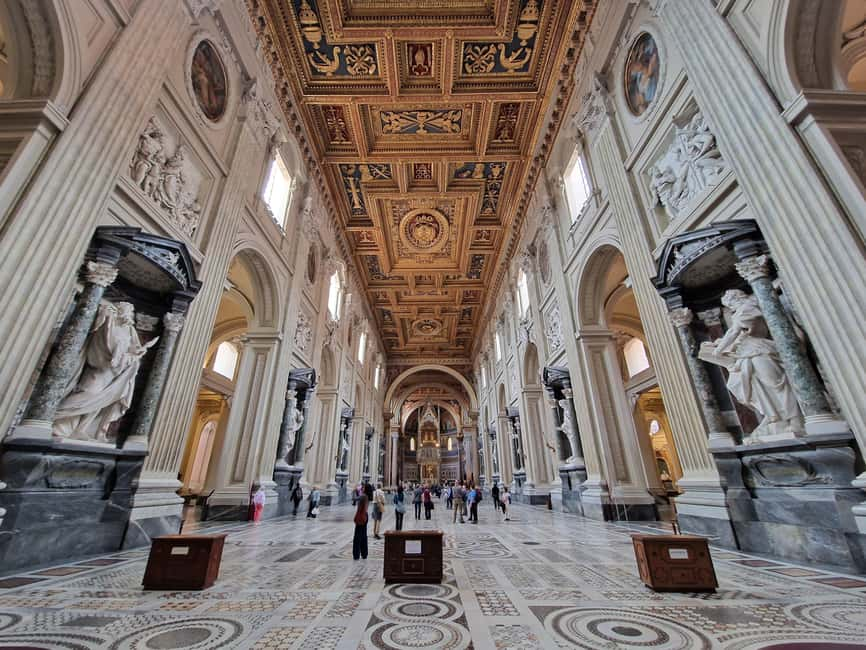
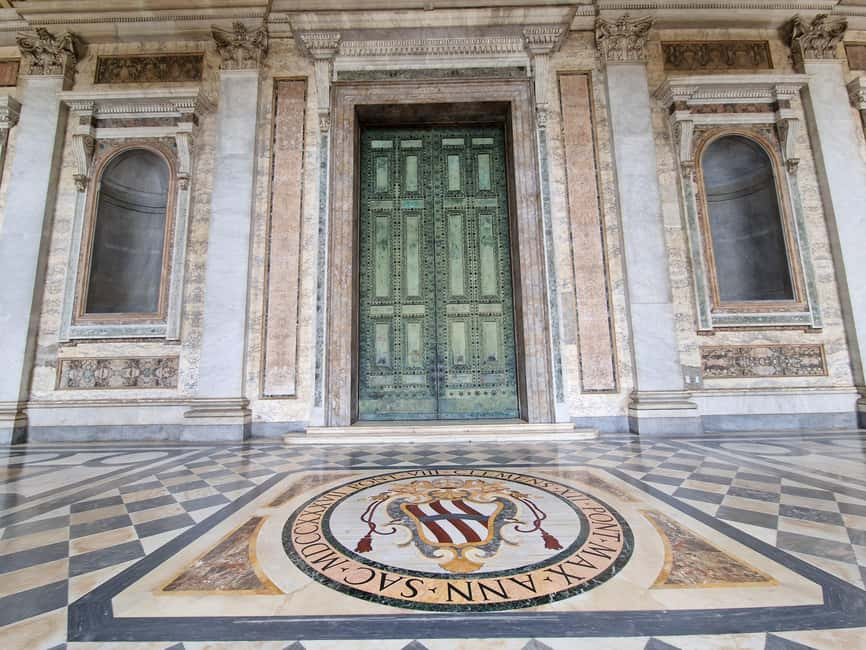
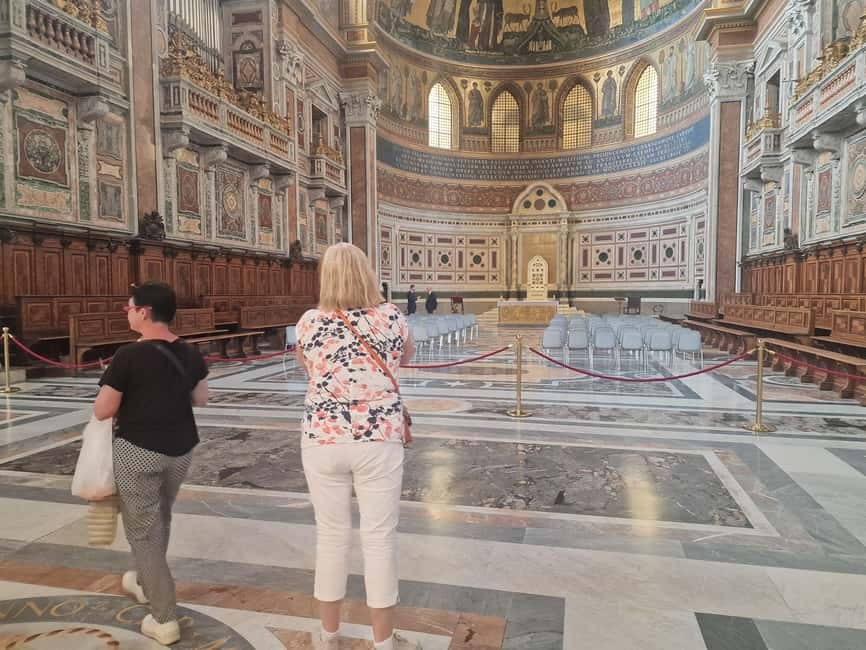
Your next stop is Basilica of Saint John Lateran (San Giovanni Laterano). This is a major Roman basilica, and the guide will steer you to meaningful details rather than letting you wander.
You will hear about the architectural design attributed to Borromini and you will learn the symbolism and history tied to a striking mosaic. That combination is a big win. Even if you do not study architecture at home, it helps you recognize that Roman churches are built like storytelling machines. The design choices are part of the message.
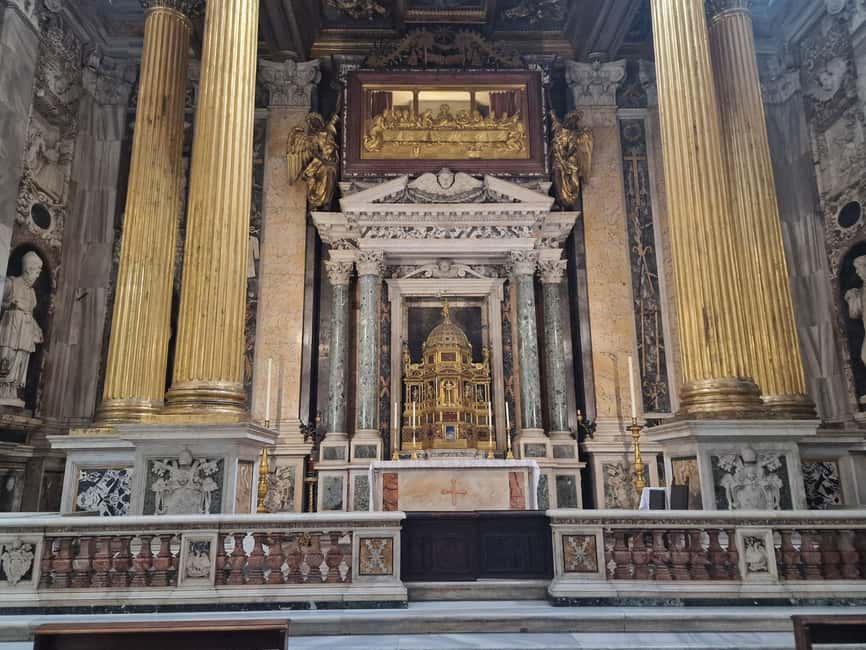
Then there is the relic element in a very direct way. Your guide points out the place above the high altar where the skulls of Sts Peter and Paul are said to rest. This is one of those details that makes the tour feel like a real pilgrimage circuit. You are not just hearing about saints as names. You are seeing how Rome physically marks their memory within a grand sacred space.
Holy Cross in Jerusalem: Nails, Thorns, Cross Wood, and Holy Sepulcher Fragments
The climax is the Basilica of the Holy Cross in Jerusalem, built on earth brought from Calvary in the 4th century. That detail is powerful on a basic level. You are not only walking through a museum-like church. The tour frames the very ground of the basilica as linked to the crucifixion site.
Inside, you will enter to see fragments and objects connected to the Passion story. The tour description highlights a set of relics that includes:
- fragments of the Holy Sepulcher
- the Cave of Bethlehem fragment connection
- a Nail of the Crucifixion
- two Thorns of the Crown of Thorns
- a small walnut board reading Jesus the Nazarene king of the Jews
- the wood of the Cross Jesus was crucified on
This is also where the tour includes time for reflection and prayer. That matters because the experience can become intense. When you see multiple Passion relics in one final stop, you need a controlled moment to process what you are feeling and why you came.
One consideration, based on real-world timing: this last basilica can be the most information-heavy. If the schedule runs tight, you might not get the same depth for every relic detail you hoped to focus on. The good news is that the tour still keeps a prayer slot built in, so you are not left feeling like it was all rushed at the end.
How Much Spiritual Time Do You Really Get?
This is where I like to be honest. A 3-hour walking itinerary that hits six major church spaces is not designed for slow meditation in every corner. You will be guided and informed, and you will get prayer time, but you will also be moving.
The upside is focus. You do not end up stuck in one place for hours while the rest of Rome passes by. Instead, you get a sequence that mirrors a Passion timeline, from sacred origins to judgement to crucifixion objects.
If you are the type who enjoys asking questions, the small group size can help. One of the big themes from the guide experience stories is that the guides are approachable and able to answer questions, which can turn “time in church” into real learning you can carry with you.
Value and What You Pay For at Around $96
At $96.29 per person for a 3-hour tour, the value comes from the combination of:
- entry included for each site
- an expert local guide
- a tight route that would otherwise take effort to piece together yourself
You are also getting small group attention, limited to 10 participants. For a tour that includes multiple basilicas and specific relic viewing, that structure is usually what makes the difference between “we saw churches” and “we understood what we were seeing.”
What is not included is also clear. Food and drink are not included, and transport to and from the tour is not included. If you plan a longer day, build in a meal stop before or after, not during. Also, bring water, because you are outside between stops even if you spend most of the time indoors.
Who This Tour Fits Best (and Who Should Skip It)
This tour is a great fit if:
- you are coming to Rome with a faith focus and want a Passion relic route
- you love the intersection of Christian tradition and Roman history
- you want guidance through key basilicas without spending your time researching each stop
It might not be the best fit if:
- you want a slow, sit-down museum pace
- you struggle with walking and stairs, because it is still a walking route even though it is described as wheelchair accessible
- you do not want to follow church dress rules, since shoulders and knees must be covered and sleeveless tops are not allowed
The good news is there is a practical option mentioned for limited mobility: if you have limited mobility, there is a golf cart option to consider. That detail matters because Rome is not kind to anyone who is fighting their own legs.
Practical Tips for Church Dress, Check-in, and Comfort
Before you go, pack for church and for walking. The tour specifically recommends comfortable shoes and comfortable clothes.
For clothing, stick to the simple rule: cover shoulders and knees. The guidance says no shorts, short skirts, or sleeveless shirts. If you are traveling in warm months, bring something light to cover your shoulders inside churches.
Check-in matters. The tour says you should arrive 15 minutes early, and tours depart promptly. Late arrivals can mean you miss the tour with no refunds. So treat this as a commitment, not a casual stroll.
Finally, plan for weather. The tour proceeds in all weather conditions unless a site closes for safety reasons. Bring water and consider sunscreen, a hat, and an umbrella based on season.
Should You Book This Rome Passion Relics Walking Tour?
I would book this tour if you want a spiritually focused, well-guided route through Rome’s Passion-related relic sites, with time to pray and a guide who connects what you see to why it ended up in Rome.
It is especially worth it if you like structure. In a short window, you hit Santa Maria Maggiore, Santa Prassede, Scala Sancta, San Giovanni in Laterano, and the Holy Cross in Jerusalem, with guided attention at each. At $96.29 and a small group size, it is also a sensible value compared to trying to coordinate multiple relic-focused church visits on your own.
Skip it if your priority is long stays in one church, or if you know walking and standing will be difficult. If that is you, consider the mobility option and plan your day around the 3-hour duration so you are not rushing afterward.
In short, this is for people who want Rome with a heartbeat, not Rome as a checklist.
Recently reviewed around Rome
- Ancient Etruscan Civilization Tour from Rome★ 5.0 · 16 reviews
- Colosseum with Arena Floor Express Guided Tour★ 3.5 · 22 reviews
- Private Tour – Ancient Ostia★ 5.0 · 42 reviews
- PRIVATE Appian Way and Lake Albano Ebike Tour with Italian Lunch★ 5.0 · 12 reviews
- Ancient Appian Way and Roman Countryside E-Bike Tour★ 4.5 · 13 reviews
- Ancient Appian Way PRIVATE Bike Tour★ 5.0 · 89 reviews
- Catacombs and Hidden Underground Rome: Small Group Max 6 People★ 5.0 · 293 reviews
- Amalfi Coast Day Trip from Rome by High-Speed Train★ 4.5 · 162 reviews
Walking Tours, compared.
Trastevere & Campo de Fiori Street Food Walking Tour
Read our review →
Paranormal Night Walking Tour & Secret Backstreets
Read our review →
Rome by Night Walking Tour – Legends & Criminal Stories
Read our review →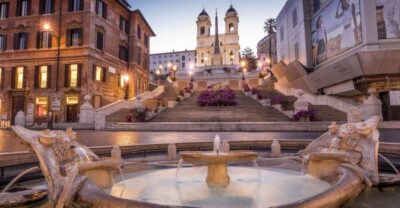
Guided City Center Evening Sightseeing Walking Tour
Read our review →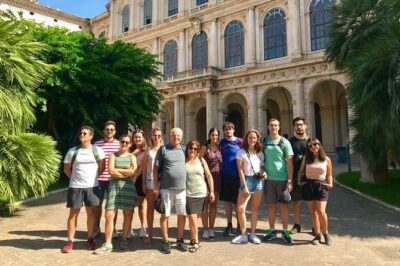
Best of Rome Walking Tour including Trevi Fountain
Read our review →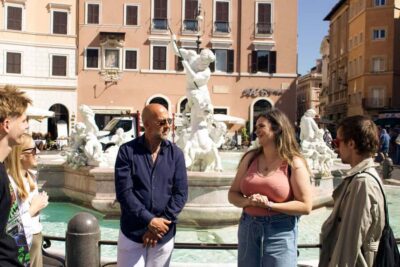
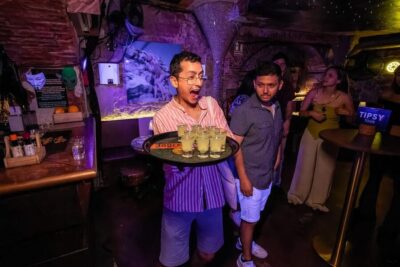
Forbidden History Walking Tour & Pub Crawl with Drinks
Read our review →
Guided Small Group Walking Tour of City Highlights
Read our review →Browse the lists this tour appears in