
Reviewed · ROME
Rome: La Traviata at St. Paul’s Within the Walls
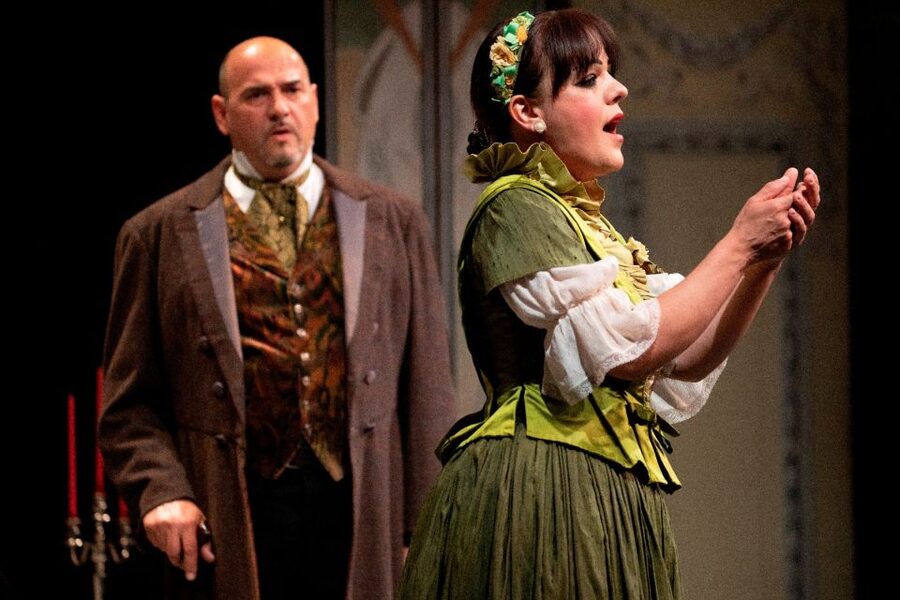
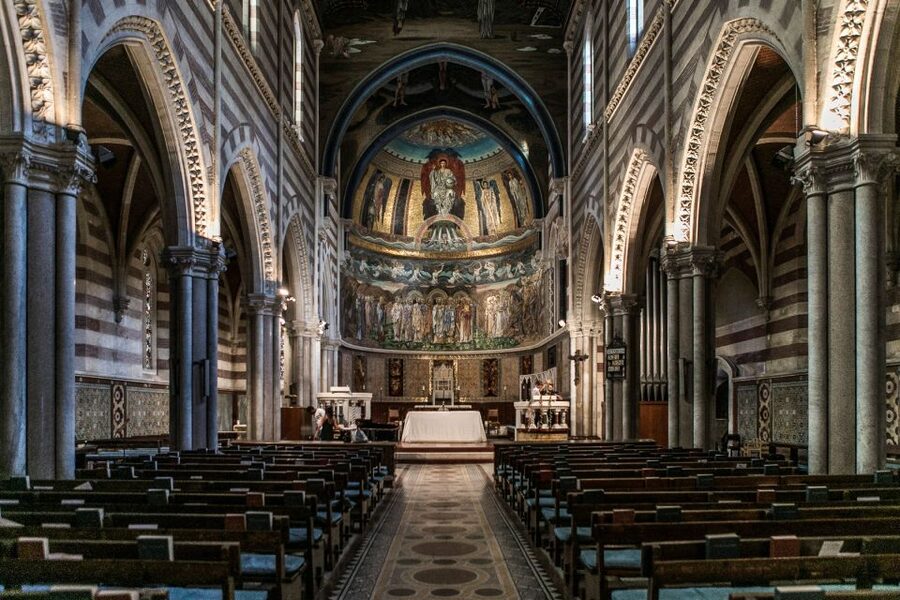
La Traviata in Rome is already a big deal, but the real hook here is the setting: Giuseppe Verdi in St. Paul’s Within the Walls, one of the city’s most storied churches. You get a world-famous opera story, set to Verdi’s music, played by professionals in a space that changes how sound travels.
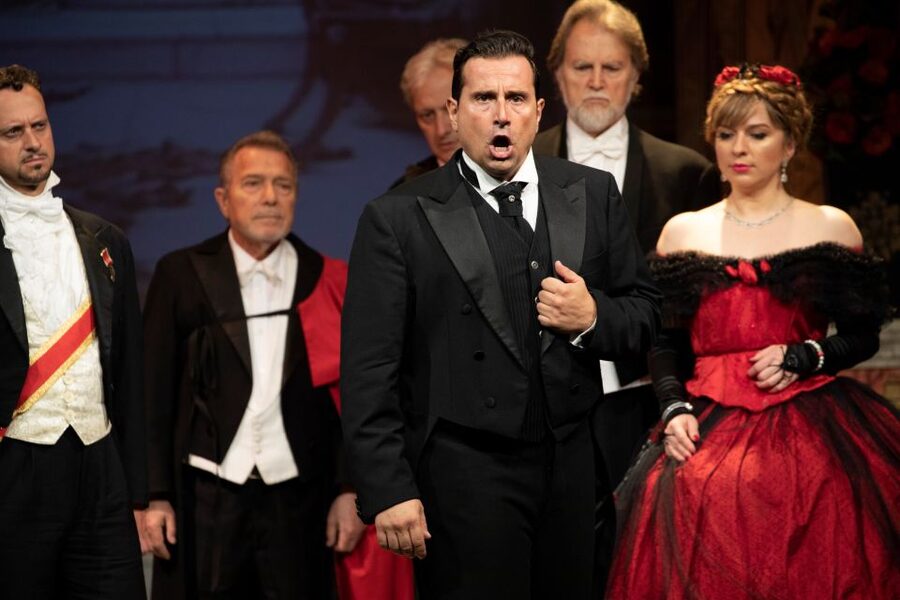
I especially like two things about this experience. First, you’re watching a complete performance with costumes and scenes, not a trimmed version. Second, the orchestra and cast are real professionals, with the ensemble I Virtuosi dell’opera di Roma made up of professors from top Italian conservatories.
One thing to think about: views and comfort depend a lot on where you sit. The church has a mostly level seating layout, and the benches can feel a bit rough for a 2-hour show.
Key things to know before you go
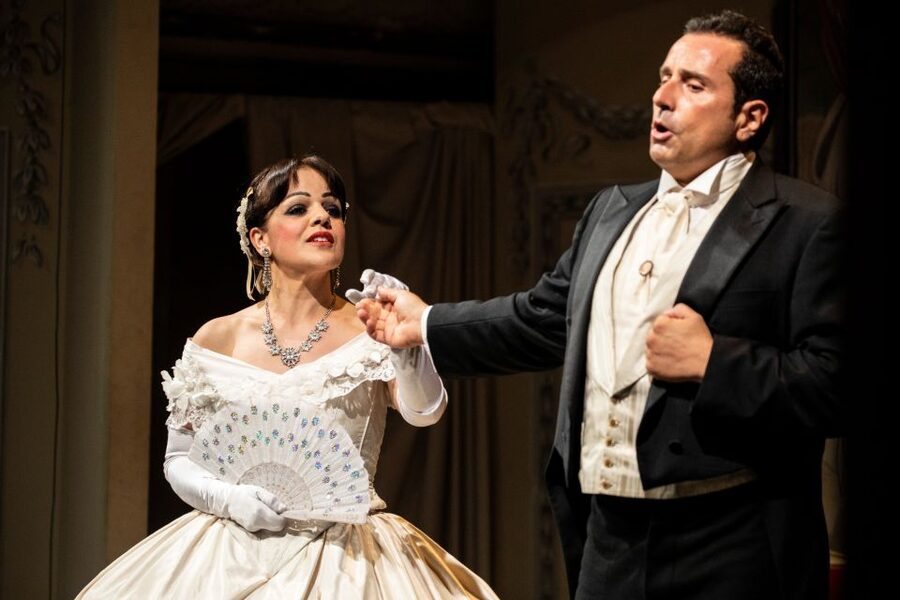
- A full staged La Traviata with costumes and scenes, not just a concert-style performance
- Church acoustics that make voices carry in a way you do not get in a typical theater
- Seating categories that matter because sightlines are not perfect from every row
- Professional musicians with I Virtuosi dell’opera di Roma, built for the Italian lyrical tradition
- A true “one-room” night in the heart of Rome, with no food included, so plan your timing
Why Verdi in St. Paul’s Within the Walls feels different
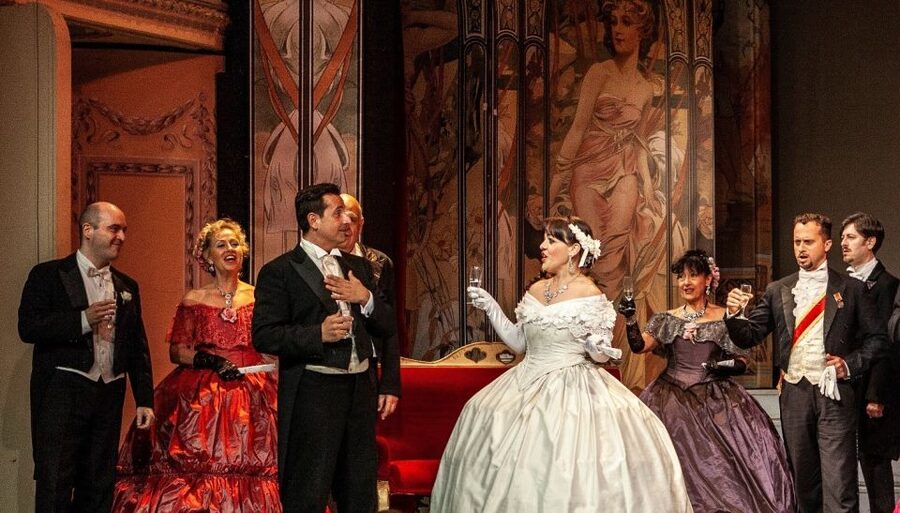
Opera nights often come with a lot of “things around” the music, like a big stage, a massive hall, and formal theater rules. Here, the experience is stripped down to the essentials, and that is exactly why it works.
La Traviata is Verdi at his most famous and most emotional. It is a three-act opera set in mid-1800s Paris, telling the impossible love between Violetta, a well-known courtesan, and Alfredo, a young nobleman. Since the story is already built for heartbreak, the church setting adds a “human scale” to it. You feel the drama in the room, not somewhere far away.
The other smart part is that this is not marketed as a history lesson with music in the background. You’re there for performance quality, and the organizers lean into the full opera experience, including costumes and scenes.
Other things people book around Rome:
- Vatican Museums & Sistine Chapel Tour with Optional Basilica
★ 4.3 · 67,413 reviews - Vatican Museums, Sistine Chapel & St Peter’s Basilica Guided Tour
★ 4.5 · 39,149 reviews - Rome: Colosseum, Palatine Hill and Roman Forum Guided Tour
★ 4.8 · 32,814 reviews
The church setting, from acoustics to sightlines
St. Paul’s Within the Walls does two jobs for you. It makes the performance feel special and it shapes your listening.
On the sound side, a church is not a neutral box. The way reverberation works can help big vocal moments land with power. Many people love that the voices sound especially clear and present in this kind of room. Lighting and acoustics are also part of the design, so the show feels designed for the space rather than tacked on.
On the view side, you have to be realistic. This venue does not have the kind of sloped floor you would expect in a modern opera house. That means seats in the back can make it harder to track faces and stage action. Some seats can also be awkward for watching performers if furniture or angles block your line of sight.
Practical takeaway: if you care about seeing the cast clearly, treat seat choice as part of the experience, not an afterthought.
Seats matter more than you think
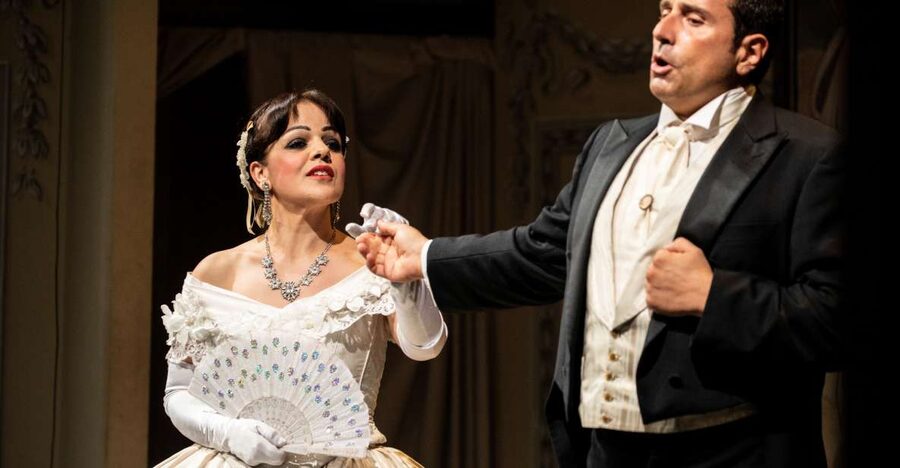
You can choose from different seating categories, and I think that is the right call for this venue. In a theater with a strong sloped layout, “front vs. back” is mostly about how close you feel. In this church, it can also affect what you can actually see.
Front row and closer sections tend to come with better face visibility and a clearer view of stage movement. The tradeoff is that you might be closer to the orchestra area, depending on where the ensemble sits. If you are sensitive to sound balance, you may notice that the orchestra can sometimes be loud in certain passages. (That is not necessarily a defect, it is just the natural result of how sound behaves and how the band projects in this space.)
If you are stuck with a less favorable view, do not panic. You can still follow the story through the singing and pacing. But you should adjust expectations. This is an opera, not a movie with close-ups.
Your 130-minute evening, step by step
This is a single event, but the flow matters. Here is the rhythm I suggest you plan for.
Same city, a completely different kind of day:
- Rome: Guided Tour of Colosseum, Roman Forum & Palatine Hill
★ 4.7 · 27,897 reviews - Rome: Colosseum & Forum with Audio Guide App -Optional Arena
★ 4.2 · 24,770 reviews - Rome: Colosseum, Roman Forum and Palatine Hill Guided Tour
★ 4.5 · 23,903 reviews - Rome: City Sightseeing Hop-on Hop-off Bus with Audioguide
★ 4.0 · 16,045 reviews
1) Arrive and exchange your voucher
Your main task before the show is simple: exchange your voucher at the St. Paul’s Within the Walls ticket counter before it starts. This is the moment to solve problems early, like finding the right entry point or checking seating.
Tip that saves stress: arrive with a buffer. Rome can move slower than you expect near central sights, and you want time to locate your ticket spot without rushing.
2) Settle in and get comfortable
You will be seated for about 130 minutes. That includes full performance time, with the opera’s natural pacing and breaks built in.
Comfort varies by seat. Some people find the benches workable. Others flag that the seating can be uncomfortable for a long stretch. If you are the type who needs support to sit for 2 hours, consider bringing what you can within venue rules, or choose seats that feel best for you.
Also: keep an eye on ventilation and temperature. Churches can run warm during full evenings, especially as the room fills.
3) The performance starts, and the story carries you
You should expect the full La Traviata experience: three acts, Verdi’s score, and the romance-to-tragedy arc that makes the opera so famous. The setting in mid-1800s Paris frames the emotional stakes from the start, and the staging uses costumes and scenes to help you track what is happening, even if you do not speak Italian.
Language note: the experience languages are Italian. If you are not comfortable with Italian, you may still follow the plot through dramatic singing, staging, and repeated musical cues, but the spoken or lyrical text will be in Italian.
4) The opera ends, and you leave with a different kind of memory
When it finishes, you leave with an unusual kind of souvenir: the feeling of having heard a masterpiece in a real Roman monument. It is less “big night out” and more “intimate cultural event,” where the room itself stays with you.
The orchestra and cast: what professional really means here
This performance features the orchestra I Virtuosi dell’opera di Roma. The group is described as being formed by professors from prestigious Italian conservatories. That matters because this is not background music. Opera needs singers and instrumentalists who can match each other’s breath, pacing, and intensity.
What you will likely notice in the best moments is balance. When voices and orchestra align, Verdi can sound like a tight conversation. The soprano and tenor lines can cut through the room, and dramatic ensembles can hit with emotion.
There is one common caution from feedback: in a few places, the orchestra can seem a bit louder than the singers. That does not ruin the experience, but it can make certain vocal lines feel less crisp. If you have perfect-audio expectations, pick a seat that feels like it offers a good angle on the performers and band.
Phones, flash, and audience behavior rules
This is one of those “small thing, big impact” situations. In the reviews and show guidance, the venue enforces rules against filming and flash photography, and staff may ask repeat offenders to stop.
My advice: put your phone away unless you are checking a quick note before the performance. Even a few glowing screens can distract you, and if the sound bounces off the walls, flashing devices can feel especially disruptive.
You paid for the voices. Let the room do its job.
Food and drinks: plan your timing like an adult
Tickets include entrance only, and food and drinks are not included. That means you should treat the opera like a clean evening event, not something you pair with a long dinner at your seat.
Some venues allow bringing your own drinks, but the safe assumption is that you should not count on on-site service. If you want a drink with your night, eat beforehand and decide your plan for water and snacks based on what is available near the church.
Also keep in mind: if you are hoping for a pre-show drink, you will need to plan around Rome’s normal restaurant timing and walking distance.
Price, value, and how $47 fits the reality
At around $47 per person, this is not priced like a fancy, high-budget “opera tour bus” moment. What makes it feel good value is that you are getting several things that usually cost more separately:
- A world-famous opera (La Traviata) in full form
- A professional orchestra (I Virtuosi dell’opera di Roma)
- A prestigious and memorable venue (a major church in central Rome)
- Seating categories, so you can choose how much you want to pay for better sightlines
Could you spend more to get better comfort or a more traditional opera house experience? Yes. But for many people, the combination of famous repertoire plus a historic setting is the point. If you want a serious opera night without opera-house pricing, this is a strong candidate.
The key value test for you: decide what matters more, traditional theater sightlines or the “Roman church music” experience. If you want the classic opera-house feel, you might feel limited. If you want a one-of-a-kind setting and excellent vocal performance, you will likely feel you got your money’s worth.
Who this is best for, and who should reconsider
This works especially well if you:
- Want to experience La Traviata without needing to understand every word to feel the emotion
- Love Roman monuments and like performance in unusual settings
- Prefer a shorter commitment than a full-day culture plan, since this runs about 130 minutes
- Are okay choosing seats based on sightlines rather than assuming “any seat is fine”
It may be less ideal if you:
- Need theater-style sloped seating for full stage visibility
- Get uncomfortable on benches for extended periods
- Are extremely sensitive to sound balance between orchestra and voices (a few feedback notes suggest the orchestra can overpower singers in some passages)
Quick practical tips so you enjoy it fully
A few small choices can make a big difference in this kind of setting.
- Arrive early enough to exchange your voucher without rushing.
- If you care about seeing performers clearly, pick your seat category carefully.
- Assume you will not have much on-site food support, so plan to eat beforehand.
- Keep your phone put away. The rules against filming and flash are part of keeping the room enjoyable.
- Dress for a church evening. It can get warm, and you may sit still for the full runtime.
Should you book La Traviata at St. Paul’s Within the Walls?
If you want a famous opera in a genuinely Roman setting, I think this is a smart booking. The professional orchestra, the full staged performance with costumes and scenes, and the church acoustics create an experience that feels special even if you are not an opera die-hard.
Book it if you can treat seat choice as part of the deal and you are comfortable with a more “intimate” venue than a big opera house. Consider a different option if you strongly need perfect sightlines from any seat or if long bench seating will be a deal-breaker for you.
FAQ
How long is the La Traviata performance?
The activity runs for about 130 minutes.
Where do I exchange my voucher?
You need to exchange your voucher at the St. Paul’s Within the Walls ticket counter before the performance begins.
Is food or drinks included with my ticket?
No. Entrance tickets are included, but food and drinks are not included.
What languages is this experience offered in?
The experience languages are Italian.
Is the venue wheelchair accessible?
Yes, it is wheelchair accessible.
Are pets allowed?
No, pets are not allowed.
Is there a rule about filming or using flash?
The experience has rules against videoing and flash photography, and staff may ask people to stop.
Recently reviewed around Rome
- Rome: Castelli Romani Hop-on and Hop-off Tour★ 4.9 · 32 reviews
- Rome: Food Tour near Vatican City with Wine★ 4.8 · 100 reviews
- Rome: Scavenger Hunt Self-Guided Tour★ 4.6 · 15 reviews
- Hidden Rome: Small Group E-Bike Tour with Street Food Stops★ 4.9 · 144 reviews
- Rome: Highlights Tour in Golf Cart★ 4.9 · 28 reviews
- Rome: Hop-on Hop-off Bus Tour and Colosseum Experience★ 3.4 · 163 reviews
- Rome: Guided Haunted Rome Ghost Tour with Dowsing Rods★ 4.8 · 63 reviews
- Rome: Highlights Photo Shoot for Memorable Moments★ 5.0 · 32 reviews