
Reviewed · JEWISH GHETTO TOURS
Rome: Jewish Quarter and Campo de’ Fiori Street Food Tour
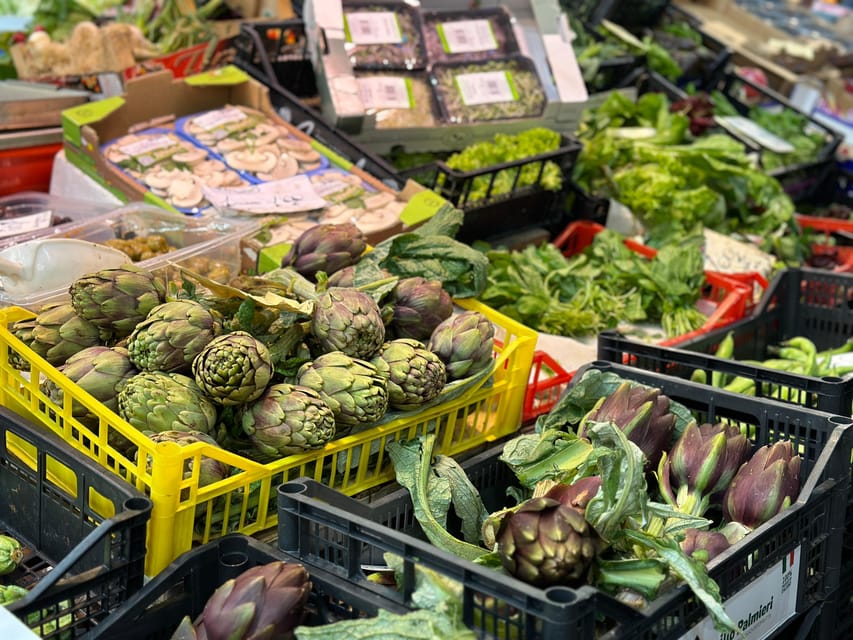
This is a food-focused walk that also teaches you how the Roman-Jewish story got written into the city’s streets. You start in Campo de’ Fiori with market energy, then step into the Jewish Ghetto for famous local specialties and key sights along the way.
I really like two things about this tour. First, the tastings are built around classic Roman street food like supplì and pizza al taglio, so you get the flavors, not just the photos. Second, the guide adds context as you walk, including how the sites in the ghetto connect to the food you are eating, and you even see major landmarks like Portico d’Ottavia and the Great Synagogue area.
One thing to think about: this is not suitable for everyone. It is not for vegans, and it is not a good choice if you have a gluten intolerance, since the tour includes wheat-based items like pizza by the slice.
Key things to know before you go
- Campo de’ Fiori market time: You get a street-food stop plus another wine-related tasting window around the square.
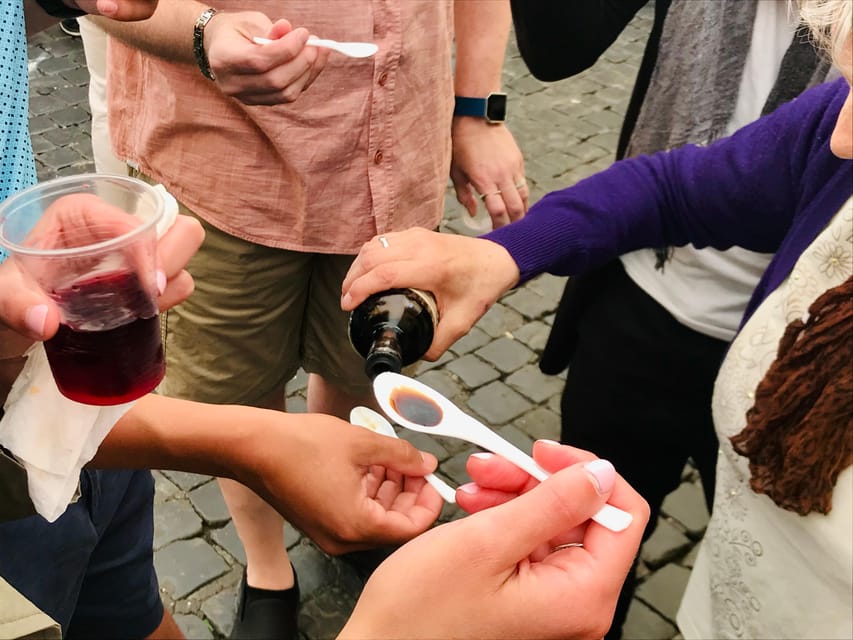
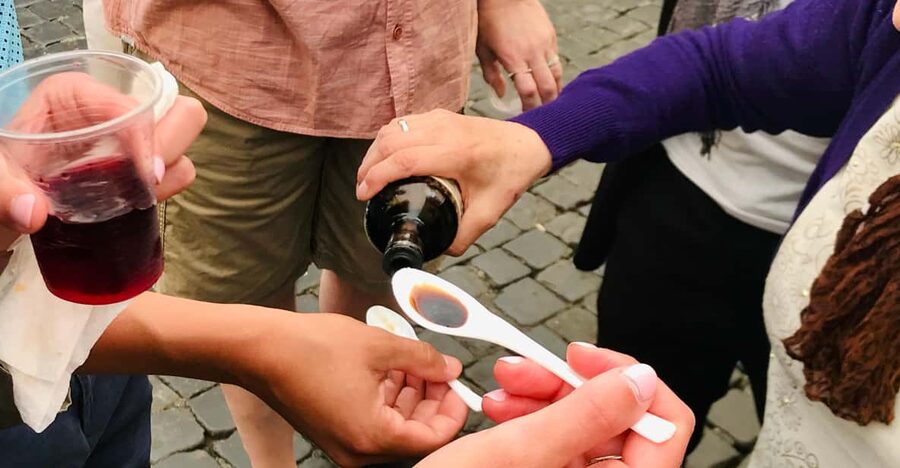
- Five food tastings: Think Roman bites plus extras like olive oil and balsamic vinegar samples.
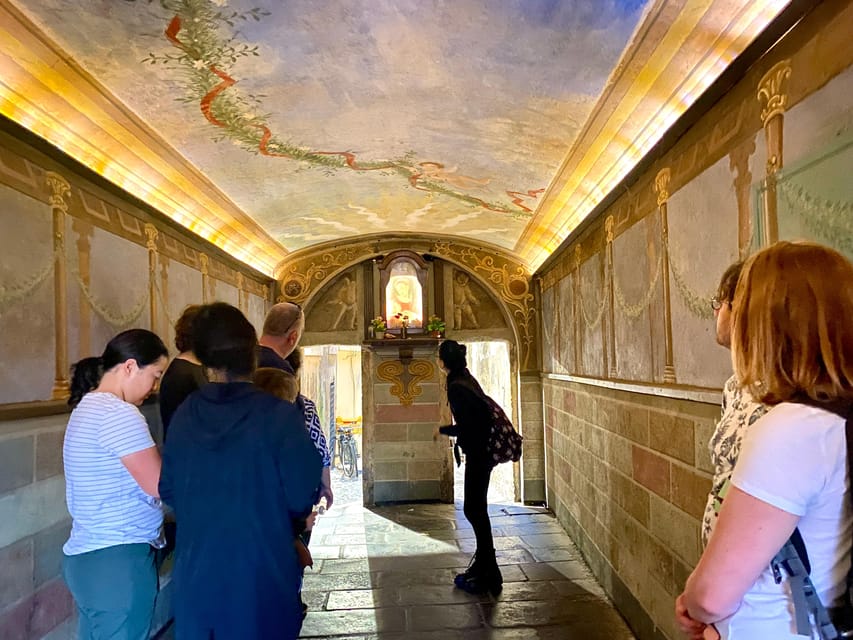
- Roman-Jewish stops: You walk through the area around Portico d’Ottavia and see the Great Synagogue from outside.
- Beer and wine included: You taste a sample of each, not just soft drinks.
- Market hours matter: The market is closed in the afternoons, so timing can affect what you see.
- Vegetarian options possible, if planned: You must request in advance, last-minute requests will not be accommodated.
Campo de’ Fiori is the perfect starting line for Roman street food
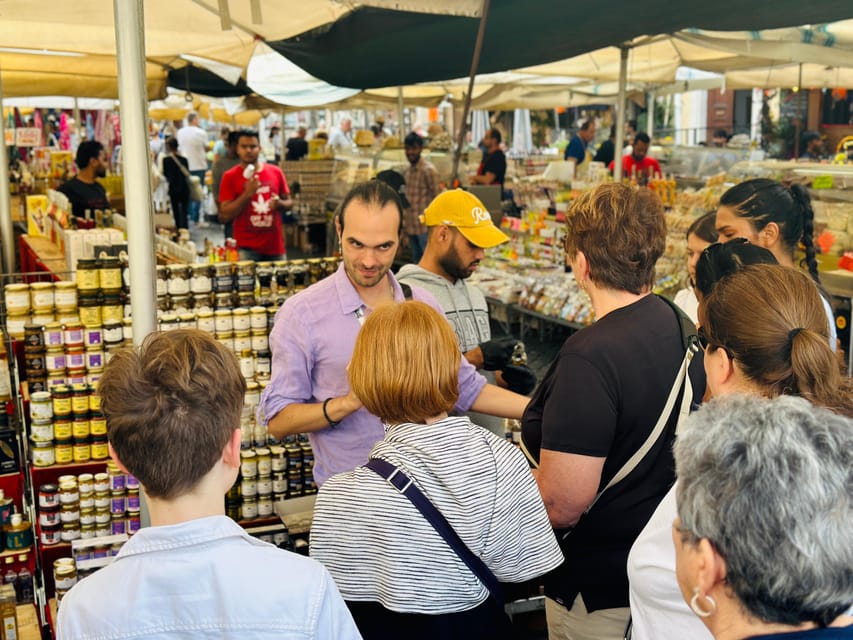
Starting at Campo dei Fiori puts you in the middle of Rome’s everyday rhythm. This square is where food culture shows up in real time, from quick purchases to people lingering over what looks good right now. The tour begins under the statue of Giordano Bruno, so it is easy to orient yourself before you meet your licensed guide.
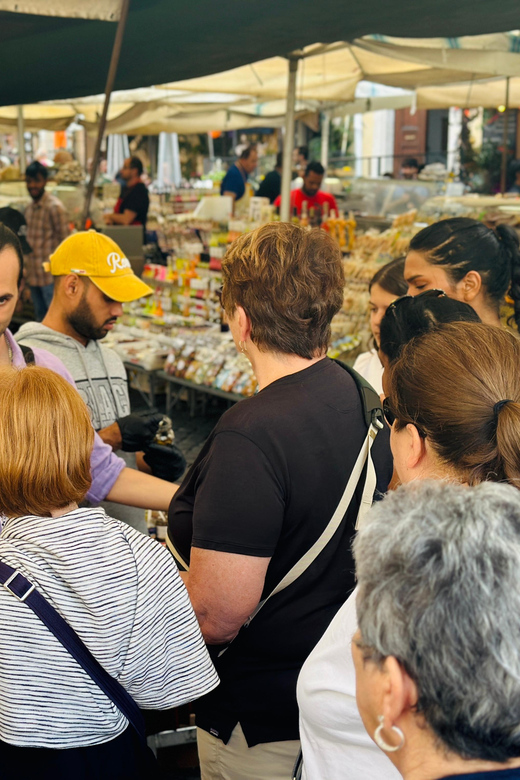
The first tasting window is designed to get you thinking like a local shopper, not like a sightseeing bus passenger. You sample street food right in the market scene, and the guide keeps you moving so you are not stuck waiting while other people catch up.
I like that the tour does not pretend Rome is only about big monuments. Here, you learn that food is part of how Romans read their own city. Even the “quick” bites have a story behind them, and you will start connecting taste with place fast.
More Jewish Ghetto tours in Rome:
- Rome: Trastevere or Jewish Quarter Street Food Tour
★ 4.8 · 3,839 reviews - Jewish Ghetto and Trastevere Tour Rome
★ 4.5 · 1,729 reviews - Jewish Ghetto and Synagogues with Jewish Roman Guide 3 Hours
★ 5.0 · 907 reviews
The tastings plan: what you actually eat, and why it matters
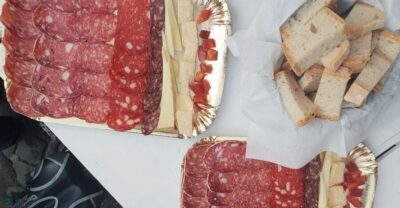
This walk is built around multiple stops with five different street food tastings, plus a beer sample and a wine sample. The exact menu can vary by day, but you can expect the core Roman classics mentioned for this experience, along with a few “ingredient” style tastings that help you understand why Roman food tastes the way it does.
Here’s what the tour highlights as part of the experience:
Roman staples you should be ready for
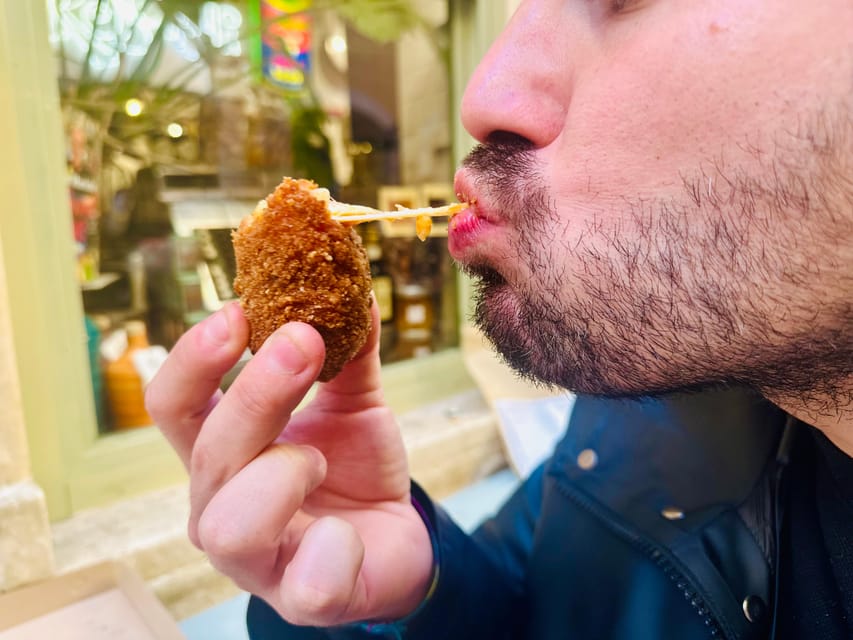
- Supplì: A rice ball filled with cheese and ragù. It is one of those foods that makes Rome feel snackable, and the ragù connection helps explain how Jewish and Roman culinary traditions can overlap in style, even when flavors differ.
- Pizza al taglio: Roman-style pizza sold by the slice. It is simple, portable, and very Roman in how it is meant to be eaten on foot.
Ingredient samples that change how you taste later
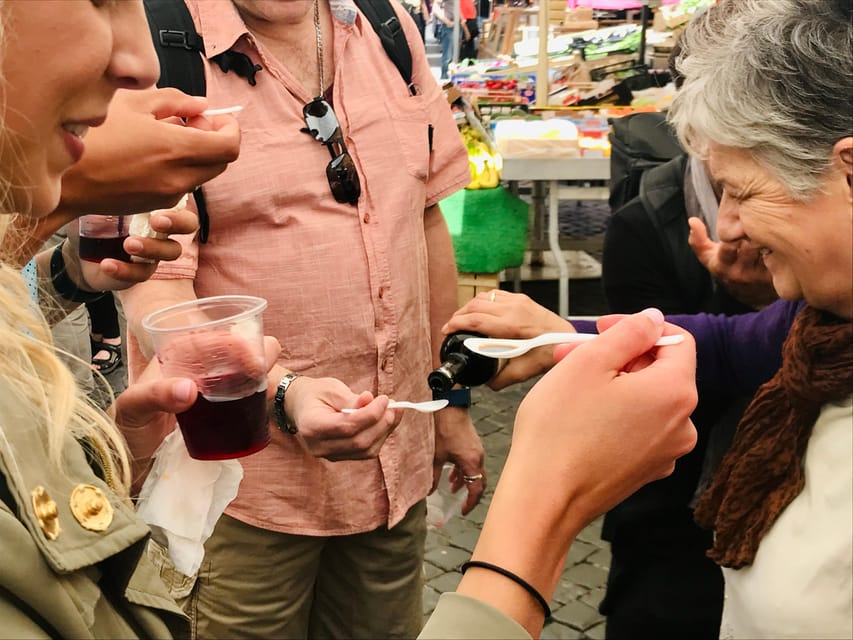
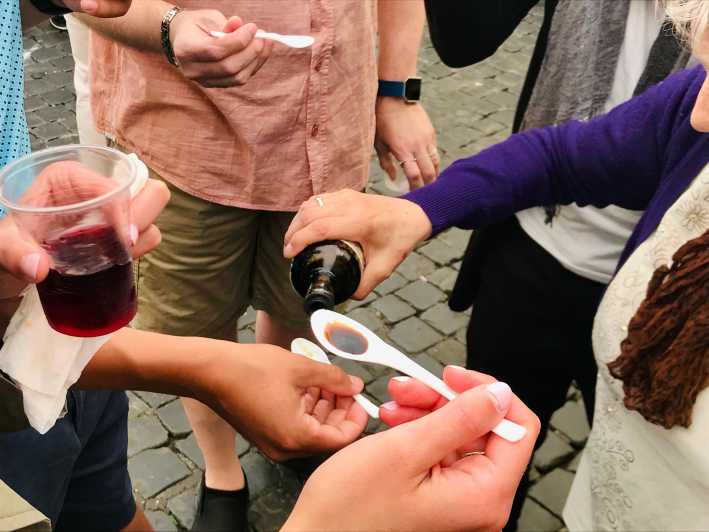
You also get samples connected to classic Italian pantry flavors, including truffles, olive oil, and balsamic vinegar. These are not just “bonus” tastes. They teach your palate what to notice in Italian food when you are later choosing gelato, cheese, or sauces on your own.
More Rome food tours to compare:
- Winner 2025 Rome Twilight Trastevere Food Tour by Eating Europe
★ 5.0 · 5,157 reviews - Rome Food Tour: Unlimited Tastings with Fine Wine & Barolo
★ 5.0 · 3,365 reviews - Rome: Trastevere Food tour with Free-Flowing Fine Wine
★ 5.0 · 2,853 reviews - Rome: Trastevere & Campo de Fiori Street Food Walking Tour
★ 4.9 · 2,768 reviews
Beer and wine, included as part of the flow
You will stop for a wine tasting and later for beer at Via dei Chiavari. Having alcohol included matters for two reasons. One, it keeps the tour from turning into five separate snack lines. Two, the guide can time sips and bites so you taste each item in the right moment rather than all at once.
One practical heads-up from real experiences
One past participant flagged a common situation in market areas: after tastings, some food purchases can feel overpriced compared with the quantity and quality you get. My advice is straightforward. Taste first, then decide what you want to buy. If you buy anything after the tasting stops, treat it like you would in any market, compare what looks similar, and trust your own judgment.
Walking through the Roman Ghetto: sights and the food connection
After Campo de’ Fiori, the tour shifts into a section of Rome that rewards slow walking. You are heading toward the Jewish Quarter, associated with the Roman Ghetto area near the Tiber River, in the zone of Rione Sant’Angelo.
This part works because it ties the walking route to what you eat. The guide points out landmarks like Portico d’Ottavia, passes by the Teatro Marcello area, and you see the Great Synagogue of Rome from outside. You are not going inside for a formal visit here, but you still get orientation, context, and a sense of how the neighborhood functions in the city.
Then comes the food stop in the ghetto itself. You will try the most famous Roman-Jewish specialty the guide wants you to know, with a dedicated tasting window in that neighborhood.
Why this part is worth your time
Rome has lots of “historic neighborhood” tours that stay surface-level. This one uses the streets as a map, then uses food as your reason to care. When you taste a specialty tied to Roman-Jewish traditions right after seeing key sights in the area, you remember the connection.
Also, this is where the tour feels the most “local.” The streets are not staged for you in the way some major monuments are. You are walking through a real part of the city, and your guide helps you read it with fresh eyes.
Portico d’Ottavia, Teatro Marcello, and seeing Rome as a set of layers
In the middle of the route, you spend time on foot near Portico d’Ottavia. This is one of those places where Rome starts stacking eras on top of each other visually. The portico gives you a strong sense of scale, and the nearby sights help you understand why people have lived, worked, and eaten here for centuries.
Next you get close to the Theatre of Marcellus area. Even if you have seen Roman ruins before, the tour keeps you focused on what matters for this experience. You are not just looking at stones. You are using the sights to ground the food stories your guide is telling.
Short sightseeing stops like these are easy to underestimate, but in practice they do something important. They keep the tour from turning into a checklist of places where you pause only to take a picture. Here, the pauses help you build a mental model of Rome, and that makes the tastings more memorable.
Pompey, the theatres, and why the route feels different than a museum day
One of the most interesting stops is around the Theatre of Pompey, where you get both sightseeing and a food tasting. The reason this matters is simple. Rome’s street food culture makes more sense when you realize how much of the city’s daily life used to orbit public spaces and crowd zones like theatres.
You also get a quick stop at Via dei Chiavari, paired with a short sightseeing moment and a beer tasting. That kind of small street break is useful. It lets you refocus, reset your appetite, and keep walking with the guide instead of feeling swallowed by long stretches.
If you like walking tours that feel like a conversation rather than a lecture, this itinerary style is a good match. The pacing stays active, and the route keeps switching between food and sight without long gaps.
Largo di Torre Argentina dessert: a sweet closer in the city center
The tour wraps at Largo di Torre Argentina. This is where you get a dessert stop, with time built in for a final taste.
A dessert ending makes sense for two reasons. One, you have already hit savory Roman street foods, so the sweetness helps balance your palate after the earlier samples. Two, you end in a lively, central area, which means you can keep exploring right away if you want to.
This is also a natural point to think about what you want to order later on your own. After tasting supplì, pizza al taglio, and the ingredient-style samples, you will likely have a better instinct for what is worth paying for when you go looking for your next meal.
Price and value: is $46 a good deal for Rome street food?
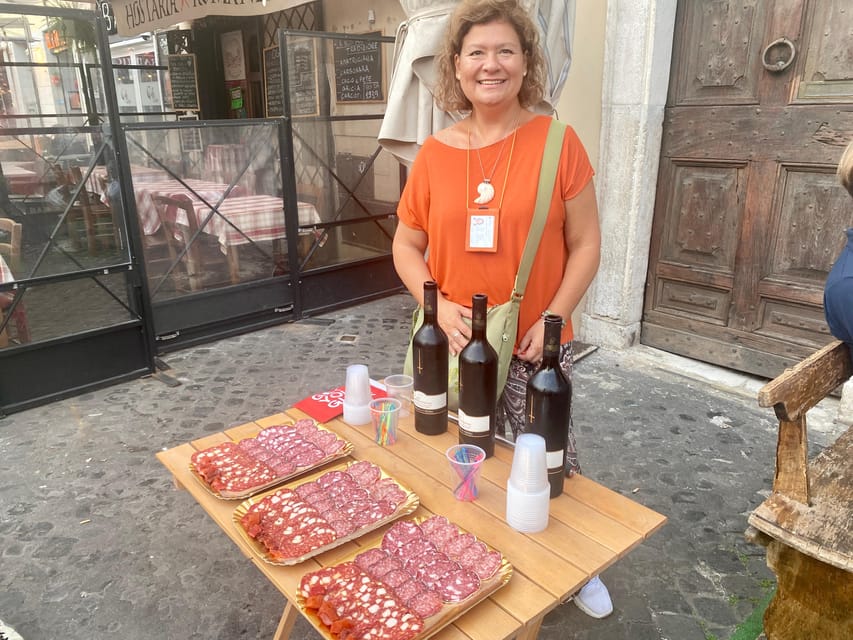
At $46 per person for a 2.5-hour walking tour with a licensed English guide, the value comes from what is included. You get five tastings, plus beer and wine. That is the heart of it.
What makes this feel like a good deal is that you are not just buying snacks. You are buying guidance and timing. The guide brings you to places like Campo de’ Fiori for food market context, and then connects the tastings to what you see as you walk through the ghetto area.
Also, the tour includes structure. Instead of you figuring out which vendor is best, you follow someone who already knows where the tastings fit. For Rome, where food options can be overwhelming, that alone can be worth real money in peace of mind.
The main “cost” to watch for is not the ticket price. It is the temptation to buy extra items after tastings. If you stick to a plan and treat purchases like you would anywhere else, this tour stays a smart value.
Who this tour suits best, and who should skip it
This experience is a great fit if you want:
- Roman street food flavors with real explanations
- A walking route that connects food to the Roman Ghetto and nearby sights
- An English guide who keeps things moving and makes the history feel relevant through what you taste
It may be a poor fit if:
- You are looking for a vegan tour, since vegans are not accommodated here.
- You have gluten intolerance, since the tour includes items like pizza.
- You need vegetarian food but did not plan ahead. Vegetarians can be accommodated, but you must advise in advance, and last-minute requests will not be accepted.
Timing tip: the Campo de’ Fiori market closes in the afternoons
One detail that can change your experience is market timing. The market is closed in the afternoons, so if your day in Rome runs late, check your departure time. If the tour is scheduled for an afternoon, you might not get the same market feel during the Campo de’ Fiori segment.
If you are flexible, morning tours usually make the most sense for this kind of format. You are there for the market atmosphere and the tasting flow that goes with it.
A note on guides, based on real experiences
The guides in past bookings have been a big reason people rate this tour so highly. For example, one participant praised Martina as charming and very interesting, and another described Ramona as enthusiastic and friendly, including the fact that even a frequent Rome visitor learned new things.
That matters because a food tour lives or dies on the guide’s storytelling. You are getting sight stops like Portico d’Ottavia, Teatro Marcello, and the Great Synagogue from outside, but the food connection is what turns it into more than a walk-and-eat routine.
Should you book the Rome Jewish Quarter and Campo de’ Fiori Street Food Tour?
Book it if you want a guided way to eat your way through central Rome, with real context for the Jewish Ghetto route and classic street food tastings like supplì and pizza al taglio. At $46 for 2.5 hours with five tastings plus beer and wine, it is good value when you consider you are buying both food and guidance.
Skip it if you need vegan options or have gluten intolerance, since this tour is not set up for those needs. Also, if you tend to get carried away by market shopping right after tastings, go with a simple plan. Taste, decide, and only buy what you truly want.
If you like tours that teach through food, this one is an efficient, memorable way to spend a half-day in Rome.
FAQ
Where is the meeting point for the tour?
Please meet your guide at the Campo dei Fiori square under the statue of Giordano Bruno located in the middle of the square.
How long is the Rome Jewish Quarter and Campo de’ Fiori street food tour?
The duration is 2.5 hours.
What food and drinks are included?
You get 5 different street food tastings, plus a sample of beer and a sample of wine.
What is the price?
The price is $46 per person.
Is the tour available in English?
Yes. The tour includes a live guide in English.
Can vegetarians be accommodated?
Yes, vegetarians can be accommodated, but you need to advise in advance. Last-minute requests won’t be accommodated.
Is the tour suitable for vegans?
No, it is not suitable for vegans.
Is it suitable for people with gluten intolerance?
No, it is not suitable for people with gluten intolerance.
Is the Campo de’ Fiori market open all day?
No. The market is closed in the afternoons, which can affect what you see during the Campo de’ Fiori portion.
More Food in Rome
- Rome: Food Tour with Unlimited Food and Barolo Wine
★ 4.8 · 1,883 reviews - Rome by Night – Ebike Small Group Tour – Food and Wine (Option)
★ 5.0 · 1,275 reviews - Rome:Appian Way E-bike Tour with Catacombs, Aqueducts & Food
★ 4.9 · 1,210 reviews - Rome Food Tour: Hidden Gems of Trastevere with Dinner & Wine
★ 5.0 · 1,166 reviews
More Food and Drink in Rome
- Rome: Tuscany & Montepulciano Day Trip with Lunch & Wine Tasting
★ 4.5 · 5,232 reviews - Rome Street Food Tour with Local Guide
★ 5.0 · 2,361 reviews - Rome: Award Winning Trastevere Group Food Tour with Wine
★ 5.0 · 2,273 reviews - Rome: Guided Food Tour in Trastevere
★ 4.8 · 2,266 reviews
Recently reviewed around Rome
- Ancient Etruscan Civilization Tour from Rome★ 5.0 · 16 reviews
- Colosseum with Arena Floor Express Guided Tour★ 3.5 · 22 reviews
- Private Tour – Ancient Ostia★ 5.0 · 42 reviews
- PRIVATE Appian Way and Lake Albano Ebike Tour with Italian Lunch★ 5.0 · 12 reviews
- Ancient Appian Way and Roman Countryside E-Bike Tour★ 4.5 · 13 reviews
- Ancient Appian Way PRIVATE Bike Tour★ 5.0 · 89 reviews
- Catacombs and Hidden Underground Rome: Small Group Max 6 People★ 5.0 · 293 reviews
- Amalfi Coast Day Trip from Rome by High-Speed Train★ 4.5 · 162 reviews
Jewish Ghetto Tours, compared.
Trastevere or Jewish Quarter Street Food Tour
Read our review →
Jewish Ghetto and Synagogues with Jewish Roman Guide 3 Hours
Read our review →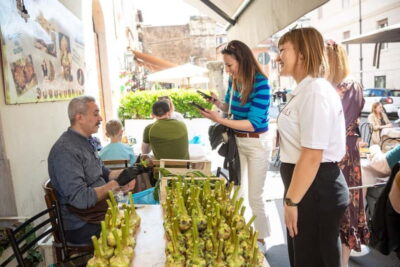
Eat Like a Roman Ghetto & Campo de’ Fiori Food Tour
Read our review →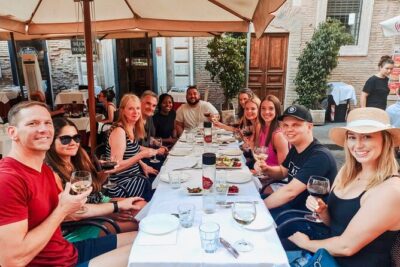
Jewish Ghetto & Piazza Navona: Food, Wine & Sightseeing Rome Tour
Read our review →
Food & Wine Tour of Campo de Fiori, Ghetto, Trastevere
Read our review →
Jewish Ghetto & Campo de Fiori by Night Food Wine Tour
Read our review →Browse the lists this tour appears in