
Reviewed · WALKING TOURS
Rome: Guided Walking Tour in English or Spanish
Rome at night has a different rhythm. The monuments look dressed up, but the real magic is that you get a guided path through the Historical Centre of Rome instead of aimless wandering.
I love how this tour strings together big name sights in a tight, walkable arc. You stop for real explanations at places like the Pantheon and Trevi Fountain, then you keep moving so the city starts to feel connected. I also love the human touch in the guide storytelling. Guides such as Dan, Alina, Sila, Theo, and Sharon have been praised for detailed, clear narration, plus the little context that makes statues and squares make sense.
One consideration: the meeting point can be tricky to spot. Multiple notes mention trouble finding the guide at the start, so arrive early and keep an eye out for clear directions, even if you think you are standing in the exact right spot. And yes, bring comfortable shoes because this is a walking tour, not a bus ride.
Key Highlights You’ll Feel Immediately
- A guided night route through the centre that hits major monuments while Rome is lit up
- Stop-by-stop context, with stories about politics, symbolism, and how Rome changed over time
- Real architectural moments at the Pantheon and other landmark squares, where you learn what to look for
- More than the headline sights, including a small church with a hidden painted illusion and lesser-known side details
- Flexible start points (and multiple options), so you can choose what fits your evening plan
- No food included, so plan for snacks or dinner on your own before or after
Why This 2-Hour Walk Works for Central Rome at Night
This tour is built for the part of the day when Rome feels most cinematic. Street lights soften the edges, crowds move differently, and the city’s geometry becomes easier to appreciate. A walking format also means you see the scale of the streets, the sightlines, and the way one plaza leads into the next.
For the money, you are really buying structure. At $28 for about two hours, the guide does the hard work of turning famous sights into something you can understand on the spot. You are not left with vague, I saw it, now what. You get short stops designed for learning without turning the evening into a lecture.
Just keep expectations practical. This is not a slow stroll with unlimited time at each stop. It is a purposeful walk. If you like to linger, you will enjoy the explanations, then you may want to come back later on your own for extra time.
More walking tours in Rome:
- Rome: Trastevere & Campo de Fiori Street Food Walking Tour
★ 4.9 · 2,768 reviews - Rome: Paranormal Night Walking Tour & Secret Backstreets
★ 4.9 · 1,921 reviews - Rome by Night Walking Tour – Legends & Criminal Stories
★ 4.5 · 1,003 reviews
Picking Your Start Point: Aracoeli, Pasquino, Trajan’s Column, or Piazza Navona
The tour offers different starting options, and they matter because they affect how easy it is to meet your guide quickly. Depending on what you book, you might start around Piazza d’Aracoeli or Piazza di Pasquino. The meeting point can also be described around Trajan’s Column or Piazza Navona for certain departures.
Here is the practical move: check your exact confirmation message the day of the tour and take it literally. One common issue is simply spotting the guide in a busy area. A few notes call for bigger visual markers, so don’t show up late and hope you will figure it out from afar. Arrive early, get your bearings, and be ready to ask for help if needed.
Also notice the ending points listed for drop-off can include Piazza Navona and the Colosseum area. At the same time, the activity is described as ending back at the meeting point area. Translation: you should plan your next stop nearby, but don’t assume you will finish far from where you started.
Stop 1: The Quick Set-Up at Piazza d’Aracoeli or Piazza di Pasquino
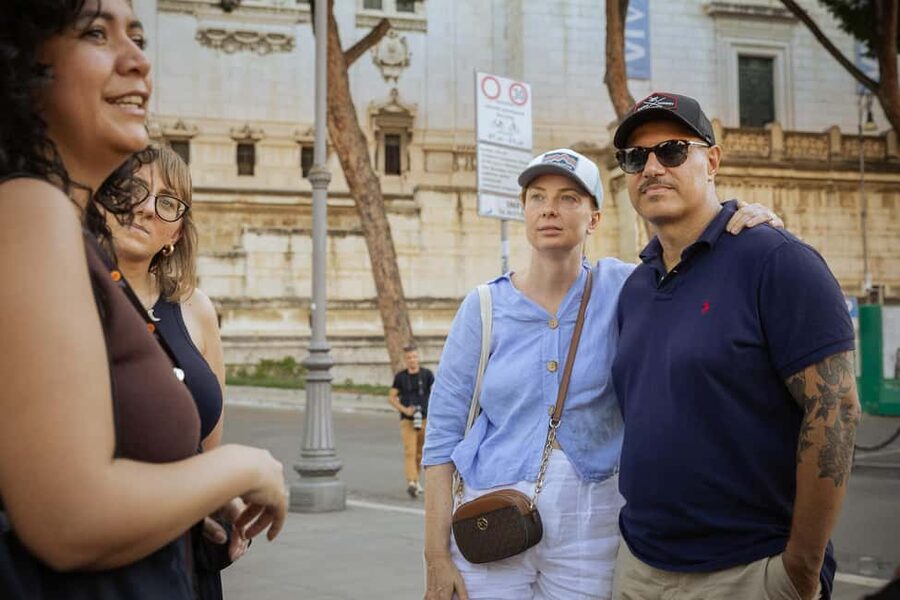
The tour begins in the historic centre with a meeting stop that depends on your chosen option. Starting around these areas gives your guide a chance to orient you fast. You usually get the early context that helps the rest of the walk click, especially if you are new to Rome’s street layout.
You will also feel the tour’s theme right away: not just sights, but stories. The route is designed so you understand why people built where they built, and what changed when Rome became the stage for modern Italy and later political drama.
If you are the type who likes to understand the why before the wow, this first segment sets you up well.
Monumento a Vittorio Emanuele II: How the Tour Connects Rome to Italian Unification
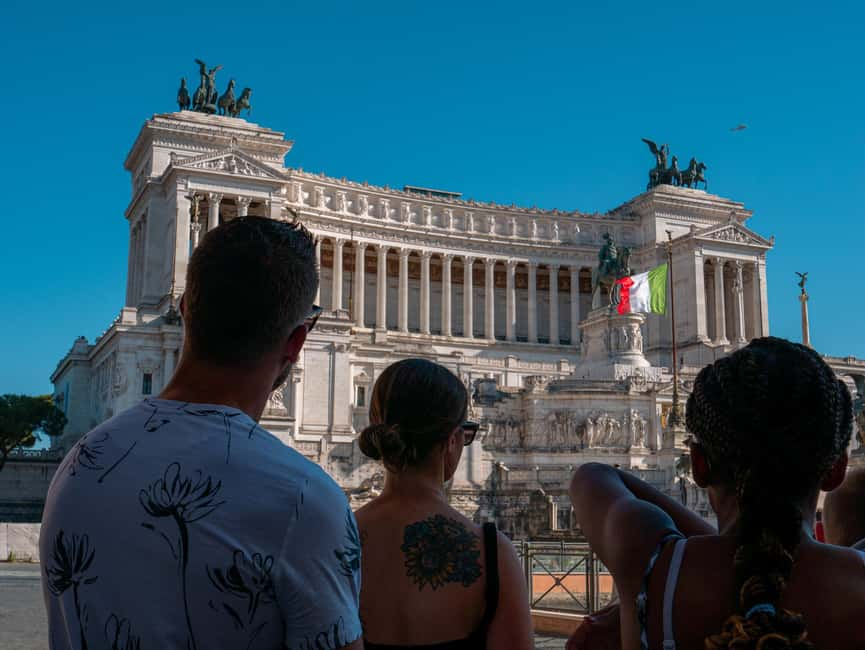
The second stop is at Monumento a Vittorio Emanuele II, with a short guided segment of about 10 minutes. This is a smart choice for a night walk because it anchors the evening in the theme of Italy’s more recent history, not just ancient ruins.
Even in a brief stop, a good guide can point out how this monument fits into the larger story of unification. You do not need to memorize dates to get value here. You just need the narrative thread. The best guides, like those praised in the notes, focus on symbolism, so the monument stops being a background landmark and becomes a clue.
Practical tip: since it is a monument area, there is often more open space and traffic noise. Stand where you can hear. If you start struggling to follow, you may need to move closer to the guide.
A few more Rome tours worth comparing
- Vatican Museums, Sistine Chapel & St Peter’s Basilica Guided Tour
★ 4.5 · 39,149 reviews - Rome: Colosseum, Palatine Hill and Roman Forum Guided Tour
★ 4.8 · 32,814 reviews - Rome: Guided Tour of Colosseum, Roman Forum & Palatine Hill
★ 4.7 · 27,897 reviews - Rome: Colosseum & Forum with Audio Guide App -Optional Arena
★ 4.2 · 24,770 reviews
Trevi Fountain at Night: More Than a Photo Stop
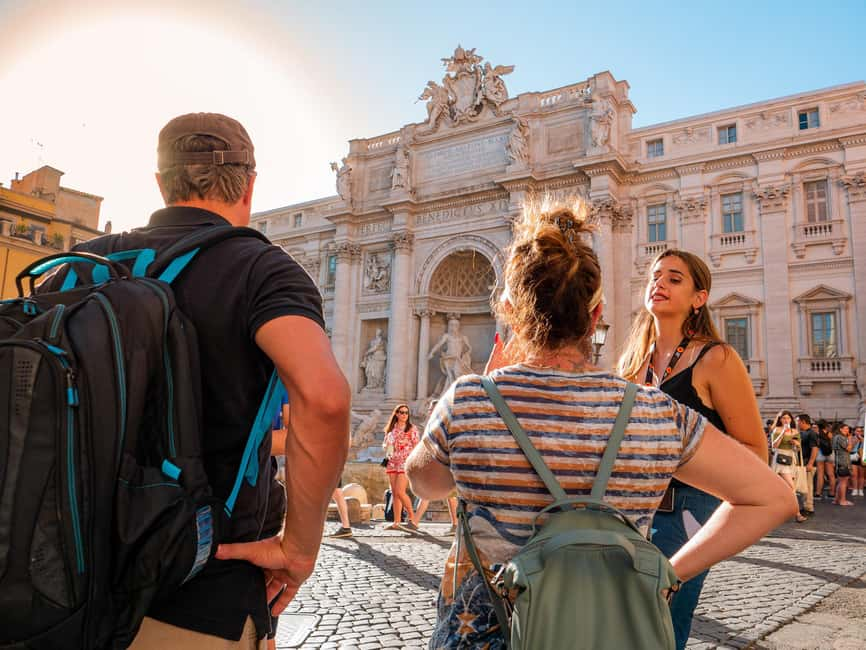
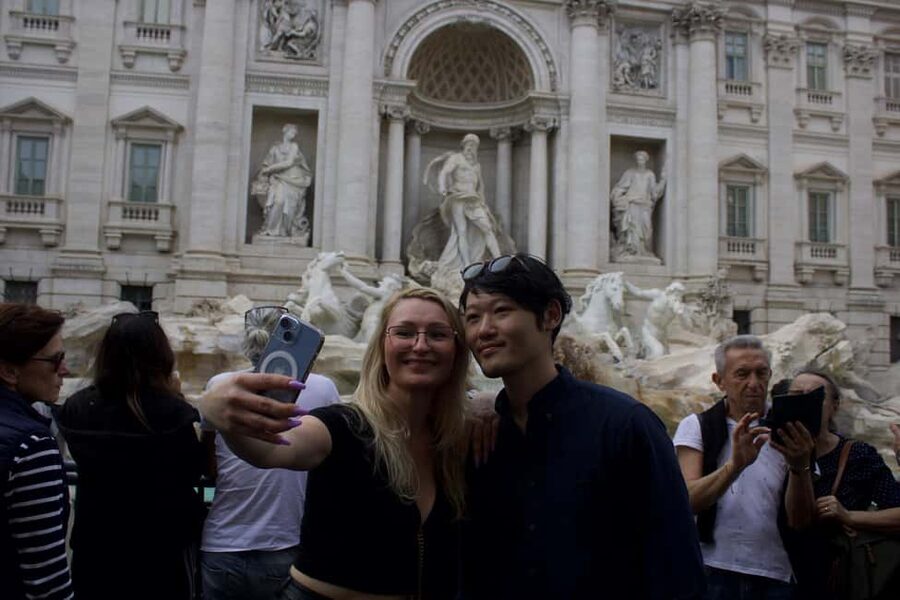
Trevi Fountain is next, with about 15 minutes guided. This is the stop where the tour earns its keep if you like learning how to look at a place.
Yes, Trevi is famous. But the tour’s value is in what you learn while you are there. The guide helps you understand the fountain’s role in the city and adds context about the surrounding squares and streets that lead you to the next big stop.
Also, you are seeing it during evening or nighttime light, which changes the feel even if you already know the postcard version. The stone looks different under lamps, and the details become easier to notice when your eyes are not fighting daylight glare.
A small caution: Trevi is a popular spot. If you care about photos, do a quick sweep, then come back for another shot after the guide finishes a key point. You will get better results than trying to balance both at once.
Pantheon: The Stop That Teaches You How to Notice Architecture
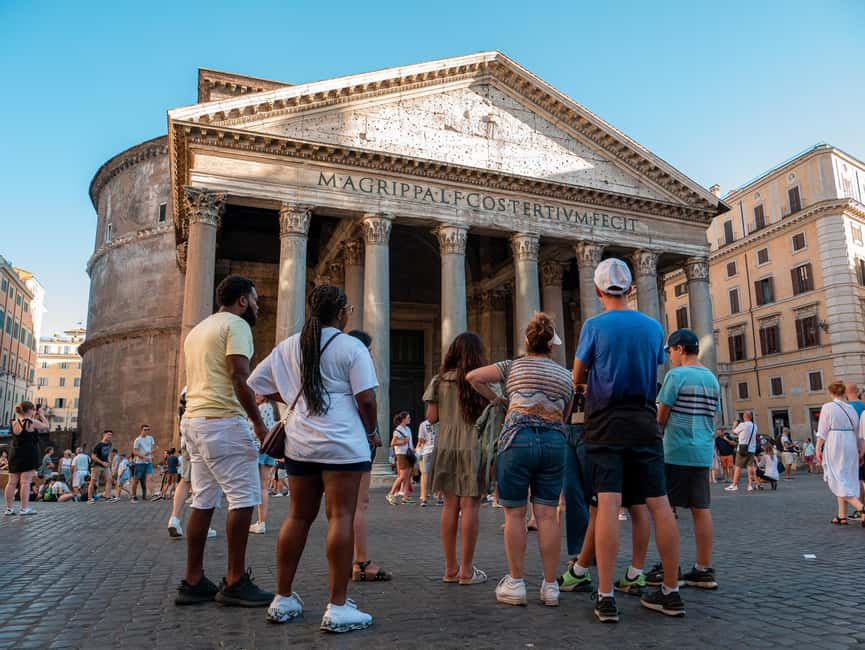
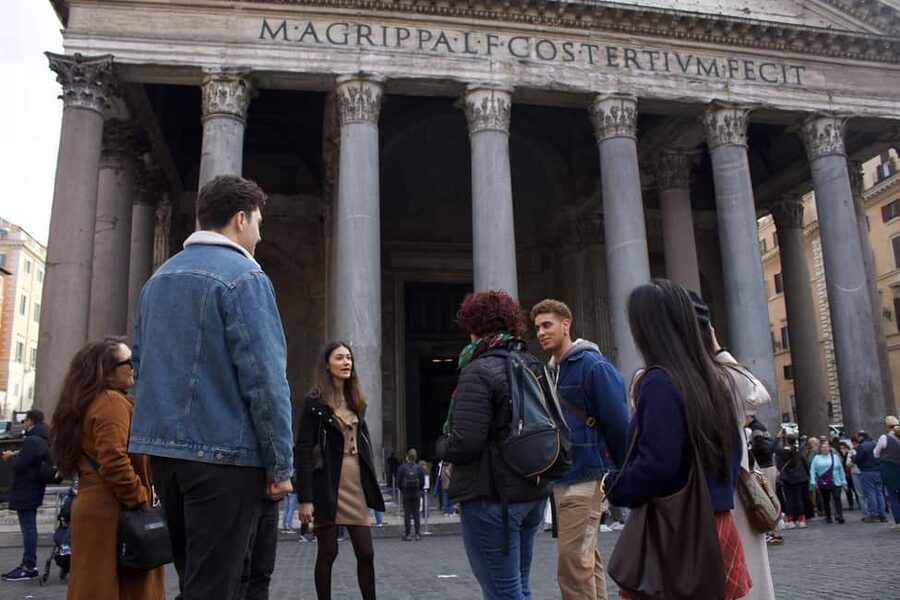
The Pantheon gets a longer guided visit of about 20 minutes, and that time matters. This is where the tour can turn from sightseeing into real understanding.
This kind of stop is perfect for learning what you should pay attention to. A guide can help you see the building not as a single impressive wall, but as a carefully designed space with meaning in the layout and form. When a guide explains why details are arranged the way they are, you walk away with mental bookmarks you can revisit later.
The tour also tends to use the Pantheon to connect ancient Rome to the rest of the walk. That makes the next squares feel less random. You start to notice the way the city organizes itself around power, faith, and public space.
If you want one reason to book this tour, it is this: you get a guided stop at the Pantheon that is long enough to actually sink in.
Piazza Navona: Stories, Squares, and the Theatre of Rome
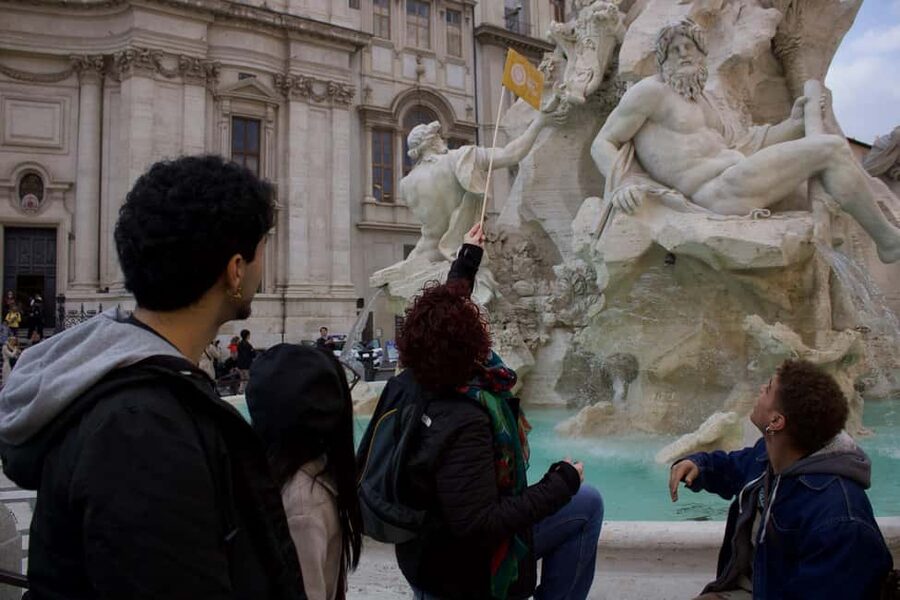
Piazza Navona is on the route with about 20 minutes guided. This square is a classic Roman stage, and the tour leans into that idea by focusing on how public spaces worked, who used them, and how the city’s evolution shows up in the layout.
What makes this stop work is the guide’s storytelling. In the notes, many guides are praised for humor, clear explanations, and pacing that keeps people engaged. That matters at a place like Piazza Navona, because it is easy to feel like you already know it from photos and still miss what is actually happening around you.
You will also get context that ties the squares to different periods of Rome. The tour is not only about what you can see, but about what the square meant to the people living through it.
Trajan’s Column: Finishing Strong with Roman Power in One Image
Trajan’s Column gets about 15 minutes guided. This is one of those sights where a guide can make a huge difference in how fast your brain locks onto the point.
The column is famous, but the tour helps you understand why it mattered, and how stories of empire show up in public monuments. It is also an efficient finale because it gives you a strong Roman anchor before you disperse to the listed drop-off areas.
If you came into the tour mostly for the big names, Trajan’s Column is the moment that can surprise you. It is not just another photo. It is a visual summary of the kind of Rome that built its messages in stone.
The Tour Experience: Pace, Listening, and Keeping Up
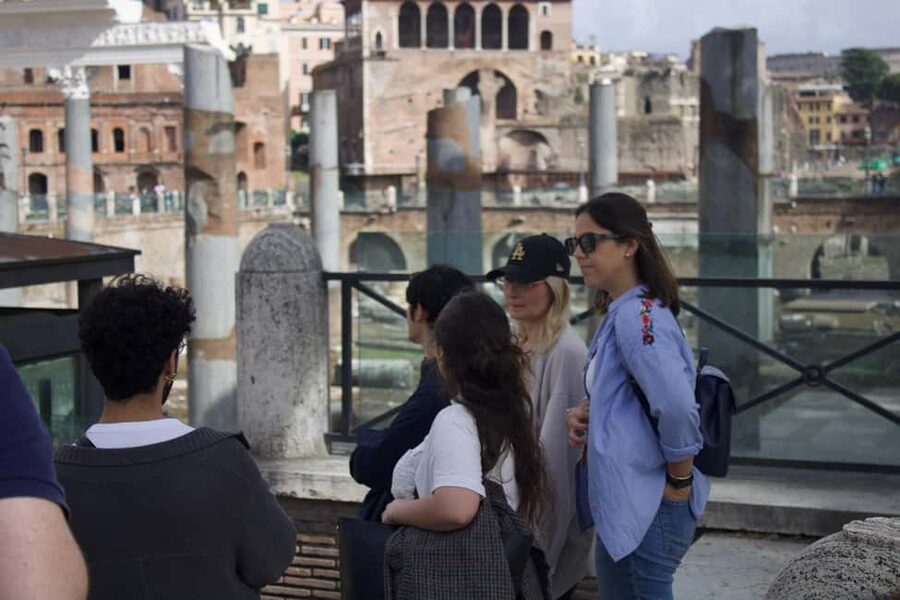
Overall, the walk is designed to be engaging without rushing too hard. The notes praise guides for keeping groups involved and adjusting pace when needed, including guides who spent extra time when questions came up.
That said, there are two practical realities:
- You will be outdoors, moving between stops, with city noise in the mix.
- Some street segments can make it harder to hear clearly.
One set of comments suggests adding radios for better audibility. Even without that feature, you can make the experience smoother by choosing a spot close to the guide, especially when the street gets louder. If you have trouble hearing on tours, be proactive.
The best guides also keep things human. Several named guides are described as friendly and patient, with an ability to explain why statues look and point the way they do. That kind of detail is exactly what you want on a night walk, because you can look around and immediately recognize what they are talking about.
What You Learn Beyond the Headlines: Politics, Symbolism, and Small Churches
A big reason this tour gets such strong marks is that it does not treat Rome as a set of disconnected icons. The route includes context about famous squares, including how some relate to Italy’s unification and also to more recent political history.
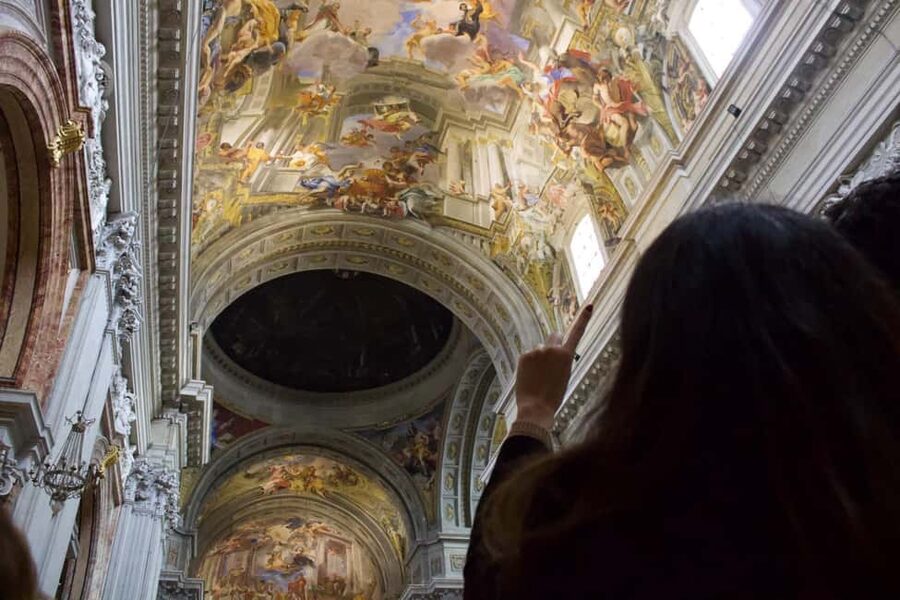
There is also mention of passing by Rome’s smallest church and a church with a hidden painted illusion. That is the sort of moment that makes you feel like you are walking with an insider. You see something you would probably miss if you were just reading a map and chasing the most obvious landmarks.
There is even storytelling about scandals involving recent politicians, plus anecdotes that touch on nastier chapters of earlier centuries. That blend is part of the charm. Rome has always been a place where art, power, and human drama share the same sidewalk.
Value for $28: What’s Included, What’s Not, and What That Means for Your Night
For about $28 per person and roughly two hours, you are getting:
- a local guide
- a walking tour
- a list of recommendations
You are not getting food and drink included. So if you plan to do this after a long day, eat first. If you plan it after dinner, you might find yourself wishing you had a snack break. The tour keeps you moving, so plan accordingly.
Also, make sure you treat this as a guided interpretation of central Rome. It is not a deep-desk research session, and it is not a museum ticket experience. The value comes from turning what you see into a story you can carry.
In the notes, guides like Dan and Theo are singled out for being detailed, engaging, and easy to follow, with humor that helps the facts stick. That is what you want when you are paying for two hours: clarity, not just sight impressions.
Who Should Book This Night Walking Tour, and Who Should Skip It
This tour is a great fit if:
- You want to see Pantheon, Trevi Fountain, and Piazza Navona in one evening-focused route
- You like a guide who explains symbolism and architecture in practical terms
- You want the city’s bigger story, from ancient monuments to Italy’s unification era and later political context
- You are traveling in English or Spanish and want that live narration
It might not be your best choice if:
- You hate walking for two hours with no breaks
- You want long, unstructured time at each monument
- You are very sensitive to meeting point ambiguity and start-time stress
If you are traveling with a group and want a more controlled experience, the option for a private group is a nice way to reduce the friction of meeting and following a larger schedule.
Final Call: Should You Book This Guided Night Walk in Rome?
I think it is worth booking if you want your first look at Rome to feel guided, not chaotic. The tour’s strongest advantage is the mix of major sights and the smaller, story-driven details that make central Rome feel like one connected world. The Pantheon stop alone justifies planning your evening around this.
Book it with one simple mindset: arrive early, wear comfy shoes, stand where you can hear the guide, and then let the route do its job. If you do that, you will leave with a clearer sense of how Rome’s monuments, squares, and even political stories all fit together in the same streets you are walking.
If your schedule is flexible, also consider the convenience options offered for booking and cancellation, since Rome evenings can shift based on weather and dinner plans.
FAQ
How long is the Rome guided walking tour?
The tour lasts about 2 hours.
What languages are available for the live guide?
The tour is available in English and Spanish.
Where do we meet the guide for this tour?
Meeting points vary by the option booked. Common starting areas include Piazza d’Aracoeli or Piazza di Pasquino, and some departures mention Trajan’s Column or Piazza Navona. Check your exact booked option.
Which major sights are included on the route?
You’ll pass by and get guided stops at key sights such as Monumento a Vittorio Emanuele II, Trevi Fountain, the Pantheon, Piazza Navona, and Trajan’s Column.
Does the tour include food or drinks?
No. Food and drink are not included.
Is this activity private-group friendly?
Yes, a private group option is available.
What is the tour price?
The price is listed as $28 per person. You can check availability for the exact starting times.
Recently reviewed around Rome
- Ancient Etruscan Civilization Tour from Rome★ 5.0 · 16 reviews
- Colosseum with Arena Floor Express Guided Tour★ 3.5 · 22 reviews
- Private Tour – Ancient Ostia★ 5.0 · 42 reviews
- PRIVATE Appian Way and Lake Albano Ebike Tour with Italian Lunch★ 5.0 · 12 reviews
- Ancient Appian Way and Roman Countryside E-Bike Tour★ 4.5 · 13 reviews
- Ancient Appian Way PRIVATE Bike Tour★ 5.0 · 89 reviews
- Catacombs and Hidden Underground Rome: Small Group Max 6 People★ 5.0 · 293 reviews
- Amalfi Coast Day Trip from Rome by High-Speed Train★ 4.5 · 162 reviews
Walking Tours, compared.

Trastevere & Campo de Fiori Street Food Walking Tour
Read our review →
Paranormal Night Walking Tour & Secret Backstreets
Read our review →
Rome by Night Walking Tour – Legends & Criminal Stories
Read our review →
Guided City Center Evening Sightseeing Walking Tour
Read our review →
Best of Rome Walking Tour including Trevi Fountain
Read our review →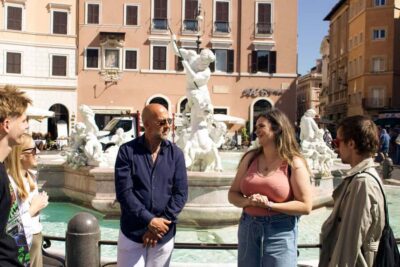

Forbidden History Walking Tour & Pub Crawl with Drinks
Read our review →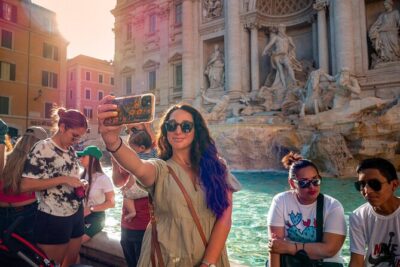
Guided Small Group Walking Tour of City Highlights
Read our review →Browse the lists this tour appears in