
Reviewed · WALKING TOURS
Rome: Fountains and Squares Small-Group Walking Tour
Rome’s top squares are good, but this walk is better because it connects them in a clear story. You start at the Spanish Steps area, then keep moving through Roman, Renaissance, and Baroque Rome until the Trevi Fountain coin moment. The route is Spanish Steps to Trevi in one smooth arc, and it helps the city make sense fast.
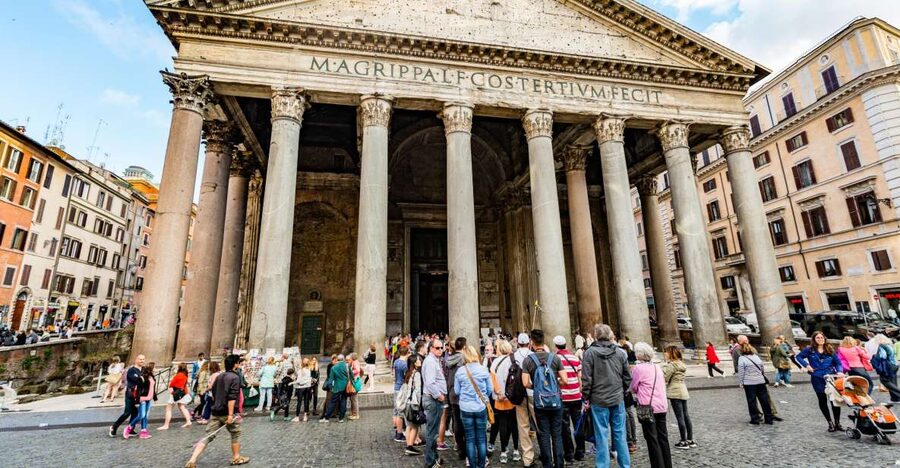
I especially like that you get inside the Pantheon, one of the few ancient buildings where you can still stand in the same kind of space ancient Romans enjoyed. I also love the stop at Sant’Ignazio for the dome’s trompe l’oeil illusions, plus nearby Bernini touches like the half-sunken ship fountain.
The main thing to plan for is walking and church dress. This is a mostly outside route on stone streets, and you’ll need comfortable shoes and clothes that cover shoulders and knees.
Key Things That Make This Tour Worth Your Time
- Spanish Steps start, Trevi finish for an easy first-time orientation walk
- Inside the Pantheon so you see more than just the facade
- Bernini and Baroque drama around Piazza di Spagna and the great piazzas
- Sant’Ignazio trompe l’oeil dome gives you a real wow moment
- Small group (max 20) keeps the guide close and the pace manageable
- Guides with personality often bring humor and strong crowd control, even in rough weather
A Simple Route That Turns Rome Into a Timeline
Rome can feel like a pile of famous things. This tour fixes that by linking the sights into a timeline you can actually follow. Starting near the Spanish Steps, you work your way through the city’s big visual periods, with each stop adding a new layer to the next one.
You walk on foot, with a licensed English-speaking guide leading you from one landmark to the next. The group is kept small, with a maximum of 20 people, so you are not lost in a crowd behind a megaphone.
One reason this works well is that it’s designed as a loop back to the meeting point. You end where you started, so you do not have to solve public transport or rethink your day.
More walking tours in Rome:
- Rome: Trastevere & Campo de Fiori Street Food Walking Tour
★ 4.9 · 2,768 reviews - Rome: Paranormal Night Walking Tour & Secret Backstreets
★ 4.9 · 1,921 reviews - Rome by Night Walking Tour – Legends & Criminal Stories
★ 4.5 · 1,003 reviews
Meeting at the Keats-Shelley Museum and Getting the Timing Right
You meet your guide by the entrance of the Keats and Shelley Museum at the bottom of the Spanish Steps. It’s in front of the Acqua di Parma store, right where the scalinata della Trinità dei Monti begins. Your guide wears a GETYOURGUIDE badge or holds a sign with the same logo.
Arrive 10 minutes early. I’m serious about this part. The tour is timed, and the group needs to stay together, especially once you start moving between squares and into church areas.
Also, the tour runs in English, and there’s a rule that no translating is allowed during the walk. If you rely on translation to process information, plan accordingly.
Trinità dei Monti and the Spanish Steps Area
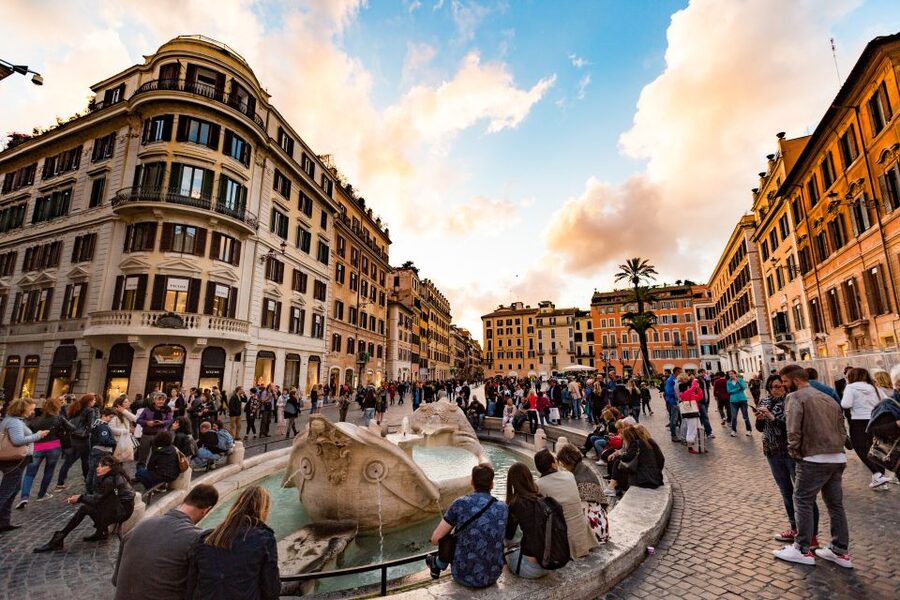
The route begins by following the “graceful flow” of the Spanish Steps up to the late Renaissance church of Trinità dei Monti. Even if you’ve seen photos, standing near the steps helps you understand why this part of Rome is so photogenic. It’s not only pretty, it’s a stage. People move up and down the staircase like it’s part of the scenery.
This is also where you get the feel for the Baroque-era mindset: big gestures in stone, built to guide your eye and create drama. You’ll be walking through the neighborhood that connects nicely to the Bernini fountain stop later.
Bernini’s Half-Sunken Ship in Piazza di Spagna
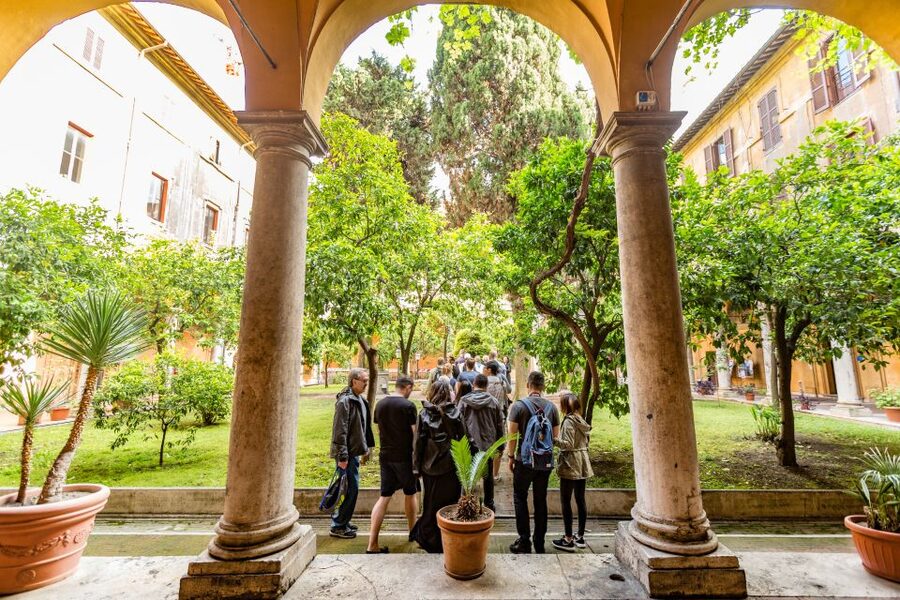
One highlight is Bernini’s fountain of a half-sunken ship at the Piazza di Spagna. This is the kind of detail you can walk past on your own, but a guide helps you notice what makes it interesting and why it belongs in a Baroque walk.
Even though the fountain is only one stop, it’s a perfect palate cleanser after the stair-and-church vibe. It’s playful art, but still firmly in the Baroque language of movement and surprise.
Same city, a completely different kind of day:
- Vatican Museums & Sistine Chapel Tour with Optional Basilica
★ 4.3 · 67,413 reviews - Vatican Museums, Sistine Chapel & St Peter’s Basilica Guided Tour
★ 4.5 · 39,149 reviews - Rome: Colosseum, Palatine Hill and Roman Forum Guided Tour
★ 4.8 · 32,814 reviews - Rome: Guided Tour of Colosseum, Roman Forum & Palatine Hill
★ 4.7 · 27,897 reviews
Piazza Navona: Domitian’s Stadium, Then Baroque Rome at Full Volume
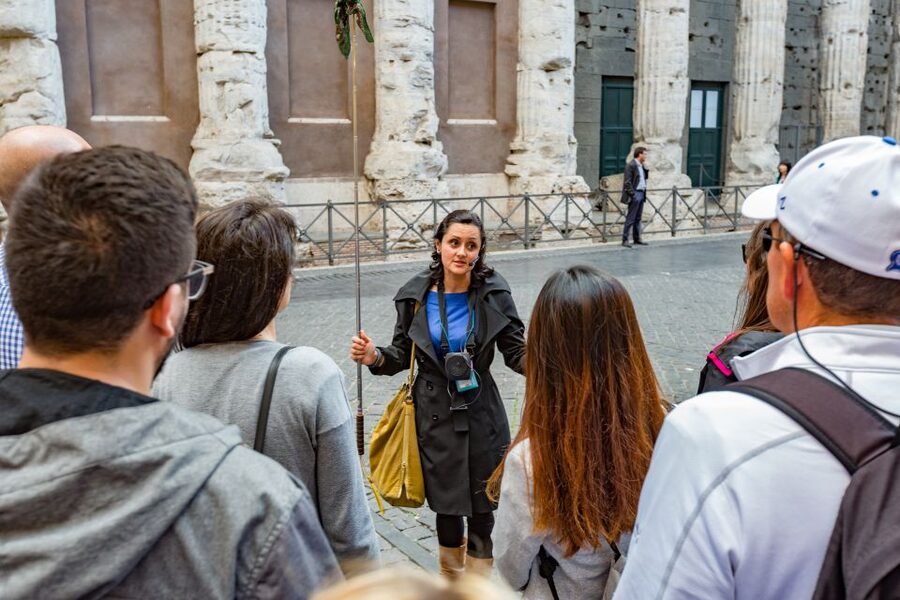
Next comes Piazza Navona, one of the city’s most impressive squares. The tour frames it as the pride of Baroque Rome, with architectural elements and sculpture by big names like Gian Lorenzo Bernini and Francesco Borromini.
Here’s what I find useful as a traveler: Piazza Navona is not just a pretty space. It was originally the Stadium of Domitian, built in 85 A.D. That means you are standing on a site that used to host athletic games, then later evolved into the Rome people dream about.
In the center of it all, you see Bernini’s Fountain of the Four Rivers. This fountain is one of the reasons Piazza Navona feels like a living set. A guide makes a difference here by pointing out what to look for, so you do not just stare at water. You learn what the fountain is doing visually, and how Baroque Rome wanted you to react.
If you’re the kind of person who likes to take pictures, this is your moment. But don’t make it your only moment. The square is also a place to pause, absorb, and reset your energy before the walk moves into major interiors.
Walking to the Pantheon: Roman Construction Still Standing Tall
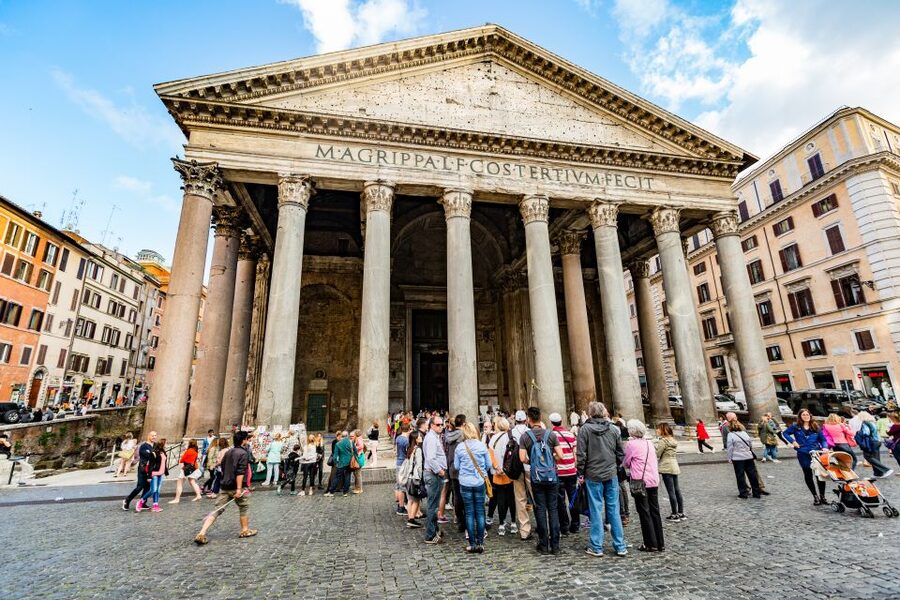
Then you head to the Pantheon to go inside. Seeing it from the outside is impressive, but inside is the real payoff. The Pantheon is a remarkably intact Greek-Roman temple, and you experience it as people have since ancient times: by being inside that huge, controlled space.
As you walk in, look up at the dome and hold onto the scale. The Pantheon’s power is partly design, partly restraint. It feels less like decoration and more like engineering made emotional.
One practical tip: this is a big-ticket stop, so keep your pace steady and listen for instructions on when to move as a group. Church interiors and major monuments can have their own flow, and you’ll want to catch the best viewing angles before the group keeps moving.
Column of Marcus Aurelius and the Gladiator Connection
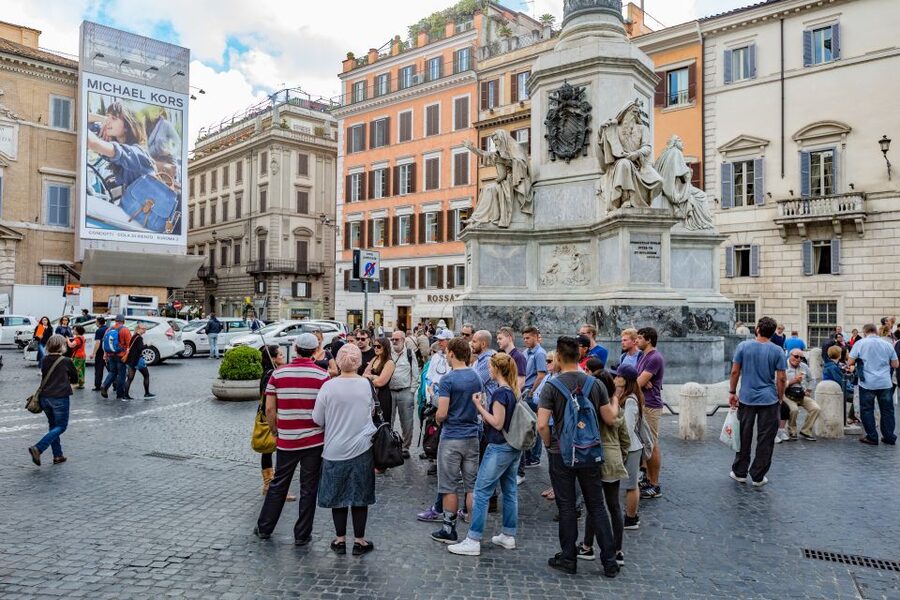
After the Pantheon, you stop at the carved Column of Marcus Aurelius and admire original scenes. The tour connects what you see to imagery from the movie Gladiator, which is a fun way to make the carvings feel less like distant art and more like something you can recognize.
Even if you’re not a movie fan, this stop is valuable because it bridges what you saw at the Pantheon with how Romans told stories. Instead of a single grand room, you get narrative carved into stone. It’s also a good reminder that Roman Rome was not just monuments, it was propaganda, commemoration, and public storytelling.
Sant’Ignazio Church and Trompe l’Oeil That Tricks Your Eye
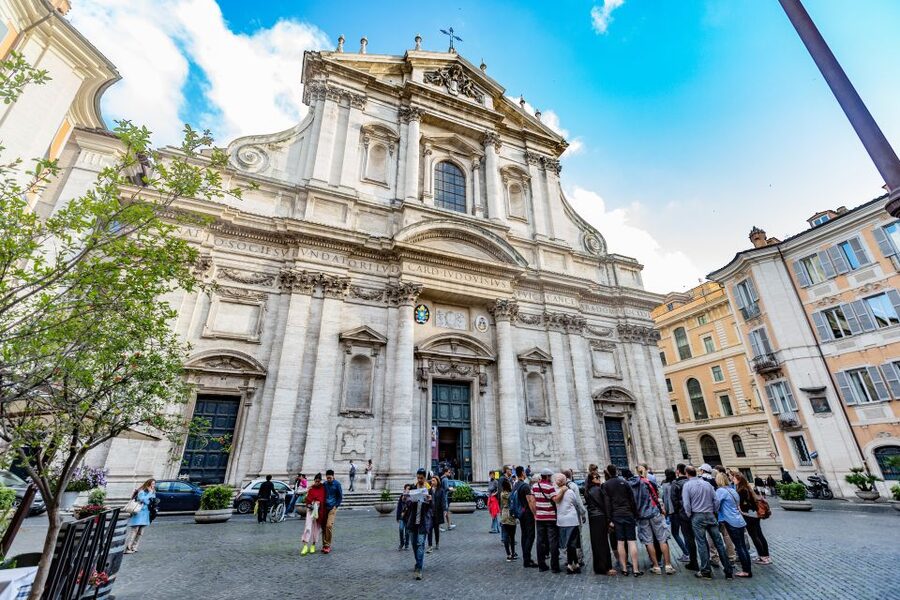
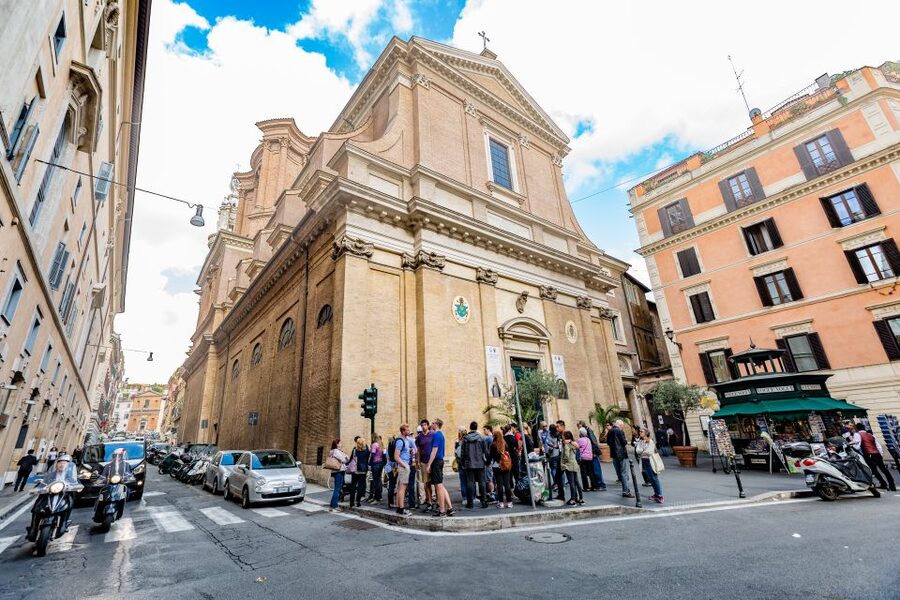
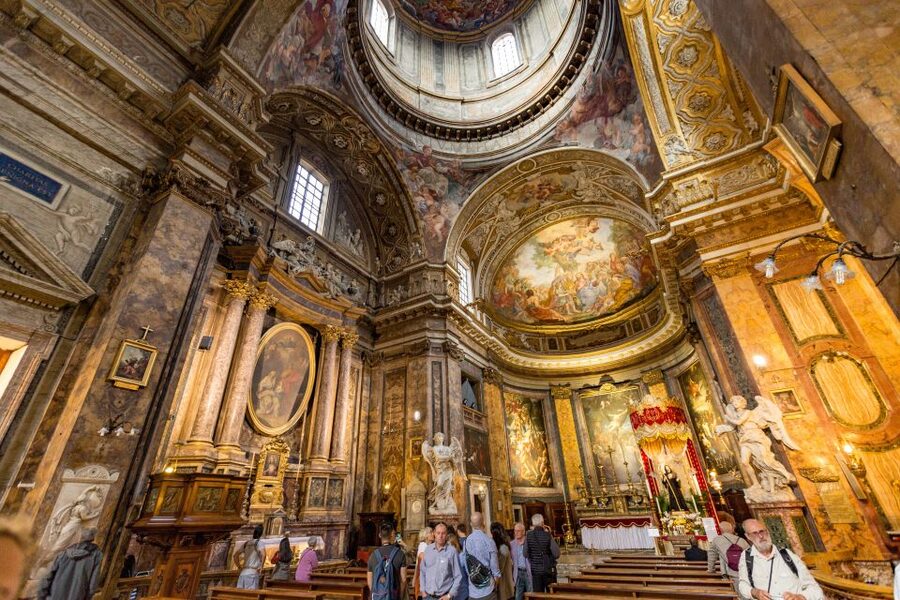
One of the most memorable moments comes at Saint Ignatius, known as Sant’Ignazio. The dome contains one of the finest examples of trompe l’oeil. In plain terms, it’s visual trickery that makes the inside of the church feel like it opens up more than architecture alone should allow.
This is one of those stops where you should slow down. Stand where the guide suggests, look straight ahead, and let your brain catch up with what your eyes are seeing. You do not need art history training for it to work. That’s the point of trompe l’oeil.
Also, this is a church stop, so remember the dress rules. Plan for fabric that covers shoulders and knees. If you show up in outfits that break the rule, you can waste time fixing it at the last second.
Trevi Fountain: The Coin Wish and the Final Photo Sprint
The tour continues on to the Trevi Fountain for the end of the walk. The ritual is simple: you throw a coin into the fountain and make a wish to one day return to Rome.
This ending works because Trevi is the kind of place where you want to be surrounded by context. Earlier you saw Roman structure, then Renaissance and Baroque moves. Trevi ties it together with a final burst of Baroque spectacle.
Practical note: Trevi can be busy. Even with a small group, your best move is to listen first, then snap your photos, then step back. Let others pass so you don’t get stuck in a crowd with your camera but no viewing angle.
Guides and Group Size: Why the Best Part Is How It Feels
A walking tour can either feel like a lecture or like a friendly guided walk. This one often lands on the right side because the guides tend to bring energy and humor, while also controlling pace.
I’ve seen names like Stefano, Bruno, Matteo, Andrea, and Paolo praised for being funny, patient, personable, and good at keeping a group together. One standout theme is that even on cold and rainy mornings, guides kept people moving and stayed entertaining without rushing the important bits.
Group size matters too. With a maximum of 20 people, you get a tour that can still feel personal. Some departures even run with very few people, which turns the walk into something closer to a guided hangout than a mass stroll.
Also, the guide is expected to show where to get the best gelato. You’re not just learning monuments, you’re getting a simple local win.
Price Value Around $45.55 for 2.5 Hours
At about $45.55 per person, the value comes from packing in major sights within a short time window. You get:
- A fully licensed English-speaking guide
- A route that covers multiple big-name landmarks and squares
- Time to go inside the Pantheon
- A finish at the Trevi Fountain, including the coin ritual
What makes this feel like a deal is not only the price. It’s the structure. Instead of spending your first day bouncing between places using guesswork, you get a guided flow that saves time and reduces the chance you miss key stops like Sant’Ignazio or the Marcus Aurelius column.
If you only have a short stay in Rome, this is the kind of ticket that helps you set up the rest of your trip. You come away knowing where things are, and you’re less likely to feel disoriented when you return later on your own.
What to Wear and Carry (So You Don’t Lose Time at Doors)
This tour is light on flexibility if you show up unprepared. It’s a walking route with church stops and rules about clothing.
Bring:
- Comfortable shoes
- Comfortable clothes
Plan your outfit around church entry and private areas. You should cover shoulders and knees. That means avoid shorts, sleeveless shirts, and short skirts. If you’re prone to thinking you’ll manage in a pinch, don’t. Rome’s churches enforce rules, and you do not want your tour to slow down because of clothing.
Not allowed on the tour:
- Pets
- Baby strollers
- Smoking
- Food and drinks
- Alcohol and drugs
- Luggage or large bags
- Oversize luggage
If you want gelato, save it for after the tour, since eating and drinking are not part of the walking portion.
Who This Walking Tour Best Fits
This tour is designed for adults and older kids. It’s not suitable for children under 10.
It’s also not suitable for wheelchair users, and it is not possible to join with strollers. That’s a big deal for families with young kids, or anyone who needs mobility support. You can still enjoy Rome, but this specific format is built for straightforward walking on uneven streets.
If you like planning that feels simple, this is your kind of activity. It’s good for:
- First-time visitors who want the main landmarks connected into a story
- People who prefer small groups over big bus crowds
- Anyone who wants a classic Rome sequence in about 2.5 hours
Should You Book This Rome Fountains and Squares Walk?
Yes, if you want a first-day style tour that makes Rome feel organized. I think it’s a strong pick because you get both spectacle and substance, with inside access at the Pantheon and a trompe l’oeil church moment that’s memorable even if you’ve seen dozens of churches already.
Skip it if you need stroller access or wheelchair-friendly routing. Also, if you dislike walking or you have trouble with church dress rules, you might find this frustrating.
If you can handle a half-morning walk and want a guided route from Spanish Steps to Trevi, this tour is a solid use of time.
FAQ
Where does the tour start?
You meet your guide by the entrance of the Keats and Shelley Museum at the bottom of the Spanish Steps, in front of the Acqua di Parma store.
Where does the tour end?
The tour ends back at the meeting point, so you finish where you started.
How long is the walking tour?
The tour duration is 2.5 hours.
How big is the group?
It is a small-group tour with a maximum of 20 participants.
Do you visit the Pantheon?
Yes. The tour includes going inside the Pantheon.
What sights are included during the walk?
You see major Rome highlights including the Pantheon, Piazza Navona and Bernini’s Fountain of the Four Rivers, Sant’Ignazio Church with trompe l’oeil, the Column of Marcus Aurelius, and the Trevi Fountain, plus stops like Piazza di Spagna and the tomb of Raphael.
What should I wear?
Wear comfortable shoes and clothes. For church stops, make sure you have something to cover your shoulders and knees.
Is it suitable for children or families with strollers?
It is not suitable for children under 10, and it is not possible to join with strollers.
Is the tour wheelchair accessible?
No, it is not suitable for wheelchair users.
Are food and drinks provided?
No. Food and drinks are not included, and eating and drinking are not allowed during the tour.
FAQ (Fast Booking Check)
Is there free cancellation?
Yes. You can cancel up to 24 hours in advance for a full refund.
Recently reviewed around Rome
- Rome: Castelli Romani Hop-on and Hop-off Tour★ 4.9 · 32 reviews
- Rome: Food Tour near Vatican City with Wine★ 4.8 · 100 reviews
- Rome: Scavenger Hunt Self-Guided Tour★ 4.6 · 15 reviews
- Hidden Rome: Small Group E-Bike Tour with Street Food Stops★ 4.9 · 144 reviews
- Rome: Highlights Tour in Golf Cart★ 4.9 · 28 reviews
- Rome: Hop-on Hop-off Bus Tour and Colosseum Experience★ 3.4 · 163 reviews
- Rome: Guided Haunted Rome Ghost Tour with Dowsing Rods★ 4.8 · 63 reviews
- Rome: Highlights Photo Shoot for Memorable Moments★ 5.0 · 32 reviews
Walking Tours, compared.
Trastevere & Campo de Fiori Street Food Walking Tour
Read our review →
Paranormal Night Walking Tour & Secret Backstreets
Read our review →
Rome by Night Walking Tour – Legends & Criminal Stories
Read our review →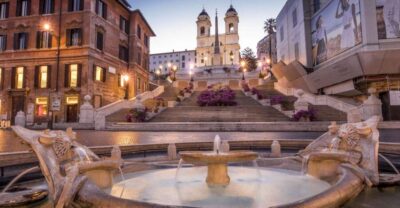
Guided City Center Evening Sightseeing Walking Tour
Read our review →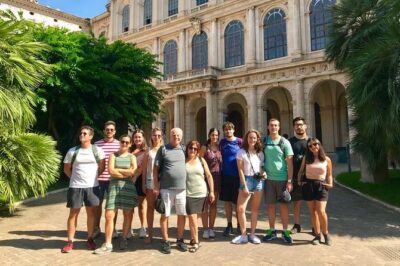
Best of Rome Walking Tour including Trevi Fountain
Read our review →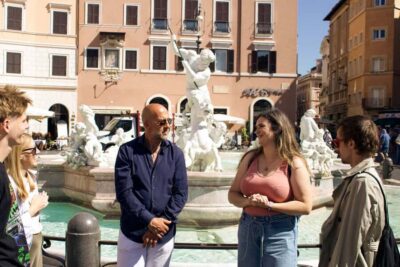

Forbidden History Walking Tour & Pub Crawl with Drinks
Read our review →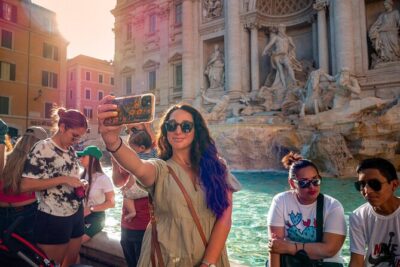
Guided Small Group Walking Tour of City Highlights
Read our review →Browse the lists this tour appears in