Reviewed · TOURS
Rome: Domus Aurea Tour with Virtual Reality Experience
Few Rome stops let you see what Nero’s palace likely looked like when it was alive with art, water, and power. The big hook here is the 3D VR reconstruction, which helps you make sense of spaces that are hard to picture once they are only walls and fragments.
What I love most is how the guide ties the rooms to the human story, from Nero’s rise to his dramatic end, plus the myths around the AD 64 fire. One thing to consider: this is a physical site and it is not suitable for wheelchair users or people with mobility impairments, plus there are strict entry rules on what you can bring.
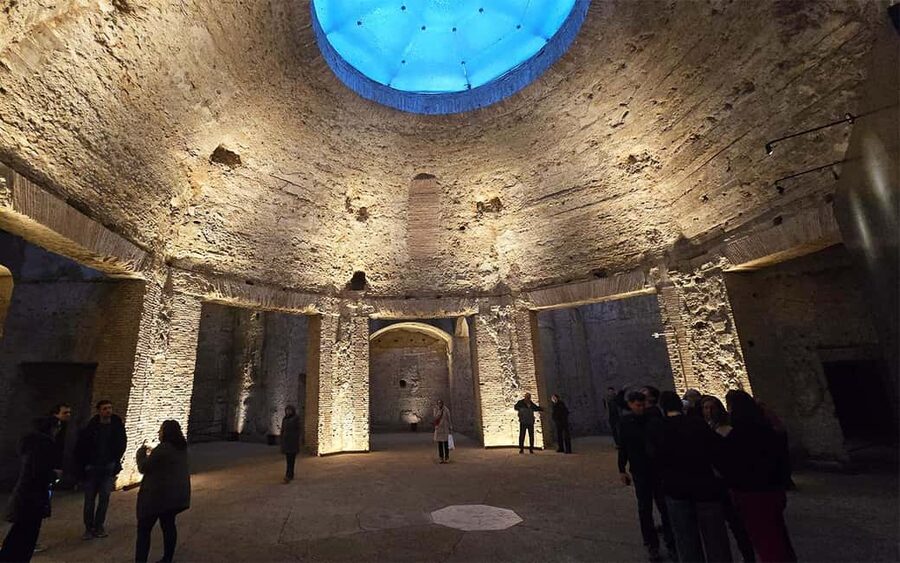
I also love the fact that the tour covers both the East side and the newly reopened West Wing, including major spaces like the fresco-filled halls and the area leading up toward the Octagonal Room. You leave with a much clearer mental map than you would from drifting through alone.
Key things that make this tour worth your time
- VR that matches the route, so you can actually connect what you see on the floor with what once stood above you
- East plus the newly reopened West Wing, not just the same highlight everyone repeats
- Fresco rooms you can follow, with a guide explaining the odd figures and what they may say about Nero
- A reality-check on the AD 64 fire myths, including why Nero was not the one behind it
- Nero’s palace story arc, from palace expansion to lake to the political “replacement” of his Golden House
First steps at Domus Aurea: where to meet and what to do
This starts right at the Domus Aurea entrance area. Your get-your-guide voucher is not your entry ticket, your guide handles that. Look for the meeting sign that says OPEN MIND TOURS, and come with an open mind and good patience.
Here’s the key timing point: entrance into the Domus happens at least 20 minutes after the scheduled guide presentation. If you arrive early, you might just wait, so plan for that. If you arrive late, you risk missing that setup stage, and the whole experience relies on getting you oriented before you step into the archaeological spaces.
The most common practical issue I’d watch for is simply finding the right spot and the right guide. People do get turned around at this location, so don’t wander off to explore while you are supposed to be matching with your group. Once you see the Open Mind Tours sign, stick with it.
What to wear matters more than you think. Bring comfortable shoes and expect you will be on the move. A jacket also helps, since conditions underground can feel cooler than you expect, even when Rome is hot above ground.
Other things people book around Rome:
- Vatican Museums & Sistine Chapel Tour with Optional Basilica
★ 4.3 · 67,413 reviews - Vatican Museums, Sistine Chapel & St Peter’s Basilica Guided Tour
★ 4.5 · 39,149 reviews - Rome: Colosseum, Palatine Hill and Roman Forum Guided Tour
★ 4.8 · 32,814 reviews
The guided tour inside: how the story travels room to room
Your guided portion runs for about 105 minutes, which is long enough for real context but not so long that you feel stuck in one lecture mode. This is where the tour earns its value. Domus Aurea can feel like a puzzle without a guide because the scale is huge, and the remains are not always obvious at a glance.
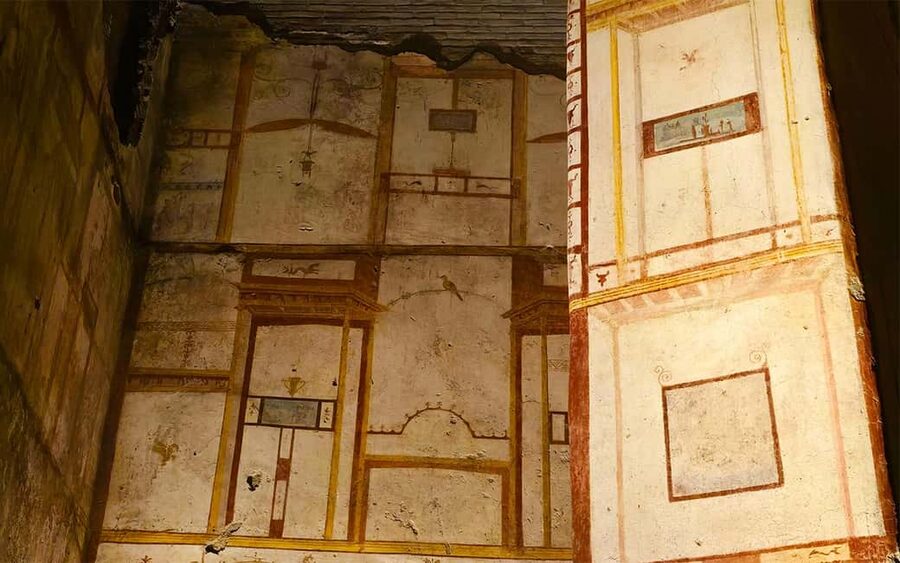
The route focuses on frescoed areas across the site, including 30 frescoed halls, and it brings you through major highlights such as the East side spaces and the newly reopened West Wing. The guide’s job is to help you “read” the architecture and decoration, not just point at walls.
You’ll also get specific historical framing. The tour doesn’t treat Nero as a cartoon villain. It sets up Nero’s tastes and sharp intellect, then explains how those strange and exaggerated fresco figures can reflect his eccentricity. The point is not to excuse him, it’s to show you the logic behind the art.
A very useful bonus here is how the guide tackles the myth-making around the fire of 64 AD. You get a clear explanation that Nero was not behind the disaster, including the detail that he was at his seaside villa at the time. That kind of “here’s what the story got wrong” moment helps you see why ancient sources spread rumors and why later culture kept repeating them.
You also get a sense of the building techniques and the sheer ambition of the complex. Even if you think you know Roman architecture, Domus Aurea has a different vibe from the Colosseum and the Forum. This is palace space, meant for spectacle, privacy, and pleasure, with engineering that lets the whole place feel planned rather than random.
East and West Wing: why the reopened space matters
The East wing is what many visitors already expect to see. The newly reopened West Wing is the reason this tour feels current rather than “only the old highlights.”
Practically, what you gain from having both sides is variety. Frescoes and vaulted corridors can look similar at first, but as you shift locations, you start to understand how the palace was laid out in terms of movement, light, and ceremony. You also get a stronger sense that Nero’s domus was designed to stage experiences, not just house artworks.
If you like archaeology that still feels lived-in, this matters. Domus Aurea is often described as hidden or mysterious, but with the West Wing back in the story, it feels less like a secret and more like a place you can follow.
The fresco rooms: what to notice beyond the photos
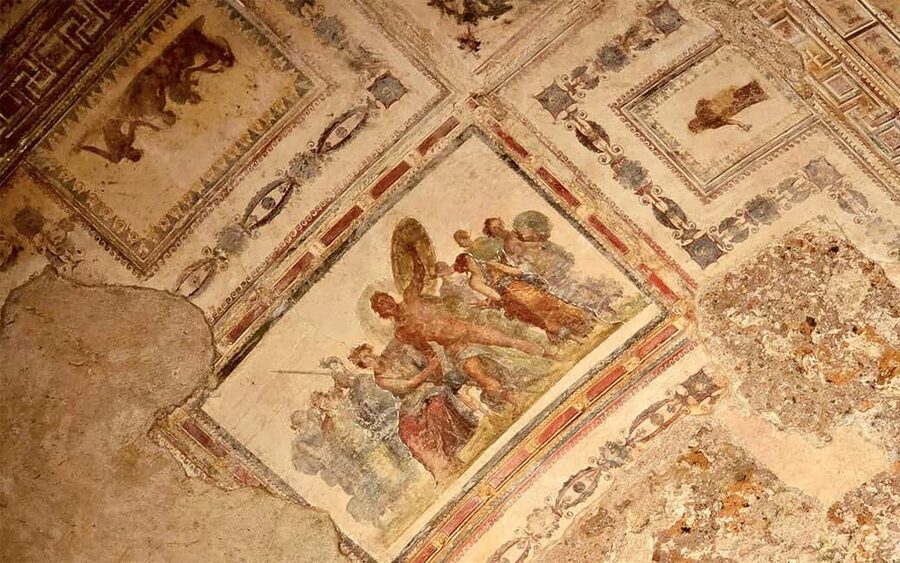
In a lot of museums, you can rely on your eyes and your instincts. Domus Aurea asks for a slightly different approach. If you only stare, you might miss what makes the frescoes meaningful. The guide helps you slow down and notice patterns.
Here’s what you should keep an eye on while you are standing in those rooms:
- How the figures are posed and how they interact with each other
- What feels exaggerated, then think about what that might suggest about the patron’s taste
- The relationship between room shape and decoration, since vaulted spaces can make painted scenes feel more dramatic than they would on a flat wall
The tour also frames the frescoes against Nero’s personality. He is portrayed as far from mad, which changes how you interpret the art. The bizarre figures start to look less like chaos and more like a chosen style, maybe even a kind of theater for the mind.
One more thing: the tour talks about the way the rooms were likely experienced in their original light. Delicate beams of light are part of the explanation here, thanks to how porticoes, fountains, and gardens worked together above and around the palace. Even without VR, that idea helps you visualize why people would have found the place unforgettable.
Same city, a completely different kind of day:
- Rome: Guided Tour of Colosseum, Roman Forum & Palatine Hill
★ 4.7 · 27,897 reviews - Rome: Colosseum & Forum with Audio Guide App -Optional Arena
★ 4.2 · 24,770 reviews - Rome: Colosseum, Roman Forum and Palatine Hill Guided Tour
★ 4.5 · 23,903 reviews - Rome: City Sightseeing Hop-on Hop-off Bus with Audioguide
★ 4.0 · 16,045 reviews
The peak moment: 3D VR of Nero’s palace and portico
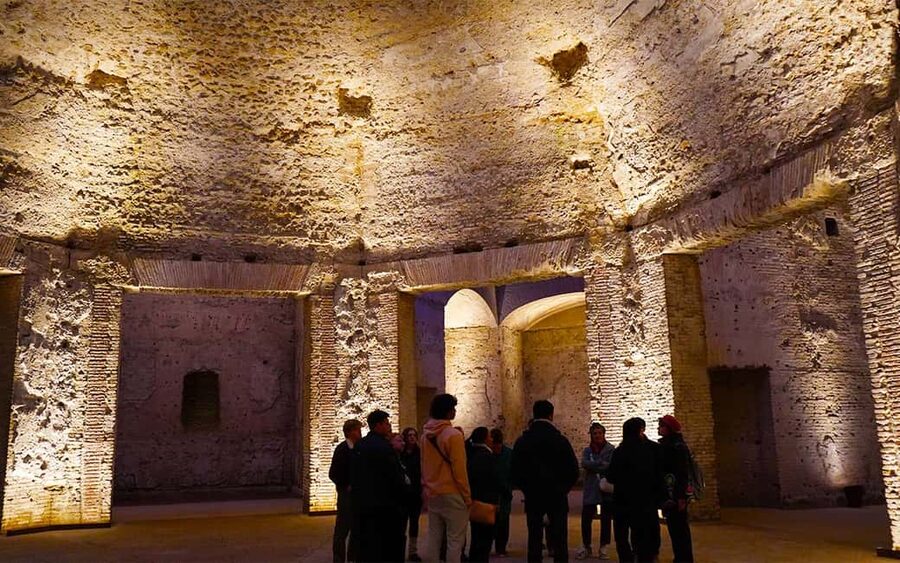
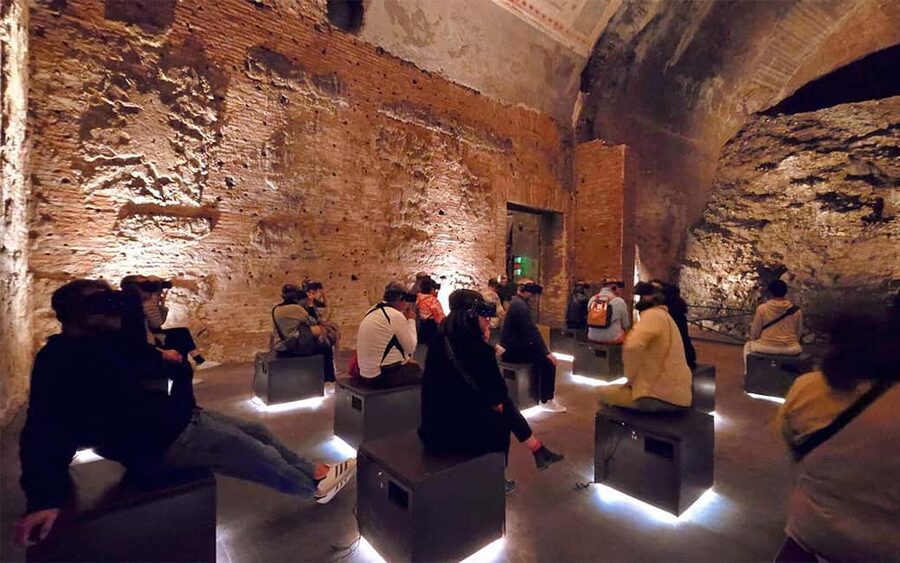
The highlight is the 3D VR segment. It is the part that many people describe as leaving them speechless because it gives you the missing piece. You are shown a 3D reconstruction of the halls, plus an outside lavish portico of the Golden Palace at its peak.
This matters because Domus Aurea is a site of partial remains. VR turns those partial remains into something you can navigate mentally. You don’t just get an image, you get a sense of scale and sequence.
Timing-wise, the VR happens during a seated portion of the tour. That’s a good thing. It gives your feet a rest, and it lets you focus on what the reconstruction is teaching. One helpful tip: look around in every direction during VR. People who do miss turns often feel they got less from the experience because the details are not only straight ahead.
If you’re thinking about whether VR is worth it, treat it as an interpretive tool, not a replacement for seeing the site. The best moment is when your brain switches from “these are ruins” to “this was a designed environment.” That switch is what makes the rest of the tour click.
Nero, the fire myths, and the political makeover that follows
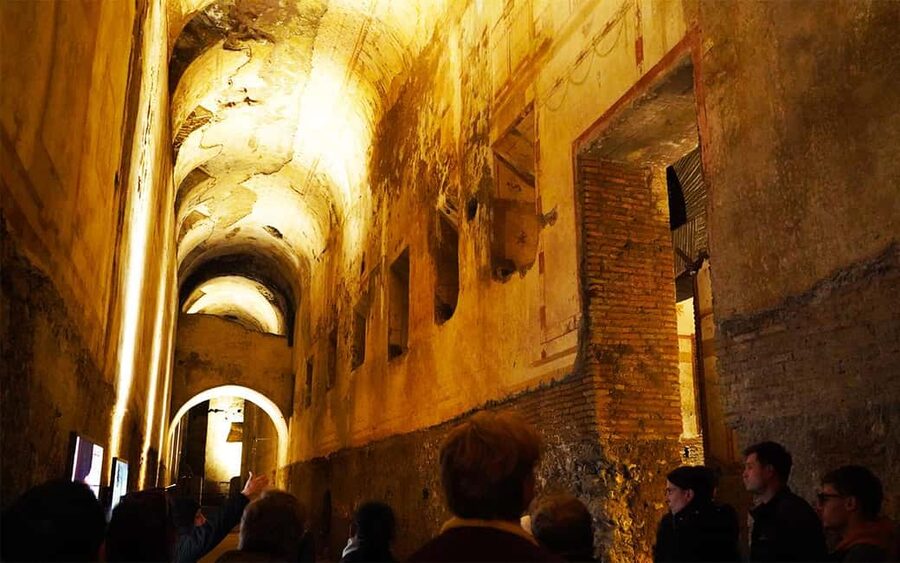
A strong part of the experience is how the guide links Nero’s personal story to wider Roman events. You start with Nero and his dramatic end, but the tour gives you the broader cause and effect.
After the fire of July 64 AD, Nero responds with actions that are both political and practical: opening gardens to shelter the homeless, distributing essential goods, lowering the price of grain, and implementing urban planning regulations. The tour mentions rules like minimum distance between buildings and shifting to stone and bricks instead of wood.
At the same time, the story includes why people criticized him. Nero is accused of delays in rescue efforts and insufficient funding for reconstruction. That balance helps you understand why his popularity collapses, instead of treating history as a straight line from one event to the next.
Then comes the architectural consequence. The tour explains how Nero took advantage of the destroyed areas to expand his palace on the Palatine Hill, building the Domus Aurea. Even at the center of the complex, there is mention of a private oasis, including a lake, which made the Golden House feel like a controlled escape.
After Nero, the story turns political fast. Vespasian is said to build the Colosseum in place of Nero’s lake, a public project aimed at restoring Rome and sending a political signal. Later, Trajan buries Nero’s Golden House under an immense bath complex.
If you’ve ever wondered why Rome feels like it is constantly covering itself, this is one clear example. Nero builds a private world. His successors rewrite the city in public form, and the result is that Domus Aurea fades from memory for roughly 1,500 years.
Rediscovery after 1,500 years: why Renaissance artists mattered
Domus Aurea does not stay lost forever. The tour includes a key historical jump to the 1500s, when Renaissance artists rediscovered it. That rediscovery is described as the start of the larger European journey into Ancient Rome’s forgotten cultural heritage.
I like how this ending ties back to your own moment in the present. You are standing in a place that survived by being buried, then surviving again by being reinterpreted. The guide’s storytelling makes it feel less like a random artifact and more like a cultural relay.
And if you care about preservation, this part of the story can land emotionally. Domus Aurea is delicate, and the point is not just to see it, but to understand why it needs care.
Practical logistics: what to bring, what to skip, and who should go
This is where I’d focus your preparation, because small things can make your tour smoother.
What to bring
- Comfortable shoes
- A jacket
What you cannot bring
Plan on leaving these at your hotel. Entry rules include no weapons or sharp objects, no luggage or large bags, no drones, no pets (assistance dogs allowed), no selfie sticks, and no professional cameras. Tripods are also not allowed. You also should not bring sprays or aerosols, and glass objects are not allowed.
Who should book
This tour is a great fit if you want:
- Nero’s story with context, not just trivia
- A guided route that helps you understand frescoes
- The VR reconstruction as a way to visualize what is missing
It is not a good fit if you have mobility issues that make uneven or underground walking difficult. The tour is also not meant for wheelchair users.
Group size and hearing
Because the spaces are tight and the tour is guided, audio clarity can vary. If you struggle hearing in a group, you may find you rely more on visual cues. VR helps here, since it becomes a focused moment.
Guide quality: why the best part might be the person
The guides matter a lot on this kind of site. The right guide turns chaos into a clean story.
In past experiences with this tour style, people have praised guides like Linda for extensive explanations, Yev for an outstanding speech from start to finish, Rosario for a strong introduction, and Alexei and Laura for linking the big picture of Rome to what you see inside. Even when someone found the meeting point confusing, the guides inside the Domus were often described as excellent and easy to understand.
My take: you should treat the outdoor introduction as part of the experience, but don’t panic if you arrive and feel rushed. Once you’re inside, the guide who leads you through the halls is what will keep the tour coherent.
Value for your time: what you are actually paying for
Even without a price here, you can judge value by what is included. You are paying for:
- Skip-the-line entry via a separate entrance
- A live English guide
- Time in multiple major sections of the Domus, including the newly reopened West Wing
- A peak VR reconstruction moment that gives you missing context
If you love architecture, art, and storytelling, that combination is hard to beat. You get both the real site and an interpretive model, and the guide helps you connect the two.
If you are the kind of person who can wander and still understand everything, you might feel the guided portion is more structured than you want. But for most visitors, Domus Aurea needs translation. That is where this tour tends to justify itself.
Should you book Domus Aurea with VR?
I’d book it if you want to understand Nero’s palace as a lived environment, not just as a set of ruins. The East plus newly reopened West Wing coverage plus the VR reconstruction is a strong combo, especially if you plan to see other Roman sites like the Colosseum or Pompeii afterward and want your Roman art and archaeology connections to feel sharper.
Skip it if mobility is an issue, or if you need a tour that allows lots of gear and cameras. This one is strict about items and it is physically demanding enough that it is not suitable for wheelchair users.
If you are traveling during warmer months, the site can feel like a relief compared to Rome above ground, and the smaller feeling compared to other top sites is part of why people like coming here. Plan your meeting carefully, watch for the Open Mind Tours sign, and give yourself that extra buffer for the entrance timing.
FAQ
Where do I meet the guide?
Meet outside Domus Aurea. Your voucher is not the entry ticket. Wait for the guide with an OPEN MIND TOURS sign.
How long is the tour?
The total experience is about 2 hours, with the guided tour inside lasting about 105 minutes.
Is skip the line included?
Yes. You enter through a separate entrance and can skip the line.
What language is the tour guide?
The live guide is in English.
What should I bring?
Bring comfortable shoes and a jacket.
Is the tour suitable for wheelchair users or mobility impairments?
No. It is not suitable for people with mobility impairments or for wheelchair users.
What items are not allowed inside?
Weapons or sharp objects, luggage or large bags, drones, pets (assistance dogs allowed), selfie sticks, professional cameras, and tripods are not allowed. Sprays or aerosols and glass objects are also not allowed.
Can I cancel if my plans change?
Yes, free cancellation is available up to 3 days in advance for a full refund.
Recently reviewed around Rome
- Rome: Castelli Romani Hop-on and Hop-off Tour★ 4.9 · 32 reviews
- Rome: Food Tour near Vatican City with Wine★ 4.8 · 100 reviews
- Rome: Scavenger Hunt Self-Guided Tour★ 4.6 · 15 reviews
- Hidden Rome: Small Group E-Bike Tour with Street Food Stops★ 4.9 · 144 reviews
- Rome: Highlights Tour in Golf Cart★ 4.9 · 28 reviews
- Rome: Hop-on Hop-off Bus Tour and Colosseum Experience★ 3.4 · 163 reviews
- Rome: Guided Haunted Rome Ghost Tour with Dowsing Rods★ 4.8 · 63 reviews
- Rome: Highlights Photo Shoot for Memorable Moments★ 5.0 · 32 reviews
Tours, compared.
Vatican Museums & Sistine Chapel Tour with Optional Basilica
Read our review →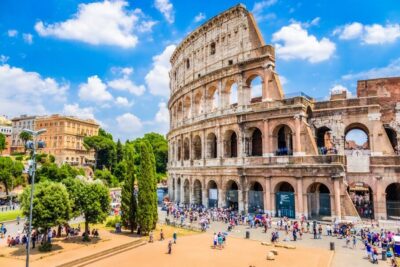
Colosseum, Roman Forum & Palatine Guided Tour
Read our review →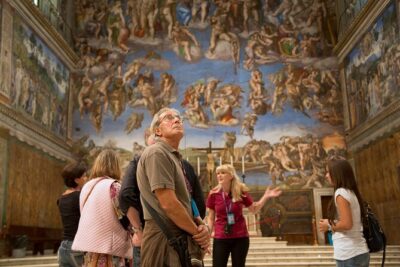
Vatican Museums, Sistine Chapel & St Peter’s Basilica Guided Tour
Read our review →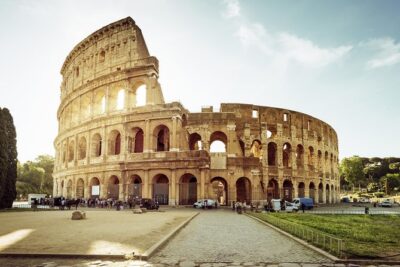
Colosseum, Palatine Hill and Roman Forum Guided Tour
Read our review →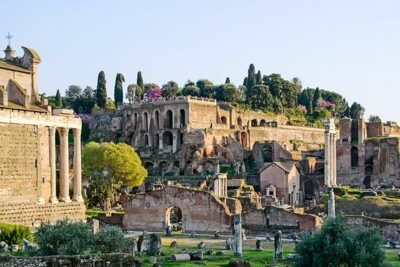
Guided Tour of Colosseum, Roman Forum & Palatine Hill
Read our review →
Colosseum, Roman Forum and Palatine Hill Guided Tour
Read our review →
Vatican Museums, Sistine Chapel & Basilica Tour
Read our review →