
Reviewed · COLOSSEUM TOURS
Rome: Colosseum, Roman Forum & Palatine Hill Tour
This tour is interesting because it gives you the full Rome power strip in one smooth run, from the Colosseum’s gladiator world to the views and palace sites of Palatine Hill. I love the way the guide connects what you see to real Roman life, not just stone for stone’s sake, and I love the practical extras like headsets and skip-the-line tickets. One drawback to plan for, the sites are very crowded and the schedule can stretch on busy days.
If you like walking where major Romans once walked, this is a strong pick. You’ll follow routes tied to the Via Sacra and the Forum’s downtown core, then finish up with sweeping overlooks from Palatine Hill. Bring comfy shoes and expect security checks, because you will pass through airport-style screening.
Key points worth your attention
- Headsets included so you can hear the guide even in big crowds
- Skip-the-line access plus priority entry through the front door, not the slow side routes
- The Via Sacra cobblestones tied to Julius Caesar, Mark Antony, and Cleopatra
- Palatine Hill palace views where emperors built their luxury compounds
- Triumphal arches focus including Septimius Severus plus the arches of Titus and Constantine
- Security is real expect airport-style screening before you start sightseeing
Why the Colosseum, Forum, and Palatine stop together
This combo makes sense because these sites are not separate attractions in Roman life, they were one system. The Colosseum was where the city staged spectacle. The Roman Forum and the Via Sacra were the downtown center for politics, religion, and public ceremony. Palatine Hill was where power got a home, with emperors building palaces and projecting control over the whole city.
Doing it in one guided block is also efficient. You get story order, what to look for first, and what details matter when your brain is tired from walking. At the Colosseum, you can get lost in architecture trivia fast. In the Forum, you can get lost in layout fast. With a guide, you move through those moments with meaning, so you leave with a map in your head.
The tradeoff is time pressure. The tour is only 2.5 hours, so it’s not a slow museum crawl. You’ll cover three major areas, and you should expect to keep moving.
More ways to see the Colosseum:
- Rome: Colosseum, Palatine Hill and Roman Forum Guided Tour
★ 4.8 · 32,814 reviews - Rome: Guided Tour of Colosseum, Roman Forum & Palatine Hill
★ 4.7 · 27,897 reviews - Rome: Colosseum & Forum with Audio Guide App -Optional Arena
★ 4.2 · 24,770 reviews
Meeting at Via delle Terme di Tito, 93 and passing security
You meet at Via delle Terme di Tito 93. If you’re arriving by Metro at Colosseo, the practical tip is to reach the terrace above the station. Walk on Via Nicola Salvi for about 100 meters, then turn left and find the meeting point.
This matters because the Colosseum area is confusing when you’re searching with your phone while other groups are rushing in. Show up early enough to regroup, not early enough to stress. Once you start, plan on airport-style security checks before entering the sites. It’s fast for some people and slow for others, depending on the day’s crowd.
The tour also has clear restrictions: no pets, no weapons or sharp objects, no alcohol or drugs, and no glass objects. The guide may also ask for ID, so have your passport or ID card handy, and bring one for children as well.
Finally, know that the tour runs in all weather. That sounds obvious in Rome, but it matters here. You will be outside for most of the experience, so pack for sun and rain, even if the morning looks good.
Entering the Colosseum: gladiators, tiers, and what to actually notice
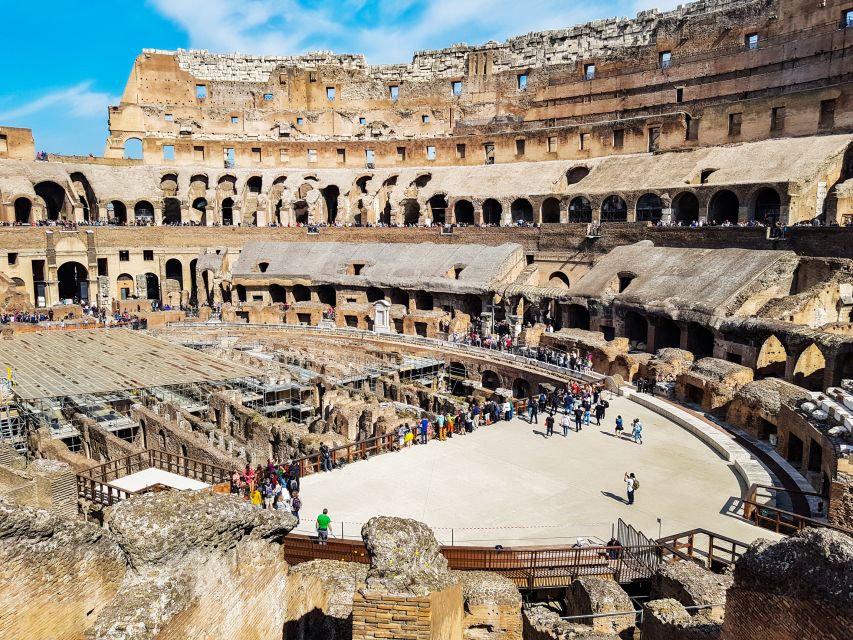
The Colosseum stop is guided for about one hour. This is where the tour really snaps into focus, because the building is so recognizable that it can trick you into thinking it’s just a big photo spot. A good guide helps you see it as a machine for performance, crowd control, and Roman messaging.
Expect the story of the gladiators, including what daily life could look like and how training worked. You’ll also hear how gladiators were treated like celebrities, which flips the modern assumption of this being only grim violence. The tone is educational rather than sensational, but you still get the essentials: why games mattered, what the fighting represented, and how the arena’s design supported the show.
What I like here is that you’re not just looking at an outline. You learn what to look for. In a crowded arena, it helps to know where the important features sit and which viewpoints make sense, especially for understanding the structure. One review complaint that you should take seriously, some guides can spend a long time on structural details while many people are still waiting to see more of the arena. If you strongly prefer floor-level exploring over building explanations, keep that in mind and stay engaged, even during the setup.
You may also hear about the skip-the-line part. The official promise is that tickets are included and you skip the ticket line. Still, you should expect a wait once inside the security and entrance system because lines can form at different checkpoints, not just at the ticket booth.
The Roman Forum and Via Sacra: Rome’s downtown core
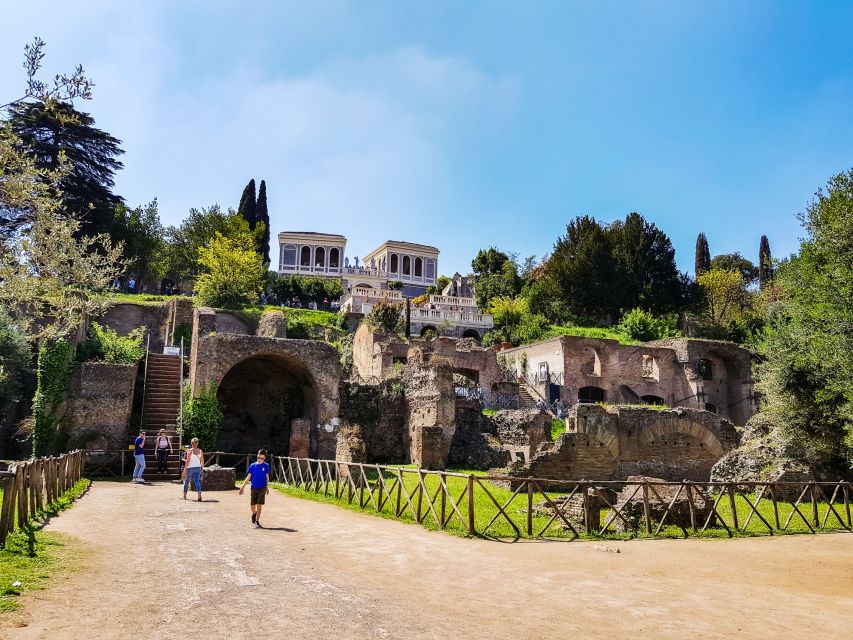
After the Colosseum, you head into the Imperial Roman Forums for about one hour of guided time. This is the stop where you can most easily feel overwhelmed if you just wander. The Forum is full of fragments, arches, and building footprints. It’s hard to see the big picture without help.
The tour gives you a key storyline by starting with the Via Sacra. You walk on cobblestones tied to major Roman figures such as Julius Caesar, Mark Antony, and Cleopatra. That connection does more than sound dramatic. It helps you understand why this route mattered, because you’re moving along the same kind of ceremonial and political path people once used.
You’ll also get a walkthrough that frames the Forum as the place where power was displayed. Think courtly life, public speeches, ceremonies, and the constant reminder that the empire’s authority was right here. The guide’s job is to stop you from treating the Forum like a pile of ruins. With clear wayfinding and story order, you start seeing patterns in the space.
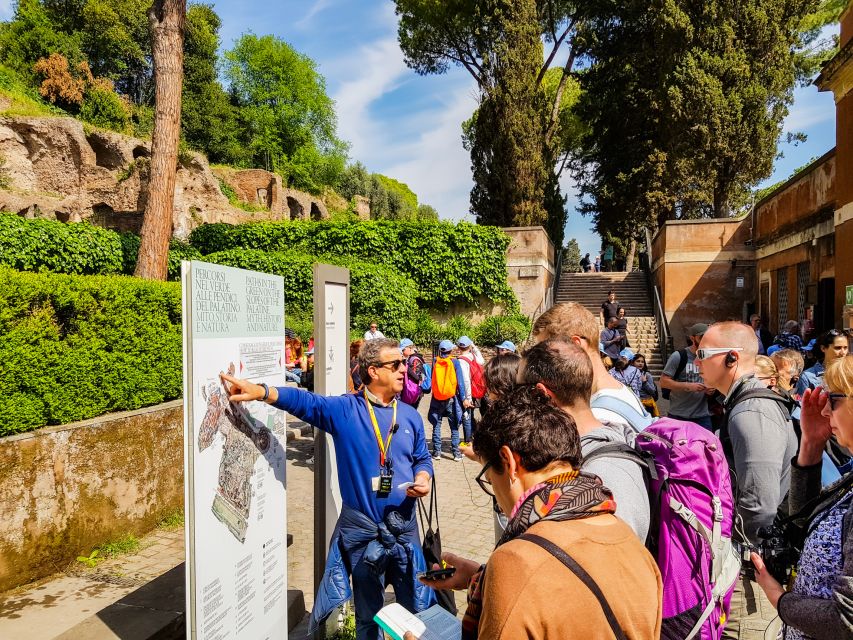
This stop also tends to be demanding in heat. Even when the walking is smooth, you’ll be outside and surrounded by other groups. Headsets help a lot here. You can tune the guide into your ear and still keep your eyes on what you’re passing.
Same city, a completely different kind of day:
- Vatican Museums & Sistine Chapel Tour with Optional Basilica
★ 4.3 · 67,413 reviews - Vatican Museums, Sistine Chapel & St Peter’s Basilica Guided Tour
★ 4.5 · 39,149 reviews - Rome: Colosseum, Roman Forum and Palatine Hill Guided Tour
★ 4.5 · 23,903 reviews - Rome: City Sightseeing Hop-on Hop-off Bus with Audioguide
★ 4.0 · 16,045 reviews
Palatine Hill: the emperor-palace views you came for
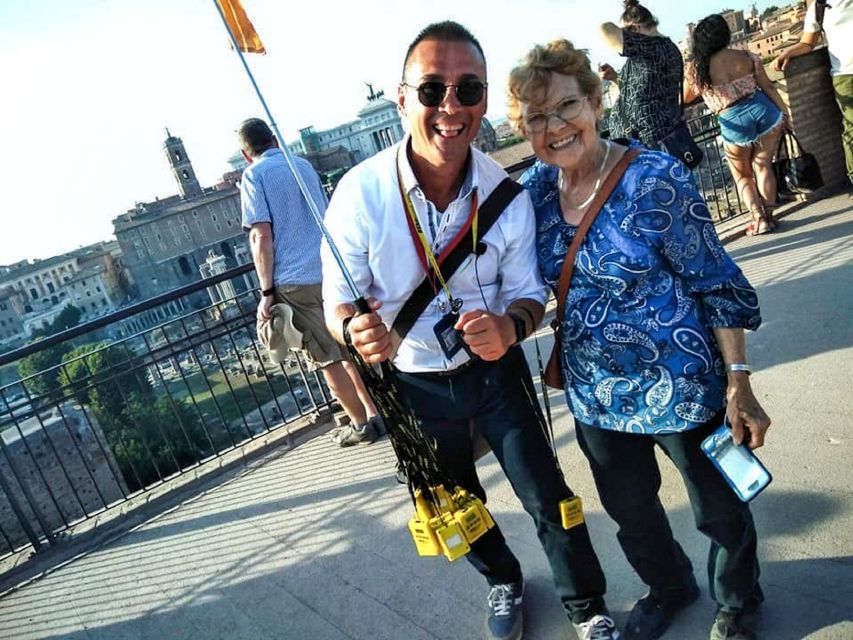
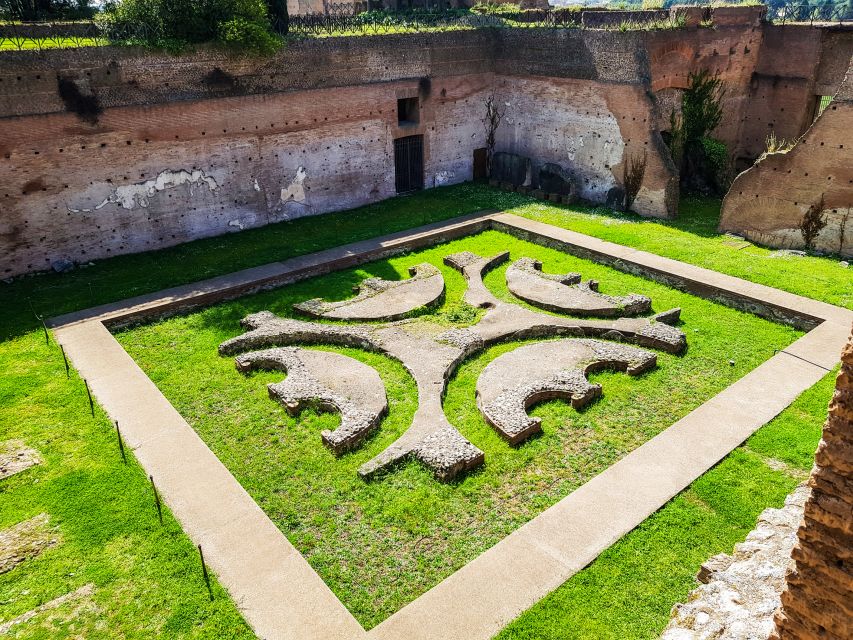
Next is Palatine Hill for about one hour. This is the high ground, the place where you feel the scale of Rome when you look out over the Forums. You get views that connect the geography of the city to the stories of power.
The tour explains why Palatine mattered by focusing on the emperors’ palaces. In other words, you learn that this wasn’t just a scenic hill. It was a political statement, built up by leaders who wanted to live where Rome’s symbolism was closest to their daily routines.
Here’s the best way to enjoy this part: take your time with the overlooks even if you feel rushed. Palatine rewards you when you look up and then look down. When you combine those two actions, suddenly the Forum makes more sense.
One timing note from experience with this kind of route: the day can run longer in extreme crowds, and some people wish they’d had more time specifically at the Colosseum or more time on certain terraces. If you’re a repeat-photo person, you might want to do a quick mental plan before you go, decide which angles matter to you most, and keep an eye on your own pacing.
Triumph arches, Titus and Constantine, and Caesar’s cremation spot
A standout part of the experience is that the tour doesn’t treat arches like decorative extras. It includes the last three surviving triumphal arches in Rome, with a focus on the Triumphal Arches of Septimius Severus, plus the Arches of Titus and Constantine.
Triumphal arches are basically propaganda in stone. They were built to mark victories, announce legitimacy, and remind people that the ruling power had a long reach. When you see them as public messaging tools, they become more than architecture.
The tour also visits the spot where Julius Caesar was cremated. That detail can feel heavy in a good way, because it connects a huge Roman turning point to a specific physical place. In a setting like the Forum, a moment like that helps you slow down for a second and feel how dense Roman events were.
If you’re the kind of traveler who likes spotting labels and then asking why they matter, you’ll enjoy this portion. It’s structured to help you connect monument to meaning fast.
Crowds, heat, and timing: how to have a good day anyway
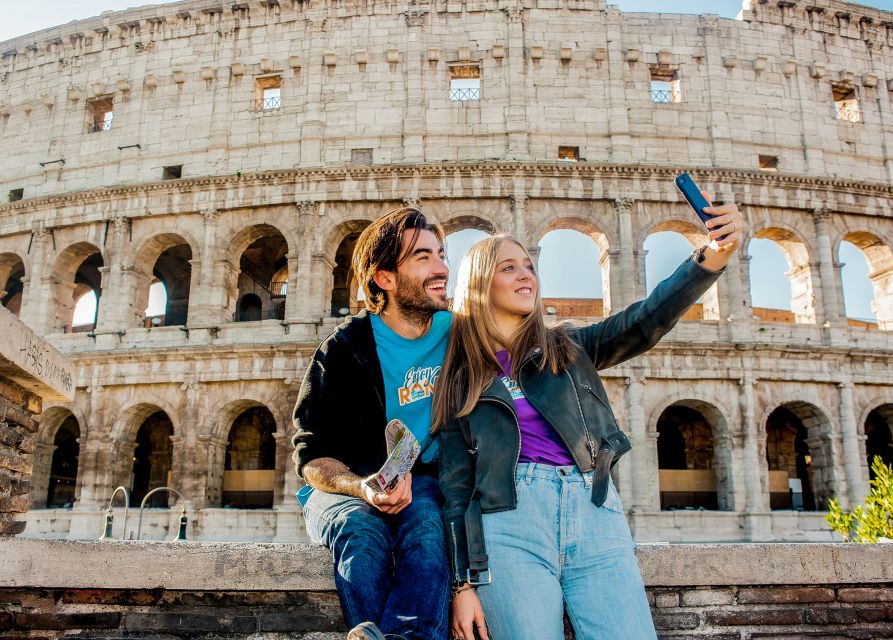
The biggest real-world variable here is the crowds. Even with skip-the-line entry, you’ll be in a high-demand area, and you’ll be close to other groups. That’s normal for the Colosseum and Forum, but it affects your experience quality.
If your tour starts and ends on time, you’ll likely feel nicely paced. If it runs late, you’ll feel it, because you have three major zones to cover. Some days can feel like the guide is managing congestion as much as sightseeing.
Heat management is a serious factor. In reviews, guides like one named Laurie were praised for staying respectful of the heat and keeping people in the shade as much as possible. Another guide named Ian was noted for pushing for comfort breaks and water refills. You can’t guarantee perfect conditions, but you can give yourself a head start by planning for sun exposure and staying hydrated.
A practical tip: wear a hat and sunscreen and bring your ID. The tour area and entrances can be strict about documentation, and photo ID is sometimes checked at entry.
Also, know your tolerance for walking. The tour is not suitable for people with mobility impairments or for wheelchair users. Even if you personally can manage stairs in general, these sites involve uneven ancient surfaces and crowds that don’t move in an orderly line.
Price and value: what $41 buys you in Rome
At $41 per person for about 2.5 hours, the value is strong if you’re doing the big three with an actual guide.
Here’s why. Entrance tickets are included, plus headsets. In a place like Rome, that matters because entrance and audio guidance both reduce hassle. You’re paying for time saved and for explanation that helps you see more than the obvious.
Is it a bargain-level price? No. But it’s not out of line for a guided, multi-site tour where you’re bundling tickets and managing logistics. One review even flagged that skip-the-line wasn’t as magical as promised, because the group still encountered waiting. That doesn’t cancel the value, but it’s a good reality check: skip-the-line usually means saving minutes at one key checkpoint, not removing all waiting.
If you’re the type who likes to wander with a self-guided app, you can do these sites on your own. But if you want help interpreting what you see, a guided route is how you turn ruins into a story you actually remember.
Guide style matters, and you can spot the best signs
Guides can make or break a busy tour like this. The most praised guides were described as friendly, engaged with the group, and firm about keeping things moving at a humane pace.
Some names came up in glowing ways. Andrei was praised for making everyone feel valued and explaining clearly. Mahmood was noted for knowing the best picture spots. Ricardo was described as sharing his passion for history with clarity. Nancy was described as chatty and enthusiastic. When guides hit that sweet spot, you don’t feel like you’re being rushed past the ruins.
One warning sign shows up too. If a guide spends too long explaining structural details while people are itching to see more of the Colosseum, the balance can feel off. If you strongly want more time inside the arena spaces, it can help to set expectations before you meet your guide, and to ask questions early so you can steer the conversation toward what you care about most.
Accent can also be a factor. Some reviews mention instances where understanding the English could be harder due to accent. You can reduce that risk by using the included headsets and asking questions even if you need clarification, since a good guide will rephrase.
Who should book, and who should choose a different plan
This tour is a great fit if you want a guided introduction to Rome’s top ancient landmarks without spending your day figuring out where to go next. If you like structured walking, you’ll appreciate the flow from Colosseum to Forum to Palatine Hill, with arches and Caesar’s cremation spot woven in.
It’s also a good fit for first-timers. If it’s your first visit to Rome, the Colosseum plus Forum combo helps you understand what the city meant to the ancient world. You’ll leave with a clearer mental map than if you only do photos.
It’s not a great fit if you need step-free or wheelchair-friendly access. It’s also not ideal if you hate crowds so much that you’d rather trade the marquee sites for smaller ones elsewhere.
Finally, it’s best if you travel with realistic expectations about time. You’re covering a lot in 2.5 hours. If you expect long lingering stops, you may feel the pace. If you expect a guided hit of the top sights, it’s a strong plan.
Should you book this Colosseum plus Roman Forum plus Palatine Hill tour?
If your goal is to see the big three and understand what they meant, I think you should book. The combination of entrance tickets, headsets, and a guide who ties monuments to stories is the core value. The price is reasonable for a multi-site route that would otherwise take you much longer to organize and interpret on your own.
Book it if you can handle crowds, you’re okay walking on uneven old surfaces, and you plan for heat and security. You should especially book if you want help noticing the details that turn the Colosseum, Via Sacra, and the emperor-palace views into a coherent picture.
Skip it or consider an alternative if mobility limits you, or if you want a slow, unstructured day with lots of free roaming. In that case, you may feel rushed by the need to cover three sites quickly.
FAQ
How long is the Colosseum, Roman Forum, and Palatine Hill tour?
It lasts about 2.5 hours.
What does the tour include?
You get a professional guide, entrance tickets, and headsets.
Is hotel pickup or drop-off included?
No. Hotel pickup and drop-off are not included.
Is food or drink included?
No. Food and drinks are not included.
Where do I meet the tour?
Meet at Via delle Terme di Tito 93.
If I arrive by Metro, what is the easiest way to find the meeting point?
From Colosseo metro station, go to the terrace above the station. Walk on Via Nicola Salvi about 100 meters, then turn left.
What languages are offered for the live guide?
The live guide is available in Spanish, French, German, English, and Italian.
Does the tour include skip-the-line entry?
Yes, it includes skip-the ticket line access.
What do I need to bring for entry?
Bring a passport or ID card, and bring the same documentation for children as well.
Recently reviewed around Rome
- Rome: Castelli Romani Hop-on and Hop-off Tour★ 4.9 · 32 reviews
- Rome: Food Tour near Vatican City with Wine★ 4.8 · 100 reviews
- Rome: Scavenger Hunt Self-Guided Tour★ 4.6 · 15 reviews
- Hidden Rome: Small Group E-Bike Tour with Street Food Stops★ 4.9 · 144 reviews
- Rome: Highlights Tour in Golf Cart★ 4.9 · 28 reviews
- Rome: Hop-on Hop-off Bus Tour and Colosseum Experience★ 3.4 · 163 reviews
- Rome: Guided Haunted Rome Ghost Tour with Dowsing Rods★ 4.8 · 63 reviews
- Rome: Highlights Photo Shoot for Memorable Moments★ 5.0 · 32 reviews
Colosseum Tours, compared.
Colosseum, Roman Forum & Palatine Guided Tour
Read our review →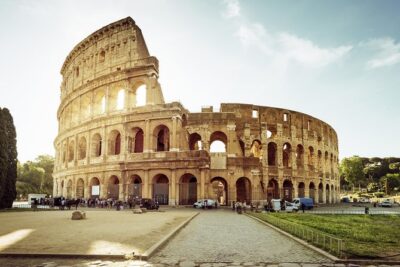
Colosseum, Palatine Hill and Roman Forum Guided Tour
Read our review →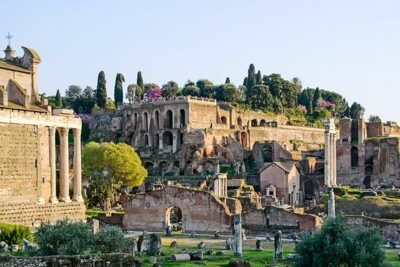
Guided Tour of Colosseum, Roman Forum & Palatine Hill
Read our review →
Colosseum & Forum with Audio Guide App -Optional Arena
Read our review →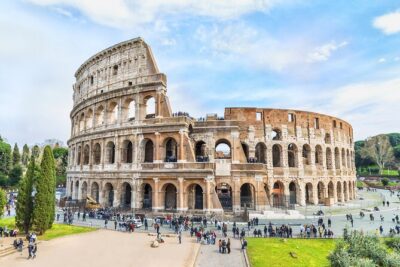
Colosseum, Roman Forum and Palatine Hill Guided Tour
Read our review →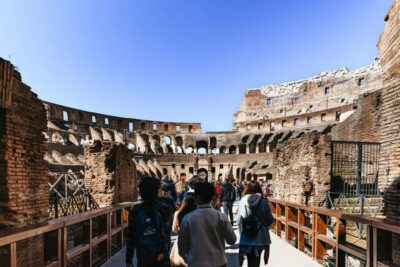
Colosseum, Forum & Palatine Hill Tour & Optional Arena
Read our review →
Colosseum, Roman Forum, Palatine with Multimedia Video
Read our review →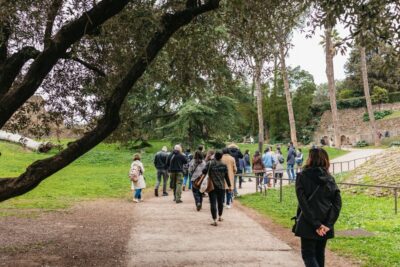
Colosseum, Palatine Hill & Roman Forum Guided Tour
Read our review →Browse the lists this tour appears in