
Reviewed · BIKE TOURS
Appia Antica & Aqueducts e-Bike Tour – Official Provider
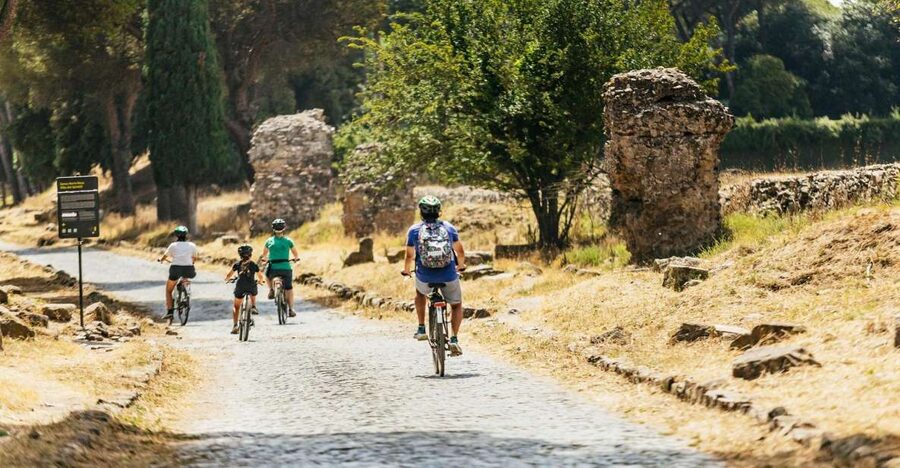
This tour is interesting because it trades Rome’s crowded center for a long stretch of ancient road and big Roman structures, all while you’re rolling under electric power. You’ll follow the Appian Way through Appia Antica and into the Parco degli Acquedotti, where the aqueduct arches feel larger than you expect. It is also a good pick if you already did the big city sights and you want the quieter, older Rome.
I love how close you get to the road itself, including touching stones that have been worn by centuries, including the old wagon routes. I also like the way the ride is guided end to end, with past groups praising guides such as Federico, Sara, and Alex for keeping people safe at crossings and telling stories that actually connect to what you see in front of you.
One thing to consider: this is a group ride, and if some riders are less confident on bikes, the pace can stretch out a bit. If you hate waiting on a slow line, you might want a calmer solo plan, but if you like history paired with movement, the structure works well.
Key highlights worth your attention
- 2000-year-old road surface moments where you can literally put your hand on the stones of the Appian Way
- Regina Viarum to Aqueducts Park route, using the green park space instead of jammed streets
- English live guiding, with guides in past groups noted for clear care at road crossings
- Optional catacombs add-on, paid on site for either Saint Sebastian or Saint Callixtus
- Emperor Maxentius complex, including the preserved circus tied to the Ben-Hur chariot race scene
The Appian Way, Why It Feels Different From Central Rome
Rome can feel like a nonstop loop of piazzas, fountains, and lines. This tour gives you a clean break from that. You head onto the Appian Way in the protected Regional Park of the Appian Way, an enormous area with 4,500 hectares to explore.
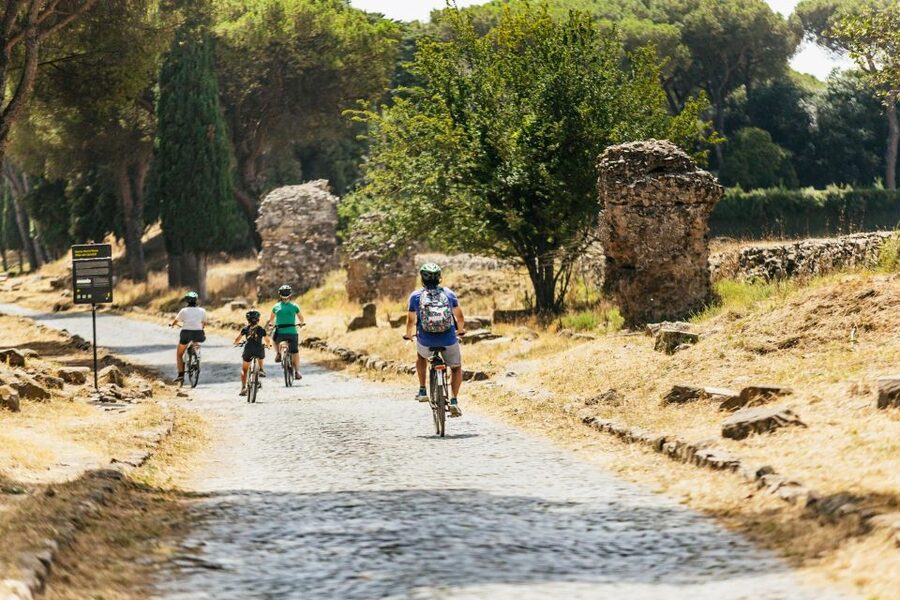
What I like about this is the “human scale” of the experience. You’re not just staring at monuments behind barriers. You ride through the corridor where the ancient road system still shapes how people move through the area today.
You also get context for the Appian Way beyond the postcard version. The road was built for military use, then later used by traders, pilgrims, and travelers. That layered purpose is exactly what makes the ruins and tombs along the way feel meaningful instead of random.
More bike and e-bike tours in Rome:
- Rome EBike Tour: Appian Way, Catacombs & Roman Aqueducts
★ 5.0 · 1,766 reviews - Rome: Top Highlights & Hidden Gems Tour by Cannondale E-Bike
★ 4.9 · 1,760 reviews - Rome: Appian Way, Catacombs, & Roman Aqueducts E-bike Tour
★ 4.9 · 1,421 reviews
Starting at EcoBike Appia Antica and Getting Comfortable on an E-Bike
You begin at Centro Servizi Appia Antica, EcoBike, your base for bikes and briefings. Included gear is simple and practical: high quality e-bikes, helmets, locks, and maps, plus a half-liter of mineral water.
The guide gives you an introduction to the ride before you start, which matters because the route mixes quieter paths with some stretches where cars exist. This is not a casual “pedal around a park with no rules” situation, but it is designed so the e-bike makes it manageable.
If you’re tall, heavy, or just picky about comfort, pay attention to the bike limits that are listed. The adults e-bikes are homologate up to 90 kg. You can also bring child seats up to 20 kg on request, but the tour is not suitable for children under 13.
Rolling Past Domine Quo Vadis Church and the Legend of Footprints
Right away, the tour points you toward a section of the Appian Way between Domine Quo Vadis church and the Aqueducts Park. That stretch is a real shift from “urban Rome” into a road corridor filled with churches, catacombs, tombs, and remnants of the Roman Empire.
Your first major storytelling stop is Domine Quo Vadis church. The legend says Apostle Saint Peter, fleeing persecution, met Jesus, and the encounter left footprints on the pavement. Even if you treat legends as spiritual history rather than fact, the site is still a strong anchor for understanding how later centuries layered their beliefs onto the ancient road.
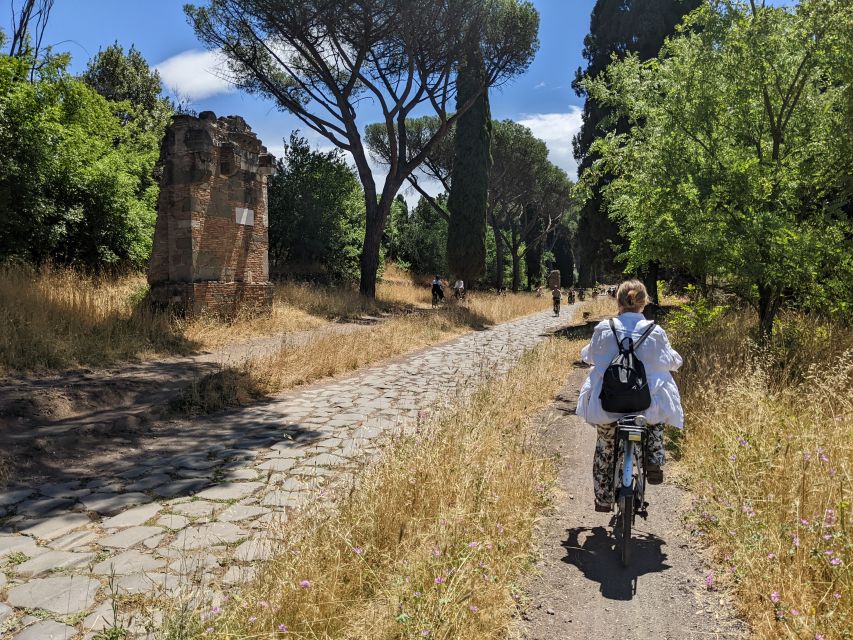
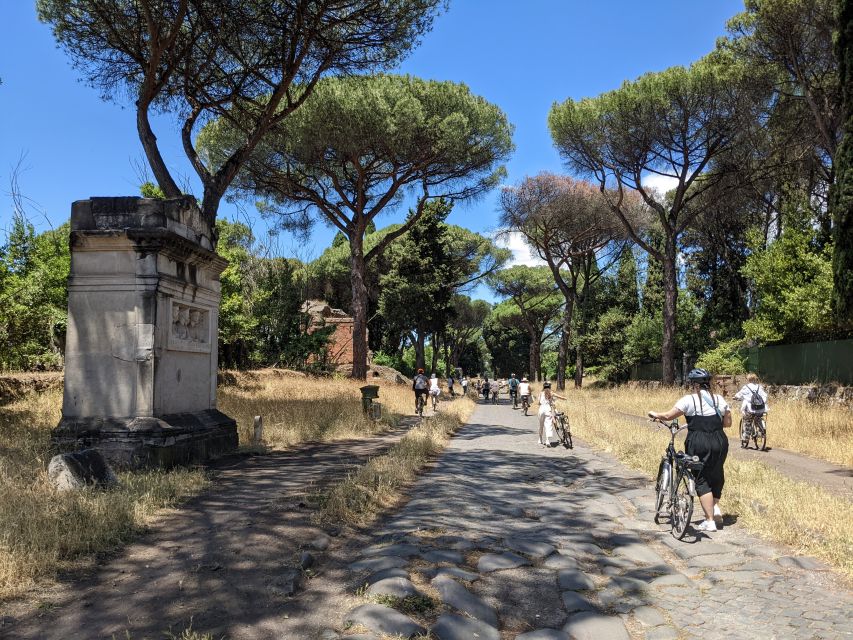
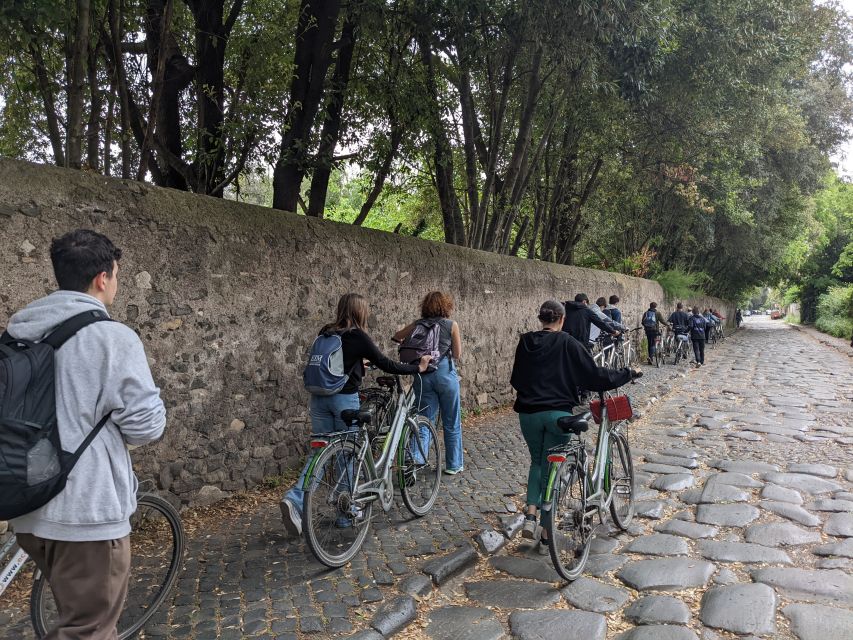
This is also where you get hands-on with the road itself. The tour highlights that you can touch the stones marked by the old horse-drawn wagon routes. That tiny action changes the whole experience. Instead of only seeing the Appian Way as an idea, you feel how worn and used it really is.
Optional Catacombs, Saint Sebastian or Saint Callixtus
One of the smartest parts of the plan is that the catacombs are optional. You can stop at the catacombs of Saint Sebastian or Saint Callixtus, and you choose which one (or both) based on your interest.
The cost is clearly stated: you pay on site, 10 euros each for either catacomb tour. If you’ve ever wished you could see the underworld side of ancient Rome without committing to everything, this add-on is a flexible way to do it.
Above ground, this section still stays rich. You’re moving along the road corridor where graves and tombs are part of the everyday structure of the park. Even if you skip the underground part, you’re still seeing the Appian Way as a working burial landscape.
Same city, a completely different kind of day:
- Vatican Museums & Sistine Chapel Tour with Optional Basilica
★ 4.3 · 67,413 reviews - Vatican Museums, Sistine Chapel & St Peter’s Basilica Guided Tour
★ 4.5 · 39,149 reviews - Rome: Colosseum, Palatine Hill and Roman Forum Guided Tour
★ 4.8 · 32,814 reviews - Rome: Guided Tour of Colosseum, Roman Forum & Palatine Hill
★ 4.7 · 27,897 reviews
The Private Circus of Maxentius and a Ben-Hur Moment
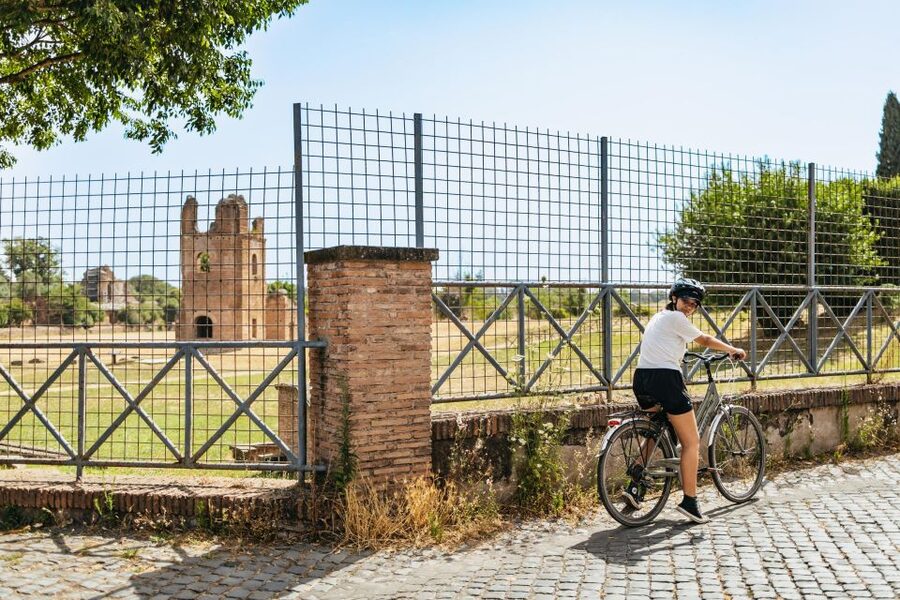
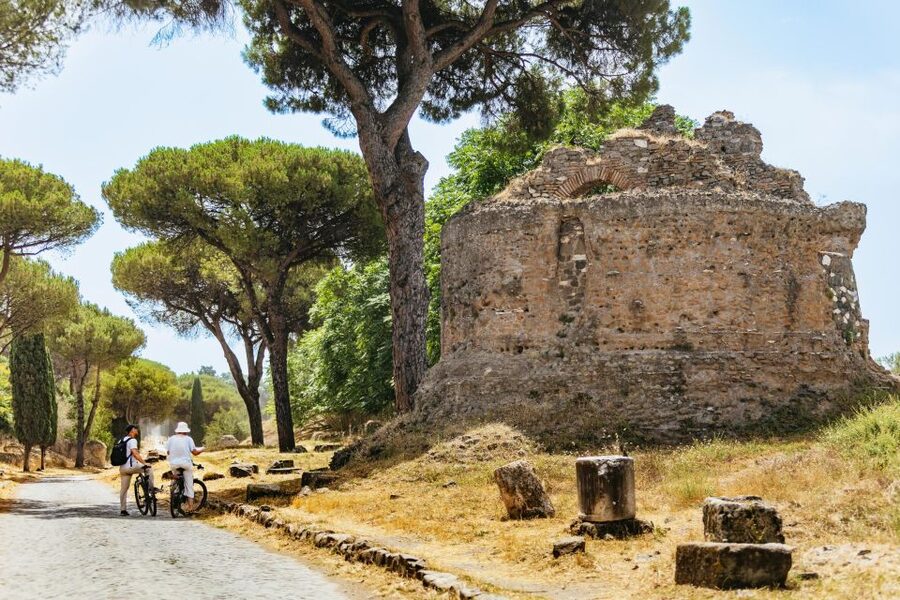
Next comes one of the most cinematic stops: the private circus of Emperor Maxentius. This is described as the best preserved Roman circus in the world, and it’s part of a complex that includes the circus, the villa, and the mausoleum of his son Valerio Romolo.
What makes this stop feel extra fun is the movie connection. The film Ben-Hur, directed by William Wyler and starring Charlton Heston, used this location for the chariot race scene. You don’t need to be a film buff to enjoy it. It helps you picture scale and speed in a place that is otherwise ancient stone and quiet grass.
This is guided, so you’re not just walking through structures. You’re getting the why behind the what, and that keeps your attention where it matters.
Cecilia Metella’s Tomb, the Lava Plateau, and the Caetani Control Point
You then pass by the Tomb of Cecilia Metella, a giant presence on a lava plateau dating back more than 260,000 years. The tour uses this stop to explain how a tomb became a strategic tool long after the Roman era.
Here’s the key idea I’d carry with me: the Appian Way was valuable because it controlled movement. The tomb’s position later made it useful as a fortress during the Middle Ages, and families including the Caetani used it to manage transit. The tour notes that they built a self-sufficient village and charged a duty for passers-by to transit.
Even if you only glance at the tomb from the bike path, that story changes how you read it. You start seeing the road as a long-term power corridor, not just an archaeological display.
Villa dei Quintili and the Imperial Leisure Connection
After the Cecilia Metella stop, you pass by Villa dei Quintili. This matters because it shifts the story from purely military or burial functions toward elite Roman leisure and property.
The ride also references the Quintili Nympheum as a key point before you move into the Aqueducts Park. A nympheum is basically an ornate water-related structure, and that tie-in helps you understand why the aqueduct area feels like the next logical chapter of Roman engineering.
You’ll feel the change in setting as you approach the aqueduct zone, because the road corridor opens up into those large park spaces where engineering meets nature over centuries.
Parco degli Acquedotti: Roman Aqueduct Arches Up Close
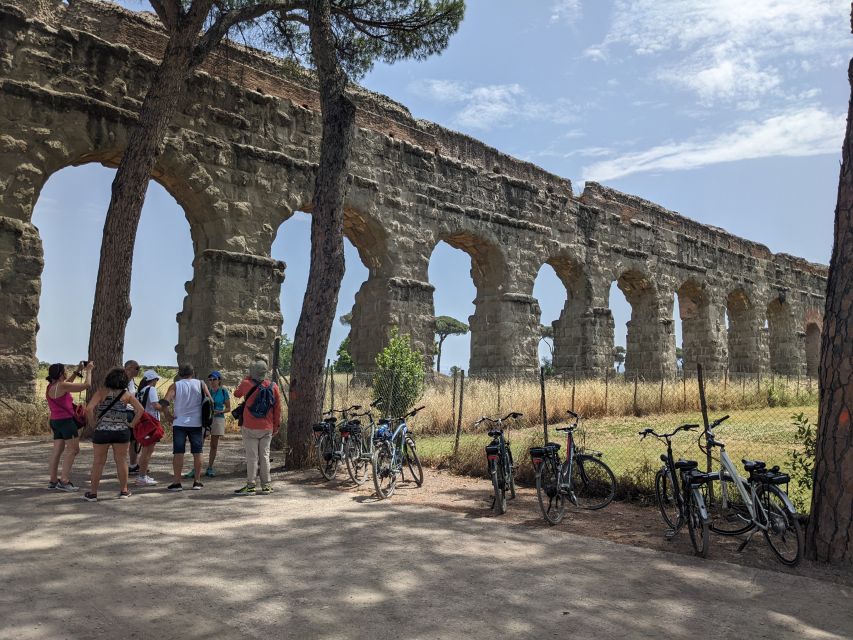
This is the part many people remember most. The Aqueducts Park section is guided, and the highlight is reaching the amazing arches of Roman aqueducts.
When you’re in the city, aqueducts can look like distant shapes. On this ride, the structures feel closer and more layered. You’re not just looking at a monument; you’re moving through the same green corridor where people have been navigating near these arches for generations.
The guide’s job here is important. Aqueducts are hard to “read” from a distance. With a guide pointing out what you’re looking at, you start to understand Roman engineering as a system, not a collection of cool photos.
Parco della Caffarella: Green Trails, Tombs, and Space Between Stops
Your ride continues into Parco della Caffarella, also guided. This valley area is one of the reasons this tour works as more than just a fast highlight run. You get a sense of space, and you move at a human pace through a park environment that sits alongside major ancient sites.
The tour frames the Caffarella area as part of a wider corridor of churches, catacombs, tombs, and Roman remains. In practice, it means you’re constantly surrounded by evidence of the past, but you are not stuck inside a single fenced-in viewpoint.
This is where the e-bike makes the day feel fair. Without electric assist, it would be harder to cover ground and still keep your attention on details.
Price and Value: Is $59 for 3.5 Hours Worth It?
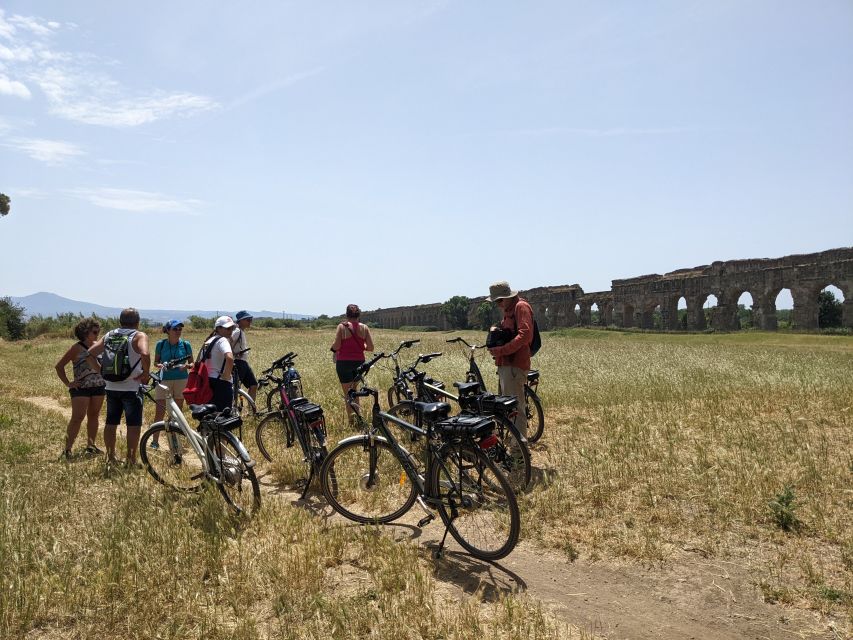
At 59 dollars per person for 3.5 hours, the value comes from what you do not have to manage yourself. You get a professional guide, the e-bike, helmets, locks, maps, and a half-liter water bottle. For many people, that bundle is the difference between a half-day that feels stressful and one that feels smooth.
It is also a specific kind of sightseeing you cannot easily reproduce on foot. The tour includes stretches with traffic, and it is stated that this route is available only on e-bike. That matters because it shapes what you can realistically see in half a day.
If you add catacombs, factor in the optional cost of 10 euros each paid on site. That turns this into a flexible choose-your-own-depth experience rather than an all-or-nothing package.
Who Should Book This, and Who Should Skip It
This tour is best for people who want history plus motion. If you like ancient roads, tombs, and Roman engineering, you’ll have a lot to connect. The guidance also helps riders feel at ease on the bikes.
There are clear limits that are worth respecting. The tour is not suitable for children under 13, pregnant women, or people with back problems. It also notes that it runs rain or shine, so you should plan for weather and wear shoes that you don’t mind getting wet or dusty.
Riders also should avoid bare feet and alcohol in the vehicle. That sounds obvious, but it’s good to remember that this is still a guided activity where safety rules matter.
My Booking Advice, Quick Decision Checklist
Book this tour if you want a high-value Appian Way day without spending your day bouncing between scattered stops by transit. The 3.5 hours, guided flow, and e-bike access make it easy to see more while still feeling grounded in what you’re looking at.
Consider skipping or adjusting expectations if you need total solo control of pace. This is a group ride, and the experience can slow if riders are not confident on bikes. If you know you ride well and you’re comfortable with some traffic stretches, you’re probably a great match.
If you’re the type who loves touching the stones, reading legends tied to specific places, and then walking into the bigger engineering story of aqueduct arches, this is a smart way to spend your time in Lazio.
FAQ
How long is the Appia Antica and Aqueducts e-Bike tour?
The tour lasts 3.5 hours.
What is included in the price?
It includes a professional guide, a half-liter of mineral water, high quality e-bikes, helmets, locks, and maps.
Do I need to speak Italian?
The live tour guide is in English.
Can I visit the catacombs on this tour?
Yes, catacombs are optional. You can visit the catacombs of Saint Sebastian or Saint Callixtus, and the on-site cost is 10 euros each.
What should I bring?
Bring a passport or ID card. A copy is accepted.
Does the tour run in bad weather?
Yes, the tour takes place rain or shine. Lunch is not included.
Recently reviewed around Rome
- Rome: Castelli Romani Hop-on and Hop-off Tour★ 4.9 · 32 reviews
- Rome: Food Tour near Vatican City with Wine★ 4.8 · 100 reviews
- Rome: Scavenger Hunt Self-Guided Tour★ 4.6 · 15 reviews
- Hidden Rome: Small Group E-Bike Tour with Street Food Stops★ 4.9 · 144 reviews
- Rome: Highlights Tour in Golf Cart★ 4.9 · 28 reviews
- Rome: Hop-on Hop-off Bus Tour and Colosseum Experience★ 3.4 · 163 reviews
- Rome: Guided Haunted Rome Ghost Tour with Dowsing Rods★ 4.8 · 63 reviews
- Rome: Highlights Photo Shoot for Memorable Moments★ 5.0 · 32 reviews
Bike Tours, compared.
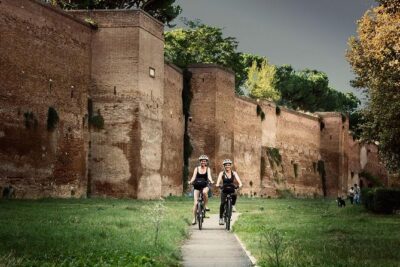
Rome EBike Tour: Appian Way, Catacombs & Roman Aqueducts
Read our review →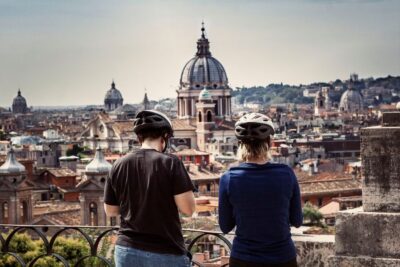
Top Highlights & Hidden Gems Tour by Cannondale E-Bike
Read our review →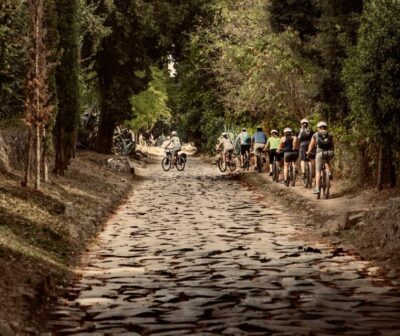
Appian Way, Catacombs, & Roman Aqueducts E-bike Tour
Read our review →
Rome City Small Group Bike Tour with quality Cannondale EBike
Read our review →
Rome by Night – Ebike Small Group Tour – Food and Wine (Option)
Read our review →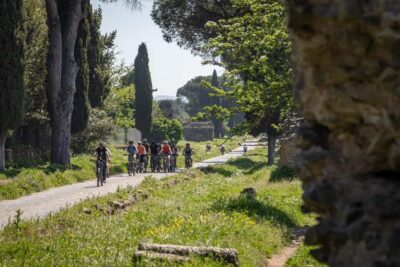
Appian Way E-bike Tour with Catacombs, Aqueducts & Food
Read our review →
Appian Way Aqueducts Bike Tour (Catacombs & Lunch Option)
Read our review →Browse the lists this tour appears in