
Reviewed · ROME
Ancient Rome: Archeological area Largo Argentina
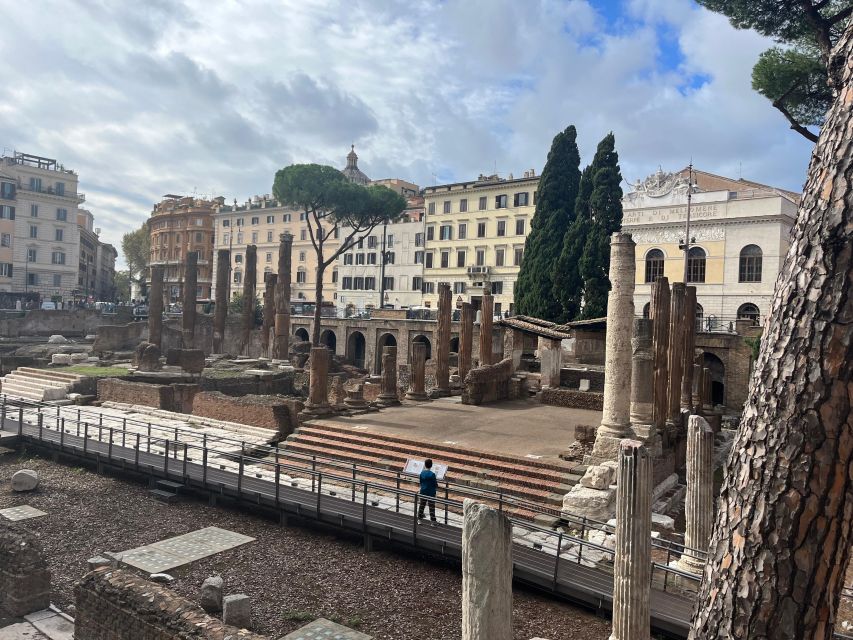
Largo di Torre Argentina is fascinating because it puts one of ancient Rome’s darkest moments right in the middle of today’s city. You walk through excavated streets and sacred spaces that have been used for thousands of years, then you connect that ground to the story of Julius Caesar’s assassination at the Ides of March in 44 BC.
What I like most is the mix of four ancient temples you can still make sense of on-site, plus the way the Curia of Pompey tuff base helps you picture where the killing happened. One possible drawback: it is not a live, talk-and-walk guided tour, so if you want a person to explain everything step by step, you may want to supplement with your own reading or questions.
Key Things to Know Before You Go
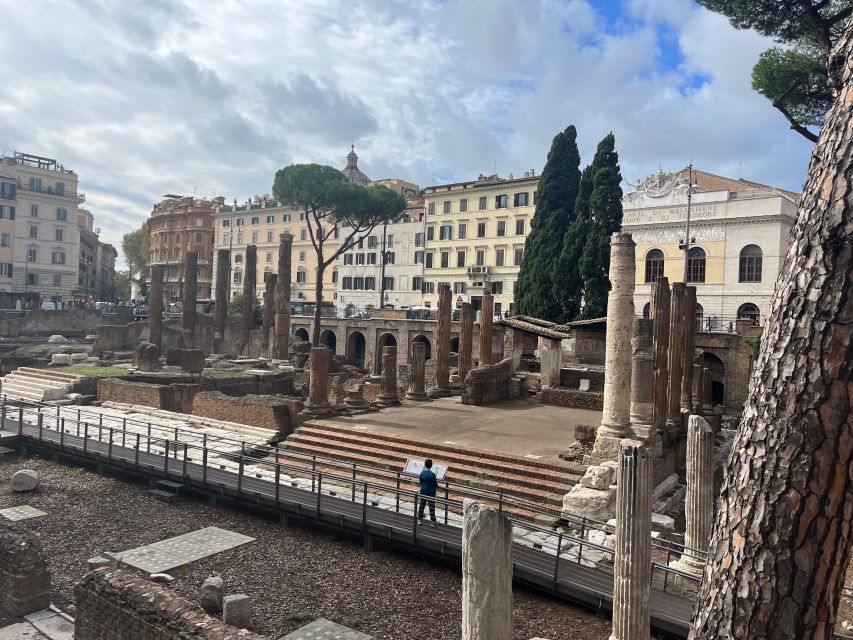
- Julius Caesar’s assassination site is tied to the tuff base of the Curia of Pompey you can see in the excavation area
- Four temples (4th to 1st centuries BC) let you focus on architecture, not just drama
- A 30-minute multimedia video gives you visual context before you enter the ruins
- Two millennia of layers show how the sacred site kept being reused, from imperial phases to medieval structures
- Reserved entry helps you get into the excavation area during your booked time
Largo di Torre Argentina: One Square, Two Thousand Years, and a Caesar Clue
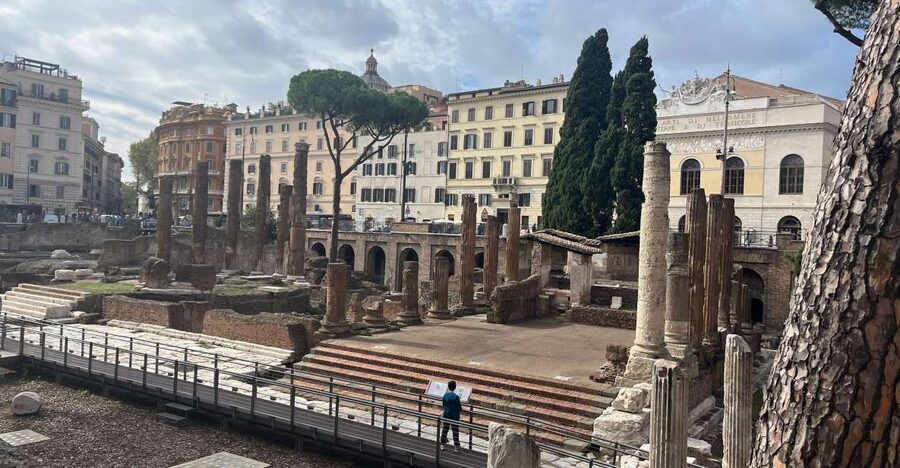
This is the kind of place where Rome feels compact in the best way. Largo Argentina sits in the archaeological area of Largo di Torre Argentina, a sacred zone that was lived in and rebuilt for around 2,000 years, all while the modern city keeps moving around it.
The big hook is the assassination of Julius Caesar on the Ides of March, 44 BC. The ruins you visit are not just pretty old stones. They are tied to how ancient sources describe what happened near the Curia of Pompey, and that connection is what makes your walk feel more like a historical investigation than sightseeing.
You also get a bonus that many other Rome stops do not offer: the site is both architecturally important and layered with later eras. You see how the sacred use of the space continues, including imperial phases linked to the temples and medieval age structures preserved in the same area.
Other things people book around Rome:
- Vatican Museums & Sistine Chapel Tour with Optional Basilica
★ 4.3 · 67,413 reviews - Vatican Museums, Sistine Chapel & St Peter’s Basilica Guided Tour
★ 4.5 · 39,149 reviews - Rome: Colosseum, Palatine Hill and Roman Forum Guided Tour
★ 4.8 · 32,814 reviews
From Piazza d’Aracoeli to the Excavations: How the 1-Hour Flow Really Feels
Your selected time does not start at the ruins. The booking time refers to your arrival at the Touristation office at Piazza d’Aracoeli 16, at the time slot you chose.
From that office, you then head into the archaeological area. In practice, the walk is short, and it is helpful to build a small buffer so you are not arriving at the site at the edge of your schedule. Plan to redeem your voucher first, then settle into the audio and video materials before you enter.
Because the experience is one hour total, it is smart to arrive with a basic game plan. Decide what you care about most: the temples’ architecture, the assassination location, or the site’s long timeline. You can catch all three, but you will enjoy it more if you do not try to treat it like a museum that could eat your whole day.
The Multimedia Video and App Audioguide: Turning Stones Into Stories
One strong part of this experience is the 30-minute multimedia video shown before you actually move through the excavation area. This matters because Largo Argentina can be visually confusing at first glance. You are looking at ruins from different periods, and the site’s layout is not always intuitive.
The video helps you get your mental map in place. Then the App Audioguide of Rome can keep you oriented as you walk from space to space. You get the audioguide in English, and the format is designed to fit this short, timed visit.
You also receive a paper city map, plus WiFi. That combination is practical: you can use the map to understand where you are in Rome’s bigger grid, while the app keeps the explanations close to what you are seeing.
And a small note based on what you will likely notice on-site: the experience is not built around a big, crowded guided group route. It is more of a self-paced visit with support provided at the meeting point and reserved entry into the excavation area.
Four Temples (4th to 1st Century BC): What You Can Appreciate Fast
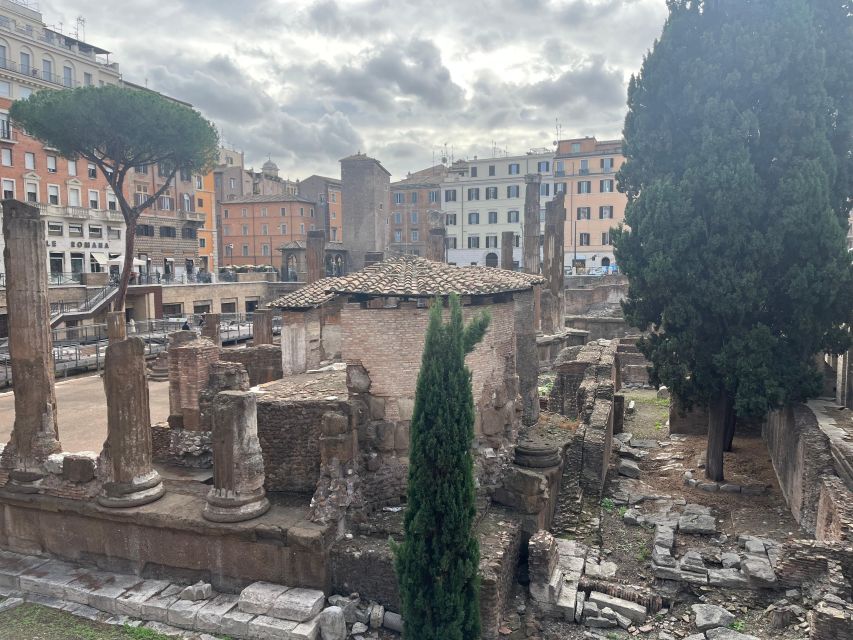
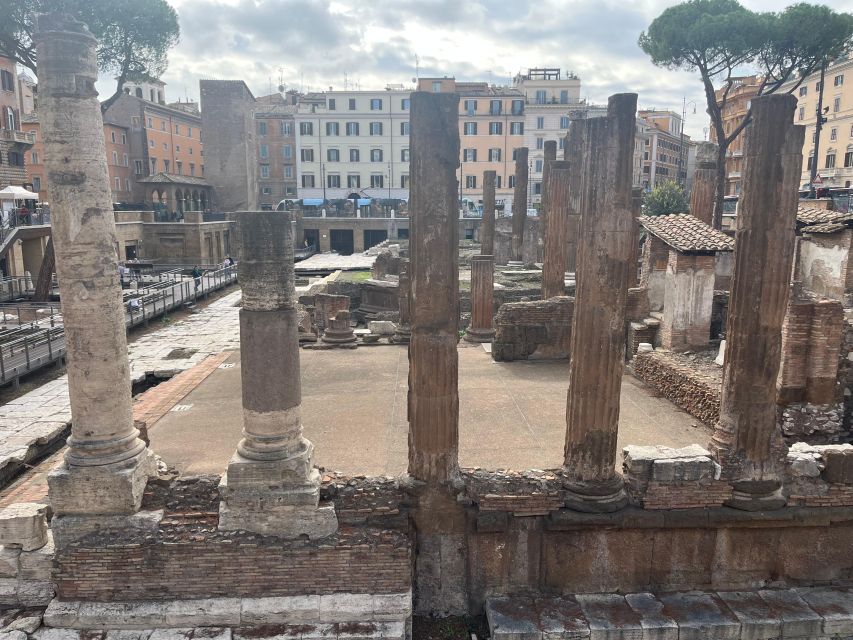
Inside the Largo Argentina excavation area, you get to admire the four temples dating from roughly the 4th to the 1st centuries BC. That range is a gift for your attention span. Even in one hour, you can compare how sacred architecture evolves.
What makes this section valuable is that temples are not just background. They give structure to the story of why this site mattered for so long. In many parts of Rome, you might see a single ruin and then move on. Here, you can feel the site’s sacred identity more clearly because the temples are right there for you to read.
Look for the way different temple phases relate to the same tuff-based ground level used through time. You do not need advanced architectural knowledge to appreciate the basic idea: sacred space was redesigned and reused, and the stones you see today are tied to earlier decisions about worship and public life.
A reality check: this is an excavation area with what you might think of as open-air museum presentation. If you love places where you can zoom in close with lots of interpretive panels everywhere, you may want to rely on the included audio guide to connect what you see to why it matters.
Same city, a completely different kind of day:
- Rome: Guided Tour of Colosseum, Roman Forum & Palatine Hill
★ 4.7 · 27,897 reviews - Rome: Colosseum & Forum with Audio Guide App -Optional Arena
★ 4.2 · 24,770 reviews - Rome: Colosseum, Roman Forum and Palatine Hill Guided Tour
★ 4.5 · 23,903 reviews - Rome: City Sightseeing Hop-on Hop-off Bus with Audioguide
★ 4.0 · 16,045 reviews
Where Caesar Was Killed: The Curia of Pompey Tuff Base Explained
The most dramatic part of Largo Argentina is the association with the Curia of Pompey tuff base, described as the location where Julius Caesar was killed on the Ides of March, 44 BC, as reported by ancient sources.
Even if you know the broad story of the assassination, seeing it tied to a specific excavation element changes the way you remember it. Instead of thinking of Caesar as a name in a textbook, you start thinking about him in terms of place and geometry: what room, what foundation level, what kind of site he entered.
It also helps that the narrative is grounded. You are not asked to imagine something completely abstract. You are directed to a visible tuff-based remain connected to the Curia of Pompey. That is the point where history becomes physical.
If you want to get more from this moment, keep your expectations practical. This is not a stage performance. You are looking at archaeological remains. Your audio guide and the prior multimedia video are what turn those remains into the story you came for.
Two Thousand Years of Reuse: Imperial Phases and Medieval Structures
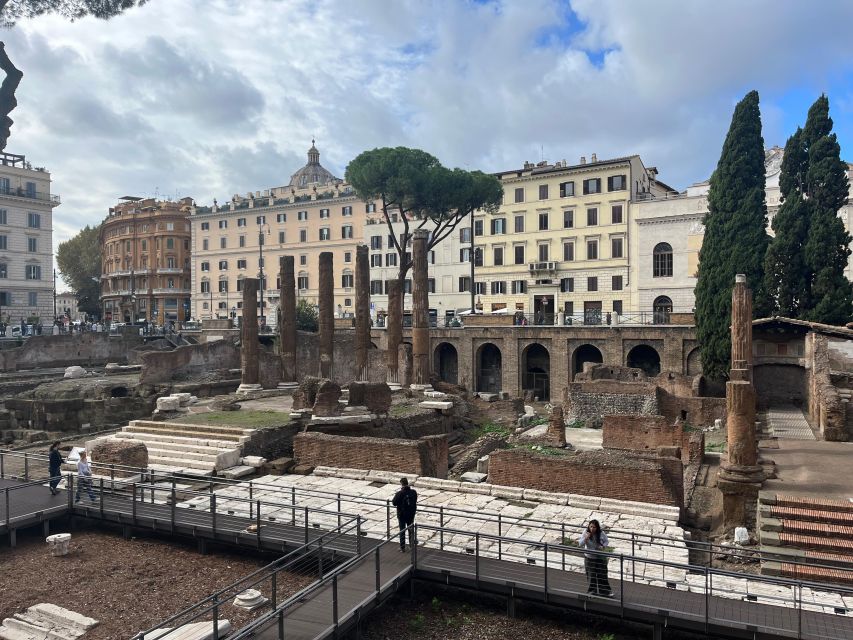
One reason Largo Argentina is special is that it preserves evidence of uninterrupted life and changing use across over 2000 years. You can see traces of the imperial phases of the temples, plus medieval age structures that survived in the same sacred zone.
This is where the experience feels more like a timeline you can walk through. Temples are older, then imperial work keeps reworking the sacred meaning, and later medieval structures show how the site stayed relevant even when the world around it changed.
If you enjoy archaeology because it reveals how societies keep reusing meaningful places, you will appreciate this layered approach. You can stand in one area and feel the long pause between periods of Roman life, then the quicker shifts of later centuries.
Price and Value: Is This $23 Ticket Worth It?
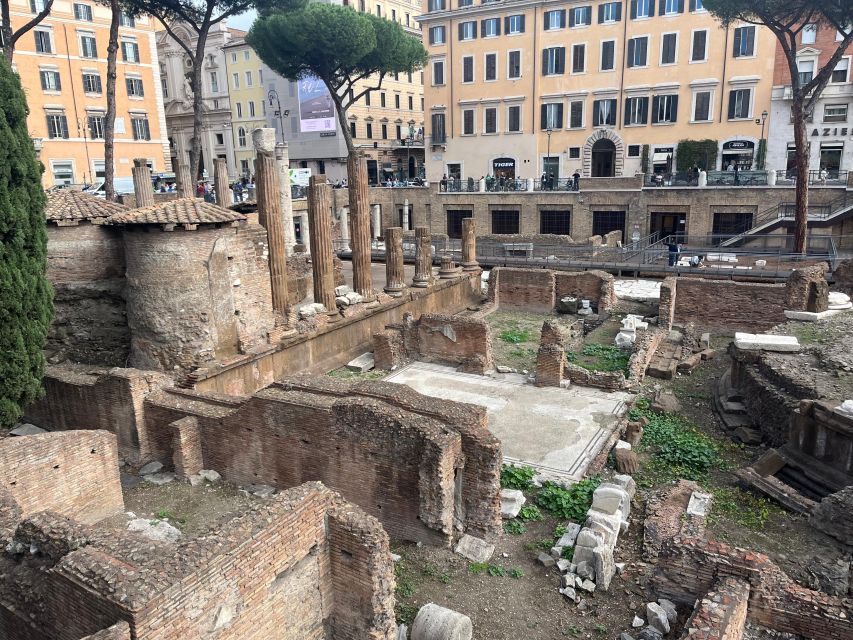
At about $23 per person for this one-hour experience, the value depends on how you like to travel.
If you want reserved entry into the Largo Argentina excavations, plus a 30-minute multimedia video, plus an English app audioguide, that is a pretty fair bundle for a short visit. You are paying partly for convenience and partly for structure, which matters when you are working with ruins that benefit from context.
That said, the site is also one of those places where you might be tempted to skip the ticket if your only goal is to see everything from outside. Some people find they can visually catch a lot without paying for the internal excavation area, and there is also a small museum space underground connected to the site.
So here is my practical way to decide: if you care about the Caesar connection and you want the most coherent explanation of what you are looking at, this ticket is the better choice. If you are mostly doing quick exterior photo stops, you might feel the paywall is less essential.
Practical Tips That Actually Help at Largo Argentina
Bring your passport. That is specifically listed as required.
Do not bring pets, glass objects, luggage or large bags, or alcohol and drugs. If you are traveling with a day bag, keep it small enough that you do not get stuck at entry rules.
You will be in an excavation area for a short but focused walk. Wear shoes you are comfortable in, and take a moment to slow down at the major points, especially around the tuff base area tied to the assassination.
Also, English is the language provided here. If you rely on translation apps, set them up before you start, so you are not fighting your phone while you are trying to read the site and follow the audioguide at the same time.
Who This Works Best For (and Who Should Skip)
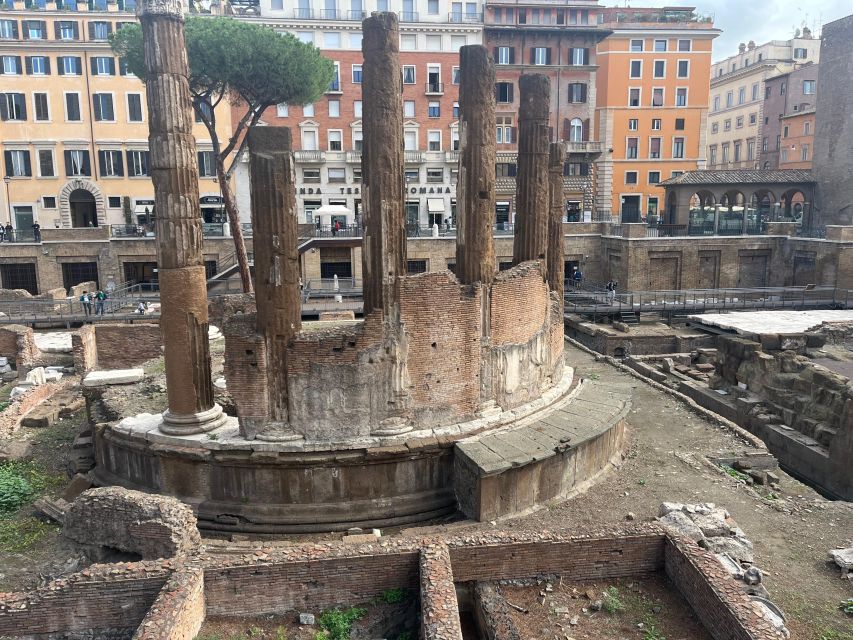
This experience is a great fit if you want an efficient Rome stop that mixes architecture with a specific, famous event. I think it works particularly well for people who:
- Want a short, high-impact visit that fits into a busy itinerary
- Like archaeology with clear explanations instead of vague wanderings
- Care about Julius Caesar beyond the basic plot
It may not be ideal if you want a classic guided tour with a live expert giving answers on the fly. This experience does not include a guided tour, so you are relying on the multimedia video and the audioguide for the narration.
If you are traveling with kids, it can still work, but you may need to do the storytelling yourself while the app provides the facts. The upside is that the Caesar angle usually grabs attention fast.
Should You Book the Ancient Rome Archaeological Area at Largo Argentina?
I would book it if you want the clearest path to understanding why this place is important, and you appreciate getting context before you step into the excavation area. The multimedia video, reserved entrance, and English app audioguide are what transform a set of ruins into a guided-by-technology story.
I would think twice if you are the type who mostly wants the exterior view and does not plan to use the audio. In that case, you might feel you are paying for access and structure more than for something completely new visually.
If you are deciding at the last moment, here is the simplest rule: if Julius Caesar and the temple architecture are on your must-see list, this is a solid use of an hour. If neither is central to your day, you might get more value elsewhere.
FAQ
How long is the Ancient Rome archaeological area experience at Largo Argentina?
The duration is 1 hour.
Where do I redeem my voucher before visiting Largo Argentina?
Redeem your voucher at the Touristation Aracoeli office, Piazza d’Aracoeli 16. A fountain and orange flags are in front of the office entrance.
What is included in the price?
It includes a 30-minute ancient Rome multimedia video, entrance reserved for the Largo Argentina excavations, an App Audioguide of Rome, assistance at the meeting point, a paper city map, and WiFi.
Is a guided tour included with a live guide?
No, a guided tour is not included.
What languages are available for the experience?
The audioguide is in English.
Do I need to bring a passport?
Yes, a passport is required.
What items are not allowed during the visit?
Pets, glass objects, luggage or large bags, alcohol, and drugs are not allowed.
Does the booked time refer to the tourist office or the archaeological site?
The selected time for your booking refers to the timing at the Touristation office.
Can I cancel for a full refund?
Yes. You can cancel up to 24 hours in advance for a full refund.
Recently reviewed around Rome
- Rome: Castelli Romani Hop-on and Hop-off Tour★ 4.9 · 32 reviews
- Rome: Food Tour near Vatican City with Wine★ 4.8 · 100 reviews
- Rome: Scavenger Hunt Self-Guided Tour★ 4.6 · 15 reviews
- Hidden Rome: Small Group E-Bike Tour with Street Food Stops★ 4.9 · 144 reviews
- Rome: Highlights Tour in Golf Cart★ 4.9 · 28 reviews
- Rome: Hop-on Hop-off Bus Tour and Colosseum Experience★ 3.4 · 163 reviews
- Rome: Guided Haunted Rome Ghost Tour with Dowsing Rods★ 4.8 · 63 reviews
- Rome: Highlights Photo Shoot for Memorable Moments★ 5.0 · 32 reviews