
Reviewed · WALKING TOURS
Alternative Walking Tour of Rome’s City Center & Hidden Gems
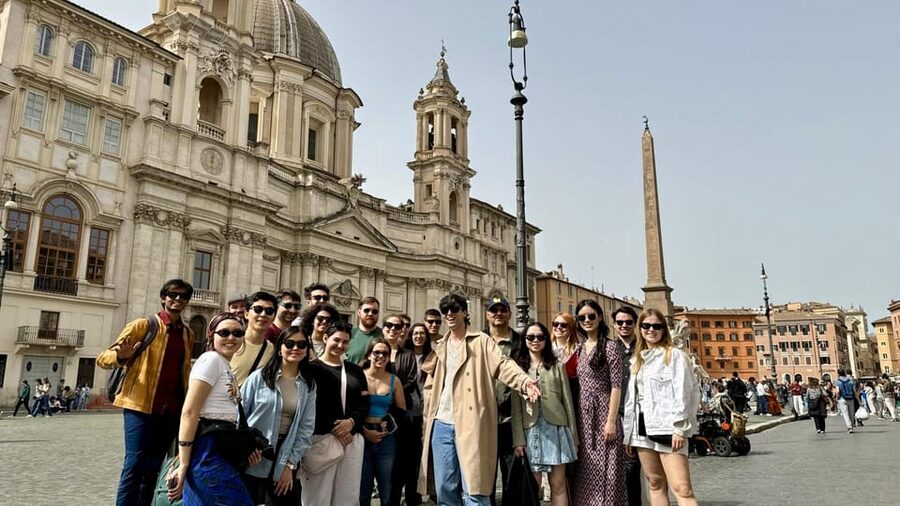
Rome is easy to fall in love with, but what makes this 2.5-hour center walk different is how it explains the city like a power struggle. You connect famous places to the people who used them, from emperors and popes to artists and political operators who left fingerprints all over the streets.
I also really like the story-first guiding. Names you hear in school show up with human motives, and the guide ties it all together with street-level details, even adding dark humor and politically incorrect jokes when the topic calls for it.
One thing to consider: it’s a tip-based tour, so your final cost depends on what you give at the end, and the humor is not for everyone.
Key highlights you will feel on the walk
- Off-limits access and “secret stop” moments you will not get on the standard postcard route
- Papal Private Gardens admission included, so part of the value is tied to doors that are not usually open to the public
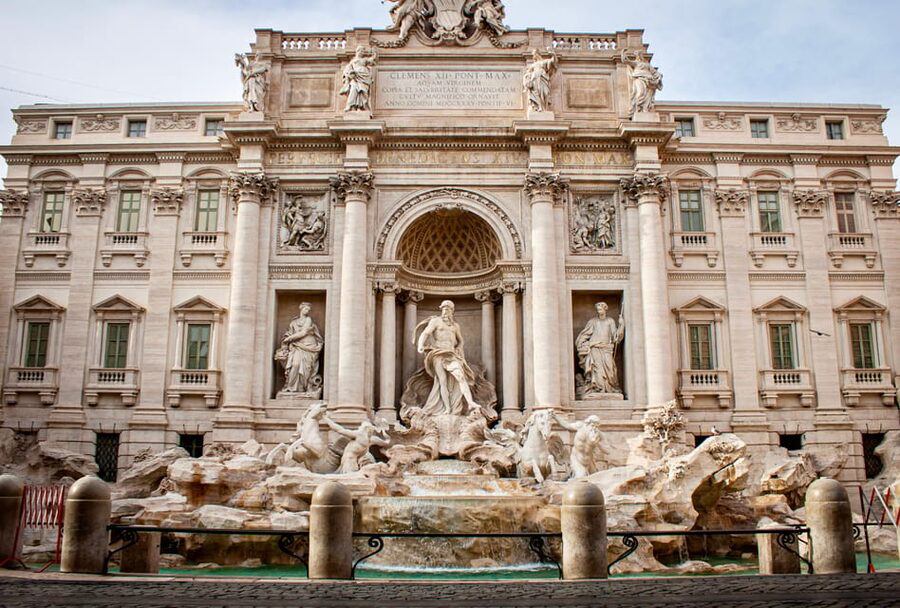
- Trajan to Trevi to the Pantheon, with the same theme running through every stop: power and propaganda
- Guides like Iris, Jacopo, and Simone get praised for story style, pacing, and keeping questions welcome
- Small-group energy shows up often, including departures where people had the guide almost to themselves
- No headphone vibe is a plus for those who prefer face-to-face conversation (some groups reported this)
Why this Rome walk feels different from a typical sightseeing circuit
This is not a “look left, look right, next stop” type of tour. The guide builds a storyline around families and dynasties, then shows you how that power shaped buildings, churches, fountains, and even public spaces. It turns the city into a living document of who won, who lost, and who made sure the record looked flattering.
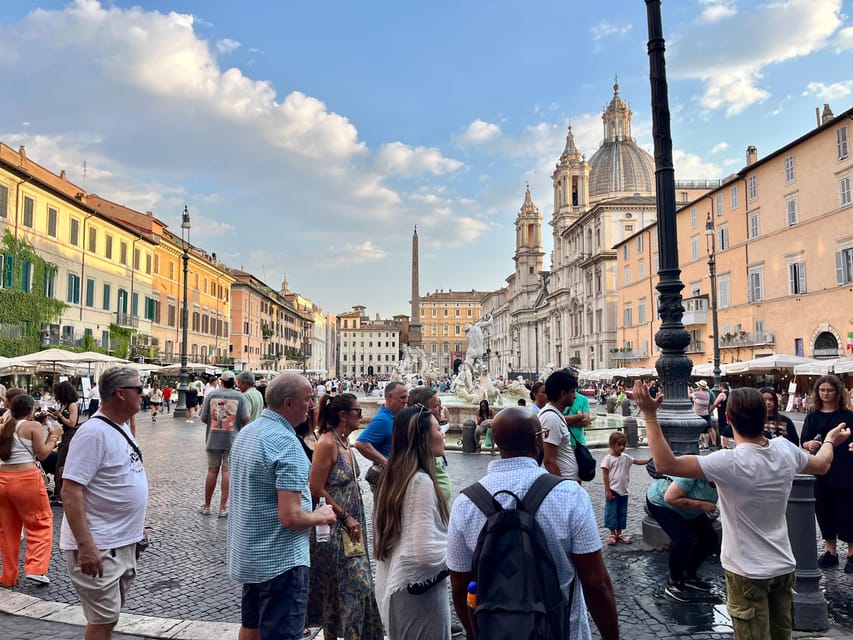
I like that the tour covers famous targets, but the focus is on what those places were used for. Trevi Fountain and Piazza Navona are there, yes. But you are also learning why Rome has so many churches, why fountains became symbols of power, and why the city still feels like it has a political pulse under the stone.
Another big plus, based on what people repeatedly said, is the guide style. You might meet Iris, Jacopo, Simone, or another host, and the common thread is energetic hosting, clear explanations in English or Spanish, and a habit of answering questions by branching into related areas. In a city as crowded as Rome, that conversational flow matters because it keeps you from feeling like you are just being marched through.
More walking tours in Rome:
- Rome: Trastevere & Campo de Fiori Street Food Walking Tour
★ 4.9 · 2,768 reviews - Rome: Paranormal Night Walking Tour & Secret Backstreets
★ 4.9 · 1,921 reviews - Rome by Night Walking Tour – Legends & Criminal Stories
★ 4.5 · 1,003 reviews
Starting at Chiesa del Santissimo Nome di Maria al Foro Traiano
Your tour starts on the steps of Chiesa del Santissimo Nome di Maria al Foro Traiano, right by Trajan’s Column and Trajan’s Forum. The guide holds a sign with the name of the tour, so you can spot them quickly and avoid the usual “which church is it” stress.
This opening is smart. You are placed next to one of Rome’s most famous ancient power symbols, and you begin in a spot that already shows layering: ancient forum energy, then later church Italy standing right alongside it. It sets the theme instantly, so when you walk toward other landmarks, you are not only looking at pretty views. You are mapping motives.
Practical note: this first stretch also helps you orient yourself. Rome can feel like one long maze, so having a guide give you a mental framework early makes the rest of the walk easier to follow.
Trajan’s Column: a photo stop that turns into a guided lesson
The first major timed stop is Trajan’s Column, about 15 minutes with photos, guided commentary, and sightseeing time. You are not there long, but the guide uses that short window to make the column part of the bigger story.
Why it works: the column is a perfect anchor for talking about Rome’s “message-making.” Your guide can connect it to how rulers wanted their accomplishments remembered, and how public art and architecture were used for persuasion. That same theme later shows up again at fountains and churches, so the lesson sticks.
Drawback to plan around: because this is a short stop, you will not get the kind of slow, museum-style reading you might do on your own. If you love taking your time with details, you can still linger after the group moves on, but the tour itself keeps momentum.
Piazza Venezia: the quick photo break with big-politics context
Next up is Piazza Venezia, only about 5 minutes, mostly a photo stop and sightseeing. It is a quick hit, but it matters because it sits in a zone where Rome’s layers of public space feel obvious. Your guide’s job here is to connect the dots between the city’s famous stages and the conflicts behind them.
You should think of this stop as a hinge. From here, the tour is less about lining up another famous view and more about preparing you for the “why this place matters” approach the guide uses throughout.
A few more Rome tours worth comparing
- Rome: City Sightseeing Hop-on Hop-off Bus with Audioguide
★ 4.0 · 16,045 reviews - City Sightseeing Rome Hop-On Hop-Off Bus Tour
★ 3.5 · 5,446 reviews - Rome: Fettuccine Pasta Cooking Class in Rome’s City Center
★ 4.8 · 2,414 reviews - Vatican City: Vatican Museums & Sistine Chapel Entry Ticket
★ 4.3 · 2,185 reviews
The secret stop: the short moment that changes how you see the main sights
Then comes the secret stop, about 5 minutes, with photo time and a guided visit. Even though it is brief, this is one of the parts that people seem to remember because it shifts the tour off the easiest route.
In practical terms, this is where you benefit most from booking an alternative tour. Rome is loaded with iconic images, but most visitors only see the obvious angles. A well-run short surprise like this trains your eye to spot how the city hides meaning in plain sight.
Because this stop is designed as a change of pace, keep your camera ready, but also look around with your guide’s framing in mind. The value is not only what you photograph, it’s what you understand about why the place is there.
Monastery time, plus Papal Private Gardens admission
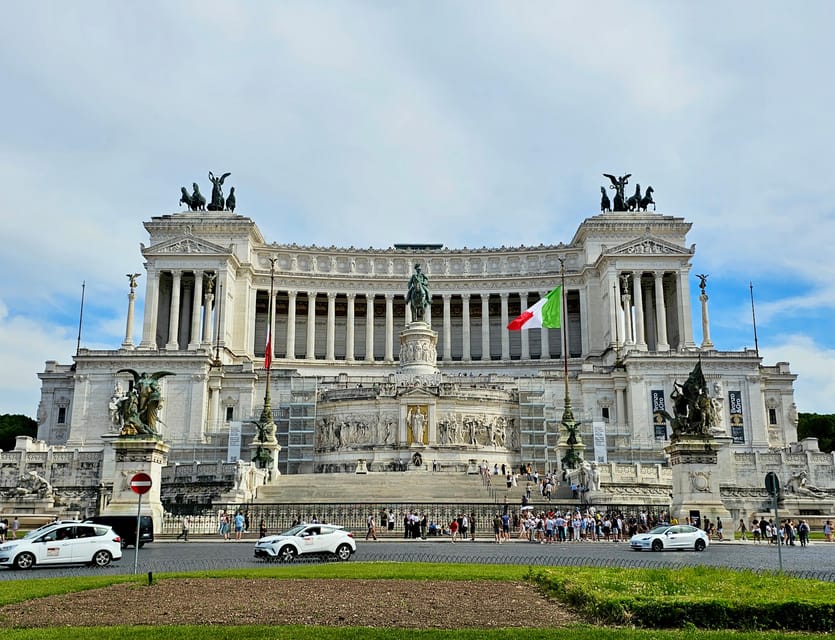
The longest stop on the middle of the walk is a monastery visit, about 25 minutes, with photo time, guided touring, and sightseeing. This is also where the tour’s special inclusion starts to feel real, because the package includes Papal Private Gardens admission.
Even if you are not sure exactly which door that opens until you get there, it changes the feel of the tour. You are not only moving through public Rome. You are getting a taste of a Rome where access is controlled, where the city’s power structures show up in architecture and in who gets to enter certain spaces.
What to expect: a calmer, more reflective segment than the open squares. If your feet are already warming up by the time you reach this portion, this stop is a welcome break in pace.
Trevi Fountain: the crowd magnet, explained with power and symbolism
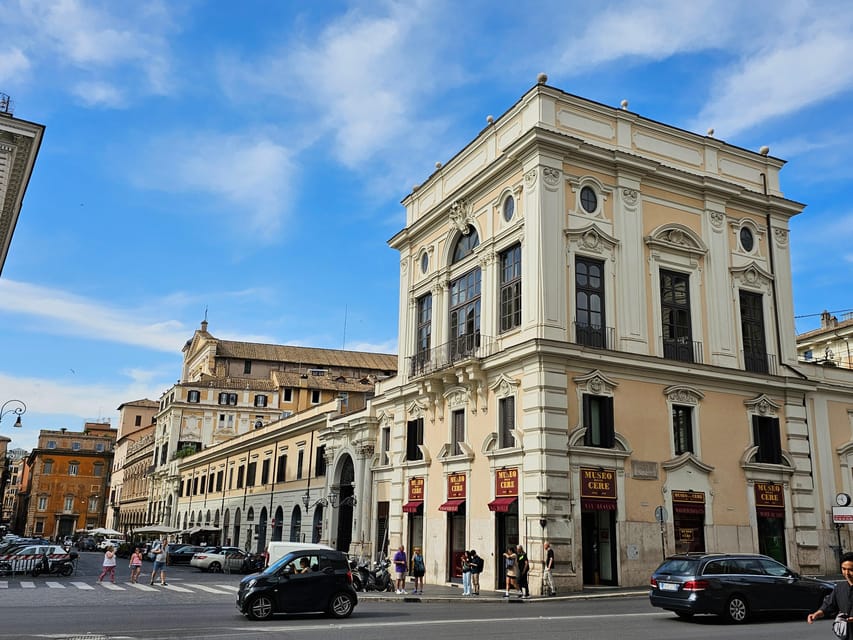
Then you reach Trevi Fountain for a break, plus photo stop, guided tour, and some free time, about 15 minutes total. Trevi can be chaotic, so the guiding here is important because it helps you move from postcard mode to interpretation mode.
The tour’s theme fits Trevi perfectly. You will hear the idea that fountains in Rome were not just decoration. They became symbols, even tools for power and propaganda, tying beauty to political messaging. When you hear that, the scene changes from I want a photo to I want to understand the message.
One practical tip: treat the free time as your chance to reset, step back from the densest crush, and take in what you can without rushing. The guided portion gives context, but the break helps you enjoy the surroundings rather than just survive them.
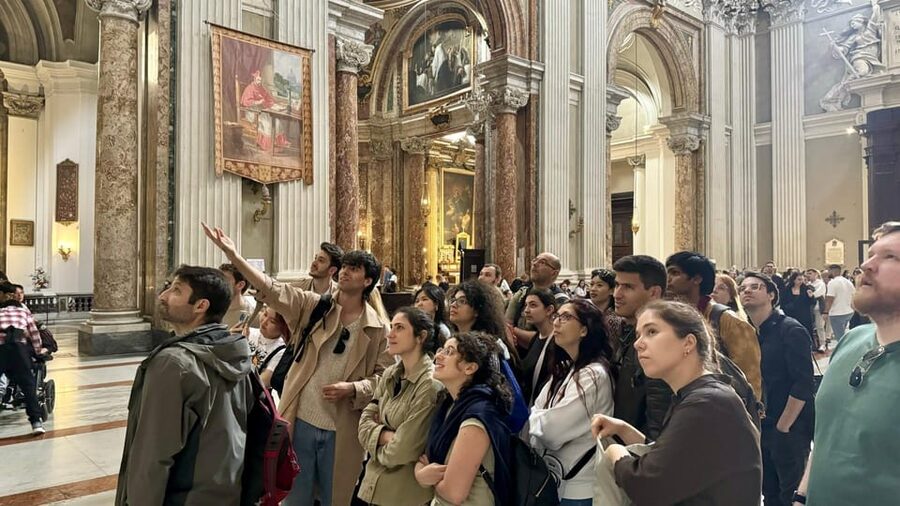
Church of Sant’Ignazio di Loyola: Baroque spectacle with stories attached
Next is Church of Sant’Ignazio di Loyola, about 10 minutes, with a photo stop, visit, and guided sightseeing. This is one of those stops where the architecture is memorable, and the guide makes sure you notice what matters.
Based on what people said after the tour, the ceiling fresco is a highlight, and the guide uses it as a way to talk about art as persuasion. In Rome, churches are often where style carries a political message, and this stop supports that theme well.
If you are the type who gets impatient in churches, this is a good target because it is framed as part of a story, not a standalone lecture. Still, it is a relatively short time, so if you want to stare at details for a long time, you will likely need extra time later on your own.
Pantheon in 5 minutes: fast, focused, and guided
The tour then reaches the Pantheon, Rome for about 5 minutes, with photos, guided tour, and sightseeing. This is not enough time for a full slow look, but it is enough time for a guided framing that can change how you read the building.
Think of this stop as a “compression” moment. Your guide helps you connect the Pantheon to the tour’s larger point about how Rome evolved, including the link between ancient forms and later religious architecture. Even a short stop can be valuable if the guide tells you exactly what to notice.
If you want more time here, plan to return later the same day or on another day. This tour gives you the story angle first.
Piazza Navona finale: where the tour lands and your takeaway locks in
The walk ends at Piazza Navona, with about 15 minutes for photo stop, visit, guided tour, and sightseeing before finishing there. Piazza Navona is one of the most satisfying places to wrap up because it naturally combines drama and liveliness, and it feels like a place where the city shows off.
Finishing here also matches the tour’s method. You have moved from ancient power cues to Renaissance and Baroque religious and public space, then landed in a square that looks like political theatre made into stone.
In the best case, you leave with a stronger sense of how to explore on your own after the tour. People consistently said they got extra recommendations for what to see next, and that follow-up planning is a real form of value in a city where every street looks like it could hide something.
Price and tips: how the $3.77 rate fits the real cost
The listed price is $3.77 per person, but this is a tip-based experience. The guide works on a pay-what-you-want model, so the real spending happens at the end. The information provided says typical tips are between 10€ and 50$.
Here is how I think about value in Rome: if you want a guided storyline, you are paying for someone to translate the city into something you understand. The low upfront price is not the whole story, because the guide’s income depends on your tip. So you should budget for at least the lower end of that range and tip based on your experience.
If your guide keeps things engaging, handles questions well, and helps you notice details you would have missed alone, tip toward the middle or higher end. If you just wanted a quick walk-by tour with minimal interaction, tip closer to the low end. This keeps things fair and helps the tour model keep working.
Which type of traveler should book this Rome center walk
This is ideal for you if you want more than a photo stop list. It fits first-time visitors who need context fast, and it also fits return visitors who have already seen the big landmarks and want the next layer of meaning.
It is especially good for you if you like:
- Storytelling tied to real people, including scandals, corruption, crime, and betrayal themes
- A guide who uses humor, including dark humor and politically incorrect jokes
- A route that mixes famous sites with less obvious stops and off-limits moments
- A pace that aims to be comfortable and helps you navigate crowds without feeling overwhelmed
It may not fit you as well if you want a quiet, strictly family-friendly style. The tour’s highlighted tone includes jokes and dark humor, so it is better for adults or older teens who are comfortable with that kind of storytelling.
Should you book this alternative Rome center tour?
If you want a Rome tour that explains how the city’s power systems shaped what you see today, I think you should book it. The combination of major landmarks plus off-limits access, and the fact that Papal Private Gardens admission is included, makes it more than just a standard highlights walk.
I’d book it even if you have already visited Trevi Fountain, the Pantheon, and Piazza Navona. The difference here is the guide’s focus on families, propaganda, and the human drama behind the stone. If you are willing to tip well, ask questions, and enjoy a guide who tells stories with a sharp sense of humor, this is the kind of tour that leaves you thinking about Rome long after your photos end.
FAQ
Where does the tour start?
It starts at the steps of Chiesa del Santissimo Nome di Maria al Foro Traiano, right by Trajan’s Column and Trajan Forum. The guide holds a tour sign with the name of the tour.
Where does the tour end?
The tour finishes at Piazza Navona.
How long is the walking tour?
The duration is 2.5 hours.
What languages are offered?
Live tour guidance is available in Spanish and English.
Is this a paid tour with a fixed cost?
It is tip-based. The guide works on a pay-what-you-want model, and you give a tip at the end based on what you think the tour was worth.
What is the typical tip amount?
The information provided says tips are usually between 10€ and 50$.
What major sites are included?
The route includes Trevi Fountain, the Pantheon, and Piazza Navona, plus other central stops.
What makes this tour different from a standard route?
It includes off-limits locations and a secret stop, plus guided storytelling focused on the people and forces behind Rome’s buildings and monuments.
What is included in the tour price?
Inclusions are a local guide, the walking tour, city highlights, hidden off-limits locations, and Papal Private Gardens admission.
Can I cancel and get a refund?
Yes. Free cancellation is available up to 24 hours in advance for a full refund.
Recently reviewed around Rome
- Rome: Castelli Romani Hop-on and Hop-off Tour★ 4.9 · 32 reviews
- Rome: Food Tour near Vatican City with Wine★ 4.8 · 100 reviews
- Rome: Scavenger Hunt Self-Guided Tour★ 4.6 · 15 reviews
- Rome: Hop-on Hop-off Bus Tour and Colosseum Experience★ 3.4 · 163 reviews
- Hidden Rome: Small Group E-Bike Tour with Street Food Stops★ 4.9 · 144 reviews
- Rome: Highlights Tour in Golf Cart★ 4.9 · 28 reviews
- Rome: Guided Haunted Rome Ghost Tour with Dowsing Rods★ 4.8 · 63 reviews
- Rome: Highlights Photo Shoot for Memorable Moments★ 5.0 · 32 reviews
Walking Tours, compared.
Trastevere & Campo de Fiori Street Food Walking Tour
Read our review →
Paranormal Night Walking Tour & Secret Backstreets
Read our review →
Rome by Night Walking Tour – Legends & Criminal Stories
Read our review →
Guided City Center Evening Sightseeing Walking Tour
Read our review →
Best of Rome Walking Tour including Trevi Fountain
Read our review →

Forbidden History Walking Tour & Pub Crawl with Drinks
Read our review →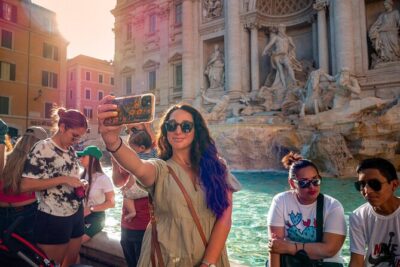
Guided Small Group Walking Tour of City Highlights
Read our review →Browse the lists this tour appears in