
Reviewed · PRIVATE TOURS
Rome: Capitoline Museums Private Guided Tour
The Capitoline Museums are Rome’s original art stop, and this private tour gives you a smart route through the highlights without wasting time. I love how the visit mixes Roman sculpture with later masterpieces, so you see how tastes changed over centuries. You’ll also get Roman Forum views as part of the experience, not as an awkward bonus detour.
I especially like the way the tour moves through recognizable icons, like the Spinario and the Capitoline Wolf, then shifts upstairs to the Pinacoteca Capitolina. One possible drawback: 2.5 hours goes fast, so if you want long, slow picture-taking breaks everywhere, you might find the pace a bit tight.
The upside is that it’s a true private format, usually with a max of 20 people, led by an art historian guide who can explain what you’re actually looking at and why it matters. If your guide is Martin, you’ll get a warm, practical style, plus the kind of calm attention you really appreciate if plans or energy levels go sideways.
Key highlights at a glance
- Skip-the-line entry so you spend your time inside, not stuck at the start
- Pinacoteca Capitolina paintings, including works by Caravaggio, Guido Reni, Titian, Tintoretto, and more
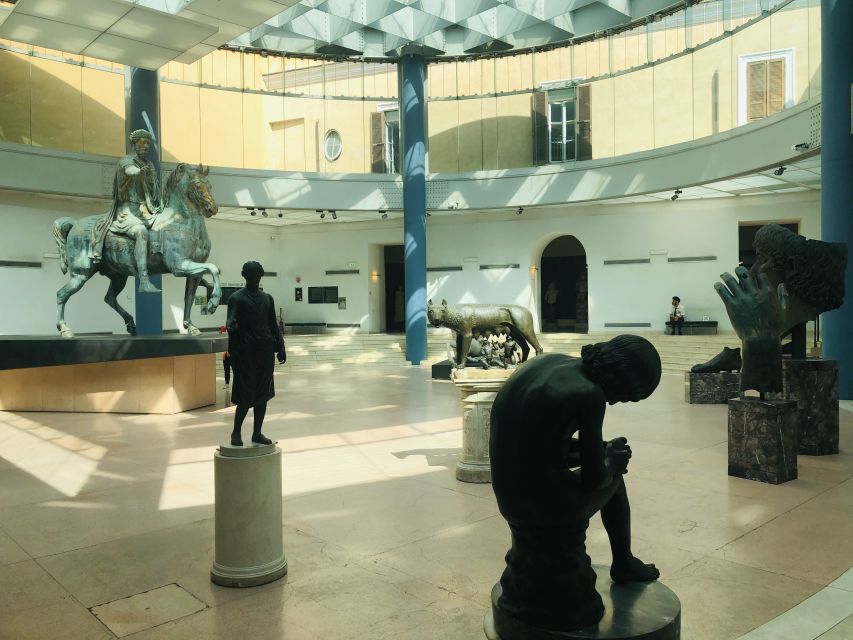
- Marcus Aurelius equestrian statue in an exedra setting that makes it feel even more monumental
- Underground tunnel views from the Tabularium across to the Roman Forum
- Two museum “seats” in one flow, the Palace of the Conservatives and the New Palace
- Signature sculptures and casts of Roman legends, from the Capitoline Wolf to the Dying Gaul
Why the Capitoline Museums feel like a must in Rome
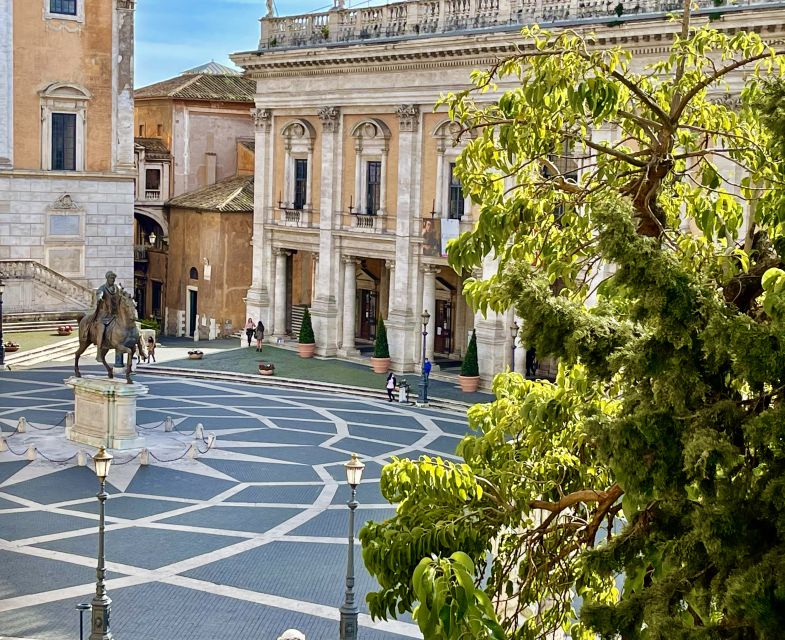
The Capitoline Museums sit on Rome’s power and art crossroads. This complex is often described as the first museum of its kind, which matters because it explains why the collection feels so intentional. You’re not just wandering, you’re touring a place built to show off art to the public, with rooms and sightlines that still guide your eyes.
What I like most for practical travelers is the mix. You get major Roman antiquities like bronzes and sculptures, then you climb into painting and later periods in the Pinacoteca Capitolina. That back-and-forth keeps the tour from turning into a one-note slideshow of statues. Even if you only know a handful of names, the guide can connect the dots between mythology, politics, and art style.
There’s also a built-in sense of “Rome layered on Rome.” The museum buildings incorporate parts of older structures, and the visit naturally threads from ancient fragments to Renaissance and Baroque Rome. If you’ve ever wished you could get the big picture without reading a 400-page book, this is the kind of route that does it for you.
More museums and galleries in Rome:
- Vatican Museums & Sistine Chapel Tour with Optional Basilica
★ 4.3 · 67,413 reviews - Vatican Museums, Sistine Chapel & St Peter’s Basilica Guided Tour
★ 4.5 · 39,149 reviews - Rome: Vatican Museums, Sistine Chapel & Basilica Tour
★ 4.3 · 13,872 reviews
Meet your private guide and get moving fast
You meet at the Capitoline Museums entrance. Your guide waits with a sign with your name, and the tour is live with an English or Italian-speaking professional art historian guide. Because it’s skip-the-line, you get into the museum area efficiently, which is a big deal in Rome where queues can be long and weather can change quickly.
Private also means the guide can actually steer. Instead of racing a crowd, you can ask questions, and the explanations can match what you care about, whether that’s Roman politics, myth, or how painters and sculptors told stories.
Time-wise, this tour is designed to be tight but not frantic. The museum portion is about 2 hours, then you add roughly 20 minutes of scenic viewing time on the way toward the Forum. If you’re trying to fit a major Rome highlight into a day that’s already packed with the Colosseum and Vatican plans, this is one of the easier “value per hour” choices.
Palace of the Conservatives courtyard: where the tour starts to click
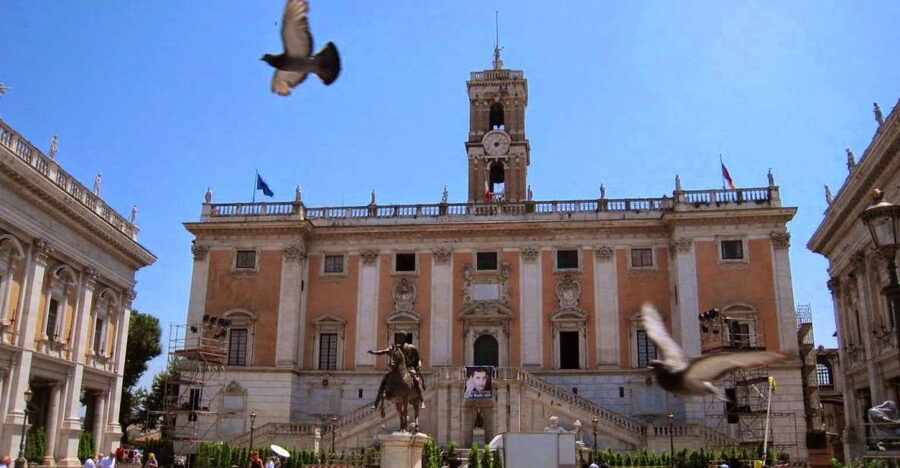
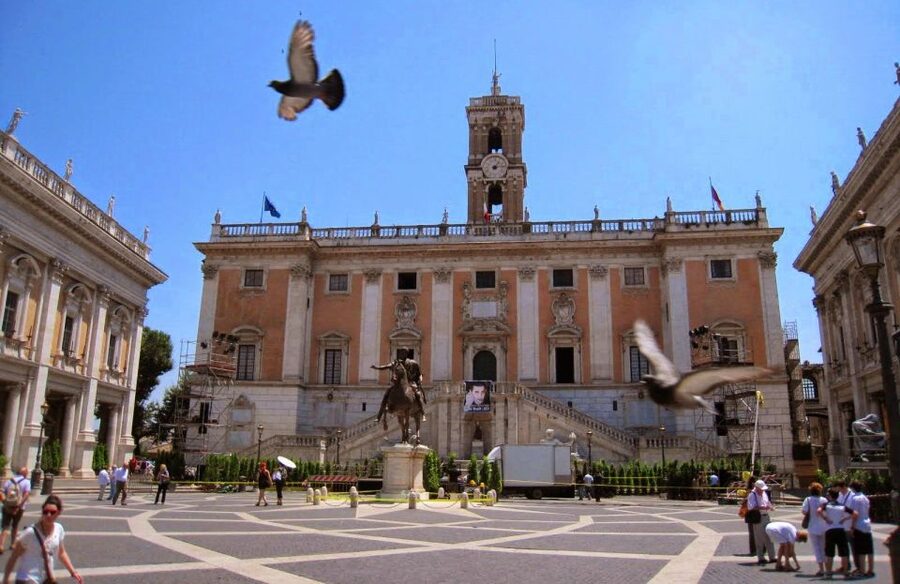
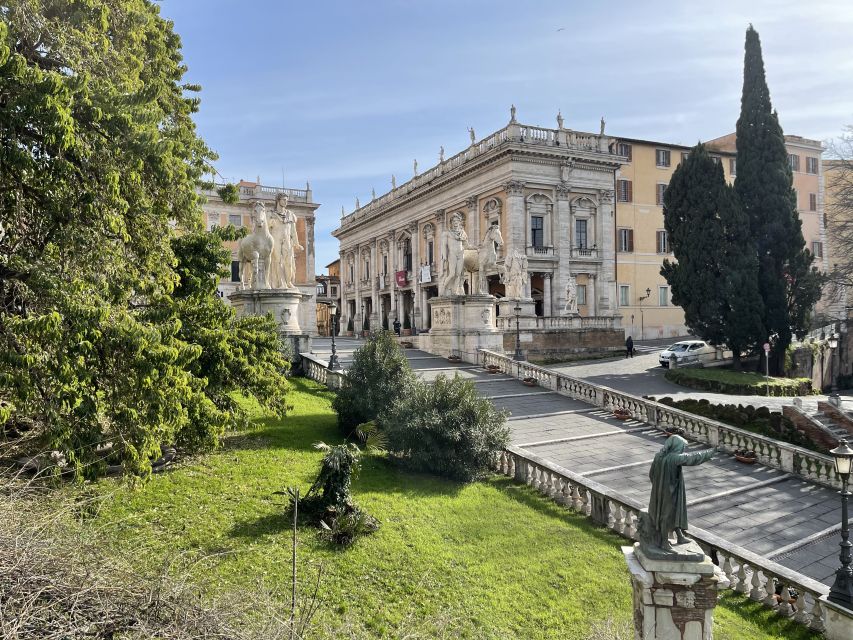
The route begins at the Palace of the Conservatives courtyard, one of the museum’s two historic seats. This is a strong first move because the courtyard sets the tone. You immediately see how the museum presents Roman images as political messaging, not just decorative objects.
A standout you’ll hear about is the remains of a colossal acrolith representing Constantine. Even as a fragment, it signals scale and authority. It also reminds you that “art” and “power” were basically the same thing in the ancient world.
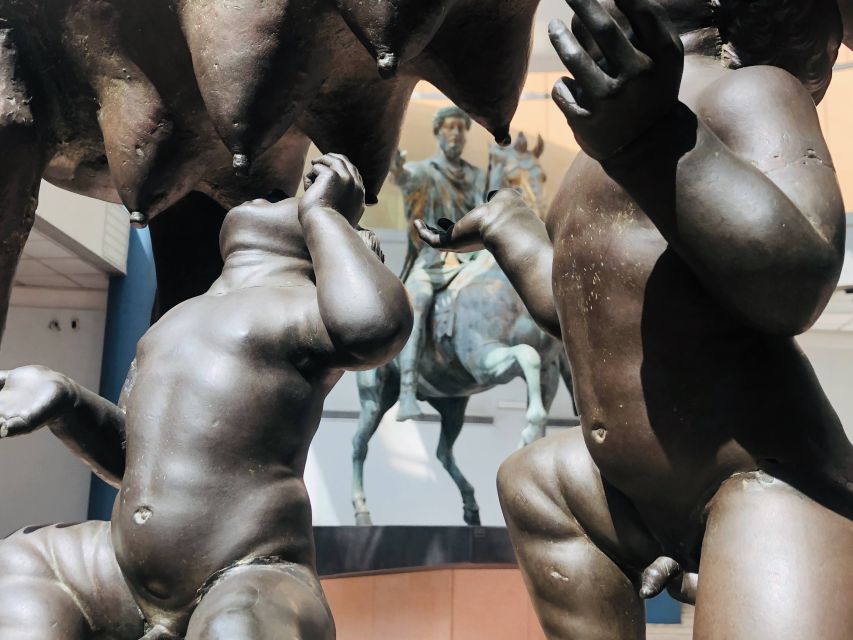
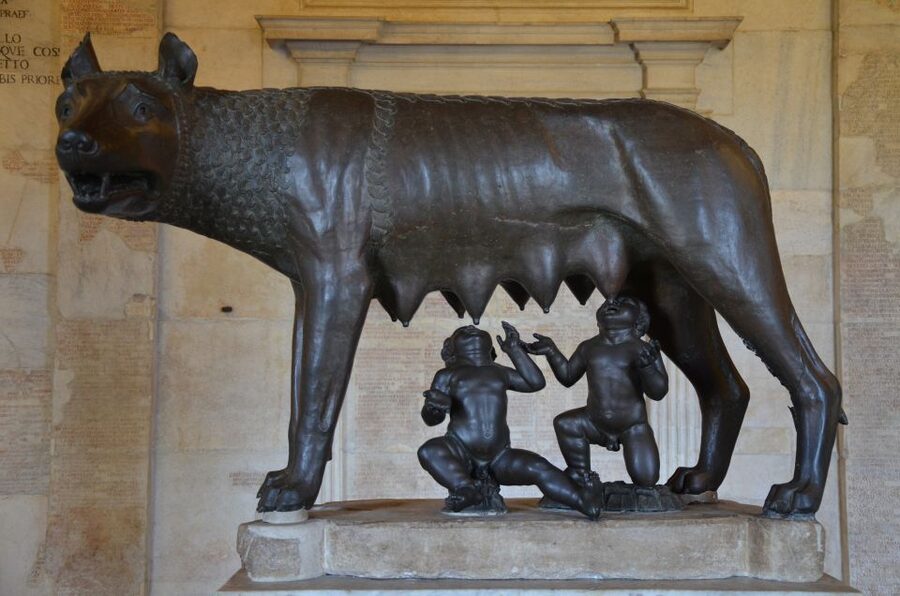
From there, you head to key sculptures and antiquities you can recognize even if you’re not a hardcore history person. The guide will point out the Capitoline Brutus bust, and then you’ll see works that became long-lasting symbols of Rome. Two of the most famous are the Spinario, a Greco-Roman Hellenistic bronze of a boy withdrawing a thorn from his foot, and the Capitoline Wolf, the bronze she-wolf nursing Romulus and Remus.
Those two are more than famous names. They’re also great examples of how Roman culture reused older styles and legends to keep shaping identity. The Spinario, with its quiet physical detail, feels human and immediate. The Capitoline Wolf feels like a civic emblem, not just a creature statue.
Castellani collection and Greek-Etruscan vases
One of the most “you’ll be glad you booked a guide for this” parts is the Castellani collection, with approximately 700 Greek and Etruscan vases. The sheer number tells you this is not a random display. It’s a serious catalog of decorative art tied to identity, trade, and daily life around the Mediterranean.
Even if ceramics are not your thing, a guide can help you look at what changes: themes, styles, craftsmanship, and how the Romans and their predecessors understood imagery. This is also a good mental break from statue viewing because vases let you slow down and scan details like scenes and figures.
The drawback here is simple: if you’re the type who gets bored by anything “too small,” you may want to focus on the guide’s cue points first. Your best strategy is to let the guide show you what to notice, then you can decide how much you want to roam.
More private tours in Rome:
- Rome by Golf Cart Private Tour: Beyond the Landmarks
★ 5.0 · 4,361 reviews - Early Morning Vatican, Sistine, St. Peter’s Semi or Private Tour
★ 5.0 · 3,779 reviews - Rome on a Golf Cart Semi-Private Tour Max 6 with Private Option
★ 5.0 · 2,502 reviews - Rome Private Arrival Transfer: Fiumicino Airport to Hotel in Rome
★ 4.5 · 2,492 reviews
Pinacoteca Capitolina: upstairs painting with serious names
On the first floor and then the second, the tour shifts into painting and later art. The Pinacoteca Capitolina is the oldest public collection of paintings, and the building makes it feel like you’re stepping into a curated timeline.
Expect to see works by major painters across different schools, including Caravaggio, Guido Reni, Carracci, Guercino, Domenichino, Veronese, Titian, Tintoretto, Rubens, and Pietro da Cortona. That lineup is the kind of list that can overwhelm you if you’re walking alone. With a guide, you get help picking out what each artist is doing, what the subject likely means, and how the style fits the period.
You’ll also have time to appreciate frescoes and statues from Renaissance and Baroque Rome. This is important because it shows how Rome reinterpreted the classical world again and again. A Roman museum isn’t just about ancient objects. It’s about how later artists looked back and decided what to keep, what to change, and what to amplify.
If you’re short on time in Rome, Pinacoteca Capitolina can feel like a shortcut to “serious art museum credibility.” You get major names without needing a full day in multiple separate galleries.
Marcus Aurelius and the exedra setting
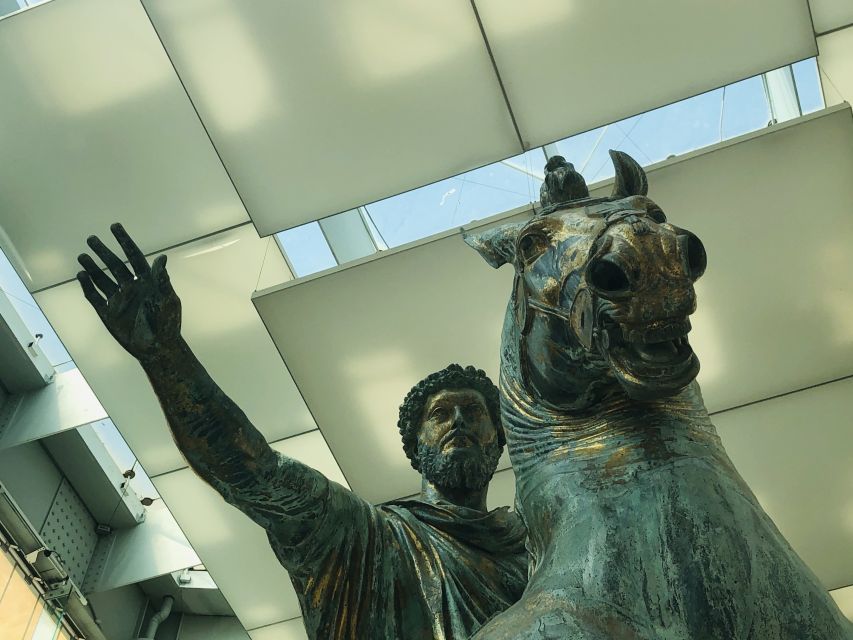
Going down toward the ground floor, you’ll reach the exedra with the equestrian statue of Marcus Aurelius. This is one of those artworks that looks better the more you understand it. The guide can explain how it’s presented, why this type of image carried authority, and how it helped establish an enduring visual language for leadership.
What makes this stop special in this tour is the way the building structure still shows traces of ancient temples. So the experience isn’t just a statue in a room. It’s a Roman monument embedded in a layered environment, with architecture doing part of the storytelling.
Practical note: this is a good moment to take a breath. Even though you’re moving efficiently, the tour has enough “big stop” objects that you’ll feel like you’re hitting real anchors, not only reading placards.
Tabularium tunnel to the Forum: the view that seals the deal
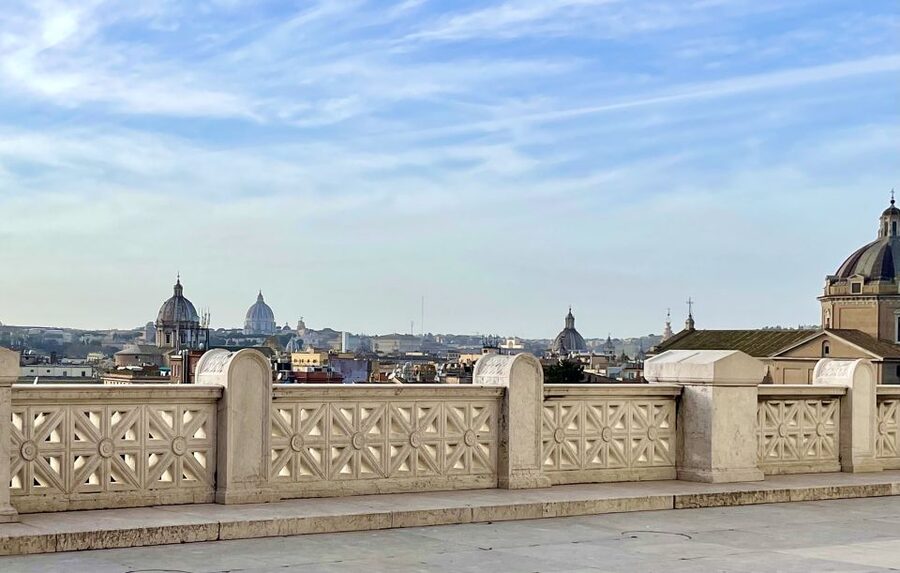
One of the best “only-on-a-guided-route” moments is the underground tunnel that crosses the Tabularium. It’s not just a passage. Your guide leads you through it so you can enjoy magnificent views of the Roman Forum from the route.
This is why the tour’s pacing works. You spend time absorbing sculpture and painting in the museum, then you get an immediate payoff: you see the Forum in a way that feels connected to what you just learned. If your knowledge of the Forum is currently based on photos, this view can reset your sense of scale and placement.
Also, the tunnel route helps you avoid the guesswork of where to stand for the best sightlines. You’re not figuring it out while standing in the sun or trying to match signs to landmarks. You walk, you look, you get context.
If you’re someone who hates “scenic detours,” you’ll still appreciate this one because it’s tied to the museum itself, not just a random sightseeing bonus.
New Palace galleries: Roman fragments, myth, and emotional sculpture

After the tunnel views, you reach the museum’s second historic seat: the New Palace. This is where the tour expands into a broader range of antiquities, including statues, inscriptions, sarcophagi, busts, mosaics, and other Roman artifacts.
This part is ideal for travelers who want variety. You’re not stuck only in one category. Instead, the guide can bounce you from political imagery to myth to funerary art, all within one compact visit window.
A highlight you can look forward to is the statue of Marforio. You’ll also see the Dying Gaul, a famous work known for its sense of struggle and emotion. Even without prior knowledge, that kind of sculpture hits you quickly because it’s about human experience, not only armor and style.
Another memorable object is Cupid and Psyche. This selection helps the tour finish on a more narrative note. Mythological subjects in art tend to be easiest to grasp when you see how artists treat expression and relationships, and this is a good place to notice those choices.
Price and value: what you’re really paying for
At $201.65 per person, this isn’t a bargain-basement museum ticket. But it is priced like what it is: a private, 2.5-hour guided experience with skip-the-line entry and a professional art historian guide.
Here’s the value math I’d use before booking:
- You’re buying time saved with skip-the-line access.
- You’re buying context, which is the difference between looking at objects and understanding them.
- You’re buying efficiency, because the route connects two museum seats and includes Forum viewpoints inside the time limit.
If you’re traveling with another adult, the private format can start to feel less expensive relative to what you’d spend on multiple tickets and separate guides. If you’re traveling solo, it’s still a strong option if your main goal is to see the best works with a guide who can point out what matters and avoid wasted stops.
If you’re on a tight budget and you’re happy reading a lot on your own, you could do the museums independently. But if you want a guided storyline that ties sculpture, painting, and architecture together in one go, the price starts to make sense.
Timing, pacing, and what to bring so it stays enjoyable
This tour asks for comfortable shoes. You’ll move through multiple floors and then spend time in museum corridors and a tunnel route. Rome museums can be slippery or uneven in spots, so don’t show up in shoes that are fine for city streets but not for museum walking.
Dress code is smart casual. That’s not strict, but it helps you feel comfortable. Also, bring your passport or ID card.
For limits, oversize luggage is not allowed, and walking frames are not allowed. If you’re traveling with anything bulky, you’ll want to keep it manageable before you reach the museum.
As for pacing, 2.5 hours is built for focus. You’ll see a lot, but you’re not meant to linger forever in every room. If you’re the kind of person who always reads every caption, you might want to choose your top 5 areas and let the guide handle the rest.
Who this tour suits best
This is a great fit if:
- You want a private art museum visit and like having a person guide your eyes
- You care about both Roman antiquities and later paintings, including major Baroque-era names
- You want a clean plan that includes the Roman Forum viewpoint without turning your day into a logistics puzzle
It’s also a smart match if you’re a couple or small group and you’d rather pay for guidance than spend your time trying to translate museum signage and figure out the best order.
If your travel style is mostly “wander and snack,” you might find the route too structured. If you want a clear narrative and fast access, you’ll feel at home.
Should you book the Rome Capitoline Museums private guided tour?
Book it if you want the best of the Capitoline Museums in a short window, with a guide who can connect sculpture, painting, and architecture so the visit feels like more than a list of objects. The biggest selling points are the skip-the-line entry, the art historian’s explanations, and the Forum views through the Tabularium tunnel.
Skip it only if you’re determined to move at your own pace for long stretches, or if you’re traveling with a budget that makes private guiding feel out of reach. If you’re on the fence, I’d frame it this way: you’re not just buying access to a museum. You’re buying a guided storyline that makes Rome’s layers easier to read.
FAQ
How long is the Capitoline Museums private guided tour?
The tour duration is 2.5 hours.
Is this tour private?
Yes. It’s listed as a private group, with a maximum of 20 persons per booking.
Where do we meet the guide?
You meet at the Capitoline Museums. The guide waits for you at the entrance with a sign with your name.
Does the tour include skip-the-line access?
Yes. Skip-the-line access is included, along with the Capitoline Museums entry ticket.
What sights and art are included?
You’ll visit parts of the Palace of the Conservatives and the New Palace, including the courtyard highlights and items like the Spinario, the Capitoline Wolf, the Castellani collection, the Pinacoteca Capitolina paintings, and the Marcus Aurelius equestrian statue, plus Roman Forum scenic views and works such as the Marforio, the Dying Gaul, and Cupid and Psyche.
What is the tour language?
The live tour guide is available in English and Italian.
What should I bring and wear?
Bring your passport or ID card and wear comfortable shoes. The dress code is smart casual.
What items are not allowed?
Oversize luggage and walking frames are not allowed.
Is there free cancellation or pay later?
Yes. Free cancellation is offered up to 24 hours in advance for a full refund, and the booking option includes reserve now and pay later.
Recently reviewed around Rome
- Rome: Castelli Romani Hop-on and Hop-off Tour★ 4.9 · 32 reviews
- Rome: Food Tour near Vatican City with Wine★ 4.8 · 100 reviews
- Rome: Scavenger Hunt Self-Guided Tour★ 4.6 · 15 reviews
- Hidden Rome: Small Group E-Bike Tour with Street Food Stops★ 4.9 · 144 reviews
- Rome: Highlights Tour in Golf Cart★ 4.9 · 28 reviews
- Rome: Hop-on Hop-off Bus Tour and Colosseum Experience★ 3.4 · 163 reviews
- Rome: Guided Haunted Rome Ghost Tour with Dowsing Rods★ 4.8 · 63 reviews
- Rome: Highlights Photo Shoot for Memorable Moments★ 5.0 · 32 reviews
Private Tours, compared.

Rome by Golf Cart Private Tour: Beyond the Landmarks
Read our review →
Early Morning Vatican, Sistine, St. Peter’s Semi or Private Tour
Read our review →
Rome on a Golf Cart Semi-Private Tour Max 6 with Private Option
Read our review →
Rome Private Arrival Transfer: Fiumicino Airport to Hotel in Rome
Read our review →
Private Pompeii, Positano & Amalfi coast Tour from Rome
Read our review →
Private Departure Transfer: Hotel to Rome Fiumicino Airport
Read our review →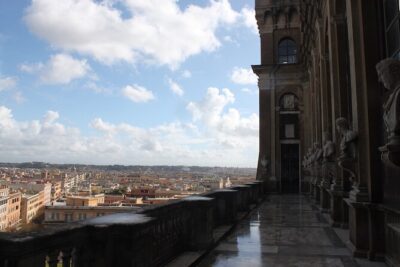
Private Vatican Highlights Guided Tour with Sistine Chapel
Read our review →Browse the lists this tour appears in