Reviewed · SHOW
Rome: Welcome To Rome Immersive Multimedia Show
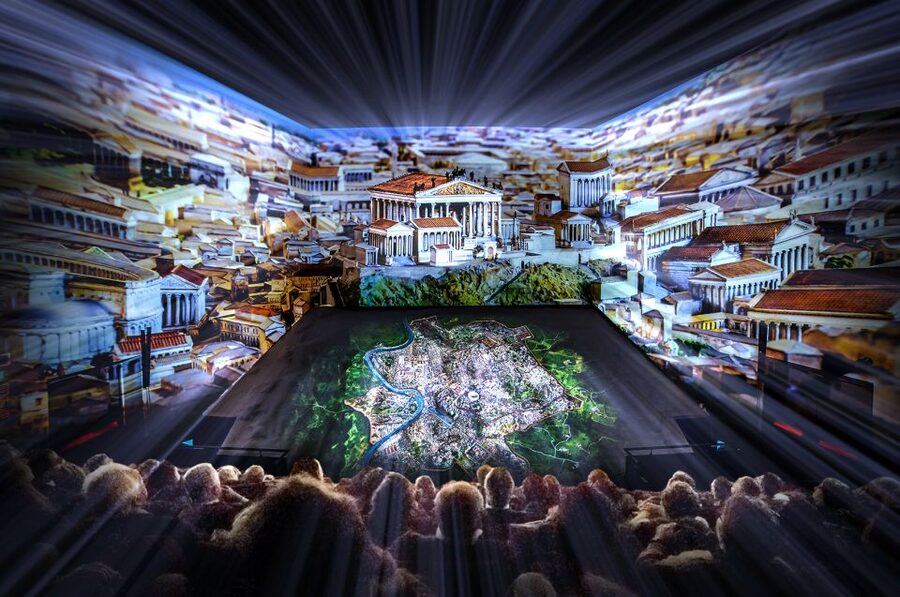
What makes the Welcome To Rome multimedia show so interesting is that it turns Rome history into a big picture experience. The main presentation runs about 27 minutes and moves through roughly 2700 years of change, right in front of you.
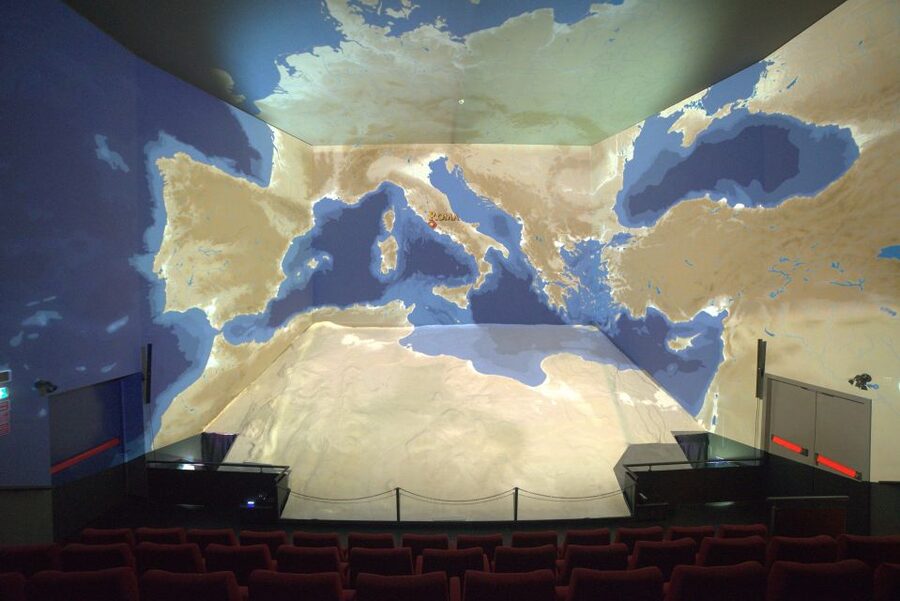
I especially love the way the show uses big multi-projection scenes on walls and ceilings, then backs it up with a glowing city model on the floor. You also get an audio guide in 9 languages, so you are not stuck guessing what you are seeing.
One possible drawback: it is a theater-style stop, not a walk outside with a live guide, so if you want only street time and views all day, this can feel a bit “contained.” I still think it is one of the fastest ways to make the ruins around you snap into place.
Key highlights to look for
- Multi-projection time travel that plays on walls and ceilings, plus a light-up model of Rome on the ground
- A clear 2700-year timeline told in about 27 minutes, so you get the big picture fast
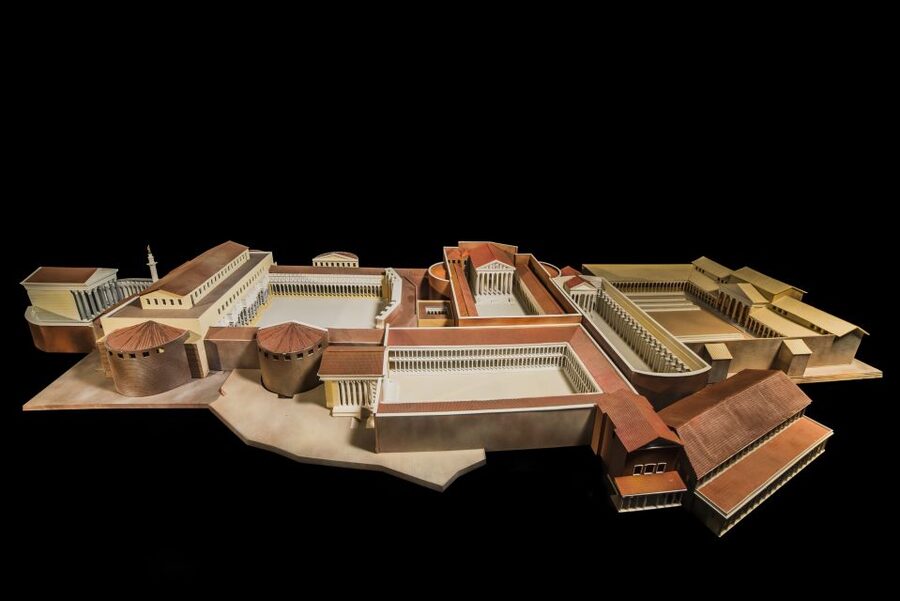
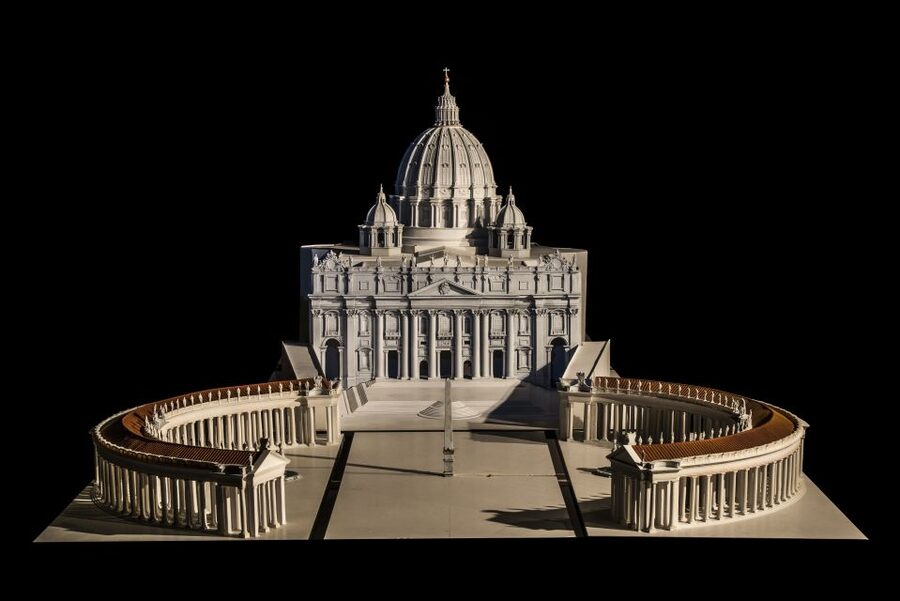
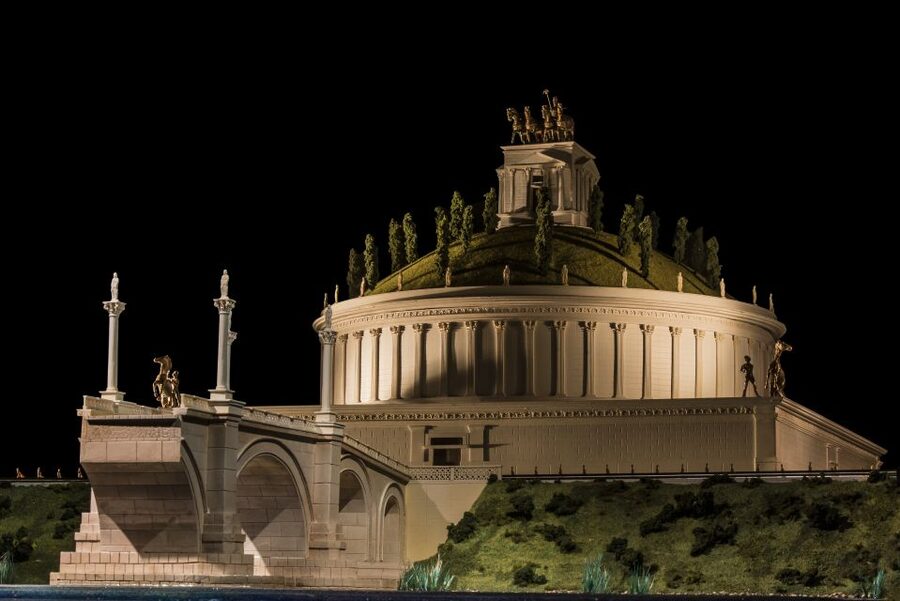
- Four interactive models covering the Imperial Forum, Augustus Forum, Mausoleum of Adrian, and San Peter Basilica
- 9-language audio guide (including English, Spanish, French, German, Italian, Russian, Chinese, Croatian, and Japanese)
- Flexible start during opening hours, since the show runs continuously
Where to find Welcome To Rome in Rome, and what the room is like
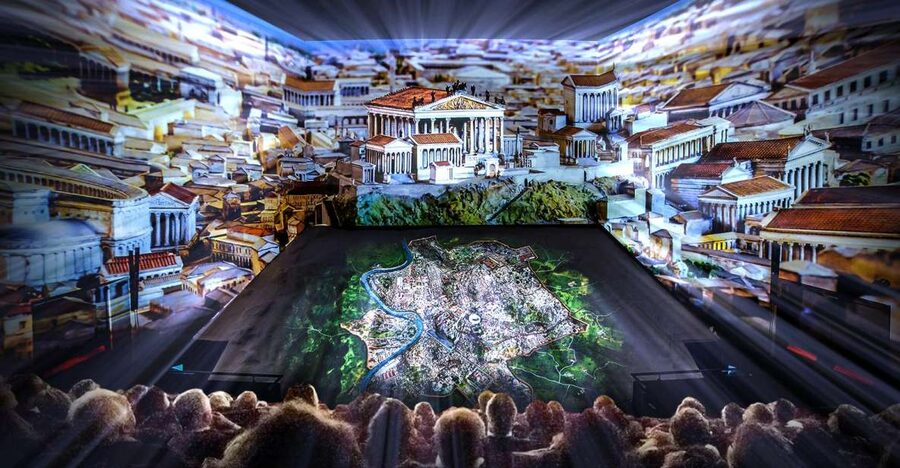
Welcome To Rome takes place inside the former Cinema Augustus, at Corso Vittorio Emanuele II, 203. It is only a few hundred meters from Piazza Navona, which makes it easy to pair with a wander through central Rome before or after.
Once you arrive, the setup is designed for a smooth entry. The ticket process includes a skip-the-ticket-line option, which matters in a city where lines can eat up your day. The show space is also described as accessible, and the experience is wheelchair accessible.
A smart timing detail: the show runs continuously, and you can start at any point during opening hours. That is great if your day gets thrown off by crowds, heat, or just the sheer pull of wandering.
Other things people book around Rome:
- Vatican Museums & Sistine Chapel Tour with Optional Basilica
★ 4.3 · 67,413 reviews - Vatican Museums, Sistine Chapel & St Peter’s Basilica Guided Tour
★ 4.5 · 39,149 reviews - Rome: Colosseum, Palatine Hill and Roman Forum Guided Tour
★ 4.8 · 32,814 reviews
The 27-minute show, 2700 years, and how to watch it for real value
The heart of the experience is a big projection journey through Rome’s development over about 27 minutes. The show tells the story by combining two visual approaches: projections that “wake up” walls and ceilings, and a large model of the city that lights up on the ground.
You will also get the sense of motion, like you are flying above Rome and moving within the city’s monuments, palaces, churches, and squares across different eras. Even if you do not remember every fact afterward, the overall effect is practical. You start to recognize what you are looking at when you later stand in front of ruins, because you have a mental map of where things fit in time.
How I suggest you watch it:
- Focus on the transitions. The value is not just “Roman times,” it is how one layer becomes the base for the next.
- Keep an eye on the floor model. It helps you connect the screen visuals to real locations you may visit later.
- Listen actively to the audio narration, not just the visuals. The story is built to make the overlap between ancient, imperial, and later Rome understandable.
You can treat this like a high-impact intro lesson. It is short enough to feel doable, but it covers the core eras in a way that helps your later sightseeing feel less random.
The four interactive models: places you can study instead of just see
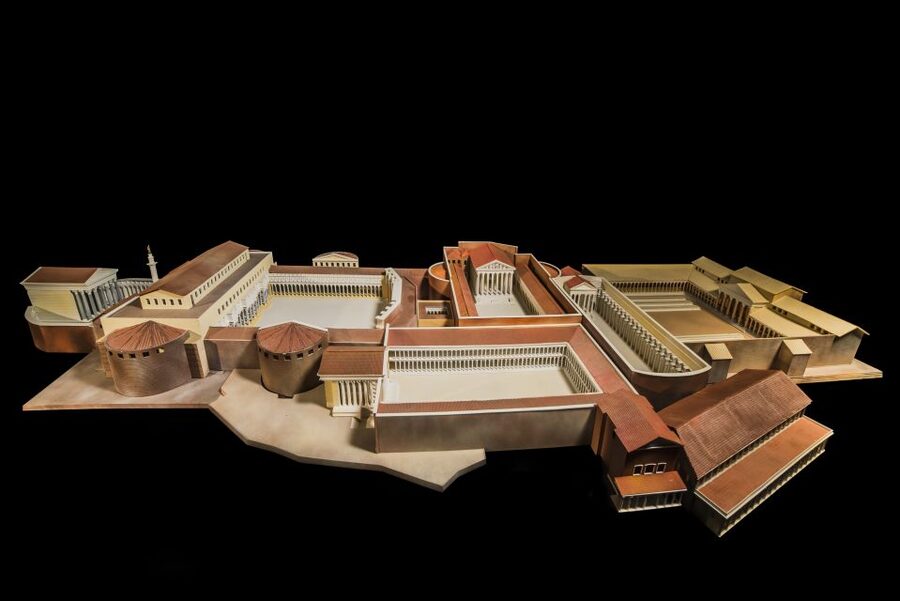
After the main projection, you can spend time with four large interactive models. These are designed to help you move from “I saw Rome on a screen” to “I can picture these monuments in 3D.”
The models focus on:
- The Imperial Forum
- The Augustus Forum
- The Mausoleum of Adrian
- San Peter Basilica
What makes these models especially useful is that they target the kind of monuments that are easy to misread from the outside. In real life, ruins can look like scattered stone blocks. Here, you get a structured way to understand what was where and how the complex connected.
This part is also where families tend to relax. Kids may not care about every historical detail, but interactive displays give them something to do with their hands and attention. For adults, it is a chance to slow down, look around, and make the story stick.
One practical note: since the models are interactive, give yourself a little extra time instead of rushing. If your goal is learning, you want the chance to revisit sections and compare what you remember from the projection.
Audio guide in 9 languages: the difference between half-understanding and getting it
You get an audio guide with narration in 9 languages. The listed languages are Italian, English, Spanish, French, German, Russian, Chinese, Croatian, and Japanese. That is a big deal for value, because it means the show is meant to work for international visitors, not only for Italians.
If you are traveling with mixed language groups, this is helpful. Everyone can follow along, and you can still share reactions without one person feeling left behind.
I also like that this is not presented as a “read the plaque” kind of museum experience. With an audio guide, the pacing stays consistent. Even when the visuals move quickly between eras, you have a voice explaining what you are looking at.
Same city, a completely different kind of day:
- Rome: Guided Tour of Colosseum, Roman Forum & Palatine Hill
★ 4.7 · 27,897 reviews - Rome: Colosseum & Forum with Audio Guide App -Optional Arena
★ 4.2 · 24,770 reviews - Rome: Colosseum, Roman Forum and Palatine Hill Guided Tour
★ 4.5 · 23,903 reviews - Rome: City Sightseeing Hop-on Hop-off Bus with Audioguide
★ 4.0 · 16,045 reviews
Choosing your timing: before big sites, or after a walking day
Because the show runs continuously and you can start at any time during opening hours, you have flexibility. Still, your best timing depends on how you like to travel.
If you go before your major Roman sights, this can act like a fast foundation. The effect is that later monuments can feel less like disconnected highlights and more like parts of the same long story. Several people specifically recommend doing it early so the rest of your trip makes more sense as you go.
If you go after you have already walked around, you can use it as a “connect the dots” session. Seeing places you have already walked near, then watching them transform on screen, makes the overlap between ancient Rome and modern streets click in a new way.
Either way, one advantage is comfort. The show gives you a seated break in an air-conditioned theater setting, and that can be especially welcome when Rome is hot and your energy is tired.
Just be aware of the schedule rhythm: the last show starts 1 hour before closing time. So if you are aiming for a late start, plan to arrive with enough buffer.
Price and value: what $21 gets you, and who benefits most
The listed price is $21 per person. For Rome, that is not cheap for a short sit-down activity. I get why some people question it.
But here is the value argument that makes it work for many visitors:
- You get entrance to the show plus an audio guide.
- The main narrative is about 27 minutes, covering around 2700 years in a structured way.
- You also get time with four interactive models, which adds more “learning per minute” than a typical quick stop.
If your trip is short, the math is even easier. Rome has an overwhelming number of sights, and this experience helps you prioritize what you look at next because you understand the timeline behind it.
If your goal is only to watch visual effects and you do not want any educational component at all, you might find it a bit too factual. But if you enjoy history, architecture, ruins, or you just want your sightseeing to feel less confusing, it is a solid use of about an hour.
Who should go, and who should think twice
Welcome To Rome is a strong match for:
- First-time visitors who need the big picture fast
- Families who want something indoor, structured, and easy to follow
- History-minded travelers who want context for forums, tombs, and major basilicas
- People who want to rest their feet without losing momentum on learning
It may be less ideal for you if:
- You are expecting a full walking tour outside with long stops and lots of discussion on-site
- You dislike cinema-style presentations and prefer only real-world exploration
Also, while the experience is wheelchair accessible, you should still plan based on your comfort with being in a theater environment and moving through the model areas.
Should you book Welcome To Rome?
Book it if you want to understand Rome quickly, especially if you are heading to the bigger ancient sites soon. I would prioritize it early in your trip for the “everything makes sense later” effect, but doing it after you walk around also works well if you want to connect what you already saw to what it used to be.
Skip it only if you truly do not want a theater-based learning experience, or if you have limited time and would rather spend every minute outside. Otherwise, for $21 and about an hour of your day, this show is one of the most efficient ways to build a real mental timeline for Rome.
FAQ
How long is the Welcome To Rome multimedia show?
The main story presentation runs for about 27 minutes, and you can also spend time with the interactive models. Many visitors plan around an hour total for the full experience.
Where is Welcome To Rome located?
It is inside the ex-Cinema Augustus on Corso Vittorio Emanuele II, 203, in Rome. The entrance is a few hundred meters from Piazza Navona.
Can I start the experience at any time during opening hours?
Yes. The show goes on continuously, so you can start at any time during opening hours.
What is the last show start time?
The last show starts 1 hour before closing time.
What languages are available on the audio guide?
The audio guide is available in 9 languages: Italian, English, Spanish, French, German, Russian, Chinese, Croatian, and Japanese.
What does the experience include?
It includes entrance to the Welcome To Rome multimedia show, plus the audio guide and time to view four large interactive models.
Which interactive models are included?
You can view interactive models of the Imperial Forum, the Augustus Forum, the Mausoleum of Adrian, and San Peter Basilica.
Is Welcome To Rome wheelchair accessible?
Yes. The projection and interactive exhibits are accessible, and the experience is wheelchair accessible.
Recently reviewed around Rome
- Rome: Castelli Romani Hop-on and Hop-off Tour★ 4.9 · 32 reviews
- Rome: Food Tour near Vatican City with Wine★ 4.8 · 100 reviews
- Rome: Scavenger Hunt Self-Guided Tour★ 4.6 · 15 reviews
- Hidden Rome: Small Group E-Bike Tour with Street Food Stops★ 4.9 · 144 reviews
- Rome: Highlights Tour in Golf Cart★ 4.9 · 28 reviews
- Rome: Hop-on Hop-off Bus Tour and Colosseum Experience★ 3.4 · 163 reviews
- Rome: Guided Haunted Rome Ghost Tour with Dowsing Rods★ 4.8 · 63 reviews
- Rome: Highlights Photo Shoot for Memorable Moments★ 5.0 · 32 reviews
Show, compared.