
Reviewed · ROME
Rome: Palazzo Valentini Roman Domus Multimedia Experience
This experience is interesting because it lets you see a Roman domus the way it likely looked in the Imperial Age, using VR plus a multimedia warm-up. I love how the VR headset brings mosaics and polychrome floors to life instead of leaving them as frozen fragments. I also like that you start with a quick Rome-wide monuments video, so the domus feels connected to the city you’re already exploring. One drawback to know up front: VR is not suitable for people with claustrophobia, and wheelchair access is not supported.
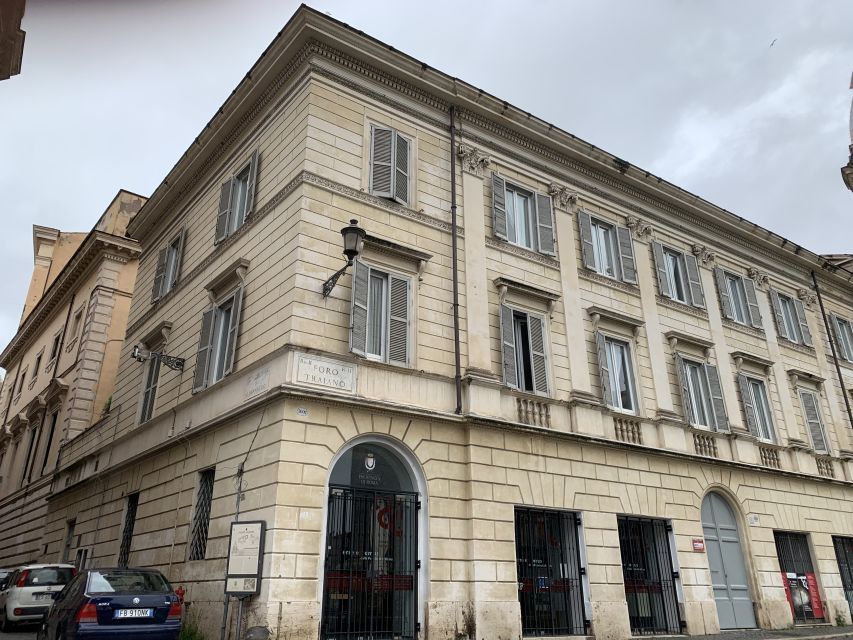
If you want Rome without the guesswork, this format helps you picture rooms, walls, peristyles, kitchens, and baths as a functioning home. The total time is about 2 hours, but your day will feel smoother if you show up on time at TOURISTATION ARACOELI at Piazza d’Ara Coeli, 16.
Key things to know before you go
- VR reconstruction of daily life: rooms, walls, mosaics, peristyles, kitchens, baths, furnishings, and decorations
- 25-minute multimedia intro video: past and present of major Rome monuments shown before the VR
- Trajan’s Column bas-relief view: a virtual reconstruction with the Dacia campaign story in close-up
- Optional FOROF add-on: contemporary art and archaeology in the hypogeum spaces near the Imperial Fora
- Multiple language audio options: headset audioguide comes in many languages, while the FOROF guided tours are English and Italian only
- Not for everyone: no pets, no large luggage, and it is not suitable for claustrophobia or wheelchair users
Why The Palazzo Valentini Domus VR Format Feels Different Than a Normal Ruins Visit
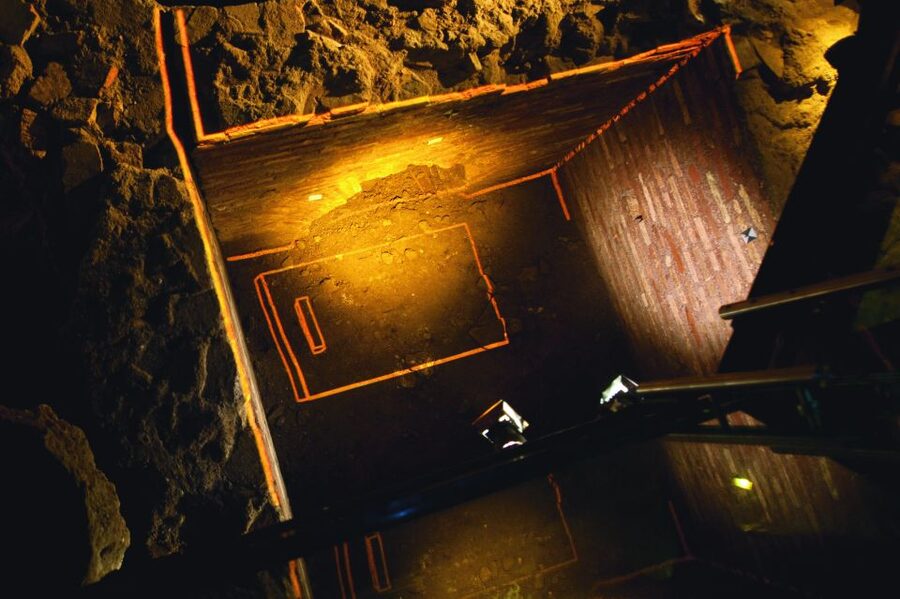
At Palazzo Valentini, the big idea is not just seeing what’s left. It’s trying to help your brain rebuild what’s missing. A Roman house like a domus can be hard to interpret in person because you’re looking at partial surfaces and floor patterns, plus modern layout changes over centuries. Here, VR aims to restore scale and layout, so you understand how people moved through spaces and how decoration functioned.
I also like that the experience stays practical. You are not asked to be an archaeologist. Instead, the VR tour gives you a guided sense of sightlines and room purpose: a peristyle reads as a central open space, and the idea of kitchens and baths feels more concrete when the reconstruction actually shows them.
One more plus: you get context beyond this one site. Before you go into the domus portion, you watch a 25-minute multimedia video showing the past and present of major monuments in Rome. That means the domus is not isolated. It sits in the wider story of Imperial power, public spectacles, and top-tier architecture around the city.
Other things people book around Rome:
- Vatican Museums & Sistine Chapel Tour with Optional Basilica
★ 4.3 · 67,413 reviews - Vatican Museums, Sistine Chapel & St Peter’s Basilica Guided Tour
★ 4.5 · 39,149 reviews - Rome: Colosseum, Palatine Hill and Roman Forum Guided Tour
★ 4.8 · 32,814 reviews
Entering The Experience: TOURISTATION ARACOELI And The 25-Minute Rome Intro Video
Your day starts at TOURISTATION ARACOELI, Piazza d’Ara Coeli, 16. Look for a fountain and orange flags in front of the office entrance. This matters because there isn’t a ticket kiosk vibe here. It’s a clear meeting point, and arriving late can compress your whole sequence.
Inside, you begin with the 25-minute Ancient Rome multimedia video. It’s set up as a past-and-present tour of headline sites in Rome, including the Colosseum, Roman Forum, St. Peter’s Basilica, Castel St. Angel, Circus Maximus, and Ara Pacis. The point is not to replace what you’ll see later in the city. It’s to give your eyes a shared reference map so the domus makes more sense the moment you start looking at rooms, floors, and decorative fragments.
A small consideration: this intro is included, but it can feel like a warm-up rather than the main course. If you already know your Roman landmarks and want to get straight to the VR reconstructions, you can treat the video as orientation and not as the highlight.
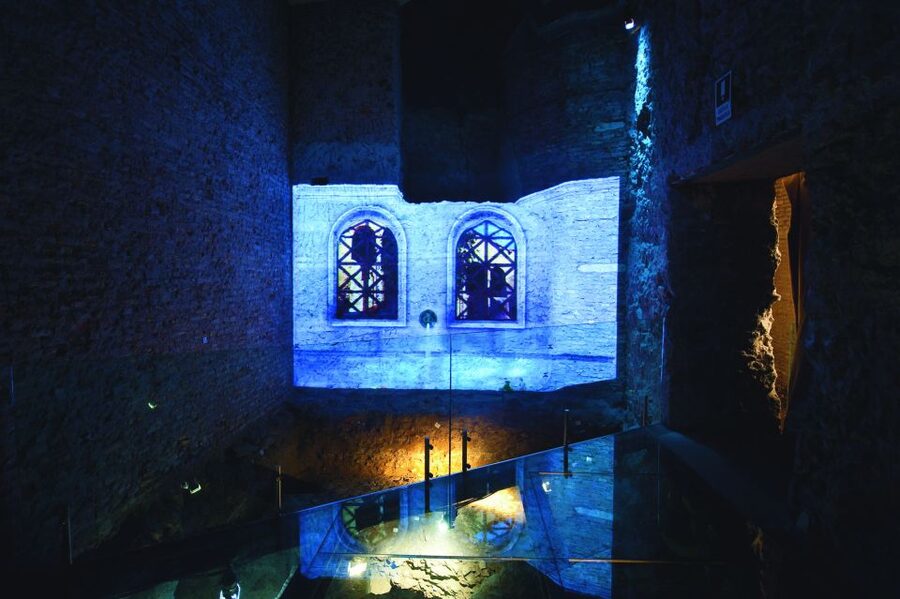
One Hour Later At Palazzo Valentini: The VR Walk-Through Of Imperial Rooms, Walls, Mosaics, And More
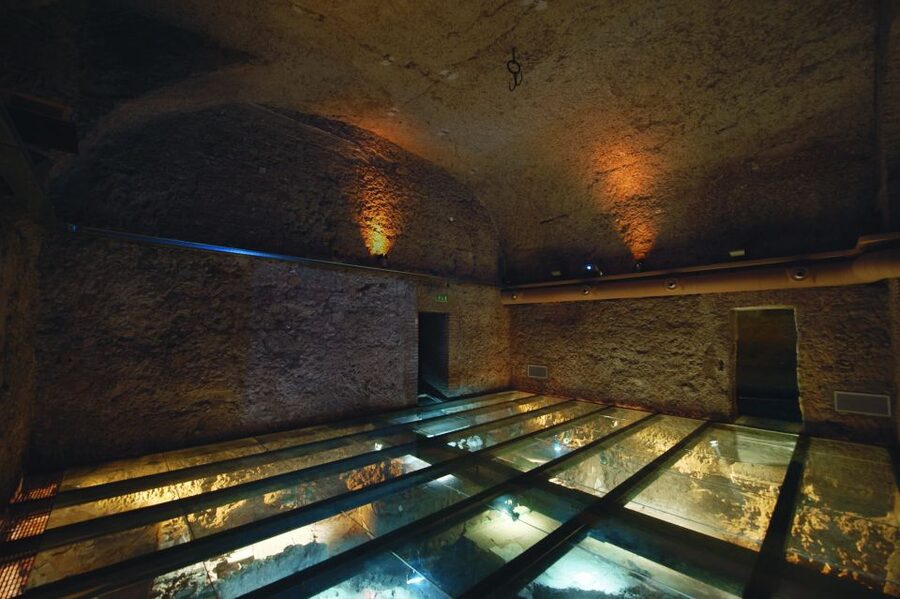
After the intro, the visit at the domus begins one hour later. That gap is part of how the experience is paced, so plan to use the time calmly. You’ll want to avoid showing up frantic. Once you enter the domus portion, the VR headset becomes your main focus.
Inside the domus, the VR experience is built around virtual reconstruction. With the headset, you’re meant to admire:
- rooms and walls brought back into their original decorated look
- mosaics and polychrome floors (not just patterns, but a color-and-material sense)
- peristyles, kitchens, and baths
- furnishings and decoration, so you get a more complete picture of daily life
The value here is interpretation. In many archaeological sites, you end up with a lot of “What am I looking at?” moments. In this format, VR gives you a visual translation of what the surviving surfaces likely represented. You can stand in front of the area and see it return to life, instead of trying to mentally fill in centuries of missing pieces.
Also, take advantage of your senses while you can. The experience includes an audioguide headset, and there’s also a city app audioguide option on your smartphone. The headset is the core tool during the domus part, so if you want the simplest setup, rely on that and treat the app as a backup you can use later.
What You Learn About The Domus And Why It Connects Past, Medieval, And Modern Rome
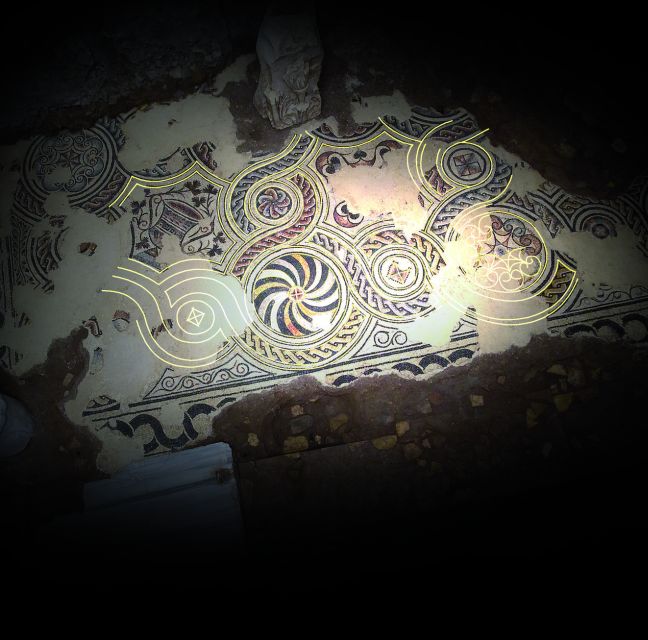
One reason I think this domus VR matters is how it helps you piece together layers of the city. Rome is never only one time period. Even when you are standing in an Imperial Age footprint, you’re also dealing with medieval changes and modern reshaping.
This experience is designed to connect those layers. It helps you understand that the area you’re exploring was important in Roman times, and then it shows how that importance echoes into later parts of Rome. Instead of feeling like the domus exists in a museum vacuum, you get a better sense of why this spot kept being useful and meaningful.
You’ll also get to observe what the area around Trajan’s Column looked like in older times. That matters because the Column is a big visual anchor in modern Rome, but it can be harder to understand in context when you’re only seeing it as a monument. Here, the reconstruction aims to show the close-up bas-reliefs and what the story is actually saying.
Same city, a completely different kind of day:
- Rome: Guided Tour of Colosseum, Roman Forum & Palatine Hill
★ 4.7 · 27,897 reviews - Rome: Colosseum & Forum with Audio Guide App -Optional Arena
★ 4.2 · 24,770 reviews - Rome: Colosseum, Roman Forum and Palatine Hill Guided Tour
★ 4.5 · 23,903 reviews - Rome: City Sightseeing Hop-on Hop-off Bus with Audioguide
★ 4.0 · 16,045 reviews
Trajan’s Column Virtual Reconstruction: Bas-Reliefs And The Dacia Campaign Story
A standout part of the experience is the chance to get close to Trajan’s Column through virtual reconstruction. You’re shown the bas-reliefs in a close-up way, with the story tied directly to Trajan’s military campaign, specifically the conquest of Dacia (present-day Romania).
This is the kind of detail that usually defeats a normal visit. Up close, you’d still face limits of viewing angle and distance. In VR, the goal is to make the narrative legible so you can connect scenes to what they represent, not just recognize that the Column is covered in sculpted battle imagery.
If you care about Roman storytelling, symbolism, and propaganda, this segment is worth your attention. Even if you only catch parts of the narrative, you walk away with a clearer idea of what Trajan’s Column was meant to communicate.
FOROF Option: When Contemporary Art Meets Archaeology In The Imperial Fora Area
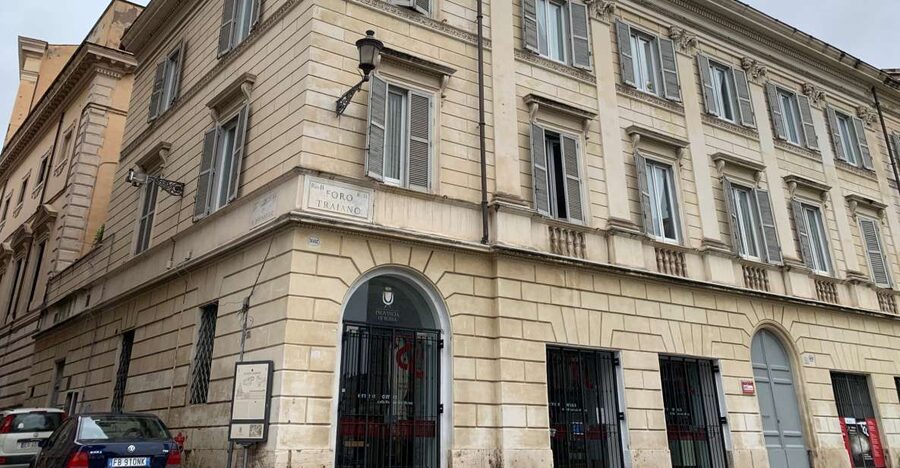
There’s an optional add-on called FOROF Experience: archaeology and contemporary art. If you select it, the experience works like a second layer of the day. It’s described as a mutual process of regeneration, inspired by the cultural café atmosphere of the 20th century avant-garde.
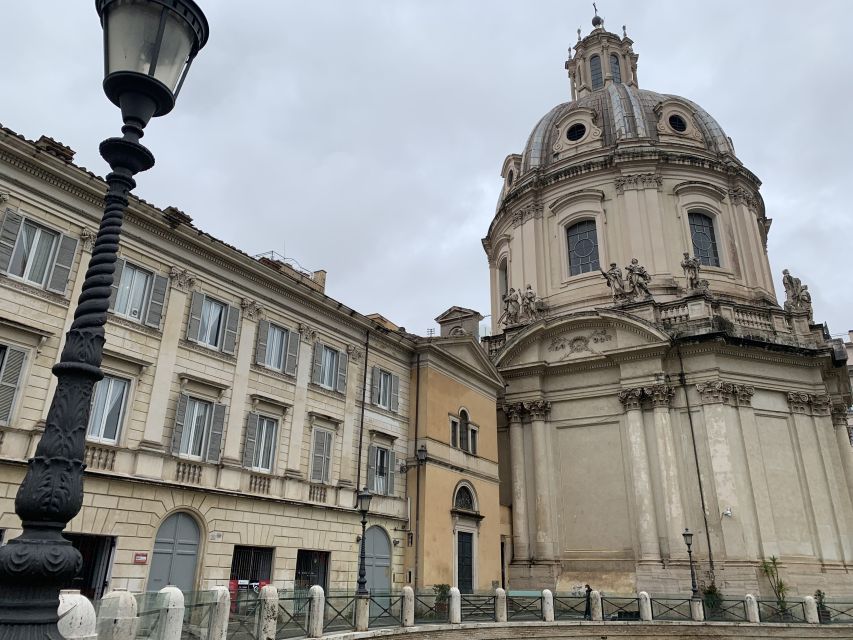
FOROF is positioned as a permanent, continuous reality in Rome that connects contemporary art and archaeology. It is located at Palazzo Roccagiovine, opposite Trajan’s Column at the Imperial Fora. It also preserves colored marble pavement of the Basilica Ulpia and remains of an eastern apse from the 2nd century A.C., in hypogeum environments, in agreement with the Archaeological Superintendence of Rome.
One more unique touch: FOROF includes an olfactory experience called FOROF ESSENZA, developed by Laura Bosetti Tonatto. The idea is to return the spirit of a place through scent, as a cultural and social tale of freedom.
Two practical notes:
- The FOROF guided tours are in English and Italian only (so plan around that if language matters).
- This option is separate from the domus VR itself. If you want to keep your day simple, you can skip FOROF and focus entirely on Palazzo Valentini.
Price And Value: What Your $35 Gets You For A 2-Hour Roman Time Travel Session
At $35 per person for about 2 hours, this is not a budget tour, but it is also not just paying for access to a ruin. You are paying for a package that includes:
- admission to the Ancient Roman Domus museum
- the 25-minute multimedia video intro
- an audioguide headset for the domus
- a city app audioguide download to your smartphone
- optional FOROF if you add it
That mix matters for value. The museum admission gets you into the site. The multimedia video reduces the learning curve. The headset and app aim to provide the narration and context you’d otherwise need from a guide. And the VR part is doing the heavy lifting of interpretation, which is usually the hardest part of visiting a domus.
Should you expect a guided tour style with a live human guide at Palazzo Valentini? No. This experience includes the audioguide system, not a guided tour at Palazzo Valentini. If you strongly prefer a live guide, you might find yourself reading more and listening more rather than asking questions.
Timing, Setup, And Small Tips That Make The Experience Smoother
Here’s how to make it feel easy rather than stressful.
First, arrive at TOURISTATION ARACOELI and find the fountain with orange flags. Show up a bit early so you can settle in before the multimedia video starts.
Second, wear comfortable shoes. You’ll be moving between the meeting point area, the time gap, and then the domus portion. Rome is Rome, and your feet will do most of the work.
Third, don’t bring pets or large bags. Luggage or large bags are not allowed. If you’re traveling with shopping bags, try to travel light. This is the kind of ticketed experience where you do not want to be slowed down by bag rules.
Finally, set expectations about VR. If you are even mildly concerned about enclosed feeling, respect the warning. The experience is not suitable for claustrophobia, and wheelchair users are not supported.
Who Should Book This Palazzo Valentini Roman Domus Experience
This fits best if you want:
- a VR-driven interpretation of Roman domestic life (mosaics, floors, peristyles, baths, kitchens)
- a quick Rome monuments context before you study one site
- a chance to understand Trajan’s Column story more clearly through close-up bas-reliefs
It’s also a good match for people who learn visually and want less guesswork than a classic “look at stones” visit.
Consider skipping or changing your plan if:
- VR makes you uneasy, especially if you have claustrophobia
- you need wheelchair accessibility
- you only want the lowest-effort self-guided museum walk with no VR portion
Should You Book This Palazzo Valentini Roman Domus Experience?
Yes, if your goal is to understand what a domus looked like and how spaces worked. The VR format is the point of the visit, and the combination with the audioguide and multimedia intro makes the experience feel guided even without a live guide. I especially like the way it ties the domus to bigger Imperial storytelling, including Trajan’s Column.
If you hate VR, skip it. If you are fine with VR but want less “extra,” focus on the domus portion with the headset and treat the multimedia intro and smartphone app as optional supports. The domus is the main event here.
FAQ
How long is the Palazzo Valentini Roman Domus experience?
It lasts about 2 hours. The exact start times depend on availability.
Where do I meet for the experience?
Meet at TOURISTATION ARACOELI, Piazza d’Ara Coeli, 16. There is a fountain and orange flags in front of the office entrance.
What is included in the ticket?
Admission to the Ancient Roman Domus museum, a 25-minute Ancient Rome multimedia video, an audioguide headset for the Ancient Roman Domus, and a city app audioguide download on your smartphone. The FOROF experience is included only if you select that option.
What languages are available?
The audioguide headset for the Ancient Roman Domus is available in English, French, German, Italian, Spanish, Russian, and Japanese. The Palazzo Valentini Experience languages are listed as English, Italian, Spanish, French, and German. The FOROF guided tour is in English and Italian.
What should I bring?
Wear comfortable shoes. If you are traveling with children, bring a passport or ID card for children.
Is it suitable for claustrophobia or for wheelchair users?
No. It is not suitable for people with claustrophobia, and it is not suitable for wheelchair users.
Can I bring pets or large luggage?
Pets are not allowed. Luggage or large bags are also not allowed.
Recently reviewed around Rome
- Rome: Castelli Romani Hop-on and Hop-off Tour★ 4.9 · 32 reviews
- Rome: Food Tour near Vatican City with Wine★ 4.8 · 100 reviews
- Rome: Scavenger Hunt Self-Guided Tour★ 4.6 · 15 reviews
- Hidden Rome: Small Group E-Bike Tour with Street Food Stops★ 4.9 · 144 reviews
- Rome: Highlights Tour in Golf Cart★ 4.9 · 28 reviews
- Rome: Hop-on Hop-off Bus Tour and Colosseum Experience★ 3.4 · 163 reviews
- Rome: Highlights Photo Shoot for Memorable Moments★ 5.0 · 32 reviews
- Rome: Guided Haunted Rome Ghost Tour with Dowsing Rods★ 4.8 · 63 reviews