
Reviewed · ROME
Welcome To Rome Experience
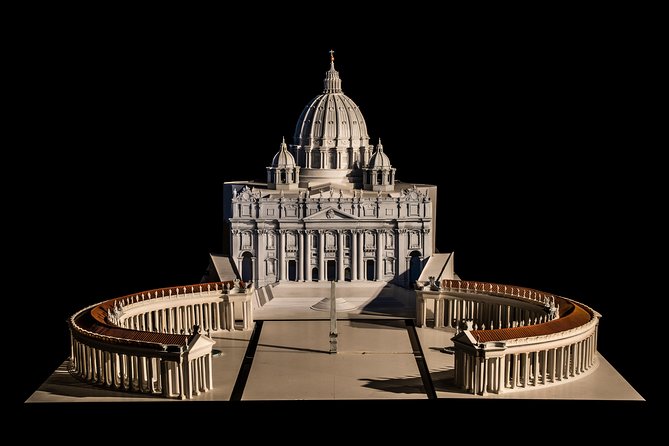
Welcome To Rome is a smart way to kick off your first days in Rome because it turns the city’s story into a hands-on, screen-and-model experience you can follow in about an hour. I like the 3D reconstructions and the way modern Rome and ancient Rome get shown side by side, then blended through the eras. I also like that it uses audio, projections, and interactive elements, so it feels more like a guided visual lesson than a lecture.
The main thing to watch is that it is built around multiple “stations” before you settle into the theatre, so if your group wants lots of ancient-Rome details or lots of sitting time, you may feel the pacing is a bit tight.
Key things to know before you go
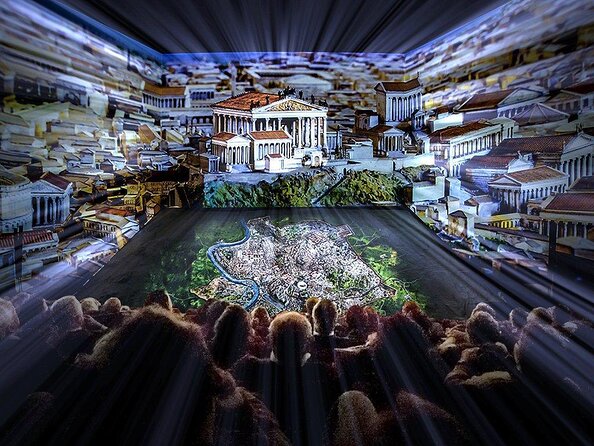
- You get a one-hour master view of Rome’s evolution, from early setting to later architectural eras.
- 3D models and reconstructions help you picture what ruins once looked like, then compare that with today.
- Audio in English guides what you’re seeing, with handheld devices used during parts of the show.
- It’s built for families and works well for mixed ages, especially kids who enjoy visuals.
- Multiple daily showings and a central address make it easier to fit into a real itinerary.
- Some audio devices can be replaced quickly if anything glitches during your session.
Welcome To Rome: your one-hour multimedia start in the Eternal City
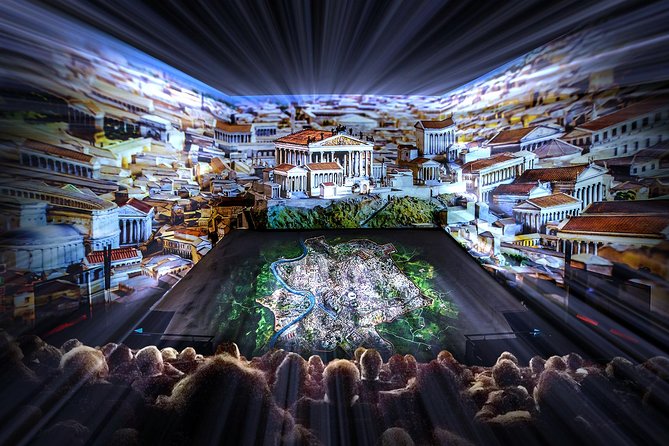
This is one stop you can treat like a warm-up for everything that comes after. Instead of trying to memorize dates and names while you’re jet lagged, you get a clear storyline of how Rome changed over time, taught through visuals you can actually keep up with.
The format matters. You’re not just watching a movie on a loop. You move through rooms with interactive displays, you get an audio guide to steer you, and then you finish with a longer film experience in the theatre. In other words, you’re training your brain to see Rome the way Rome looked in different periods, which makes later visits feel less random.
If you like the idea of walking into the Forum or the Colosseum already understanding what you’re looking at, this is the kind of “setup” experience that helps. It is also compact enough that it does not steal a whole morning or afternoon.
Other things people book around Rome:
- Vatican Museums & Sistine Chapel Tour with Optional Basilica
★ 4.3 · 67,413 reviews - Vatican Museums, Sistine Chapel & St Peter’s Basilica Guided Tour
★ 4.5 · 39,149 reviews - Rome: Colosseum, Palatine Hill and Roman Forum Guided Tour
★ 4.8 · 32,814 reviews
Inside the show: four small rooms, audio devices, then the theatre film
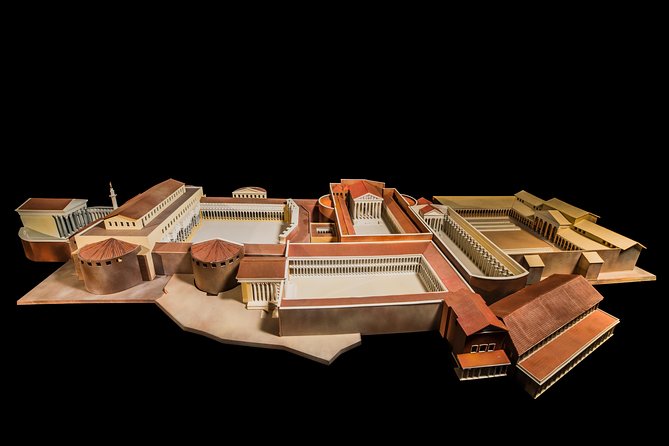
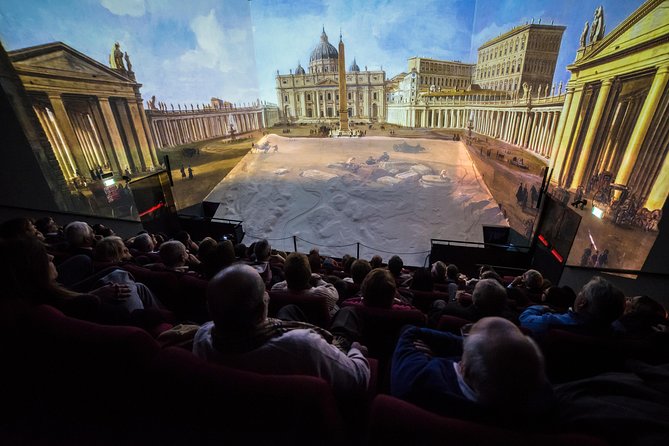
The experience is paced like this: you pass through several small exhibition stops, each with projections and a model-based display. During these parts, you use audio devices in English, so you can listen while you look.
One review described the structure as four small rooms where you stand and watch a diorama-style presentation with your preferred language audio, followed by about a 30-minute video in an auditorium where you can sit. That sitting part is a nice break, especially after you’ve been standing in busy central Rome all day.
A practical note from the same feedback: on occasion, audio radios did not work properly for everyone at once. If that happens, staff were reported to replace the device so the show can keep moving. That means you are not stuck missing the story.
Where you might feel the difference is comfort. You will spend time on your feet in the smaller rooms, and you are moving between stations before the main film. If you know your group tires quickly or prefers minimal walking indoors, plan to go at a time when everyone is still fresh.
From volcanoes to emperors: how the show explains Rome’s evolution
The show is built to give you a big picture view of Rome’s timeline fast. You start with a surprising foundation, a geological explanation of Rome’s early landscape, then move into successive architectural eras. That is a helpful approach, because Rome is not just a collection of famous monuments, it is a city built on a specific setting and reshaped by centuries of building and rebuilding.
A standout theme is that the experience shows how the same parts of Rome looked in different eras. Several descriptions point to a “morphing” effect where modern Rome visuals shift into ancient Rome reconstructions, then continue through later periods. The end result is that you learn what the city was trying to be at each stage, not just what it looks like now.
The eras get sketched clearly enough to give you a framework. You get quick orientation for Classical, Medieval, Renaissance, and Baroque periods, so when you later see a church façade, a museum hall, or a palace interior, you can place what you’re looking at in the broader story.
And you are not only learning history in words. The emphasis on models and graphics helps you understand layout and structure. One person specifically liked how it made imagining the city layout easier later during visits to the Roman Forum and Palatine Hill. Another praised the models and reconstructions, saying they were great for establishing perspective between periods.
Why the 3D reconstructions make later ruins feel easier
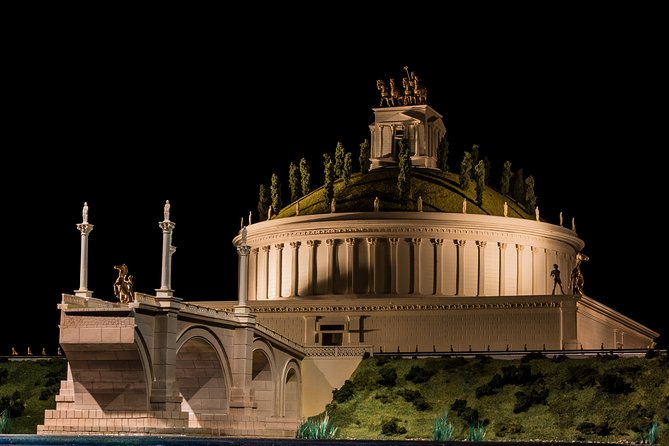
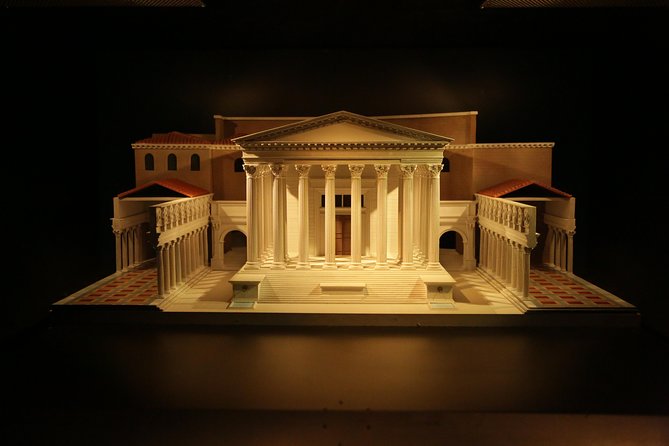
This is the part that gets the most enthusiastic feedback: the 3D look at what buildings and structures may have looked like in their prime. It is not just eye candy. It changes how your brain reads stones in the real world.
When you face a ruin today, you see fragments, angles, and emptiness where walls used to be. The show helps you translate those fragments into something whole. You get a way to imagine scale, volume, and placement, which means your visits can feel less like, I think this is that, and more like, I get why this mattered.
The side-by-side effect also helps you spot what changed. You understand what features survived in altered forms, what was rebuilt, and what was replaced. That can make your “walk around and see everything” days more satisfying, because you are not just ticking off sites.
If you are bringing kids, this format tends to be a hit because it is visual and interactive. One family described it as a great way to start a Roman adventure, especially for a child who liked the audio and found it easy to absorb. Another mentioned that the interactive setup kept kids engaged, and they used the show’s perspective later at major sites.
Same city, a completely different kind of day:
- Rome: Guided Tour of Colosseum, Roman Forum & Palatine Hill
★ 4.7 · 27,897 reviews - Rome: Colosseum & Forum with Audio Guide App -Optional Arena
★ 4.2 · 24,770 reviews - Rome: Colosseum, Roman Forum and Palatine Hill Guided Tour
★ 4.5 · 23,903 reviews - Rome: City Sightseeing Hop-on Hop-off Bus with Audioguide
★ 4.0 · 16,045 reviews
Location and timing: central address, near transit, multiple showings
The address is Corso Vittorio Emanuele II, 203, 00186 Roma. That puts it in central Rome, which matters because you want your first activity to be easy to reach. It is also noted to be near public transportation.
Another useful detail for planning: there are multiple showings daily. That gives you flexibility if your day starts late or you want to time it around a major museum entry.
Timing also has guardrails. The last entry is one hour before closing, so don’t show up at the very end of the day. If you want a calm experience, aim earlier in the day, when lines and crowds tend to be less intense.
As for duration, it runs about one hour. That is a sweet spot. You get enough time to follow the story and learn a framework, without losing half a day.
Price and value: $21.77 for a guided visual roadmap of Rome
At $21.77 per person for about an hour, the value depends on what you want out of Rome. If you want a quick, high-level sense of what you’re walking into, this price can feel fair. The show is designed to give you context before you spend hours outdoors looking at ruins and historic buildings.
Most of the strong ratings point to exactly that: people used the experience as a foundation for later visits, saying it made understanding the Forum, Palatine Hill, the Colosseum, and even churches and palaces easier. When an activity genuinely helps you interpret what you see next, it is money well spent, even if it is not a “ticket to a pile of ruins.”
There are also dissenting notes. One review felt it was overpriced, mentioning the rooms were empty and cold, and that the exhibit did not feel like it delivered enough information. Another critic said execution was mediocre and mentioned issues like broken seats and dirty bathrooms in the auditorium area.
So here’s the balanced way to decide: if you are the type who enjoys audiovisual learning and 3D reconstructions, you’ll likely feel you got your money’s worth. If you want deeper, hands-on ancient-Rome instruction with lots of sitting and lots of detail, you might want to pair this with a guided walking tour or a museum stop that goes deeper.
Who this is best for, and who might not love it
This experience fits best when you want an approachable start. It works for first-time visitors who need a mental map and a timeline. It also works for families because the show is short enough for kids and uses visuals that make the story easier to track.
Feedback suggests ages around 10 and up tend to enjoy it the most, largely because the visuals and audio keep attention. One person said their 11-year-old really enjoyed it. Another liked it for its concise history of Rome in a fascinating medium and found it easy to absorb.
On the flip side, kids under 8 might find it harder to stay engaged. Some teens may also find it less exciting if they want fast action rather than a structured history lesson. One review mentioned teens who felt there were excessive details and one person said they nodded off.
If you know your group likes movement outdoors and hates indoor time, consider this a “context builder,” not a must-see replacement for everything else.
Also, if you have sensory or comfort needs, remember you will be standing and moving between small rooms, then sitting in the auditorium. If you need to rest often, you might find it helpful to bring a plan for breaks, since reviews suggested adding benches or chairs would help.
Practical tips to get the most from your one-hour session
Keep these in mind so you leave with better Rome instincts, not just a blur of images.
First, treat it like the first day tool for your trip. Go early enough that you can use the perspective in your later visits. Many people recommended doing it on day one because it makes subsequent tours feel clearer.
Second, be ready to listen while you look. The audio is a key part of why the show works. If you ignore the audio and only watch the visuals, you will still enjoy the projections and models, but you will miss a chunk of the narrative.
Third, if your group is sensitive to pacing, plan your day to avoid stacking too many outdoor activities right before. Since you’ll stand through the exhibition rooms, going when everyone is tired can make the pacing feel longer than it is.
Should you book Welcome To Rome?
Book it if you want a quick, visual roadmap of Rome that helps you interpret major sites later. If your family includes kids who enjoy multimedia, or if you want to get your bearings fast before you hit the Forum and Colosseum, this is an excellent “first context stop” that fits into a tight schedule.
Skip it or rethink it if you strongly prefer to spend your Rome time outdoors and you want deeper historical explanation with lots of time to read or sit with a specialist. Also consider that a few reviews mentioned comfort and cleanliness issues in the theatre area, so if that is a dealbreaker for you, you might want to check other options.
If you are on the fence, the best deciding factor is simple: do you learn best from 3D visuals, audio narration, and short video? If yes, you will likely find this one-hour experience a solid start.
FAQ
How long is the Welcome To Rome experience?
It runs for about 1 hour.
Is the tour offered in English?
Yes, it is offered in English.
Do I get a mobile ticket?
Yes, the experience includes a mobile ticket.
What is the address of Welcome To Rome?
Corso Vittorio Emanuele II, 203, 00186 Roma (RM).
Is the experience near public transportation?
Yes, it is noted to be near public transportation.
When is the last entry?
The last entry is one hour before closing.
Is free cancellation available?
Yes. You can cancel up to 24 hours in advance for a full refund.
Are service animals allowed?
Yes, service animals are allowed.
Recently reviewed around Rome
- Rome: Castelli Romani Hop-on and Hop-off Tour★ 4.9 · 32 reviews
- Rome: Food Tour near Vatican City with Wine★ 4.8 · 100 reviews
- Rome: Scavenger Hunt Self-Guided Tour★ 4.6 · 15 reviews
- Hidden Rome: Small Group E-Bike Tour with Street Food Stops★ 4.9 · 144 reviews
- Rome: Highlights Tour in Golf Cart★ 4.9 · 28 reviews
- Rome: Hop-on Hop-off Bus Tour and Colosseum Experience★ 3.4 · 163 reviews
- Rome: Guided Haunted Rome Ghost Tour with Dowsing Rods★ 4.8 · 63 reviews
- Rome: Highlights Photo Shoot for Memorable Moments★ 5.0 · 32 reviews