
Reviewed · BIKE TOURS
Rome: City Highlights Electric Bike Tour
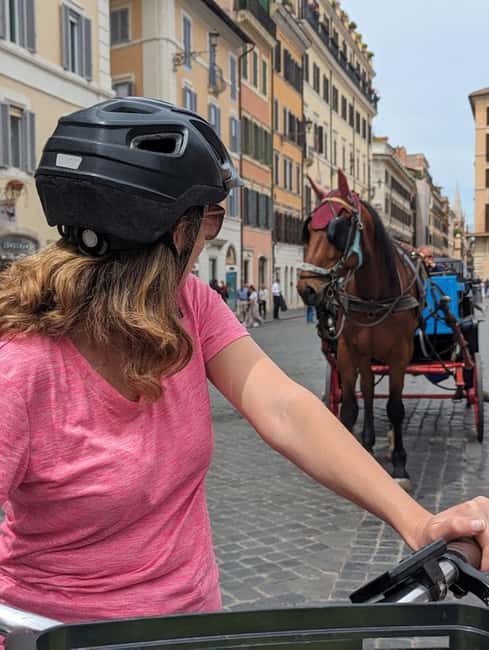
Rome by electric bike is interesting because it changes your pace. You get the big hits, but you also glide through side streets and along the Tiber bike path, so the city feels closer and less like a checklist. Guides such as Daniela and Giorgio set the tone with clear storytelling and calm leadership, even when the streets look a little chaotic on foot.
I love how this tour balances iconic landmarks with off-the-beaten-track stops. You spend short, well-timed stretches at places like the Colosseum and St. Peter’s, then move on quickly to the Jewish Ghetto, Campo de’ Fiori, and the river views around Castel Sant’Angelo. The biggest benefit is that you keep your legs for Rome food and gelato later.
One consideration is that Rome crowds can force short walks in the most packed areas, so the tour is easiest if you are comfortable riding and doing brief bike-walking. Also, you do need a minimum cycling level, and the guide can run a quick readiness check before you start.
Key highlights to look forward to
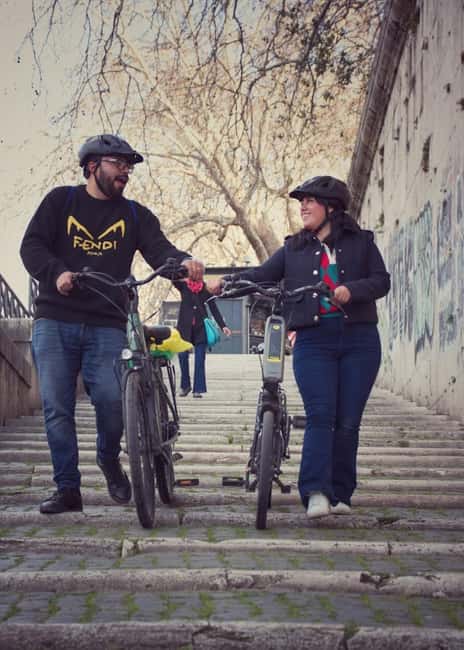
- Quiet-road route plus the Tiber bike path keeps you from spending the whole time fighting traffic
- Photo-stop timing gives you quick iconic views without losing half your day to lines
- Local guide stories turn places like Piazza Navona and the Pantheon from photos into context
- Lesser-known corners like the Jewish Ghetto add texture beyond the postcard stops
- Rain-ready gear includes ponchos, so the plan usually survives bad weather
- Small groups up to 8 mean fewer bottlenecks and more personal attention
Why an electric bike is the best way to do Rome highlights in one afternoon
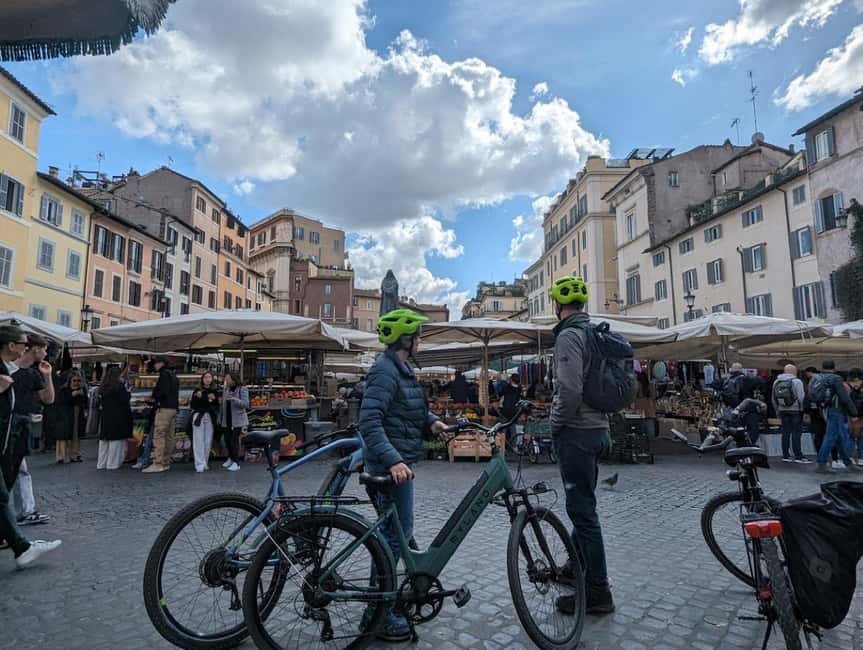
Rome is famous for two things: sights and walking. This tour is designed for the middle ground, where you still get the major landmarks but without grinding through long distances on sore feet.
In 4 hours, you move across a tight loop of classic Rome. You start along the Tiber area, then work your way through the historical center, hitting the Colosseum zone, key squares, and the “greatest hits” cluster from the Pantheon to Trevi. Electric assist matters here. It helps you handle Rome’s small changes in grade and those stop-and-go moments that can wear you down on a regular bike.
The result is a tour that feels like you’re getting a guided ride through Rome’s highlights, not just being dropped at famous spots. If this is your first time in the city, it’s a very efficient way to get your bearings fast.
More bike and e-bike tours in Rome:
- Rome EBike Tour: Appian Way, Catacombs & Roman Aqueducts
★ 5.0 · 1,766 reviews - Rome: Top Highlights & Hidden Gems Tour by Cannondale E-Bike
★ 4.9 · 1,760 reviews - Rome: Appian Way, Catacombs, & Roman Aqueducts E-bike Tour
★ 4.9 · 1,421 reviews
What $80 buys you, and how the value adds up in four hours
At $80 per person for a 4-hour guided e-bike tour, you are paying for three things: a local guide, a bike that does most of the work, and a route that minimizes stress.
A big cost in Rome is time. This tour tries to spend it well. You get structured stops around places most people travel across the city to see, but you aren’t stuck doing one attraction after another for hours. The short photo stops help you cover more ground while still getting clear viewpoints for photos.
You also get practical support. Helmets are provided with a cover, and ponchos are included if rain shows up. On top of that, guides accompany you at all times and use quieter roads when possible. That combination makes the whole thing feel like transportation plus sightseeing, not sightseeing plus extra effort.
The route design: how you stay comfortable with Rome traffic
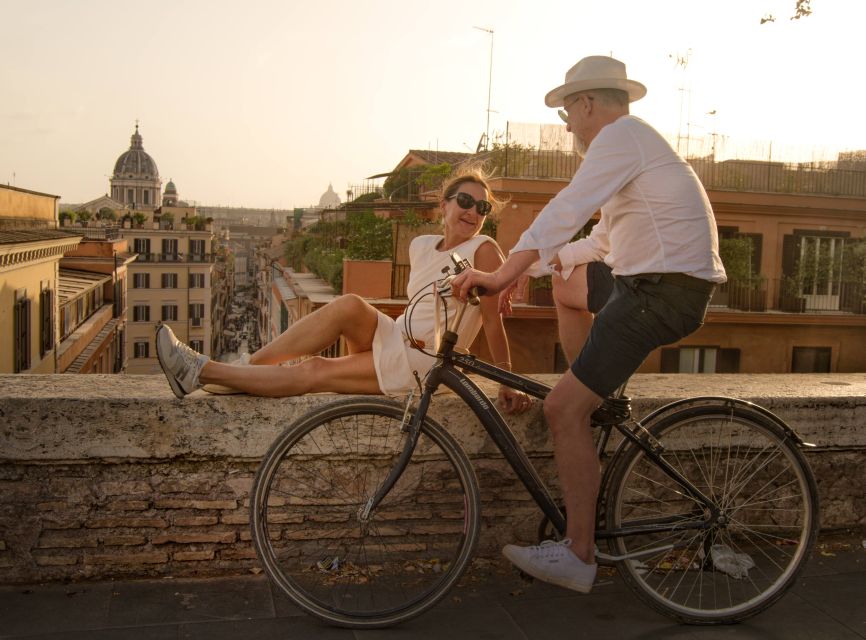
Rome traffic can look intense. The tour is built to avoid the worst of it. The route favors quiet roads with little traffic, and it includes cycling time on the Tiber bike path, which is usually where the ride feels smoothest.
That said, the company notes that light vehicular traffic on surface streets can be unavoidable at times. You should mentally prepare for a few crossings or shared-road sections, especially near major sites. The good news is that the guides are there to manage the pace and group spacing.
This is also why the tour is not listed as a casual “anyone can do it” ride. A minimum cycling level is mandatory, and there is a pre-departure test. If you’re hesitant, wobbly, or dealing with health limits, it’s better to choose a different style of tour.
E-bike or mountain bike: what you need to know before you ride
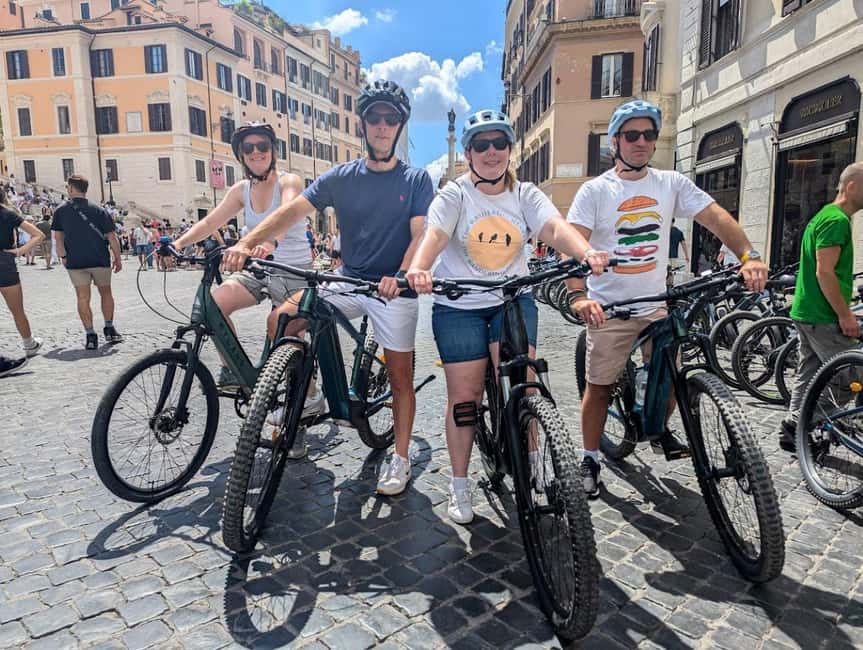
You can ride an e-bike or a mountain bike depending on the option you select. E-bikes have an age minimum to operate, and you should plan around that if you are traveling with teens.
Here’s the practical part. Your guide does a readiness check before departure, and participation can be denied if you are unsuitable due to lack of ability or health concerns. That sounds strict, but it’s also what makes the experience feel controlled.
If you have never ridden an e-bike, don’t assume it means no pedaling at all. You will still be expected to ride, steer, and manage starts and stops. The electric assist is meant to make it easier, not replace bike control.
Also check weight limits. The tour is listed as not suitable for people over 220 lbs (100 kg), and it is not suitable for people with vertigo, heart problems, recent surgeries, or mobility impairments.
Same city, a completely different kind of day:
- Vatican Museums & Sistine Chapel Tour with Optional Basilica
★ 4.3 · 67,413 reviews - Vatican Museums, Sistine Chapel & St Peter’s Basilica Guided Tour
★ 4.5 · 39,149 reviews - Rome: Colosseum, Palatine Hill and Roman Forum Guided Tour
★ 4.8 · 32,814 reviews - Rome: Guided Tour of Colosseum, Roman Forum & Palatine Hill
★ 4.7 · 27,897 reviews
Starting in the Lungotevere area and warming up on the Tiber
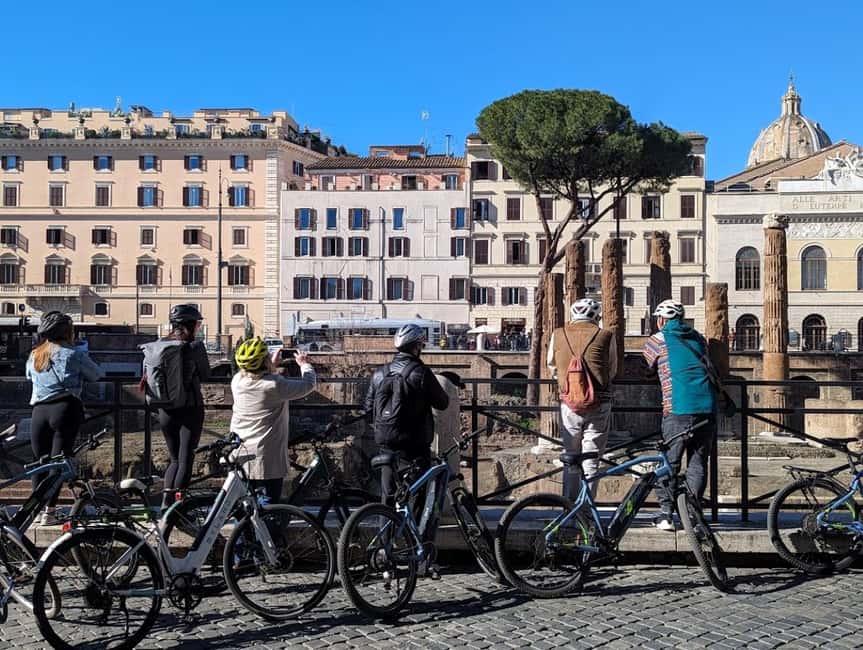
Most likely, you’ll meet at Lungotevere delle Armi 44, and you’ll also finish back in that area for drop-off. From there, the tour moves toward the first landmarks.
The early segment works like a warm-up. You get a short guided start at Tiber Island, about 10 minutes. Even if it’s brief, it helps you understand the flow of the ride and how your guide communicates along the route.
This is the moment to get comfortable with the bike. Adjust your grip, figure out how the pedal assist feels for your cadence, and settle into the group rhythm. Once you leave the immediate start area, the tour becomes a string of quick, meaningful stops rather than one long parking-lot moment at a single site.
Tip for you: keep your phone or camera ready, but also keep one hand ready for steering. The best photos come from stopping intentionally, not from trying to film while moving.
Tiber Island to Circus Maximus: quick context, then faster cruising
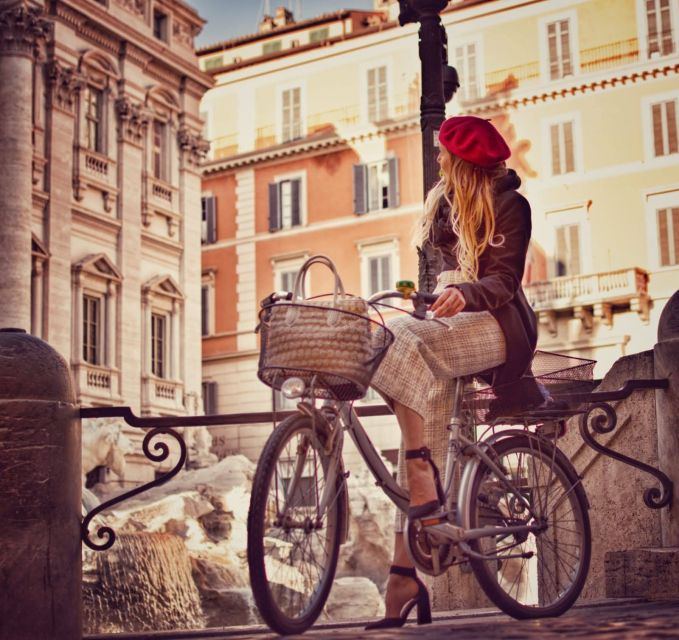
After Tiber Island, the route includes Circus Maximus with a photo stop and about 10 minutes of biking between key moments.
Circus Maximus is one of those places that many people recognize by name but don’t fully understand. A good guide can connect it to the way Rome entertained itself, and that’s where the tour format shines. You’re not stuck reading placards. You’re moving, then getting a brief explanation that makes the setting click.
Because stops are time-limited, your guide is likely to focus on the bits that change how you see the site. For you, that means you leave with more than a quick postcard. You also get context you can use later when you walk through the same neighborhood on your own.
The trade-off is simple: you won’t get long lingering time. This is a highlights tour, not a slow, museum-style experience.
Colosseum photo stop: what you see, how long you’ll have, and what can happen
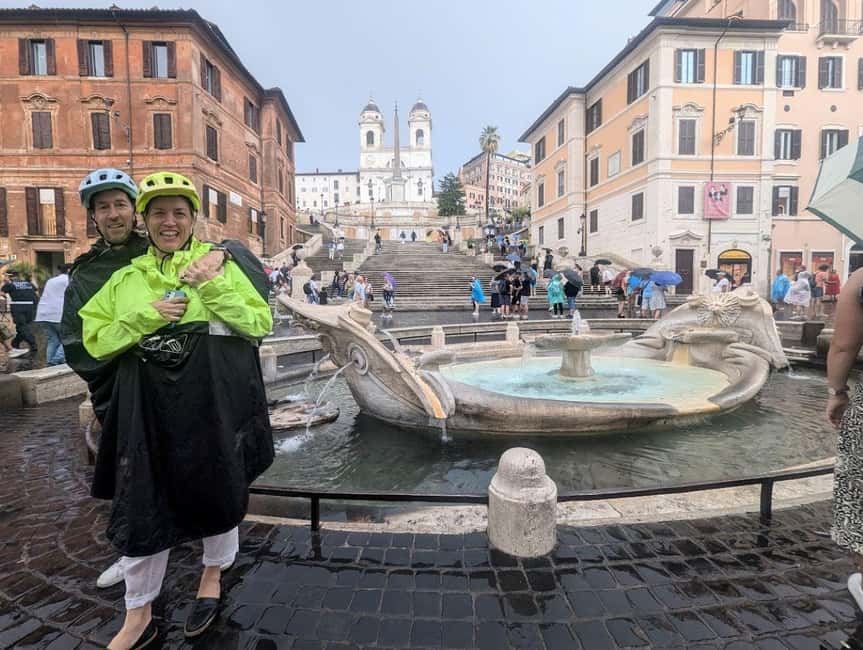
The Colosseum is next, with a photo stop and about 15 minutes of cycling time around the area. This is your classic moment, but Rome is Rome. Crowds can be intense, and in these environments you may need to do some short bike walking rather than riding right up to the tightest viewing points.
That’s actually normal for a guided city ride in the historic center. Your job is to stay flexible and follow the guide’s plan. The 15-minute window is meant to give you clear views and photos without turning the whole tour into one bottleneck.
What I like about this approach is that you can still see the Colosseum’s scale and vibe, then move on before you lose momentum. And because you’re on an e-bike, you avoid the post-Colosseum fatigue that hits when you do it all on foot.
If you hate tight crowd spaces, you might want to mentally prepare for some off-bike time here. The tour is still designed to keep things efficient.
Piazza Venezia to the Jewish Ghetto: squares, stories, and daily Rome
From the Colosseum zone, you head to Piazza Venezia for a photo stop (about 10 minutes). Piazza Venezia is a crossroads square. It helps you orient. It also sets you up for the next stop, the Jewish Ghetto, where you get about 10 minutes of riding.
Then you reach Campo de’ Fiori for a photo stop.
This section is valuable because it adds a layer beyond the biggest monuments. The Jewish Ghetto area is not just scenery. It’s a lived neighborhood, and a good guide can make the historical backdrop feel grounded instead of distant.
Campo de’ Fiori is similar. It’s busy for a reason, and the sights feel real rather than staged. On a bike, you experience the shape of the place faster than you would if you were weaving through pedestrians hour after hour.
Possible drawback: because these are lively areas, the tour’s timing can feel quick. But that’s also why it works. You get exposure to different Rome moods in one afternoon.
Piazza Navona and the fountains effect: why the timing matters
Piazza Navona is next, another photo stop with about 10 minutes of riding between segments. Navona is famous for a reason. It’s the kind of square where fountains and street life sit right next to each other, so it feels like the city is performing.
A bike tour here is fun because you see how people actually move through space. You also get a guide’s framing, so you understand what you’re looking at. Even if your stop is brief, the context helps you notice details you’d normally miss.
One thing to expect: since Navona is popular, it can be crowded. The guide keeps the group safe and moving, so you are not stuck feeling lost. You get the photo moments and then you shift to the next area while the energy stays high.
If you prefer unhurried fountain time, treat this as a quick introduction. Use it as a launch point to return later for longer wandering.
Castel Sant’Angelo to St. Peter’s Basilica: river views and the Vatican edge
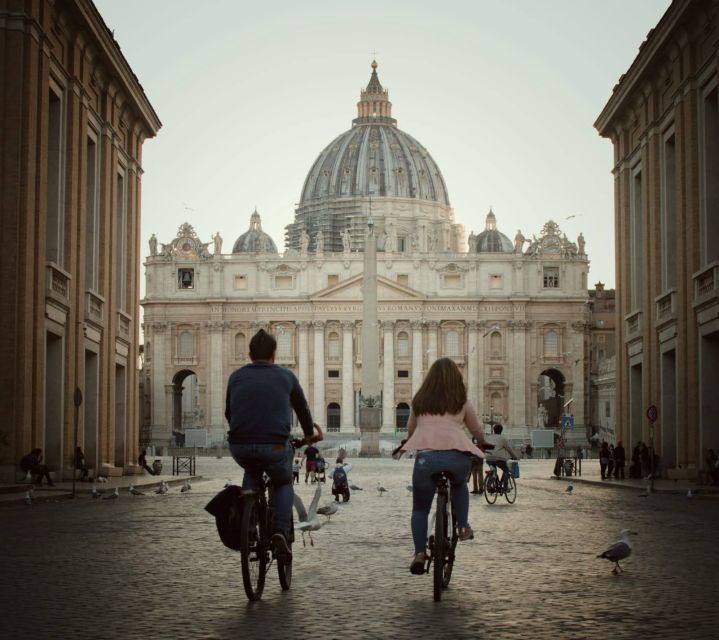
Next is Castel Sant’Angelo with a photo stop and about 10 minutes of riding. Then you reach St. Peter’s Basilica for another photo stop and about 10 minutes of biking.
This part of the tour is special because it connects Rome’s layers. You get the river perspective around Castel Sant’Angelo, then the shift toward the Vatican area’s scale and symbolism.
Ten minutes at St. Peter’s is short, but this is where the bike format helps. You can take in the setting quickly, then you’re already positioned for your next move without spending hours trudging through the area.
Possible consideration: crowd density near major religious sites can be high. Expect some tight movement and follow the guide’s cues. If you struggle with standing still for short photo opportunities, you might find this segment a bit intense.
Still, it’s a powerful snapshot of Rome’s two big worlds, the imperial past and the modern religious center.
Pantheon to Trevi Fountain: classic icons without the all-day slog
You’ll hit two of Rome’s most photographed interiors and streetscapes. First up is the Pantheon for a photo stop (about 10 minutes). Then Trevi Fountain for another photo stop (about 10 minutes).
The Pantheon is one of those places where scale shocks you. A quick stop works because you’re seeing it from street level with a guide giving you the right frame of reference. You likely won’t be doing a long internal visit on this tour, but you can still leave with a stronger mental map.
Then Trevi Fountain. Trevi is a big ask because it’s always popular. A short stop helps you get the view without turning your whole tour into one slow queue scene. Your guide can also keep the group organized so you don’t waste time circling.
Practical tip: pick your photo moment early. Once you find the right angle, hold position. Don’t chase movement, because crowds will shift your view in minutes.
Piazza di Spagna to Piazza del Popolo: finishing with Rome’s dramatic streets
After Trevi, you head to Piazza di Spagna for a photo stop and about 10 minutes of riding. Then Piazza del Popolo for a bike tour of about 10 minutes.
This last stretch works as a visual reward. Spagna and Popolo sit in neighborhoods where the streets feel like they’re designed for walking, but the bike lets you cover them faster and still feel the drama.
Even though your time here is short, it’s a good way to end with variety. You move from baroque grand squares into broader city views, and that helps you close the loop of the afternoon.
If your legs are feeling okay, you can turn this into a self-guided extension after the tour. You’ll know which streets to return to based on what you liked most from the bike route.
What’s included, and what you should bring
This tour includes the essentials that make riding in Rome easier. You get a local guide, an e-bike or mountain bike depending on your option, a helmet cover, and a poncho if rain hits. A child bike seat is included if needed.
Bring comfortable clothes and have ID with you. If you don’t want to be stuck in light rain, wear something you can move in and don’t rely on a fragile umbrella.
Also note that pets are not allowed. That’s standard for many active group tours, but it’s worth knowing.
Small groups and guided control: why that matters more than people think
This ride is limited to a maximum group size of 8 per guide. That detail matters because it affects spacing, safety, and how quickly you can follow instructions without losing people.
A guide can only do so much when the group is too large. With smaller numbers, you get clearer direction and more freedom for photo pauses that don’t derail the schedule.
The tour also has a minimum participant requirement. If the minimum is not met, you’ll be offered an alternative date or a full refund. That’s a small risk, but it’s better than showing up to a tour with no plan.
Private tour option: when it is worth paying extra
If you want more tailoring, choose the private tour option. The listing notes that for the Private Tour, you get the local guide exclusively for you.
That can be worth it if you have a specific focus, like extra time at one area or a pacing style that suits your group better. One-size-fits-all tours can be fine, but private gives you control.
It can also be helpful with mixed ability groups, where you might need a slower pace or more frequent regrouping.
Who should book this e-bike tour, and who should skip it
Book it if you want a fast, guided way to see a lot of Rome in a half-day window. It’s especially good if you know you’ll struggle with long walks. The e-bike helps you keep your energy for evening plans.
It’s also a strong match for groups who like structure but still want some flexibility. You’ll ride a planned loop, but your guide should be able to react if weather changes or if the route needs adjusting for safety.
Skip this tour if any of the listed limitations apply. It is not suitable for pregnant people, wheelchair users, people with heart problems, people with vertigo, or anyone who cannot ride a bike comfortably. The pre-departure test and cycling minimum are there for a reason.
Should you book the Rome City Highlights Electric Bike Tour?
Yes, if you want a high-value Rome overview that saves your legs and gives you context at the right stops. At $80 for 4 hours with a local guide, helmets, and rain gear, it’s a practical way to hit Colosseum, Pantheon, Trevi, and the Vatican area without turning your vacation into a long walking test.
I’d book it sooner rather than later in your trip. You’ll come out with a better sense of where you want to return on foot. Just be honest with yourself about cycling comfort. If you can ride steadily and handle short crowd moments, this tour is a great way to see the Eternal City with momentum.
FAQ
How long is the Rome City Highlights Electric Bike Tour?
The tour lasts 4 hours.
What is the meeting point for the tour?
The meeting point may vary depending on the option booked, but the itinerary shows Lungotevere delle Armi 44 as a starting and drop-off area.
What landmarks are included on the route?
The route includes stops such as Tiber Island, Circus Maximus, the Colosseum, Piazza Venezia, the Jewish Ghetto, Campo de’ Fiori, Piazza Navona, Castel Sant’Angelo, St. Peter’s Basilica, the Pantheon, Trevi Fountain, Piazza di Spagna, and Piazza del Popolo.
What languages are the guides available in?
Live tour guides are available in Spanish, English, French, and Italian.
Do I need cycling experience to join?
Yes. A minimum cycling level is mandatory, and a pre-departure test is conducted. The guide may deny participation (without refund) if you are unsuitable due to ability or health concerns.
What bike do I ride?
You’ll ride either an e-bike or a mountain bike depending on the option selected.
Is the tour available as a private tour?
Yes. A private group option is available, including an exclusive guide for your group.
Recently reviewed around Rome
- Rome: Castelli Romani Hop-on and Hop-off Tour★ 4.9 · 32 reviews
- Rome: Food Tour near Vatican City with Wine★ 4.8 · 100 reviews
- Rome: Scavenger Hunt Self-Guided Tour★ 4.6 · 15 reviews
- Rome: Hop-on Hop-off Bus Tour and Colosseum Experience★ 3.4 · 163 reviews
- Hidden Rome: Small Group E-Bike Tour with Street Food Stops★ 4.9 · 144 reviews
- Rome: Highlights Tour in Golf Cart★ 4.9 · 28 reviews
- Rome: Guided Haunted Rome Ghost Tour with Dowsing Rods★ 4.8 · 63 reviews
- Rome: Highlights Photo Shoot for Memorable Moments★ 5.0 · 32 reviews
Bike Tours, compared.
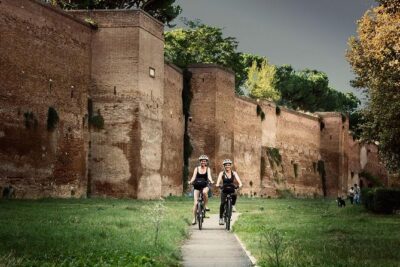
Rome EBike Tour: Appian Way, Catacombs & Roman Aqueducts
Read our review →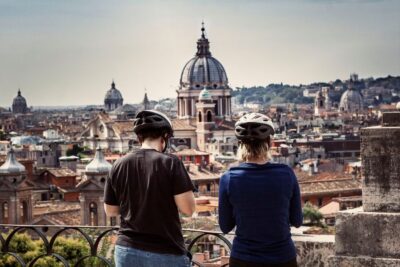
Top Highlights & Hidden Gems Tour by Cannondale E-Bike
Read our review →
Appian Way, Catacombs, & Roman Aqueducts E-bike Tour
Read our review →
Rome City Small Group Bike Tour with quality Cannondale EBike
Read our review →
Rome by Night – Ebike Small Group Tour – Food and Wine (Option)
Read our review →
Appian Way E-bike Tour with Catacombs, Aqueducts & Food
Read our review →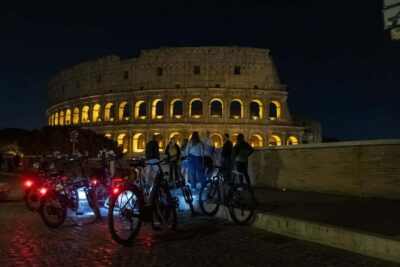
Appian Way Aqueducts Bike Tour (Catacombs & Lunch Option)
Read our review →Browse the lists this tour appears in