Reviewed · TICKETS
Ticket to Piazza Navona Undergrounds Stadium of Domitian
This experience is interesting because it lets you see a major chunk of ancient Rome sitting under one of the city’s most famous squares. You go below street level and step into the remains of an early masonry stadium, still preserved where you would not expect it.
I love the included audio guide that keeps you moving at your own pace, and I also like that the site is small enough to feel manageable, even on busy Rome days. The biggest drawback to plan around is simple: it is not a huge monument, so if you want dramatic, towering ruins like the Colosseum, you may find this one more quiet and museum-like.
Key things worth knowing
- Underground entry under Piazza Navona: descend about 5 meters below street level
- Stadio di Domiziano ruins: the first and only masonry stadium in Roman history
- UNESCO-listed setting: you are looking at protected archaeology beneath the modern piazza
- Audio guide for English: clear, self-paced storytelling, plus a kids version (age 6+)
- Short visit window: plan for about 40 to 50 minutes
- Moderate group size: a maximum of 150 people, so it typically feels civilized
Stadio di Domiziano Under Piazza Navona: what you are really seeing
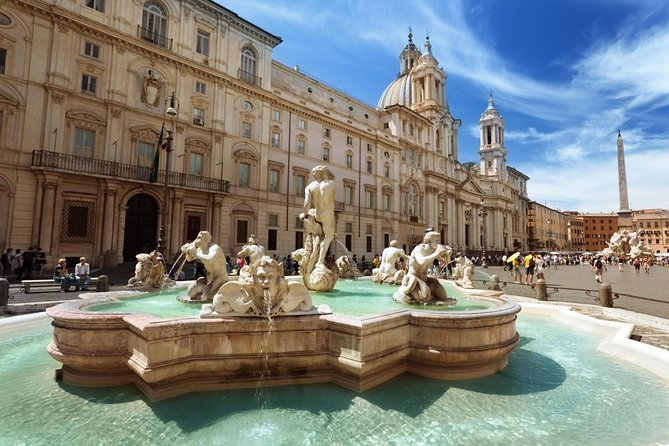
Piazza Navona looks like pure theater from above. Buildings curve around the square, fountains pull your eyes, and busier streets frame it all. Then you turn a corner, head to the entrance, and go below. Suddenly you are in an archaeological layer of Rome that feels like a time machine.
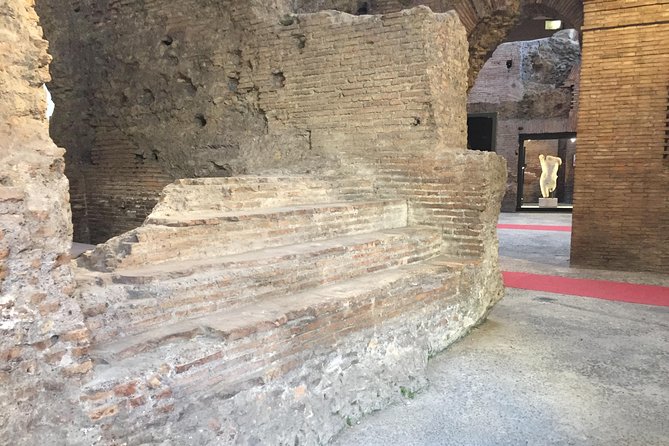
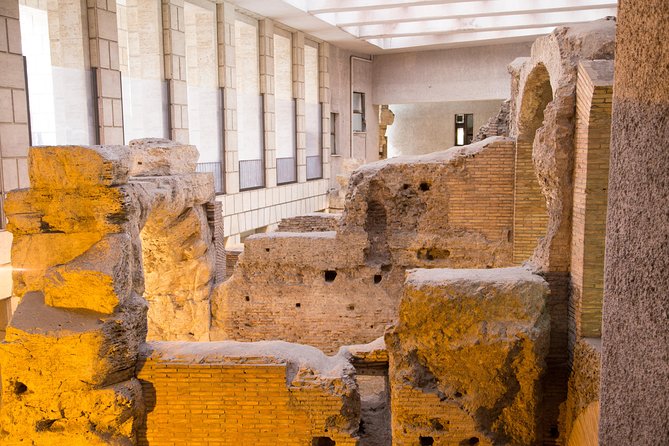
The highlight here is the Stadium of Domitian, a masonry stadium preserved under the square. This is not just a random basement of bricks. It is a rare survival connected to ancient Roman sports life, and the exhibits help you picture the scale and purpose of the space in Roman times. The site is also described as UNESCO-listed ruins, so you are not just sightseeing, you are walking through protected history.
I also like the basic honesty of the experience. The ruins are not enormous. You see sections of masonry, arches, and structural fragments that you have to read like an archaeologist in training. The audio guide and display material do the heavy lifting, so you can understand what you are looking at without needing a Rome PhD.
One practical thing to expect: you are going to spend most of your time underground in a guided exhibit route. If you love airy, panoramic monuments, this is more of a focused interior visit. Still, it is a welcome break from heat and crowds when you need one.
A few more Rome tours worth comparing
- Rome:Hop-On Hop-Off Panoramic Open Bus Ticket 3 Circuits x 1
★ 4.0 · 15,405 reviews - Vatican Museums & Sistine Chapel Skip-the-Line Entry Ticket
★ 4.4 · 13,838 reviews - Vatican Museums & Sistine Chapel Skip-the-Ticket-Line Tour
★ 4.3 · 10,486 reviews
Entering the underground levels: the descent and first impressions
The tour starts at Via di Tor Sanguigna, 3 (00186 Roma). From there, you head to the underground entrance for the excavations under Piazza Navona. Expect a short guided entry moment, then you are set up with your audio guide so you can explore at your own pace.
One thing I appreciate about how this is designed is that the first part gets your bearings fast. You are descending about 5 meters beneath street level, and that vertical shift changes everything. The temperature tends to feel cooler, your footing feels closer and more museum-like, and you immediately understand that you are looking at Roman remains where modern Rome now sits above.
Once you start the walk, you begin to see the remains that connect the piazza to its ancient stadium past. The route is set up so you do not have to constantly stop and ask questions. You follow the exhibit flow, then the audio guide explains what you are seeing as you go.
The stadium ruins: how the displays help you picture Roman sports
A stadium is one of those concepts where your imagination matters. Today, we see packed stands, modern sightlines, and stadium lighting. In ancient Rome, the stadium was a different kind of arena, built for competition and public entertainment.
Here, you look at ancient masonry stadium ruins, including structures associated with the stadium that once functioned in this zone. The site is often described as the first and only masonry stadium in Roman history, and the exhibits help you connect that claim to what you see on the walls and floors around you.
What makes this interesting, beyond the thrill of being underground, is how the information helps you build a mental model. You are shown how the space related to the piazza above, how Roman architecture shaped the sports experience, and how the ruins fit into the broader story of Rome’s evolution.
In a lot of Rome sites, you walk around big visible landmarks and just absorb the vibe. Here, you do a bit more reading and listening, because the physical remains are smaller. If you enjoy learning how ruins were used, this is a strong match.
Stop-by-stop flow: what happens during your 40 to 50 minutes
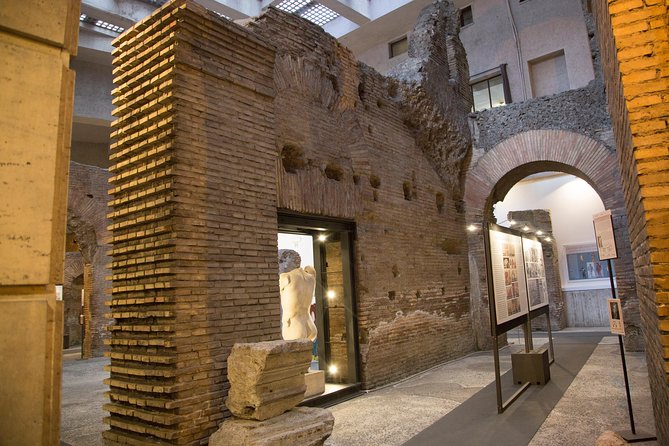
You should think of the visit as an easy loop. It runs long enough to feel complete, but short enough that it does not swallow your day.
Same city, a completely different kind of day:
- Vatican Museums & Sistine Chapel Tour with Optional Basilica
★ 4.3 · 67,413 reviews - Vatican Museums, Sistine Chapel & St Peter’s Basilica Guided Tour
★ 4.5 · 39,149 reviews - Rome: Colosseum, Palatine Hill and Roman Forum Guided Tour
★ 4.8 · 32,814 reviews - Rome: Guided Tour of Colosseum, Roman Forum & Palatine Hill
★ 4.7 · 27,897 reviews
Stop 1: Stadio di Domiziano under Piazza Navona
This is the core experience, where you spend nearly all your time. The route takes you through the underground levels opened to the public in 2014, descending into the excavations from the Roman Empire era.
As you walk, you will see the ancient masonry and key sections of the stadium remains. The audio guide ties it together with an explanation of the stadium, the piazza’s origin, and how ancient Roman sports worked in this setting. The pacing is your choice, so you can slow down to study a display or move along if you are short on time.
Where the experience ends
The tour/activity ends back at the meeting point, the same place you started. So you can plan it like a tidy appointment in the middle of your sightseeing day.
A quick timing note from your perspective as a planner: plan for about an hour, not a three-hour commitment. That makes it easy to pair with nearby sights around Piazza Navona.
Audio guide setup: headphones, self-paced listening, and common tips
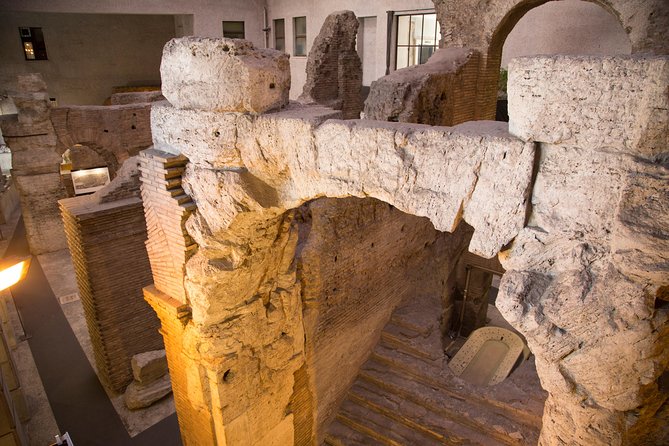
The audio guide is included, and it is also available as a children’s audio guide for kids age 6 and up. You get the device on site, and then you listen as you move through the exhibits.
I like this format for two reasons. First, it keeps the experience calm. You are not trapped in a loud group that forces you to move at someone else’s speed. Second, the audio does the work of turning “brick and arches” into a story about Roman sports and the piazza above.
Still, it is worth knowing what to do to avoid frustration. When you receive your device, test it right away. Start listening at the beginning so you can confirm sound quality before you are deep into the route. If anything seems off, alert staff quickly rather than waiting until the end.
A few reviews also highlighted extra media options like 3D video and an optional AI add-on (priced around 4€ in one mention). If you are the type who likes visual reconstructions, check what is available during your visit. Just know that extras may cost something beyond your included ticket.
Who this fits best: families, solo visitors, and Rome fans
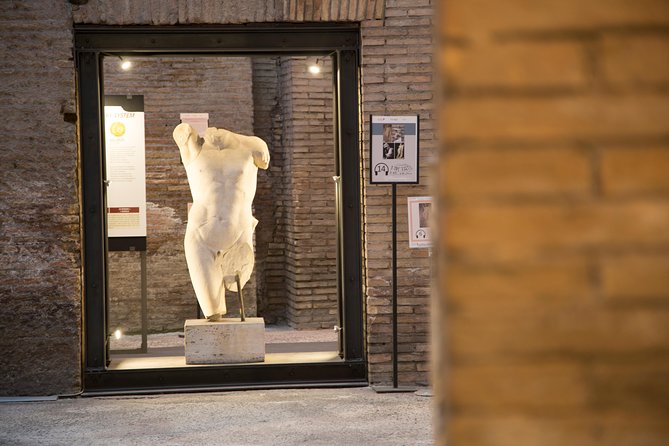
This works well for families because the visit is short and the storytelling is built into the audio system. Kids can follow along using the audio guide designed for age 6 and above, and the route is simple enough that parents are not constantly herding a group through complex navigation.
It also fits solo travelers. You can move at your pace, pause when you want, and skip the “wait for everyone” rhythm. And because the site is generally not enormous, it is a good choice when you want something meaningful without a full-day commitment.
If you are a Rome fan who enjoys how the city is layered, you will likely love the perspective shift. Standing in an ancient stadium space while modern Piazza Navona hums above is the kind of contrast that makes Rome feel real, not just postcard pretty.
Price and value: why $12.10 feels fair for what you get
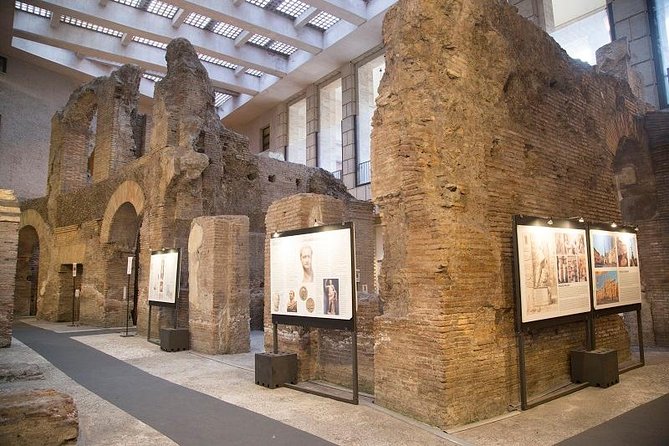
At $12.10 per person, this is a very reasonable ticket for a focused underground archaeological experience in central Rome. You get the entry itself plus an audio guide (including a kids version), and the visit time is short enough that you are not paying for hours and hours of museum weariness.
This value also comes from how useful the included audio guide is. Many small sites survive because people are willing to read plaques. Here, you are given a listening guide that helps you understand the structure you see and the function it once had. That matters, especially in a space where the ruins are not automatically dramatic.
Also keep in mind that this can function as a comfort stop. Underground, you often catch cooler air on hot Rome afternoons, and the calm pace can reset you between big-ticket monuments.
Finding the entrance at Via di Tor Sanguigna: small tips that save time
The meeting point is clear on paper, but in real life, entrances in historic Rome can be tricky. The underground stadium entrance is not always obvious from a quick glance at street level.
My practical advice: before you start walking, take a screenshot of the exact address and keep it ready. Approach slowly, and look for the specific entrance tied to the underground site rather than trying to guess from the nearby hotels or building signs.
Comfortable walking shoes help a lot. You are going to be moving through an indoor exhibit environment, which usually means uneven or museum-style surfaces and lots of standing to read or listen.
Media add-ons, the library, and the fun side of the gift shop
There is an on-site library area you can browse. It is not just a hallway. You can find art and history books, antique prints and postcards, gadgets, souvenirs of artistic crafts, and multimedia DVDs, with a section dedicated to children.
If you have extra time or you want a break from the audio device, this is a good place to skim and adjust your pace. It also gives you something to do after the main circuit, so you do not feel rushed to leave immediately.
The shop can be quirky too. One comment mentioned dinosaur-related items, which is not what most people expect in an ancient Rome context, but it can be a fun stop for kids who are excited about fossils and big bones. It is also where you might see DVDs and souvenir photos for purchase, though those are not included with the ticket.
If you are considering visual add-ons like VR or AI experiences, remember those are extra. Check availability on site and decide based on your interests and budget.
Timing, tickets, and how to plan around Rome crowds
You can book in advance, and this kind of central Rome site tends to get taken quickly. The data suggests tickets are often booked about 22 days in advance, which is a good clue that you should plan ahead if your trip dates are fixed.
Hours are 10:00 AM to 6:00 PM, Monday through Sunday. Because you are underground, it can be a smart plan for late morning or afternoon when the sun is at its strongest and you want a cooler, calmer activity.
Group size is capped at 150 travelers, which should keep the experience from turning into a cattle-rail situation. Still, start earlier in the day if you like less noise and more room to pause for photos.
Should you book it? My call
Book this if you want a short, meaningful Rome stop that adds a new angle to Piazza Navona. The underground setting is the main draw, but the audio guide and the focus on the Stadium of Domitian make it feel more than a novelty basement visit.
Skip it only if you mostly want huge, dramatic ruins that you can photograph from every angle. This is more about understanding what is left and picturing what used to be here.
If your schedule is tight, pair it with other sights around Piazza Navona. The fact that the visit is under an hour makes it easy to fit in without messing up the rest of your day.
FAQ
How long does the Stadio di Domiziano Underground visit take?
Plan for about 40 to 50 minutes, approximately.
Where do I meet for the tour?
The meeting point is Via di Tor Sanguigna, 3, 00186 Roma RM, Italy.
Is an audio guide included?
Yes. An audio guide is included, and there is also an audio guide for children age 6 and above.
What language is the audio guide offered in?
The experience is offered in English.
Is this experience good for families?
Yes. There is a children’s audio guide for kids age 6 and up, and the site is small enough that it generally feels manageable.
When is it open?
It runs daily from 10:00 AM to 6:00 PM.
What is the cancellation policy?
You can cancel for a full refund up to 24 hours in advance of the experience start time.
If you tell me your travel dates and what else you plan to do near Piazza Navona, I can suggest the best time slot and what to pair it with.
Recently reviewed around Rome
- Rome: Castelli Romani Hop-on and Hop-off Tour★ 4.9 · 32 reviews
- Rome: Food Tour near Vatican City with Wine★ 4.8 · 100 reviews
- Rome: Scavenger Hunt Self-Guided Tour★ 4.6 · 15 reviews
- Hidden Rome: Small Group E-Bike Tour with Street Food Stops★ 4.9 · 144 reviews
- Rome: Highlights Tour in Golf Cart★ 4.9 · 28 reviews
- Rome: Hop-on Hop-off Bus Tour and Colosseum Experience★ 3.4 · 163 reviews
- Rome: Guided Haunted Rome Ghost Tour with Dowsing Rods★ 4.8 · 63 reviews
- Rome: Highlights Photo Shoot for Memorable Moments★ 5.0 · 32 reviews
Tickets, compared.
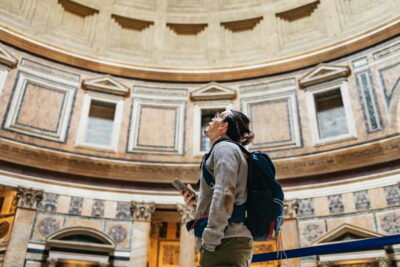
Pantheon Fast-Track Ticket and Official Audio Guide
Read our review →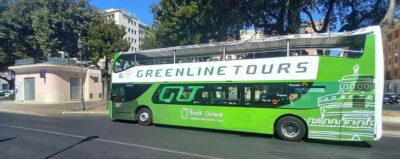
Hop-On Hop-Off Panoramic Open Bus Ticket 3 Circuits x 1
Read our review →
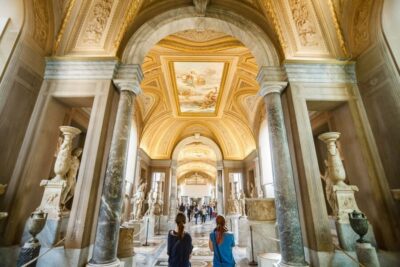
Vatican Museums & Sistine Chapel Skip-the-Line Entry Ticket
Read our review →
Vatican Museums & Sistine Chapel Skip-The-Line Ticket
Read our review →
Vatican Museums & Sistine Chapel Skip-the-Ticket-Line Tour
Read our review →
St. Peter’s Basilica & Dome Entry Ticket & Audio Tour
Read our review →