Reviewed · TOURS
Haunted Rome Ghost Tour – The Original
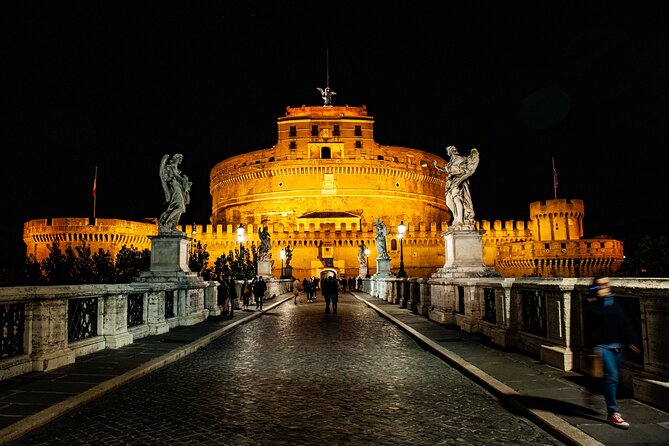
Rome by night has a different rhythm, and this haunted Rome walking tour threads gruesome legends into real spots near Castel Sant’Angelo. I like that it keeps things small-group and friendly, and the whole thing runs about 1 hour 30 minutes so you get the spooky vibe without a marathon.
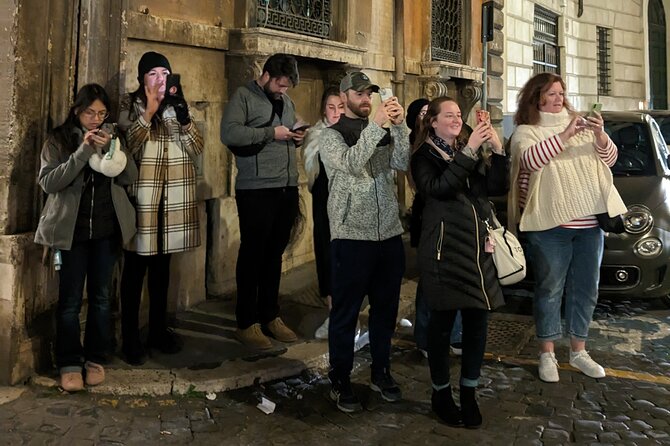
I also like the hands-on twist. You learn to use a dowsing rod and you get your guide’s name and number, so the ghost hunting feels structured and safe, not random.
One thing to consider: it is an outdoor tour that runs in all weather and it ends in a different area, so bring good walking shoes and be ready for the evening cold or rain.
Key things to know before you go
- Dowsing rod ghost hunting is built into the tour, not just a story act.
- Max 15 people keeps it conversational and gives the séance-style atmosphere.
- You start near Castel Sant’Angelo and finish at Campo de’ Fiori, ideal for an easy night plan.
- Dark Roman stories mix emperors, popes, criminals, poisoners, and a high-profile kidnapping.
- You’ll walk quite a bit, especially once it gets dark.
- It runs in all weather, so dress for outdoors even in bad conditions.
The vibe: a spooky walk that stays grounded in Rome
This tour is basically two things at once. First, it is a guided evening stroll through the city center where the guides connect famous and not-so-famous sites to dark legends. Second, it gets interactive, with you actually using a divining or dowsing rod as part of the experience.
What makes it work is the tone. Even when the stories are brutal, the walk stays social and “do-this-with-your-guide” practical. Guides like Lara, Mario, Marco, and Ali are repeatedly praised for keeping the group engaged and making the storytelling clear enough that you can follow even when the street lighting is low.
If you want scary in a horror-movie way, you might find it more “mildly creepy with historical flavor” than nightmare fuel. But if you want the kind of evening where you learn how people in Rome built legends around real streets, this format hits the sweet spot.
Other things people book around Rome:
- Vatican Museums & Sistine Chapel Tour with Optional Basilica
★ 4.3 · 67,413 reviews - Vatican Museums, Sistine Chapel & St Peter’s Basilica Guided Tour
★ 4.5 · 39,149 reviews - Rome: Colosseum, Palatine Hill and Roman Forum Guided Tour
★ 4.8 · 32,814 reviews
Meeting near Castel Sant’Angelo and getting oriented fast
You meet at Lungotevere Castello, 50, and the tour ends at Piazza Campo de’ Fiori. That start location is convenient for two reasons.
1) You are close to one of Rome’s easiest-to-find landmarks. Many people reference the Castel Sant’Angelo area as a helpful visual anchor, which reduces the usual “where is the group” stress.
2) Starting at a river-adjacent spot means your first minutes feel like you are already in the right part of town. The tour theme is all about atmosphere, so you want your brain switched on early.
The tour uses a mobile ticket, and you receive a way to contact your guide (your guide’s name and number). That detail matters more than you might think, especially if you are running late or need to confirm you are at the right place in the dark.
One small practical note from the way people talk about the experience: it is not a sit-down thing. You will be walking throughout, and the route is designed so the final area feels different from the starting area.
The first bridge stop: where Rome’s “stagecraft” turns dark
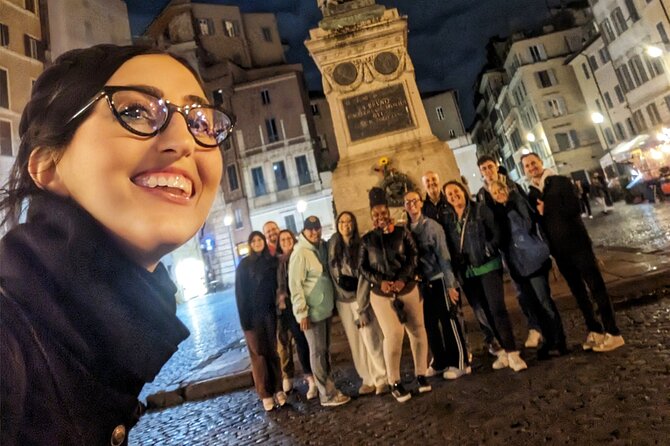
The tour begins at a bridge described as one of Rome’s most beautiful and mysterious spots, with a grim backstory tied to bloody executions. Even if you know Rome has a violent past, a bridge setting gives the stories extra punch.
Bridges in Rome are more than scenery. They are natural choke points for crowds, ceremonies, and public punishment. So when your guide frames the bridge as a place where executions happened, it changes how you interpret what you see around you. You start spotting “why would this location matter” instead of just “what does it look like.”
What I like about this kind of opening is that it sets the rules of the tour. You are not just hearing spooky lines. You are learning why the streets and monuments became stages for rumor, fear, and cautionary tales.
An ancient street that feels like it shrinks
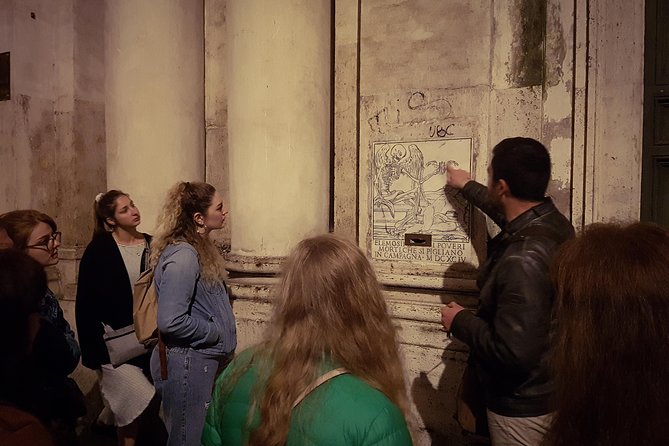
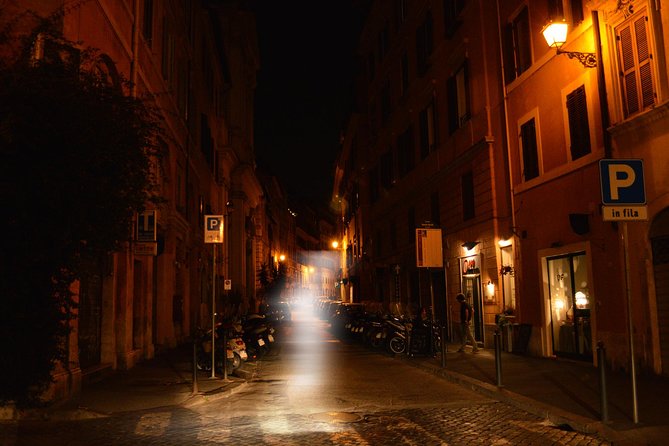
Next comes an ancient, narrow, dim, “scary” street stop. The name is less important than the vibe. Tight alleys and old stone walls do something to sound and shadow. That helps the guide deliver stories in a way that feels immediate.
A lot of people come to Rome for the big-ticket sights, but the texture of Rome is in the small scale. This is where the tour earns its keep. You see how a city can make legends feel plausible just by shaping movement and visibility.
If you are claustrophobic, this section might feel intense because the tour leans into the atmosphere. For most people, though, it is exactly what makes a ghost walk better than a museum lecture.
Same city, a completely different kind of day:
- Rome: Guided Tour of Colosseum, Roman Forum & Palatine Hill
★ 4.7 · 27,897 reviews - Rome: Colosseum & Forum with Audio Guide App -Optional Arena
★ 4.2 · 24,770 reviews - Rome: Colosseum, Roman Forum and Palatine Hill Guided Tour
★ 4.5 · 23,903 reviews - Rome: City Sightseeing Hop-on Hop-off Bus with Audioguide
★ 4.0 · 16,045 reviews
The haunted square and the poisoner story
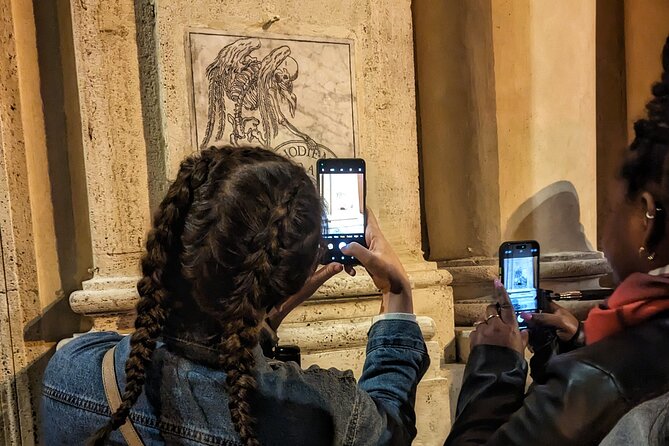
Then you hit a haunted square where the guide tells a story about professional poisoners who helped women kill their husbands. This is one of those locations where the tour mixes social history with dark folklore.
I find this kind of tale valuable because it is not only about ghosts. It is about how fear gets packaged. In older societies, rumor and secret knowledge could be more powerful than official power. When guides connect that to specific places, the stories stop feeling like generic “creepy content” and start feeling like an explanation of how myths grow.
You should also be aware that this part can be heavy. If you are bringing kids, one review specifically mentioned that the guide was sensitive with the level of detail. That’s a good sign, but it still means you may want to mentally prepare for crimes and grim motives.
A street tied to pope mistresses: scandal, privacy, and stone
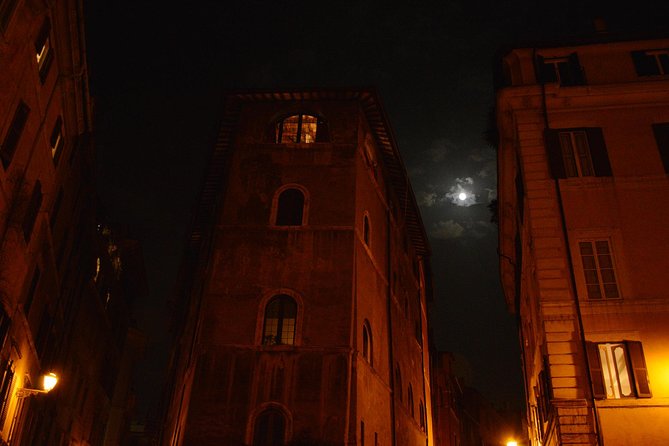
Another stop brings you down an ancient street described as built to let the Pope visit his mistresses in peace. Even if you treat the story as part of legend rather than documentary proof, the tour is doing something useful here.
It shows you how Rome’s design could support secrecy. Streets, courtyards, and routes for foot traffic can make private movements easier to hide. Guides use these explanations to turn architecture into narrative.
This is also where the tour feels less like “supernatural theater” and more like “Rome as a place people lived through, lied about, feared, and survived.” That balance is why a lot of people rate the tour so highly for entertainment plus learning.
The brotherhood of Death church: mass burial in plain sight
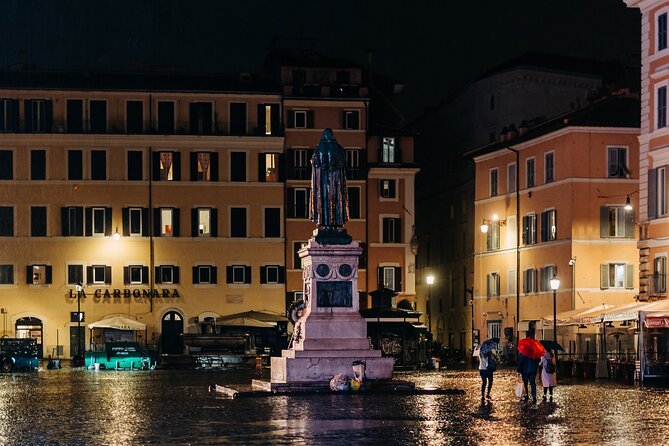
Next is the head church of the brotherhood of Death, a place tied to burial of thousands of bodies collected from the streets of Rome. This is not a gentle stop. It is a grim reminder of what cities look like when disease or violence overwhelms normal life.
This moment is valuable because it grounds the entire theme. Ghost stories feel like folklore until you remember that real suffering leaves physical and institutional traces. A brotherhood tied to death and burial turns the word “haunted” into something broader than supernatural.
Also, you are in a church setting, which means the emotional tone shifts from “spooky legend” to “dark history.” Guides who handle this well tend to do it with a steady voice, not a jump-scare vibe. People mention guides like Ali handling rude guests professionally, which often correlates with a more respectful approach overall.
The John Paul Getty III kidnapping spot, still haunted
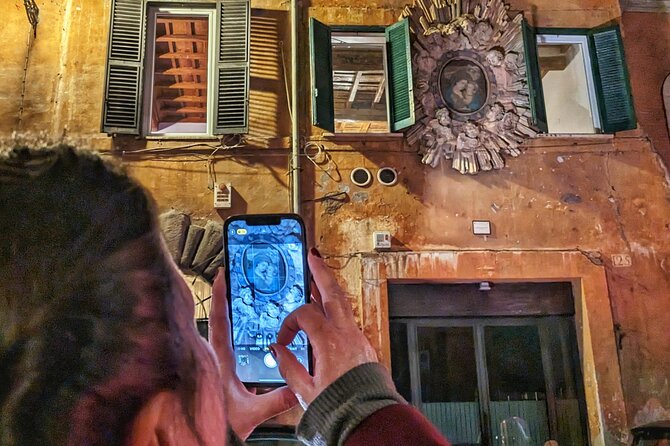
One of the most specific stops is the exact place from which John Paul Getty III was kidnapped in the 1970s, described as still haunted. That kind of modern reference is smart in a ghost tour.
It does two things:
- It connects the theme to recent history that many people recognize.
- It reminds you that haunting does not always mean an ancient curse. Sometimes it is memory, grief, and unresolved fear.
If you like history that feels close to your lifetime, this stop is a highlight. If you prefer only Roman-era lore, you might find it a tonal shift, but it is clearly part of the tour’s goal: the streets hold stories across centuries.
Piazza Farnese: a beautiful square with a darker pedigree
The tour includes Piazza Farnese for about 10 minutes, and the stop notes it is free. Your guide frames it as built by one of the filthiest families of Rome, and the palace and square come off as breathtakingly dark.
Even if you do not fully buy the “filthy” wording literally, the takeaway matters. This is a reminder that Rome’s grandeur often came with power games, wealth, and corruption. A tour like this helps you see those layers in the stone.
Practical upside: the stop is short enough that you get the atmosphere without getting stuck for long. You also get to look around and place the earlier stories in a broader map of the neighborhood.
Campo de’ Fiori and the witch-and-heretic fires
Finally, you reach Campo de’ Fiori, around 15 minutes. The theme here is thousands of witches and heretics burned alive, plus the playful nudge that you might meet a ghost or two if you are unlucky.
This stop often lands well because Campo de’ Fiori is so central and lively. At night, though, the square changes character. The same place that can feel like a casual evening hangout becomes a stage for darker imagination.
If you want a “walk ends with atmosphere” moment, this is it. And because the tour ends there, you can naturally continue your evening with dinner or drinks in the area without backtracking.
Price and value: what $31.43 buys you in Rome
The tour costs $31.43 per person and lasts about 90 minutes. That price sits in the “worth it if you want a real evening activity” zone, not the “super cheap filler” zone.
Here is where the value comes from:
- It is a small group up to 15, so you are not blended into a big crowd.
- You get a guide-led story route that goes beyond the headline monuments.
- You get dowsing rod instruction, which adds an interactive element most walking tours do not offer.
- You are outdoors at night, which means you are paying for an experience, not just access.
What is not included is just as important. No food or drinks are included, so plan on eating before or after. Also, gratuities are appreciated, even if they are not mandatory. If you liked your guide’s humor and pacing, it is an easy way to say thank you.
If your budget is tight, you might compare this with standard history walks. But if you want the combination of story, hands-on interaction, and a route that gives you a different Rome angle, this is a solid use of one evening.
Guides make or break the ghost factor
One clear pattern in the experience is that the guides carry the show. People call out guides like Lara, Mario, Marco, Yash, Bryan, Sonya, Clara, Rebecca, Emma, and Ali for being engaging, funny, and good at handling questions.
A guide who is theatrical and still organized makes the dowsing rod portion feel like part of the narrative instead of a gimmick. It also matters when the group gets late, confused, or frustrated. Reviews specifically mention how guides communicated locations and kept people safe crossing roads, which is not glamorous but it is real value on a busy Roman street.
If you are picky about tone, you can use that as your decision filter:
- If you like interactive activities and mild creepiness, you will probably enjoy most guides in this format.
- If you want only deep academic history with no “paranormal” framing, you might find the ghost hunting element too playful.
Walking, timing, and what to wear in the dark
This is an evening walking tour, and you should expect a decent amount of walking. The route also changes location from start to end, which is great for sightseeing flow but means you should plan where you will stop after.
The tour operates in all weather, and it asks you to dress appropriately and wear comfortable shoes. That advice is not boilerplate. Rome at night can mean slick pavement, sudden rain, and shoes that suddenly feel like a bad idea. If you pack comfort, the tour feels fun instead of exhausting.
Also, due to the Jubilee, some monuments may be under restoration. The tour notes you should pay attention to messages about potential changes. That is normal in Rome right now, but it is still smart to watch for updates once you book.
Who should book this tour
This tour fits best if you want:
- A spooky evening that is also a guided history walk.
- An interactive add-on, like using a dowsing rod.
- A route that explores Rome beyond the main daytime photo stops.
- A group size where you can actually hear the guide and ask questions.
It might be less ideal if:
- You want a horror-level scare with minimal humor.
- You are not comfortable with crime and death-related stories.
- You do not like walking at night or you have mobility constraints that make uneven streets tough.
One more tip: if you are a fan of storytelling, you will probably have a better time than if you only want facts. This tour is structured around atmosphere, and the guide’s delivery is part of the product.
Should you book Haunted Rome Ghost Tour – The Original?
If you want one evening activity that feels different from the usual “line up and look up,” I would book it. For the price, the combo of small-group night walk plus dowsing rod ghost hunting plus a route that takes you from Castel Sant’Angelo area energy to Campo de’ Fiori is strong value.
Go for it especially if you enjoy:
- dark legends tied to real places
- interactive elements
- guides who bring energy and keep the group engaged
Skip it only if your idea of a haunted tour means nonstop terror or if you want zero paranormal framing. Otherwise, this is a fun, practical way to see Rome after dark and walk away with stories you will keep retelling.
FAQ
How long is the Haunted Rome Ghost Tour – The Original?
It’s listed at about 1 hour 30 minutes.
What is the price per person?
The price is $31.43 per person.
How large is the group?
The tour has a maximum of 15 travelers.
What language is the tour offered in?
It is offered in English.
Where do I meet, and where does the tour end?
Meet at Lungotevere Castello, 50, 00193 Roma RM, Italy. The tour ends at Piazza Campo de’ Fiori, 00186 Roma RM, Italy.
Is a mobile ticket provided?
Yes, the tour uses a mobile ticket.
What is included in the experience?
You get a guide who teaches you how to use dowsing rods, plus a small-group setup designed to create a séance-like atmosphere. You will also receive your guide’s name and number.
Is food or drinks included?
No. Food and drinks are not included.
Does it run in bad weather?
Yes, it operates in all weather conditions, so you should dress appropriately and wear comfortable shoes.
Recently reviewed around Rome
- Rome: Castelli Romani Hop-on and Hop-off Tour★ 4.9 · 32 reviews
- Rome: Food Tour near Vatican City with Wine★ 4.8 · 100 reviews
- Rome: Scavenger Hunt Self-Guided Tour★ 4.6 · 15 reviews
- Rome: Hop-on Hop-off Bus Tour and Colosseum Experience★ 3.4 · 163 reviews
- Hidden Rome: Small Group E-Bike Tour with Street Food Stops★ 4.9 · 144 reviews
- Rome: Highlights Tour in Golf Cart★ 4.9 · 28 reviews
- Rome: Guided Haunted Rome Ghost Tour with Dowsing Rods★ 4.8 · 63 reviews
- Rome: Highlights Photo Shoot for Memorable Moments★ 5.0 · 32 reviews
Tours, compared.

Vatican Museums & Sistine Chapel Tour with Optional Basilica
Read our review →
Colosseum, Roman Forum & Palatine Guided Tour
Read our review →
Vatican Museums, Sistine Chapel & St Peter’s Basilica Guided Tour
Read our review →
Colosseum, Palatine Hill and Roman Forum Guided Tour
Read our review →
Guided Tour of Colosseum, Roman Forum & Palatine Hill
Read our review →
Colosseum, Roman Forum and Palatine Hill Guided Tour
Read our review →
Vatican Museums, Sistine Chapel & Basilica Tour
Read our review →