
Reviewed · BIKE TOURS
Ancient Appian Way PRIVATE Bike Tour
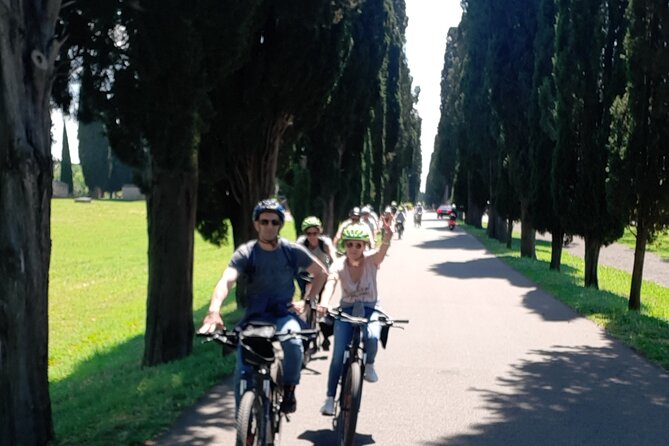
The Ancient Appian Way on an e-bike is interesting because it turns Rome into something calmer and older, fast. You leave the main city noise behind and roll along a route tied to emperors, engineers, and pilgrims, all with a private guide pacing the day for you. The Ancient Appian Way itself feels like a time machine, not a stop on a checklist.
I love how the tour mixes big-ticket monuments with long stretches of park riding. You’ll get to see aqueduct ruins and even water systems that still work, and you’ll hit major sites like the Circus of Maxentius and the Mausoleum of Cecilia Metella without feeling rushed. I also like the guide approach, with names like Chris, Alex, Valerio, Sara, Marco, Nico, and Claudio showing how to connect each site to a story you can remember.
One drawback to consider: you need to feel comfortable riding in mixed conditions. There can be city traffic on parts of the ride, and the e-bikes are pedal assisted, not a twist-and-go scooter, so you still have to pedal.
Key highlights to know before you go
- E-bike comfort with pedal assist (no throttle), so you control your effort
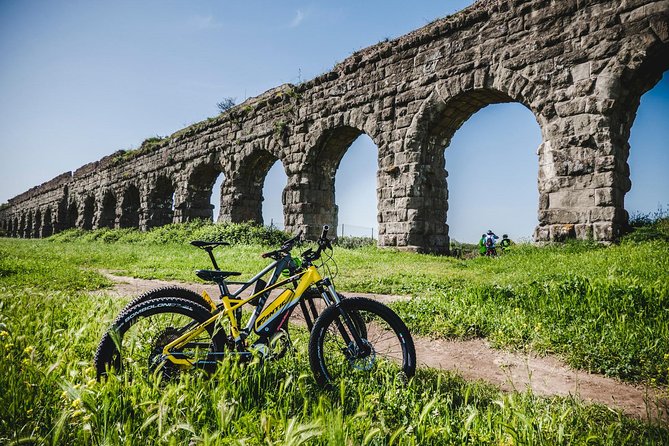
- Aqueduct Park views plus spots where Roman water engineering is still active
- A tightly planned half-day with about eight stops, each timed for easy pacing
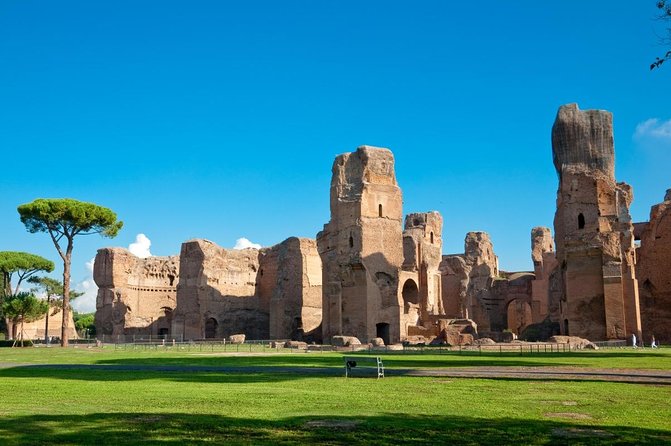
- Major Appia Way landmarks like Porta San Sebastiano, the Circus of Maxentius, and Caracalla’s Baths
- Family setup with child seats and specific rules for kids on a trailer bike
- Private guide attention with English and consistently strong storytelling from guides such as Valerio and Sara
Ancient Appian Way, Rome edition, why it feels calmer
Rome has a way of crowding your attention. This ride is different. Instead of bouncing between ticket lines and buses, you follow a historic spine out of the city and into open green spaces that still hold Roman remains.
What makes the Appian Way so compelling is how visible it is. Even when the structures are broken, the layout makes sense. Roads, aqueduct lines, tomb placements, and water routes create a clear picture of how the empire organized daily life.
And you get a private rhythm. Stops are short enough to stay fresh, but long enough to actually look closely, read the surroundings, and absorb what the guide points out.
More bike and e-bike tours in Rome:
- Rome EBike Tour: Appian Way, Catacombs & Roman Aqueducts
★ 5.0 · 1,766 reviews - Rome: Top Highlights & Hidden Gems Tour by Cannondale E-Bike
★ 4.9 · 1,760 reviews - Rome: Appian Way, Catacombs, & Roman Aqueducts E-bike Tour
★ 4.9 · 1,421 reviews
E-bike setup, riding skills, and the reality of Roman streets
You’ll be on a high-quality e-bike with a helmet, plus practical extras like a phone holder and handlebar holder. The tour is private, and it’s designed for travelers with a moderate physical fitness level, but with one clear requirement: you must know how to ride a bike well.
Here’s the part I think is most important. The e-bike is pedal assisted, and there is no throttle. That means you can get help when you work, but you’ll still be doing the pedaling. If you want to coast constantly, this setup may feel like work.
Also, plan for mixed road types. You may ride on cobblestone stretches and leave the paved feel in park areas. One review even flagged that roughly 20% of the ride can involve busier city traffic. If that makes you nervous, you’ll want to think twice before booking.
The upside is that the private guide helps you manage the pace. When I think about value, I think about how often a tour actually makes you feel safe and supported while you move through a big city on two wheels, and this format is built for that.
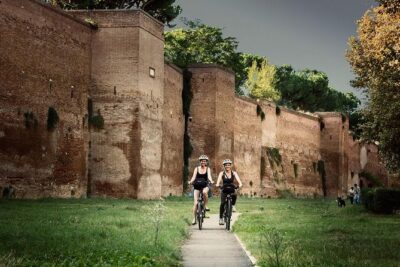
Starting at Porta San Sebastiano, the south gate that launches the story
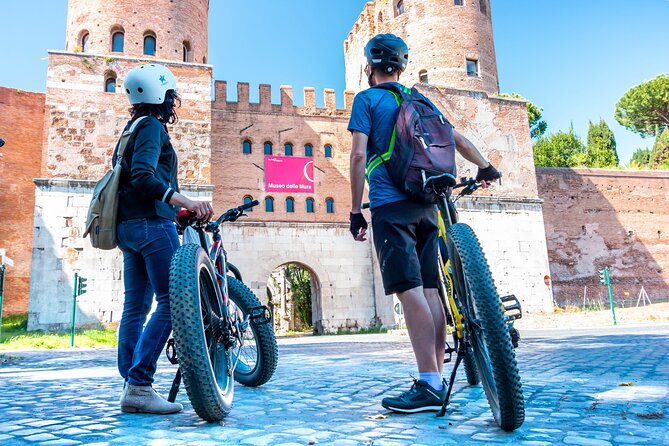
Your first stop is Porta San Sebastiano, a dramatic southern gateway to Rome. It’s tied to the Aurelian Walls, built around 275 AD, and it’s also where the historic Via Appia Antica effectively begins.
This is a great opening because it gives you instant orientation. You’re standing at a city edge, not deep in the center, so it’s easier to imagine the Appia Way as a road that led out to other places and peoples.
You’ll also notice medieval graffiti. That sounds minor, but it actually adds texture. It shows how long people kept passing through this spot long after Roman power changed form.
Caffarella Park, where old ruins sit inside big open green space
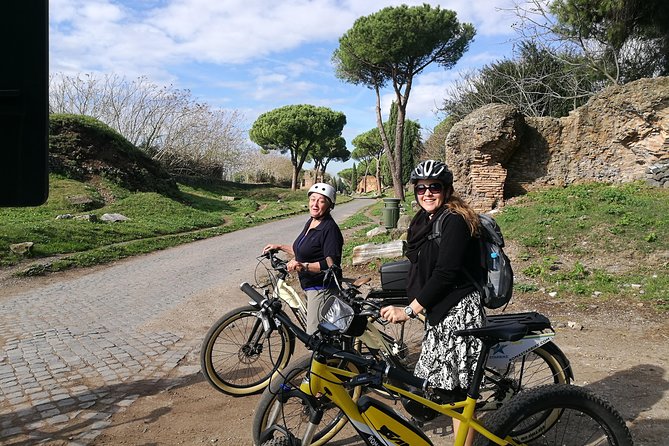
Next you enter Parco della Caffarella, now part of the Appia Antica Regional Park. This is one of the biggest green areas not just in Rome, but across Europe, which matters because it changes the whole feel of the ride.
Instead of the Rome you see from the major squares, you’ll get paths, groves, and a calmer pace. More importantly, the park holds remains of ancient buildings tucked into the landscape, so you’re not just cycling past grass. You’re cycling past history placed like it belongs.
A practical tip: since this is a park environment, it’s a good place to slow down your breathing and really look. Let the guide show you what to focus on. In a setting like this, the details are what make the story stick.
Same city, a completely different kind of day:
- Vatican Museums & Sistine Chapel Tour with Optional Basilica
★ 4.3 · 67,413 reviews - Vatican Museums, Sistine Chapel & St Peter’s Basilica Guided Tour
★ 4.5 · 39,149 reviews - Rome: Colosseum, Palatine Hill and Roman Forum Guided Tour
★ 4.8 · 32,814 reviews - Rome: Guided Tour of Colosseum, Roman Forum & Palatine Hill
★ 4.7 · 27,897 reviews
Ninfeo di Egeria, a sacred spring and the myth behind it
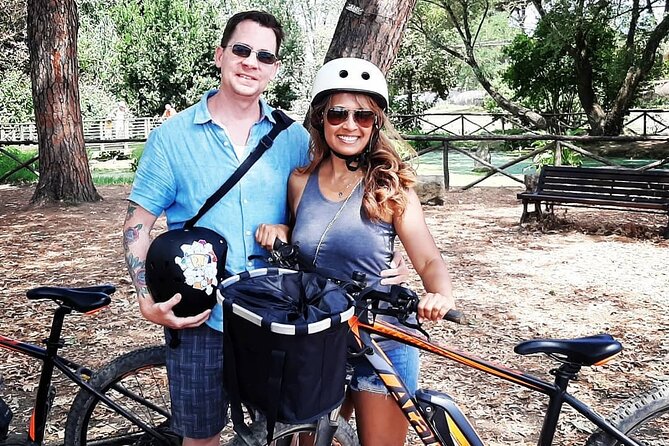
At Ninfeo di Egeria, you’ll hear the story of Egeria, a nymph connected to Numa Pompilius, the second king of Rome. The legend says Egeria learned of her beloved’s death and burst into tears, creating a spring.
This stop is short, but it’s a nice shift in tone. The Appia Way can feel like monuments and engineering, and then suddenly it’s about emotion and belief. It reminds you that Romans also shaped their world through myth, not only architecture.
If you enjoy the human side of Rome, this is the moment to pay attention. The guide will usually connect the myth to how sacred places worked in Roman culture, where belief and landscape mixed together.
Parco degli Acquedotti, Via Latina, and seeing Rome’s water system work
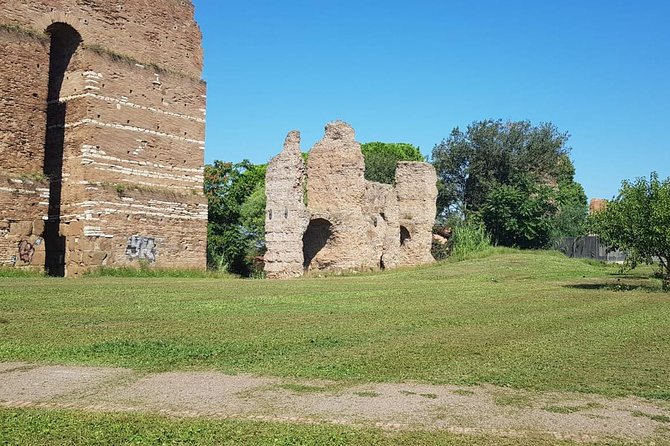
Parco degli Acquedotti and the Appia Antica Archaeological Park is where the ride earns its wow factor. You’re walking through a huge green area that traces ancient routes, including the Via Latina, described as the oldest road in Rome.
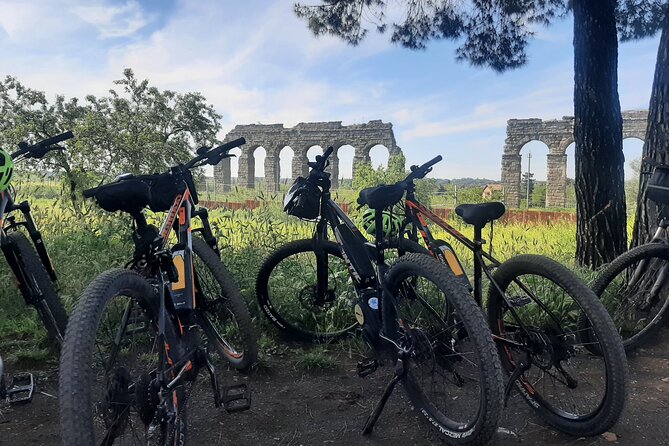
This is also the water crossroads of Ancient Rome. Aqueduct remains are still visible in places, and you can get a clear sense of Roman engineering. Even better, some parts are still in operation, meaning you’re seeing the same basic idea carry power centuries later.
What I like here is the visual clarity. Aqueduct structures line up in your mind, and once you understand the logic of water getting from point A to point B, the ruins stop being scattered pieces. They become a system.
If you’re the type who enjoys understanding how things worked, don’t rush this stop. Spend a few minutes longer looking than you think you should. The difference between a quick glance and real noticing is huge in this park.
Villa dei Quintili and Cecilia Metella, when empire politics shows up in stone
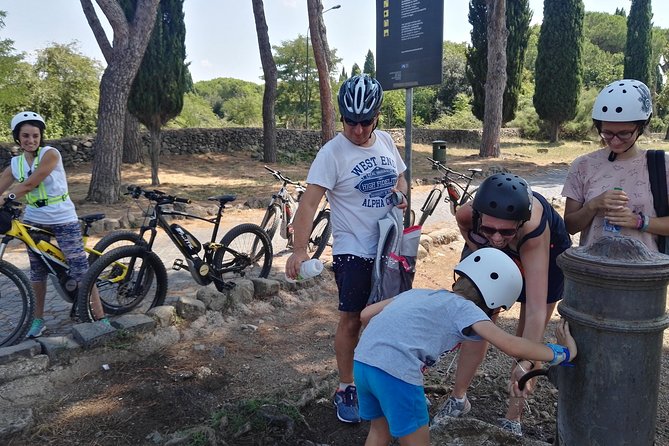
After the aqueduct zone, the tour moves into tombs and villas that connect directly to power struggles.
At Villa dei Quintili and Santa Maria Nova, you’ll be on the fifth mile of the Appian Way. This is where you can see the remains of the Villa dei Quintili, tied to Sesto Quintilio Condiano and Massimo Valerio, consuls in the second century AD. The guide will connect the site to Commodus I, who allegedly had the brothers killed and then seized the villa, turning it into imperial property.
That political twist matters. It’s not just a pretty ruin. It shows how wealth and influence could be transferred by force.
Then you’ll visit Mausoleo di Cecilia Metella and Castrum Caetani. Cecilia Metella’s mausoleum dates to the 1st century BC and is often described as the best preserved mausoleum on the Via Appia Antica. It also gets folded into the later Castrum Caetani complex, which adds another layer.
This is one of those stops that makes you appreciate Roman reuse and transformation. You’ll see the mausoleum, but you’ll also see medieval elements, like the perimeter walls that remain from the church of San Nicola and parts tied to the Caetani family.
If you’re thinking about what you’ll remember later, this is a strong contender. It’s a story with characters, not just stones.
Circus of Maxentius, Roman entertainment without the modern crowds
The Circus of Maxentius brings a different kind of Roman scale. It’s on the Via Appia Antica and is considered one of the best examples of a Roman circus that survived to today.
The big idea here is that the circus was built for events, speed, and spectacle. You can still see the spina, the central spine, and it connects to a famous obelisk, the Agonale obelisk. During the Renaissance, that obelisk was moved to the Fountain of the Four Rivers in Piazza Navona.
So you can look at something right here on the Appia Way and also understand how it ended up in one of Rome’s most famous fountains. It makes the city feel like one continuous set of connections.
This stop is also a great place to take photos, but don’t turn it into a photo line. The guide’s job is to help you see how the seating and arena would have worked.
Terme di Caracalla, and why baths were power as much as comfort
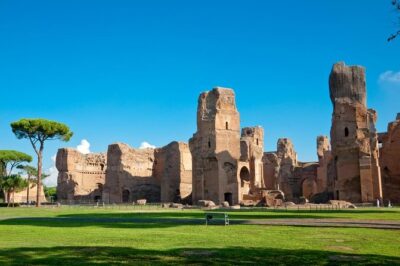
Your last major stop is Terme di Caracalla. These baths were commissioned by Emperor Caracalla, and they were for about a century the largest public baths ever built. Much of the structure is still preserved, which is the reason the site works so well for a bike tour day.
Water access was everything. You’ll hear how a branch of the Aqua Marcia brought water to the baths through the Antoninian aqueduct. One detail you might appreciate is that small remains connected to this water system can also be seen near Porta San Sebastiano.
What I find useful about ending with the baths is that it ties together earlier stops. You start with gates, then walk through parks and tombs, then you end with one of Rome’s most dramatic buildings. The unifying theme is systems: movement, burial, water, and public life.
Family-friendly Appian Way biking, child seats and trailer rules
This tour can work well for families because it’s private and paced for your group. One family example involved children from 11 down to 5 riding e-bikes over the Appia Way, and the younger kids apparently wanted the ride to keep going.
The tour includes child seats up to 25 kg. There’s also a child age 6 to 10 discount, but only if the child is less than 4/7 feet, which equals 143 cm, because the setup uses a trailer bike rather than a bike for the child alone.
That height condition matters. If your child is close to that cutoff, measure carefully and plan for the trailer setup if needed.
And remember the big riding requirement: you must know how to ride a bike well. This isn’t a shaky, first-time pedal lesson tour. But with the right family setup, it can be a fantastic way to get a long, meaningful outing without spending the day in traffic jams or lines.
Guides are the difference maker, from Chris and Alex to Nico
A half-day tour can be mostly walking and looking. The best version is when you understand what you’re seeing.
On this route, the guides are consistently strong story tellers. Chris is an example of a guide who was praised for historical explanations that made the aqueduct walk feel special. Alex was noted for being warm, patient, and engaging while keeping the history clear.
Valerio is another name that comes up for being both knowledgeable and patient, which matters a lot when you’re dealing with cobblestones, park paths, and a group’s varying comfort levels.
You’ll also hear about Sara and Marco as guides who helped people understand parts of Rome they would likely miss on their own. And Nico stood out because he had studied ancient Greek and Latin and had a degree in ancient history, which is a big deal if you like the language side of Rome.
As a practical matter, for this tour, you should actually talk to your guide. Ask why the aqueduct is placed where it is, or what the Circus spina was for. When the guide answers well, the sites stop being isolated stops.
Price and value, why $147.54 for 4 hours can make sense
At $147.54 per person for about 4 hours, this isn’t a cheap “grab and go” activity. But it may still be good value because you’re paying for three things that are hard to fake on your own.
First, you’re paying for a private guide and a planned route that strings together eight major locations along the Appian Way. Second, you get the e-bike and safety gear, which can reduce the friction of navigating a car-heavy city area. Third, you’re getting structured stop time, about 20 minutes at each site, so you don’t spend your day guessing what’s worth your attention.
Is it worth it if you’re only interested in one or two monuments? Maybe not. But if you want the Appian Way as a coherent experience, with aqueducts, tombs, and baths, you’re paying for that cohesion.
Also, since it’s booked about 53 days in advance on average, planning ahead can help you lock in the time that fits your schedule. Rome days can fill up fast, especially in peak season.
Should you book this private bike tour of the Ancient Appian Way?
Book it if you want a half-day on a route that feels like Rome’s other side: quieter, greener, and packed with big monuments. It’s a strong choice for couples and families who want value, not just photos.
I would especially book it if you like historical context that connects architecture to people and power. The stops are meaningful, from Porta San Sebastiano’s role in city walls and the Appia start, to the Circus of Maxentius linking to Piazza Navona, to Caracalla’s Baths showing the scale of Roman public life.
Think twice if you hate bike-riding stress. You must be a confident rider, you should expect some cobblestones and park paths, and there may be traffic segments. Also remember the e-bike has pedal assist and no throttle, so you’ll do more work than you might expect.
If you’re the right fit, you’ll leave with a different mental map of Rome. Not just monuments, but the way roads, water, and empire organization all fit together.
FAQ
How long is the Ancient Appian Way private bike tour?
It runs for about 4 hours.
Where does the tour start and end?
It starts at Via dei SS. Quattro, 58, 00184 Roma RM, Italy, and it ends back at the same meeting point.
Is the tour private?
Yes. It is a private tour/activity, and only your group participates.
What language is the tour offered in?
The tour is offered in English.
Do I need to know how to ride a bike?
Yes. You must know how to ride a bike well. The tour also notes a moderate physical fitness level.
Are child seats available?
Yes. Child seats are included up to 25 kg, and there are rules for child ages 6 to 10 based on height because the setup uses a trailer bike.
Do the e-bikes have a throttle?
Based on the experience notes from the tour feedback provided, the e-bikes have pedal assist and no throttle.
What is the cancellation policy?
Free cancellation is available if you cancel up to 24 hours in advance for a full refund. If you cancel less than 24 hours before the start time, the amount paid will not be refunded.
Recently reviewed around Rome
- Ancient Etruscan Civilization Tour from Rome★ 5.0 · 16 reviews
- Colosseum with Arena Floor Express Guided Tour★ 3.5 · 22 reviews
- Private Tour – Ancient Ostia★ 5.0 · 42 reviews
- PRIVATE Appian Way and Lake Albano Ebike Tour with Italian Lunch★ 5.0 · 12 reviews
- Ancient Appian Way and Roman Countryside E-Bike Tour★ 4.5 · 13 reviews
- Catacombs and Hidden Underground Rome: Small Group Max 6 People★ 5.0 · 293 reviews
- Amalfi Coast Day Trip from Rome by High-Speed Train★ 4.5 · 162 reviews
- Vespa Scooter Tour in Rome with RomeIsMyLove Pro Photo Team★ 5.0 · 151 reviews
Bike Tours, compared.
Rome EBike Tour: Appian Way, Catacombs & Roman Aqueducts
Read our review →
Top Highlights & Hidden Gems Tour by Cannondale E-Bike
Read our review →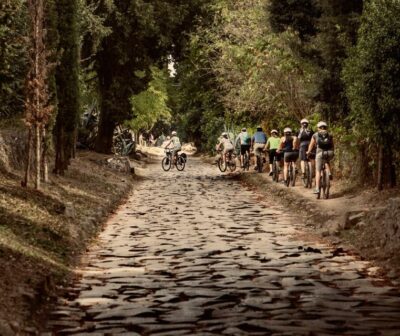
Appian Way, Catacombs, & Roman Aqueducts E-bike Tour
Read our review →
Rome City Small Group Bike Tour with quality Cannondale EBike
Read our review →
Rome by Night – Ebike Small Group Tour – Food and Wine (Option)
Read our review →
Appian Way E-bike Tour with Catacombs, Aqueducts & Food
Read our review →
Appian Way Aqueducts Bike Tour (Catacombs & Lunch Option)
Read our review →Browse the lists this tour appears in