
Reviewed · ROME
10 Wonders of Rome in 3 hrs
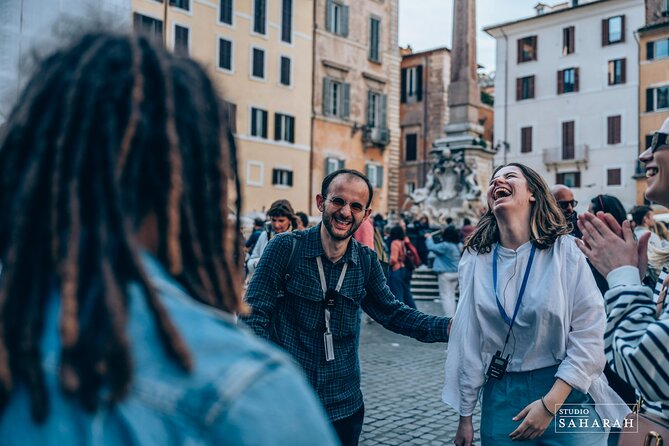
Rome is the kind of city where you can feel lost fast, even if you have good guidebooks. This 3-hour highlights walk turns that chaos into a simple route, with lots of photo moments and stories you can actually use while you keep exploring.
What I like most is the small-group pace and the focus on Rome’s big icons on foot. You get a guided orientation that helps you connect what you see with what it meant, without spending your whole day stuck in lines.
One thing to plan for: this is a moderate walking tour, and you’ll be on the move for about three hours, with stairs at the end. If you have limited mobility or hate long cobblestone stretches, you may want to consider a more relaxed option.
Key highlights to expect
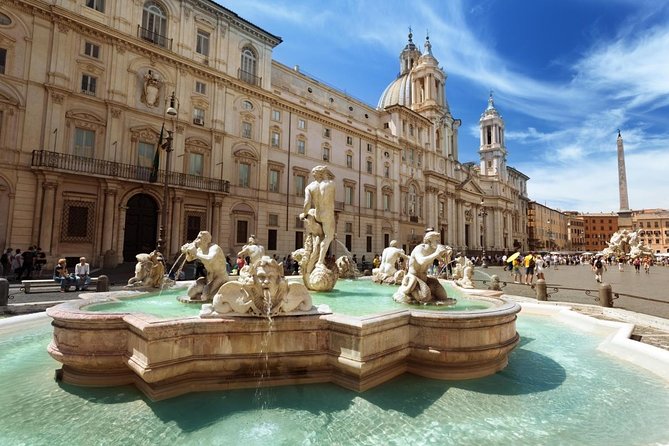
- Small group, max 12 people, so your guide can actually keep track of everyone
- Top Roman landmarks in one route, designed for first-time orientation
- Photo stops built in, including major viewpoints for Trevi and the Trevi area
- Espresso and breaks, with the guide working in quick pauses along the way
- Guided learning plus humor, with interaction like quizzes to help it stick
- No monument entrances, so you avoid ticket lines and time-consuming waits
A tight 3-hour route that helps you see Rome fast
This is a compact sightseeing plan that covers a lot of Rome in a short window, without trying to cram you into long monument queues. The whole idea is simple: walk the center, hit the recognizable landmarks, then leave with a mental map of where everything is and why it matters.
The tour runs about three hours and is offered in English, with a choice of morning or afternoon departures. That flexibility is real value, because Rome’s weather and light can change your whole experience. I’d also plan to book early if you can, since this one is commonly reserved about a month in advance.
You should know what you are not getting: this tour is sightseeing and storytelling, not interior access. Admission is generally not included, and the pace is focused on walking, looking, and photographing.
Other things people book around Rome:
- Vatican Museums & Sistine Chapel Tour with Optional Basilica
★ 4.3 · 67,413 reviews - Vatican Museums, Sistine Chapel & St Peter’s Basilica Guided Tour
★ 4.5 · 39,149 reviews - Rome: Colosseum, Palatine Hill and Roman Forum Guided Tour
★ 4.8 · 32,814 reviews
Getting started at Via del Monte Oppio, then walking into the highlights
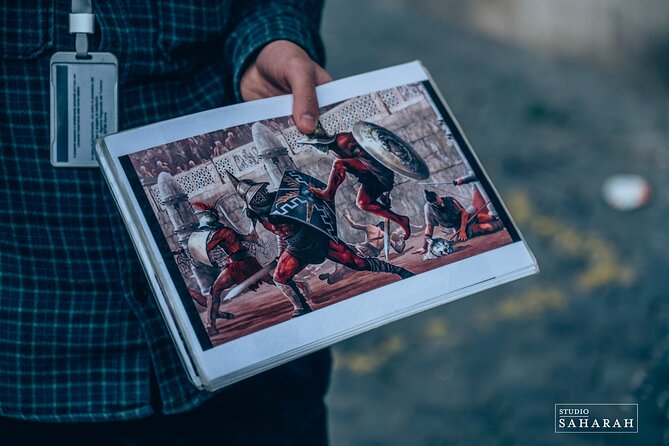
Meet at Via del Monte Oppio, 3, 00184 Roma RM. It is near public transportation, which helps if you are staying anywhere central. The endpoint is Viale del Belvedere, 00187 Roma RM, after the last panoramic viewpoint.
On arrival, expect a classic small-group rhythm: the guide gathers everyone, sets expectations, and gets moving. You’ll want a camera ready, but also comfortable shoes. Rome’s center can be uneven underfoot, and the tour keeps you moving between stops.
Stop 1: Colosseum area photo start, no entry needed
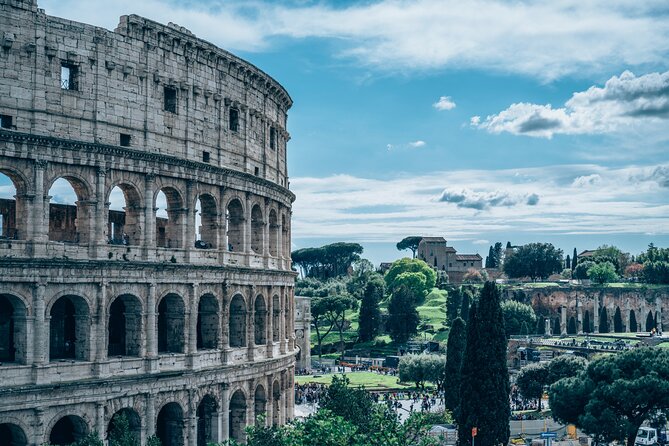
You begin right in front of the Colosseum. Even without going inside, it is a powerful way to start, because everything you see during the walk connects back to what Rome built and how it organized public life.
The stop is about 15 minutes, and it is described as starting directly in front of the monument. That means you get time to orient yourself visually, learn the story thread the guide is using, and capture the first set of photos.
A practical note: since there is no interior admission, your timing is safe. You do not have to guess how long lines might be, and you keep your three-hour window on track.
Stop 2: Via dei Fori Imperiali and Vittoriano, plus big “heart of Rome” viewpoints
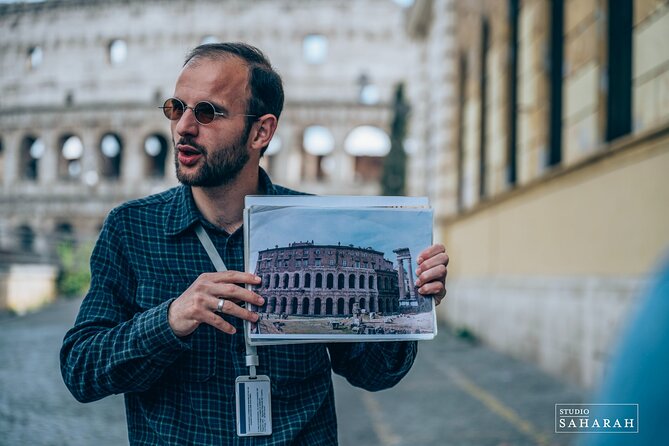
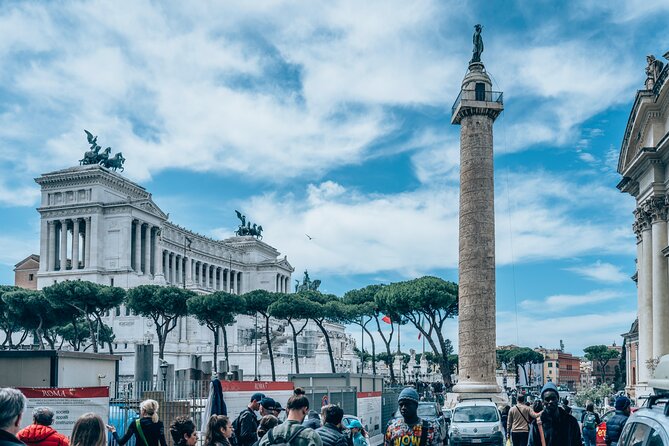
From the Colosseum area, the walk shifts into the grand sweep of Via dei Fori Imperiali, a street linked with Mussolini-era grand planning. Then you reach Venezia Square for photos in front of the Altar of the Fatherland, also known as the Vittoriano.
This part is shorter, about 10 minutes, but it serves an important purpose. You go from ancient spectacle to modern symbolic Rome, so the city stops feeling like random landmarks and starts feeling like a timeline.
The guide also builds in photo time here, and many people value this stop because you can grab wide shots that show how the urban design frames the monument. It is Rome’s “grand scale” moment.
Same city, a completely different kind of day:
- Rome: Guided Tour of Colosseum, Roman Forum & Palatine Hill
★ 4.7 · 27,897 reviews - Rome: Colosseum & Forum with Audio Guide App -Optional Arena
★ 4.2 · 24,770 reviews - Rome: Colosseum, Roman Forum and Palatine Hill Guided Tour
★ 4.5 · 23,903 reviews - Rome: City Sightseeing Hop-on Hop-off Bus with Audioguide
★ 4.0 · 16,045 reviews
Stop 3: Pantheon, church-in-action, plus an espresso break
Next up is the Pantheon, still functioning as a church. The stop is about 15 minutes, and it is framed as a key sight that you see up close while the building continues its everyday life.
This is one of my favorite types of stops on a walking tour: you do not just see something ancient, you watch it operate in the present. It helps you understand why the Pantheon still draws attention, even when you are not looking at it through a purely historical lens.
The tour description also includes an espresso treat near the Pantheon, with a well-known nearby gelato spot mentioned: Gelateria Fiocco Di Neve. Add that to the general review feedback about built-in coffee and quick breaks, and you get a sensible rhythm, not a nonstop sprint.
Stop 4: Pontifical Gregorian University, Jesuit roots in the mix
Passing by the Pontifical Gregorian University is a quick stop, about 10 minutes. The guide ties it to the idea of the first Jesuit-founded university, which gives you another layer of context as the route continues beyond the most obvious tourist monuments.
This is not the kind of stop where you will run to buy souvenirs. Instead, it’s for people who like to connect dots and understand why certain buildings, streets, and institutions occupy specific places in the city.
Stop 5: Trevi Fountain with built-in photo time, admission-free
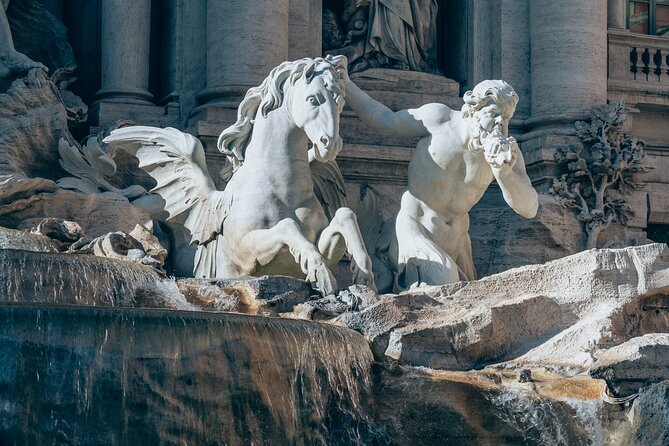
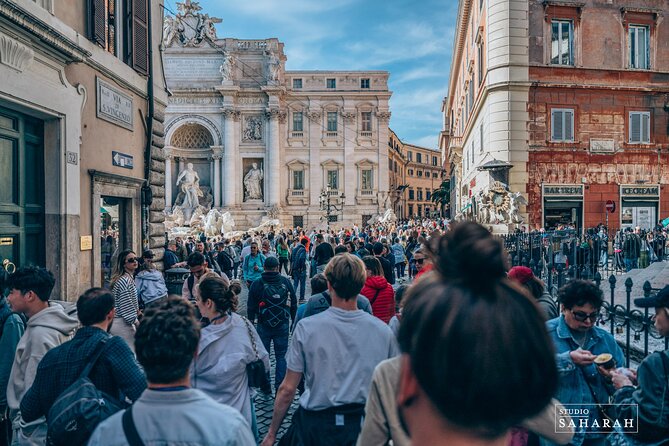
Then comes Trevi Fountain, and this is where your camera will earn its keep. The fountain stop is about 15 minutes, and it is marked as free (and you are not entering anything).
Trevi is also a great place to slow down, because it sits at the intersection of story and spectacle. The guide frames the fountain as a jewel of water and stone, which helps you look past the usual postcard angle and notice details.
One more practical angle: since this stop is outside, it is easier to enjoy even if you are not sure what time you will arrive. It is a good anchor point in a 3-hour tour.
Stop 6: Spanish Steps, romantic design from the ground up
After Trevi, you walk toward the Spanish Steps. This stop is about 10 minutes, and it is also marked as free.
The Spanish Steps are famous for their elegant design and romantic atmosphere, but the real value here is how the guide positions you for photos and explains what you are seeing. This is also a place where your eyes adjust quickly from “big monument” to “city space,” and that shift makes the whole experience feel more real.
Stop 7: Tempio di Adriano, quick but focused
You then talk about the Temple of Hadrian, shown as Tempio di Adriano in the itinerary. The stop is very short, about 5 minutes, and the emphasis is on explanation rather than lingering.
Short stops can feel rushed, but this one works if you enjoy fast context. It helps you keep the story train moving, rather than letting one landmark swallow the whole tour time.
Stop 8: Column of Marcus Aurelius, a compact final lesson
The last quick stop is the Column of Marcus Aurelius, with a time of 4 minutes. It is marked as free, and it is another “look, then learn” moment.
Columns like this are easy to overlook when you are in Rome for the first time. A guide’s job here is to help you see it as more than a tall object in a street. If you like symbolic art and visual storytelling, this fits the theme of the walk.
The “secret” panoramic view at Villa Borghese Park, where the route ends
After the column stop, the walk continues toward Villa Borghese Park and the tour’s last destination: a panoramic view, described as the “secret” last stop.
This is also where you should expect the tour’s physical finish. One review notes stairs at the end, and given that Villa Borghese offers viewpoints, that tracks with what you might anticipate. Come prepared to climb a bit at the end, then enjoy the payoff.
This final viewpoint is the kind of closing moment that makes the whole three hours feel coherent. You look out over Rome, you understand the geometry of the city center, and you’re ready to plan the rest of your trip with more confidence.
Guides who keep the walk fun, not just factual
One of the strongest themes across the experience is how guides keep the tone light while still covering the key stories. People specifically mention guides like Joseph, Drita, and Isuf for delivering history in a fun way, with humor and interaction.
What I think makes this matter is not just entertainment. When a guide turns facts into something you can remember, you end up walking through Rome later and recognizing patterns you would otherwise miss. That’s where a short tour becomes value, not just a sightseeing hit list.
Several reviews also note practical help, including tips like how to use the subway. If you are arriving with Rome already on your mind, that type of guidance can save you time during the rest of your stay.
Price and value: what you pay for in a 3-hour highlights tour
The price is $48.39 per person for about three hours. That sounds straightforward, but the real value is how it is structured: you’re paying for an official tour guide, a small-group format (maximum 12), and an efficient route through major landmarks.
Because admission tickets are not included and there are no monument interiors on this plan, you are not paying for entry fees. You are paying for the time-saving of not having to research a route yourself, plus the guide’s storytelling that makes the landmarks easier to connect.
At this price, I’d see it as a “first day” orientation tool. If you want to return later on your own to places you care about most, this tour helps you pick those places with less guesswork.
Who this tour suits best
This is ideal if you want a fast, clear overview of central Rome and you like learning while you walk. It is also a good fit if you prefer small-group attention, and if you value photo stops over deep dives into museum interiors.
It’s best suited for people with moderate physical fitness. The tour is marked for ages 11 and up, and babies under 2 are free. If you are traveling with kids, the format can work well because breaks are built into the pacing, and guides are described as keeping younger minds engaged.
The main drawbacks to consider before you book
The biggest consideration is the format: you are not entering monuments. If your dream trip is about going inside the Colosseum or other major sites, this will not satisfy that urge by itself.
The second consideration is physical effort. It’s about three hours on foot, and at least one review calls out stairs at the end. Wear shoes you trust and plan to take it slow where you need to.
Finally, be flexible about timing. One review mentions a move from morning to afternoon due to authorities, with a quick refund. That’s not something you can count on, but it is a reminder to stay calm if Rome changes the rules on the day.
Should you book 10 Wonders of Rome in 3 hrs?
If you want to get your bearings fast and see Rome’s headline landmarks in a single, organized sweep, I’d book it. The combination of small group size, a strong guide, and built-in photo moments makes it a solid use of limited time.
You should skip or pair it with other plans if you specifically want interior access to major monuments. Also, if stairs and long walking are tough for you, look at your comfort level carefully before committing.
Bottom line: at $48.39, you’re buying an efficient orientation, helpful guidance, and a route that ends with a viewpoint payoff. For a first day or a half-day buffer, this is a smart way to start Rome with less confusion.
FAQ
What is the duration of the tour?
The tour lasts about 3 hours.
Is the tour in English?
Yes, it is offered in English.
How much does it cost?
The price is $48.39 per person.
Are admission tickets included for the monuments?
No. The tour notes that admission tickets are not included for the monuments. Some stops are marked as free, like Trevi Fountain and the Spanish Steps.
Do we go inside the monuments?
No. The tour is described as not entering inside the monuments.
What is the group size limit?
The tour has a maximum of 12 travelers.
Where do we meet and where does it end?
Meet at Via del Monte Oppio, 3, 00184 Roma RM, Italy. The tour ends at Viale del Belvedere, 00187 Roma RM, Italy.
Is there Wi-Fi included?
Yes, Wi-Fi is included.
What fitness level do I need?
You should have a moderate physical fitness level. Some reviews mention stairs at the end.
What are the age requirements?
The tour is for ages 11 and up. Babies under 2 are free.
Recently reviewed around Rome
- Ancient Etruscan Civilization Tour from Rome★ 5.0 · 16 reviews
- Colosseum with Arena Floor Express Guided Tour★ 3.5 · 22 reviews
- Private Tour – Ancient Ostia★ 5.0 · 42 reviews
- PRIVATE Appian Way and Lake Albano Ebike Tour with Italian Lunch★ 5.0 · 12 reviews
- Ancient Appian Way and Roman Countryside E-Bike Tour★ 4.5 · 13 reviews
- Ancient Appian Way PRIVATE Bike Tour★ 5.0 · 89 reviews
- Catacombs and Hidden Underground Rome: Small Group Max 6 People★ 5.0 · 293 reviews
- Amalfi Coast Day Trip from Rome by High-Speed Train★ 4.5 · 162 reviews