
Reviewed · GOLF CART TOURS
Golf Cart Tour: Highlights of Rome
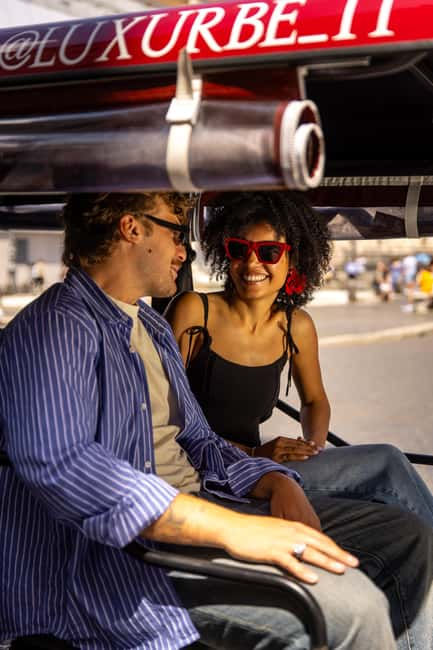
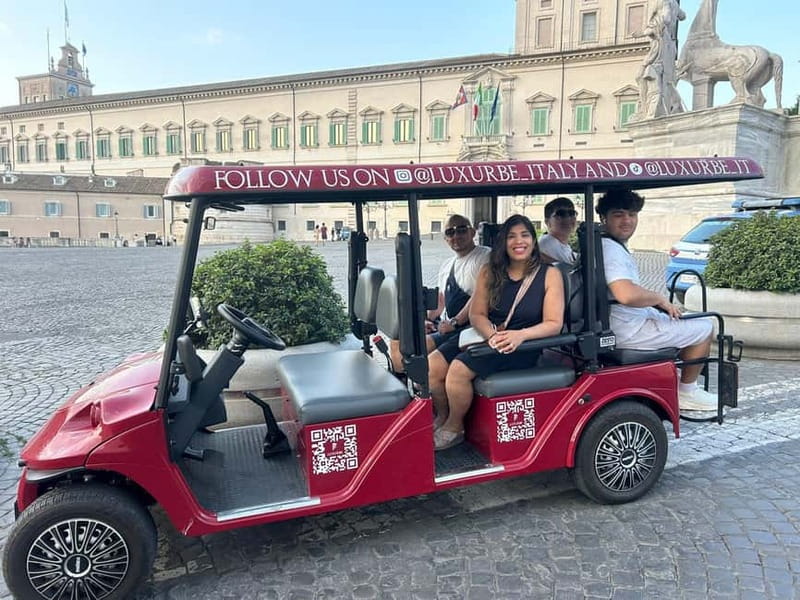
Rome works best when you can see a lot without wearing yourself out. This 3-hour electric golf cart tour is a fun, low-effort way to stitch together major sights with smaller streets you might miss on foot. Guides like Daniel have a knack for keeping things moving even when traffic and crowding mess with the plan.
I like that the ride is comfortable and eco-friendly, so you can stay fresh for the stops. I also like the focus on short guided time plus photo breaks, which makes it easy to actually get pictures you’ll keep. One possible drawback is that the schedule is tight, with guided time at each stop, so if you want long, slow museum-style visits, you may feel rushed.
Key highlights worth your attention
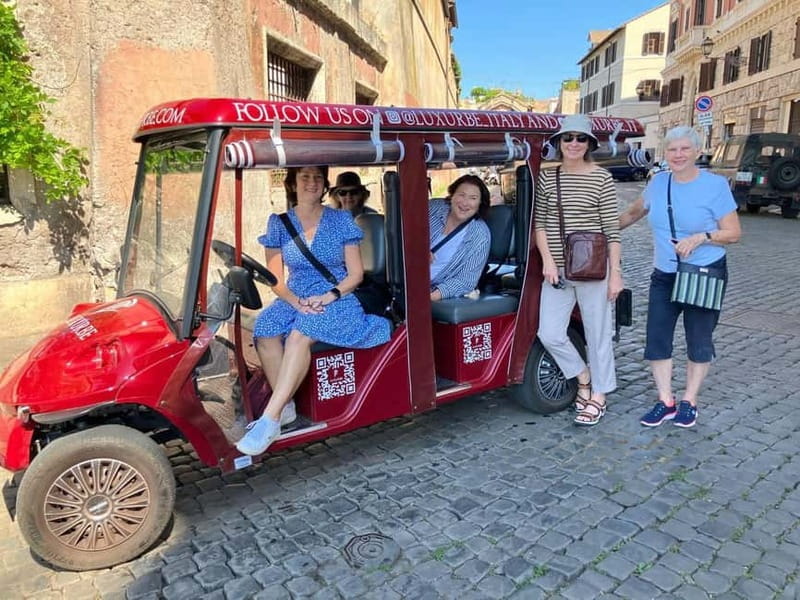
- Electric cart comfort: Easy rolling through central Rome, not a sweaty marathon on uneven streets.
- Expert local guidance: You get a guide who explains what you’re looking at in plain, story-based ways.
- Quick-hit stops with photo time: Around 15 minutes of guided sightseeing per major stop so you can move and shoot.
- Classic Rome landmarks included: Piazza Venezia, the Pantheon, Trevi Fountain, Piazza Navona, and more.
- Eco-friendly sightseeing for small groups: A fun format for couples, families, and groups that want value.
- Photo support: You get photos of your activity, plus time to take your own.
Why a 3-hour electric golf cart works so well in Rome
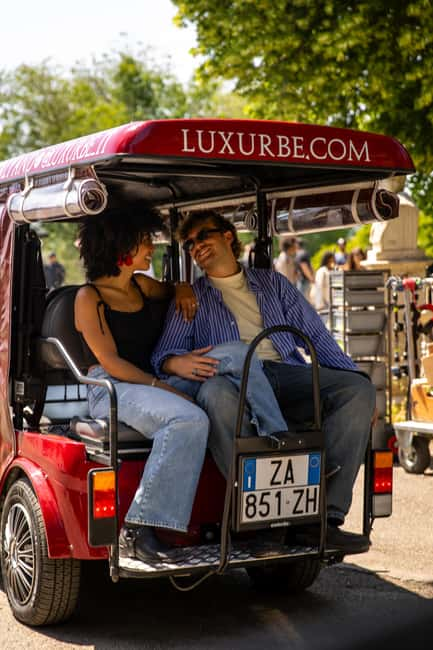
Rome is huge, and the best parts are scattered. This is not a “sit on a bus and look out the window” day. Instead, the electric golf cart format helps you cover a smart circuit while keeping the experience personal and lively.
The cart is also a practical choice when you want to see the Pantheon area, cross toward the Jewish Ghetto, then continue on toward Vatican City and the Colosseum zone without losing the whole day to transit. You get the feel of moving through real neighborhoods, not just passing landmarks at the edge of traffic.
The other big win is pacing. Each main stop is built around a short guided segment, so you know what matters at every location before you wander for photos. That matters in Rome because it’s easy to stare at something gorgeous and still miss the point.
More golf cart tours of Rome:
- Rome by Golf Cart Private Tour: Beyond the Landmarks
★ 5.0 · 4,361 reviews - Rome on a Golf Cart Semi-Private Tour Max 6 with Private Option
★ 5.0 · 2,502 reviews - Rome Highlights by Golf Cart Private Tour
★ 5.0 · 2,379 reviews
Getting picked up, meeting at Via dei Condotti, and what to expect from the ride
You’ll meet at Via dei Condotti, 61. The tour ends back at the meeting point, so you’re not left figuring out how to get home after you’ve wrapped the circuit.
If you choose the hotel pickup and drop-off option, the driver may need to wait up to 20 minutes due to Rome traffic. That’s Rome being Rome, but it’s good you can plan around it. In other cities, that wait time would be a red flag. Here, it’s often just how the streets work.
The tour includes a driver/guide and audio support (headsets when required). That’s a nice detail because Rome is loud in the wrong way, especially around major squares. Clear audio helps you follow the stories without craning your neck.
One more practical note: it’s not set up for wheelchair users, and it’s also not for unaccompanied minors. Bring comfortable shoes anyway, because you will likely do some short walks at stops. Also leave big bags and luggage at your hotel. The tour notes that luggage or large bags are not allowed.
The stop-by-stop route, and what each highlight is really for
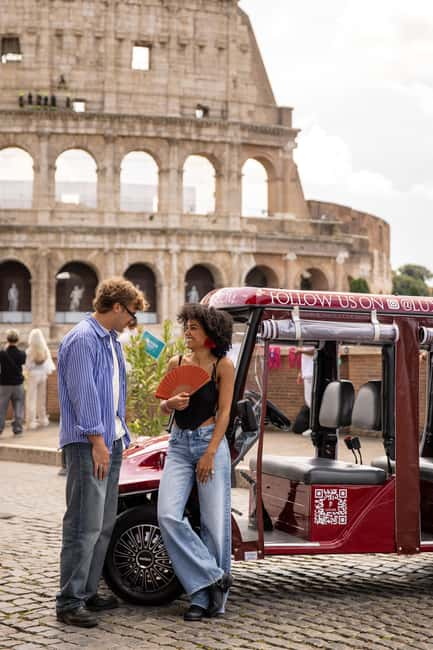
This tour is built around a series of 15-minute guided blocks, with time for your own photos throughout. The exact order stays consistent, though the operator may adjust based on weather and accessibility, so think of the day as a curated Rome circuit rather than a rigid script.
Piazza Venezia: the quick orientation stop
You start with Piazza Venezia, a classic Rome square that’s great for setting your bearings. A guide can help you connect the look of the buildings to the city’s story, so later stops feel less random and more like a timeline.
Think of this as the warm-up phase. Even if you’ve seen pictures online, being there in person helps you understand scale. After this, you’ll have an easier time noticing what’s near, what’s far, and why the city’s layouts matter.
Same city, a completely different kind of day:
- Vatican Museums & Sistine Chapel Tour with Optional Basilica
★ 4.3 · 67,413 reviews - Vatican Museums, Sistine Chapel & St Peter’s Basilica Guided Tour
★ 4.5 · 39,149 reviews - Rome: Colosseum, Palatine Hill and Roman Forum Guided Tour
★ 4.8 · 32,814 reviews - Rome: Guided Tour of Colosseum, Roman Forum & Palatine Hill
★ 4.7 · 27,897 reviews
The Pantheon: where 15 minutes can still feel like the point
Next is the Pantheon. This is one of those places where you can understand a lot quickly if someone points out the right features. With a short guided visit, you’ll likely focus on the big architectural idea and the reasons people still talk about it.
For your photos, go early in the stop window if you can. In Rome, light and crowds shift fast. If you take a few minutes to frame the shot from the best spot your guide suggests, you’ll save time later and get better results.
Theatre of Marcellus: a quieter history lesson
Then you head to the Theatre of Marcellus. It’s a spot that many people walk past while rushing between major attractions, so getting a guided moment here is a value add. Even without long wandering, you can pick up the context that makes ancient remains feel less like rubble and more like a functioning part of the city.
This stop also breaks up the heavier hitters. After the Pantheon, it’s a nice shift, and it helps you avoid the “same kind of sight overload” problem that happens on faster tours.
The additional 15-minute guided stop: flexible and access-driven
There is another 15-minute guided stop in the sequence before you reach the Jewish Ghetto. The tour notes that the itinerary can vary depending on season, weather, or area accessibility, so treat this part as a flexible insert that helps keep the route smooth.
That means you might get a different supporting landmark depending on the day. The upside is usually practical, like timing around crowds or street access.
Jewish Ghetto: stories you can actually hold onto
Next is the Jewish Ghetto. This is one of those areas where history is not just on plaques, it’s in the urban fabric. A good guide can make the area make sense, and it also helps you notice details you’d miss if you were just passing through.
Because your time at each stop is structured, you’ll want to keep your questions simple and focused. Ask what to look for as you walk, not what the full history is. In a short block, that gets you the best payoff.
Vatican City: a big-name stop with a manageable footprint
Then you go to Vatican City. With a 15-minute guided window, it’s not a slow art-history retreat. It’s more about getting the essentials right, learning how to read the area, and snapping photos in the right direction.
For practical photo advice, pay attention when your guide points out viewpoints. In Vatican City, the angle matters a lot. A quick reposition can be the difference between a flat, boring shot and one that looks like the postcard but with context.
Colosseum: seeing it, understanding it, and getting photos that work
Then comes the Colosseum. This is likely the most intense crowd area on the route, which is exactly why timing matters. Even if 15 minutes seems short, it’s enough to grasp the key idea behind the site and get you pointed toward the best photo options.
I’d prioritize one or two photos you truly want. Don’t try to shoot everything in one burst. Use the guide time to learn what to look for, then use your own time to frame those shots.
Roman Forum: the “why this matters” follow-up
After the Colosseum, you’ll visit the Roman Forum. This is where people often feel the Colosseum is like the stage, and the Forum is the setting. A guide can help you connect what you saw to what it was used for.
If you’re trying to understand Rome as a lived city rather than a set of ruins, this is where it clicks fast.
Circus Maximus: imagining scale, not just ruins
Next is Circus Maximus, the long stretch where ancient chariot races once took place. The guide time is useful here because the site’s main power is scale. You can walk through it and still not fully feel the size unless someone helps you picture how it worked.
This stop is also a good break from the most iconic “vertical” sights. Here you can look across the space and think about how crowds once moved.
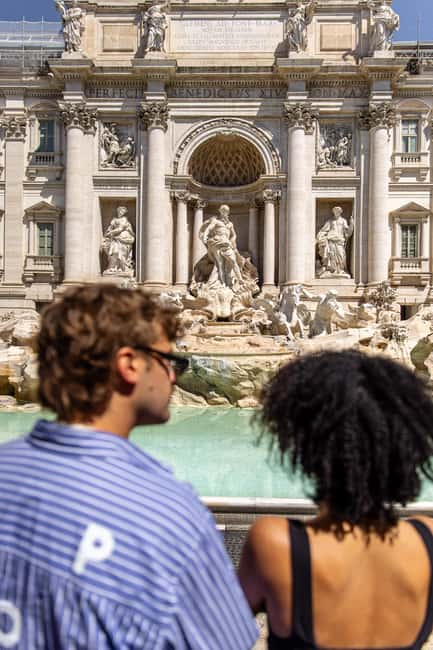
Trevi Fountain: toss the coin, then look for the details
Then you reach Trevi Fountain. This is famous for a reason, but it can also turn chaotic. The structured timing helps because you’re not stuck there all day. You get the classic moment, plus enough time for pictures that aren’t just a blur.
Focus on a couple of key angles. If your cart and guide timing put you at a busy moment, use the first minute to find where you can stand comfortably for photos, then wait for the light and crowd flow.
Piazza Navona: the square that feels like theater
Next is Piazza Navona. This square tends to feel lively even when you’re not there for a special event. With a guided stop, you learn what makes the geometry and layout matter and why it’s such a memorable pause.
For photos, Piazza Navona rewards people who step back. Try getting one full-square shot early, then a close-up detail shot after. You’ll end up with variety without wasting time.
Pincio Gardens: your calmer landing
Finally, you reach Pincio Gardens, which is a nice way to end. After the busiest sights, a garden viewpoint helps you slow down and take in the city from a better angle.
It’s also a good place to check your photos and celebrate the day. By this point, you’ve got enough stops in your head that the city starts to feel like a connected story.
What the guide does that makes the tour feel worth it
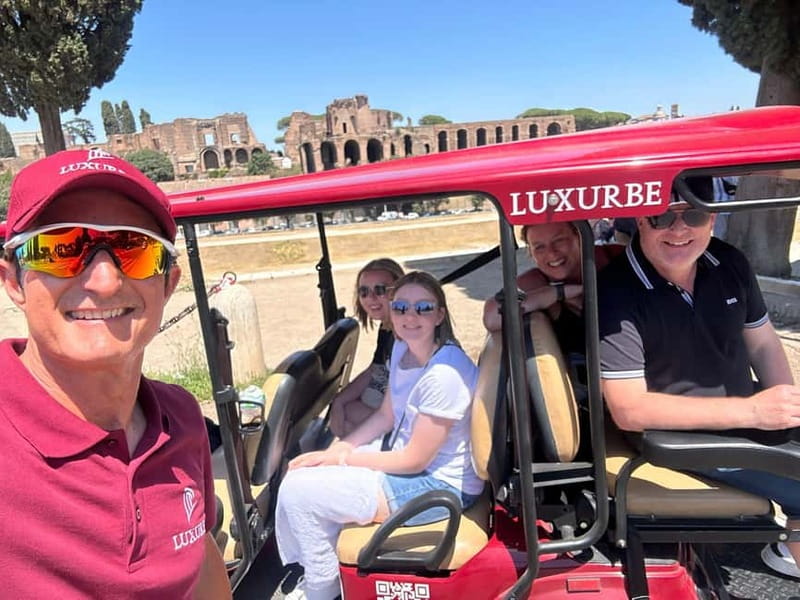
The strongest reviews point to one thing: the guide matters. Guides such as Daniel have experience handling Rome’s practical headaches, like traffic, closed roads, and crowding. He’s the type who can keep a small group moving without skipping the key moments or cutting your photo time too short.
You’ll also benefit if your guide is comfortable explaining in English, Italian, or Spanish. You get live guiding in those languages, plus audio support when needed. That combination keeps the experience from turning into a guessing game.
I love the way this tour uses short, targeted explanations. Instead of a long lecture you barely remember, you get just enough context to see what’s in front of you. It makes the photos more meaningful, because you know what each scene represents.
Value and price: what $90.33 buys you in real terms
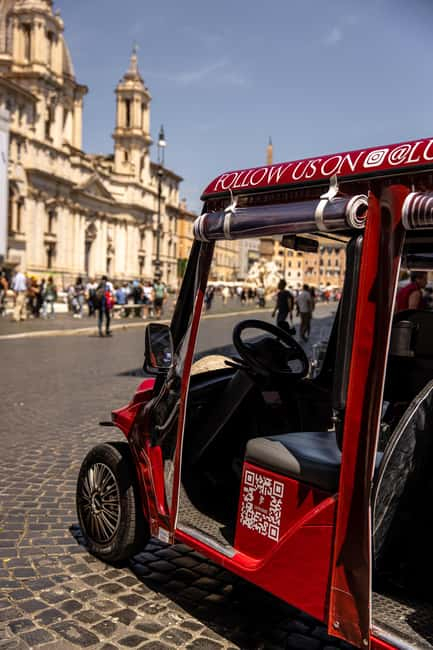
At $90.33 per person for about 3 hours, this isn’t a “cheap and cheerful” option, but it also isn’t priced like a private driver. The value comes from stacking a lot of big-name sights into one smooth route.
You’re paying for:
- Electric transportation that helps you cover more ground without constant walking
- Guiding that gives you context at each stop
- Photo support, because you get photos of your activity
- Headsets when required, which improves the experience in noisy areas
If you try to do these sights solo, you’ll spend serious time on transit, and you’ll likely miss the “what to look for” piece at several locations. If you’re short on time in Rome but want the major highlights, this is a sensible spend.
If you hate being on a schedule, or you want slow, lingering visits inside major sites, then the price may feel less justified. In that case, you might prefer a longer, more flexible day tour.
Who this tour is best for, and who should choose something else
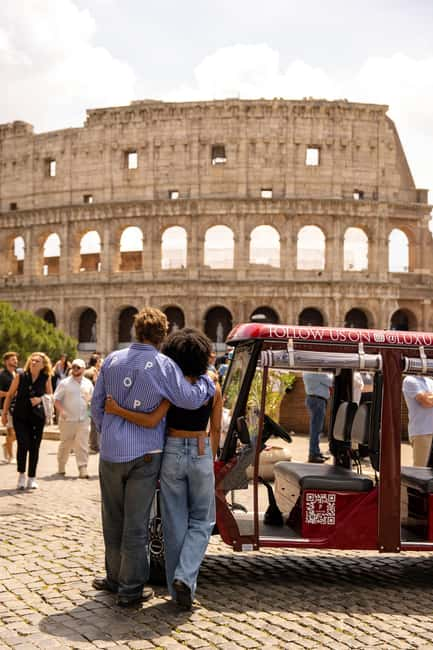
This tour fits perfectly for:
- Couples who want a “seen the classics” day without the exhaustion
- Families with kids old enough to enjoy a moving tour (it is not suitable for children under 3)
- Small groups who like guided context and photo time
- Visitors who want efficient coverage of key areas, including Vatican City and the Colosseum zone
It may be less ideal if:
- You need wheelchair access, since it’s not set up for that
- You want long indoor time at any one site
- You travel with luggage or large bags, since those are not allowed
- You prefer totally unscripted sightseeing with no guided blocks
Practical tips to make the most of your 3 hours
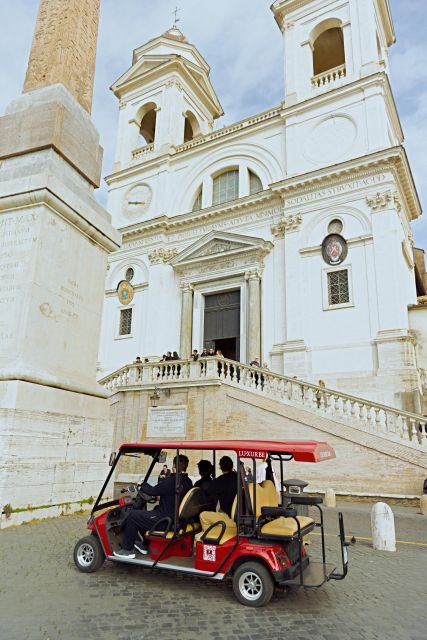
First, dress for walking, even if you’re in a cart. Rome sidewalks and stop areas can require short stretches on foot.
Second, decide ahead of time which sight you want the best photos from. Then listen for the guide’s directions during those stops. Quick positioning helps, especially at Trevi Fountain and the Colosseum area.
Third, keep your questions simple. In a short 15-minute guided block, the best questions are ones that help you see what’s in front of you, like what feature matters most or where to stand for photos.
Finally, go with the right expectations: this is a fast, curated circuit. You’ll learn a lot, but you’re not getting a full museum day.
Should you book this Golf Cart Tour of Rome?
Book it if you want to see Rome’s most recognizable landmarks and a few meaningful areas in just 3 hours, with a guide who helps you understand what you’re looking at. The electric cart format is a real advantage, and the structure keeps you from losing the day to transit and long lines.
Skip it if you want to linger, go deep into interiors for a long time, or need wheelchair accessibility. Also skip if you hate schedules. Rome is better when you pick the right pace for your style, and this one is clearly built for efficient sightseeing.
If your goal is to get your bearings fast and leave with photos plus context, this tour is a strong choice.
FAQ
How long is the Golf Cart Tour: Highlights of Rome?
The tour duration is 3 hours.
Where does the tour start and end?
It starts at Via dei Condotti, 61, 00187 Roma RM, Italy and ends back at the meeting point.
What sights are included on the tour?
The tour includes guided stops at Piazza Venezia, the Pantheon, Theatre of Marcellus, the Jewish Ghetto, Vatican City, the Colosseum, the Roman Forum, Circus Maximus, Trevi Fountain, Piazza Navona, and Pincio Gardens (plus one additional guided stop in the sequence).
Is hotel pickup available?
Pickup is optional. If you select pickup and drop-off included, the golf cart driver will wait outside your hotel, and due to Rome traffic there may be a waiting time of up to 20 minutes.
What languages are available for the live guide and audio?
The live tour guide is available in English, Italian, and Spanish. Audio is also included in English, Italian, and Spanish.
What should I bring, and what isn’t allowed?
Bring comfortable shoes and weather-appropriate clothing. Not allowed: pets, weapons or sharp objects, baby strollers, and luggage or large bags. The tour is also not suitable for unaccompanied minors and wheelchair users.
Recently reviewed around Rome
- Ancient Etruscan Civilization Tour from Rome★ 5.0 · 16 reviews
- Colosseum with Arena Floor Express Guided Tour★ 3.5 · 22 reviews
- Private Tour – Ancient Ostia★ 5.0 · 42 reviews
- PRIVATE Appian Way and Lake Albano Ebike Tour with Italian Lunch★ 5.0 · 12 reviews
- Ancient Appian Way and Roman Countryside E-Bike Tour★ 4.5 · 13 reviews
- Ancient Appian Way PRIVATE Bike Tour★ 5.0 · 89 reviews
- Catacombs and Hidden Underground Rome: Small Group Max 6 People★ 5.0 · 293 reviews
- Amalfi Coast Day Trip from Rome by High-Speed Train★ 4.5 · 162 reviews
Golf Cart Tours, compared.
Rome by Golf Cart Private Tour: Beyond the Landmarks
Read our review →
Rome on a Golf Cart Semi-Private Tour Max 6 with Private Option
Read our review →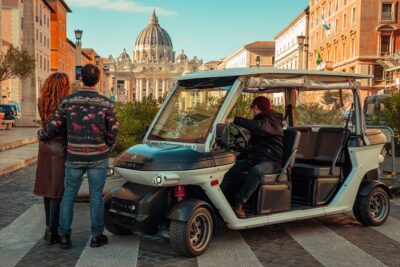
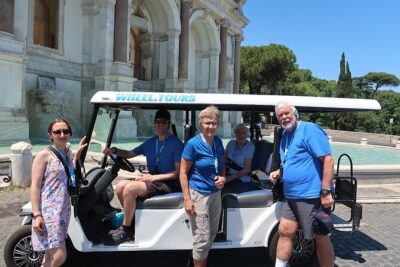
Rome Highlights City Tour by Golf Cart with Gelato
Read our review →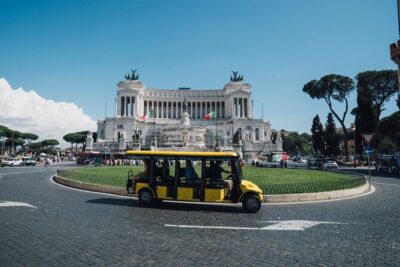
Golf Cart Small-Group Guided Tour: Rome City Highlights
Read our review →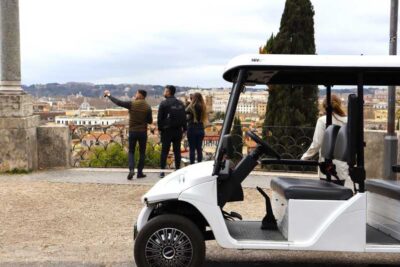
Private/Group 4 Hours Golf Cart SightseeingTour
Read our review →
Browse the lists this tour appears in