
Reviewed · COLOSSEUM TOURS
Rome: Colosseum, Roman Forum and Palatine Hill Group Tour
Rome’s ancient core comes in fast and loud: the Colosseum, the Roman Forum, and Palatine Hill, all tied together in one tight 2.5 to 3 hour walk. You get a story-led route through the key monuments, plus fast-track entrance so you spend more time looking up and less time shuffling in queues.
I like two things a lot. First, the guided option uses a headset system, so you can actually follow the talk even when other groups are making noise. Second, the guide and stops cover both the drama (gladiators) and the tech (how the arena worked), so it feels more than just sightseeing. On the guided side, I’ve heard guides named George, Riccardo, Barbara, and Simon praised for keeping the group moving without leaving people behind.
One drawback to plan for: Palatine Hill means stairs and uneven ground, and the tour is not set up for wheelchair access. If you’re dealing with mobility limits, you’ll want to think carefully before booking.
Key takeaways before you go
- Fast-track entry saves your energy right at the Colosseum security and gate area
- Headsets keep the talk clear on a busy day, especially at crowded photo stops
- Inside-the-arena details make it click trapdoors, mechanisms, and spectacle logistics
- Palatine Hill gives the “where emperors lived” payoff with big views across Circus Maximus and the Forum
- You can choose live guide or app audio depending on how you like to travel
Colosseum and Ancient Rome in 2.5 to 3 Hours
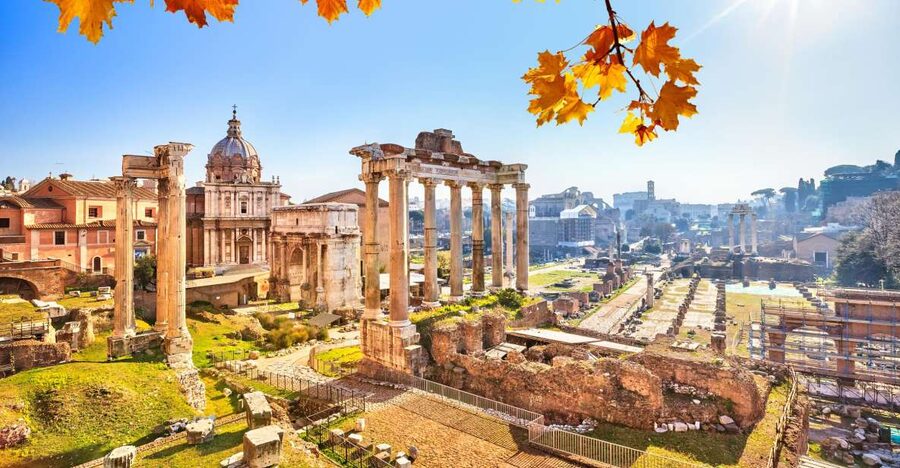
This tour is built for people who want the big hits without losing half a day to logistics. In one go, you cover the Colosseum, the Roman (Imperial) Forum, and Palatine Hill, with time for photos and the kind of explanations that help you understand what you’re actually looking at.
The pacing is “see it, then make sense of it.” You won’t just walk past ruins. You’ll hear why these places mattered to the Roman Republic first, and then to the Empire. That context is what turns stone into a story, especially when the guide points out things like where Caesar’s cremation ties to a temple spot, or how the Forum’s layout reflects political power.
If you’re a first-time Rome visitor, this is a strong way to get your bearings fast. If you’re returning and want the must-sees without building your own route from scratch, it also works. The duration is short enough that you can still do other neighborhoods afterward, but long enough to feel like you had a real experience, not a photo sprint.
More ways to see the Colosseum:
- Rome: Colosseum, Palatine Hill and Roman Forum Guided Tour
★ 4.8 · 32,814 reviews - Rome: Guided Tour of Colosseum, Roman Forum & Palatine Hill
★ 4.7 · 27,897 reviews - Rome: Colosseum & Forum with Audio Guide App -Optional Arena
★ 4.2 · 24,770 reviews
Picking Your Start Point and Avoiding the Security Surprise
Your meeting point can vary by option, which matters because the Colosseum area is crowded and there are multiple entrances around the site. The listed start options include Piazza di San Clemente, Clivo Argentario 1, and Via Labicana 96.
Here’s the practical note: the Colosseum security checks the names and ID cards of each visitor. That can add waiting time beyond what you expect. For that reason, I recommend arriving early, and having your ID card or passport ready before you get in the line.
Also, be on time. If you arrive late for the meeting time, it won’t be possible to join the group or reschedule, since tickets cannot be amended. In real terms, that means you should buffer your walk from your hotel and give yourself extra minutes.
One more rule that can catch people off guard: no large bags, no backpacks, no selfie sticks, and no pets. And yes, even sunscreen is listed as not allowed. Wear comfortable shoes, because you’ll be on your feet for the walk between stops, plus any climb on Palatine Hill.
Entering the Colosseum: Fast-Track and Smart First Impressions
The most important word here is fast-track. With your ticket, you skip the long lines through a separate entrance, and you get into the Colosseum area with less stress.
Another smart touch is that you get an outside orientation before going in. You’ll get a detailed description of the Colosseum from the outside, so when you step inside you’re not staring at architecture with no framework. Then you’ll head inside for the guided portion or app audio, depending on what you booked.
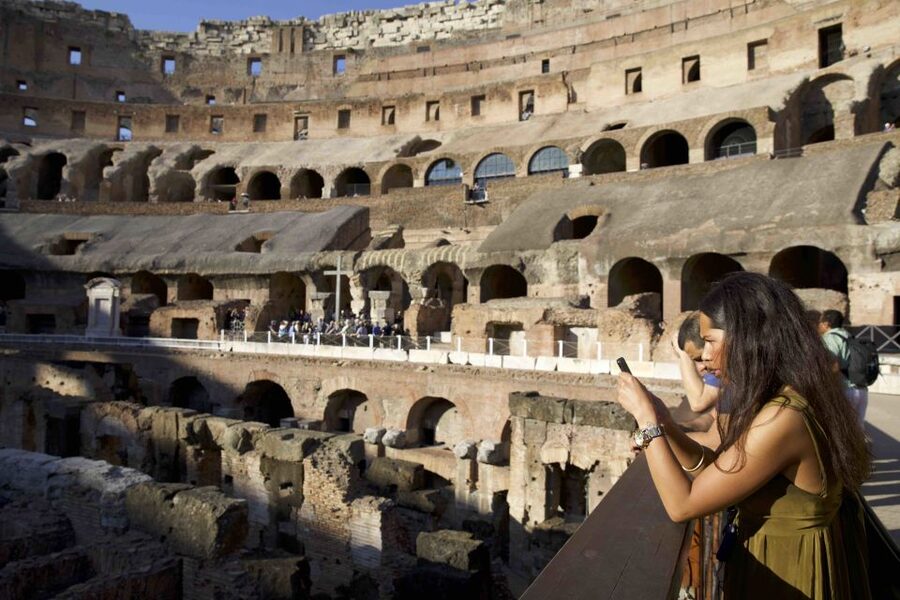
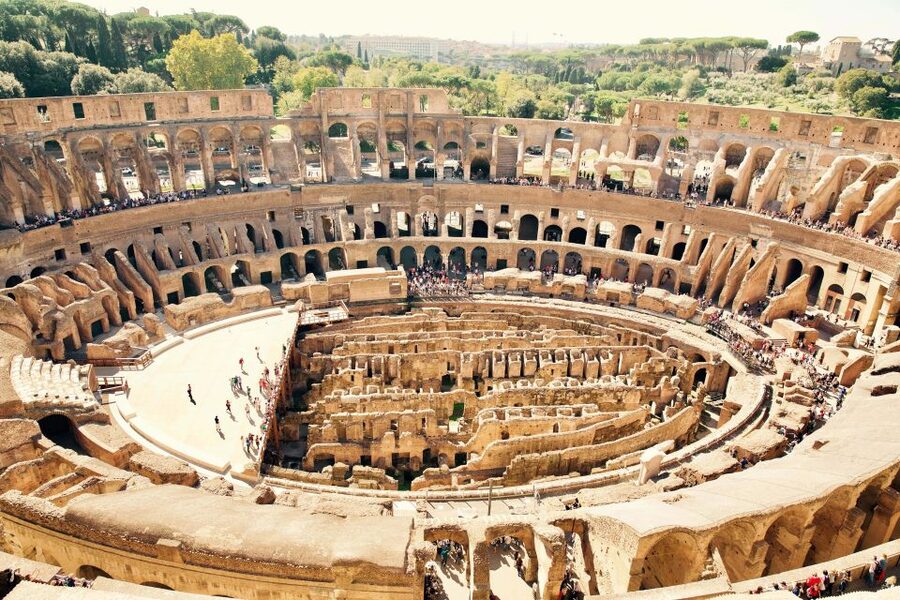
Once you’re in, the tour aims for views. The route includes a stop for panoramic views of the best-preserved part of the Colosseum, and you also continue to the second tier for better sightlines. That’s key because the arena isn’t just a floor. You’re meant to look at structure, levels, and scale.
Photo timing can be decent if you go with the flow. The tour plan builds in scenic viewpoints on the way, including photo stops at the Colosseum itself and later at arches. If you’re traveling solo, it’s also helpful, because the guide can point you toward angles that are usually hard to find when you’re standing in the busiest crowd.
Gladiators, Trapdoors, and How the Arena Actually Worked
Inside the Colosseum, the story goes beyond gladiators as a headline. You get the mechanics behind the spectacle, including trapdoors and the systems used to animate the games. In other words, the tour helps you picture how the show was staged, not just what people watched.
You’ll also hear the more theatrical side: mock sea battles, wild animal spectacles, and where lions were kept before the action. The details about cages and staging give you a mental map for where surprises could be introduced during the show.
This is where the headset system becomes more than a convenience. When you’re in a high-noise environment, you can miss half the story if you’re relying on shouted instructions. With the live guided option, you get headsets to hear the guide clearly, which keeps the experience from turning into a “look, then guess” museum visit.
If you choose the self audio-guided option, you still get story structure. The app audio includes multilingual storytelling in English plus Chinese, German, French, Italian, Polish, and Spanish, and it includes 44 points of interest. The point is that you’re not wandering alone with random audio. You’re moving through key spots with an explanation attached.
Same city, a completely different kind of day:
- Vatican Museums & Sistine Chapel Tour with Optional Basilica
★ 4.3 · 67,413 reviews - Vatican Museums, Sistine Chapel & St Peter’s Basilica Guided Tour
★ 4.5 · 39,149 reviews - Rome: Colosseum, Roman Forum and Palatine Hill Guided Tour
★ 4.5 · 23,903 reviews - Rome: City Sightseeing Hop-on Hop-off Bus with Audioguide
★ 4.0 · 16,045 reviews
Roman Forum Stops That Teach You How to Read Power
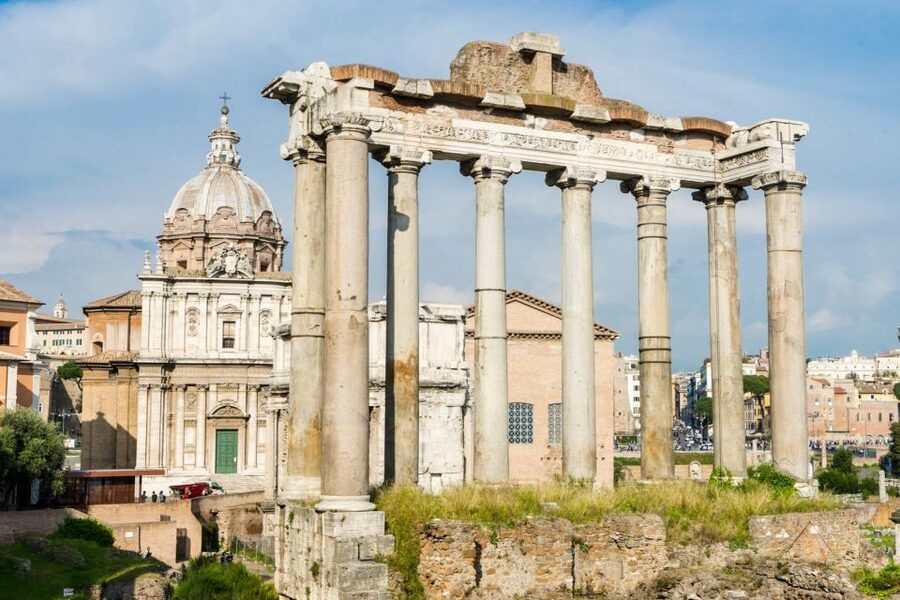
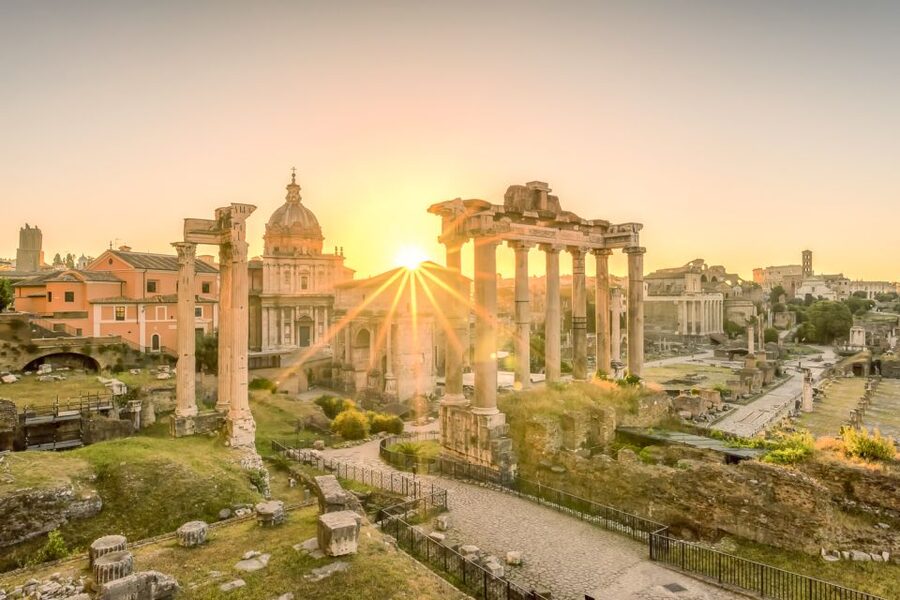
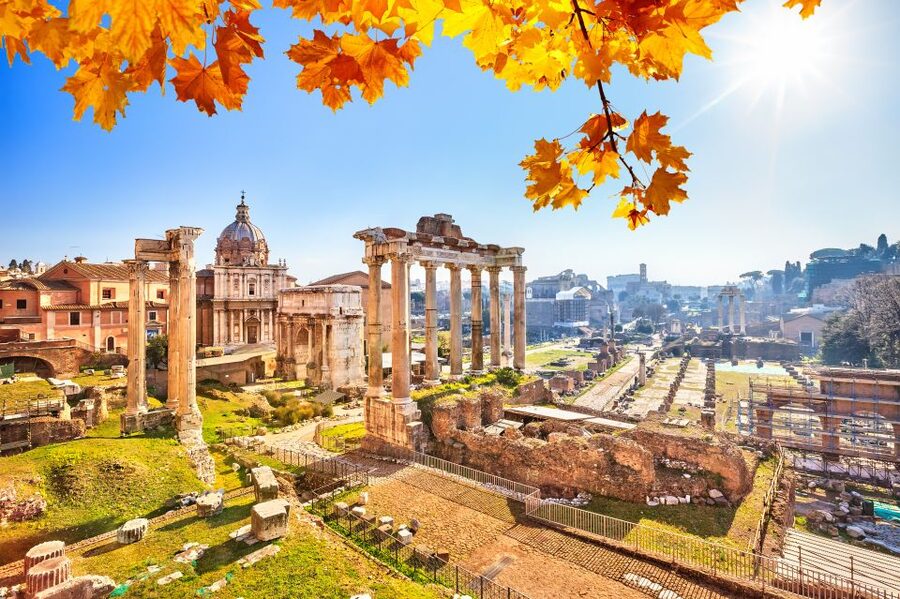
After the Colosseum, the route shifts from entertainment architecture to the political and ceremonial heart of ancient Rome. The Roman Forum is where you start seeing how daily life and government rubbed shoulders.
The tour includes a photo stop and a guided walkthrough at the Forum, with around 30 minutes allotted there. That time is short, but it’s enough to cover several landmark stops without turning it into a blur.
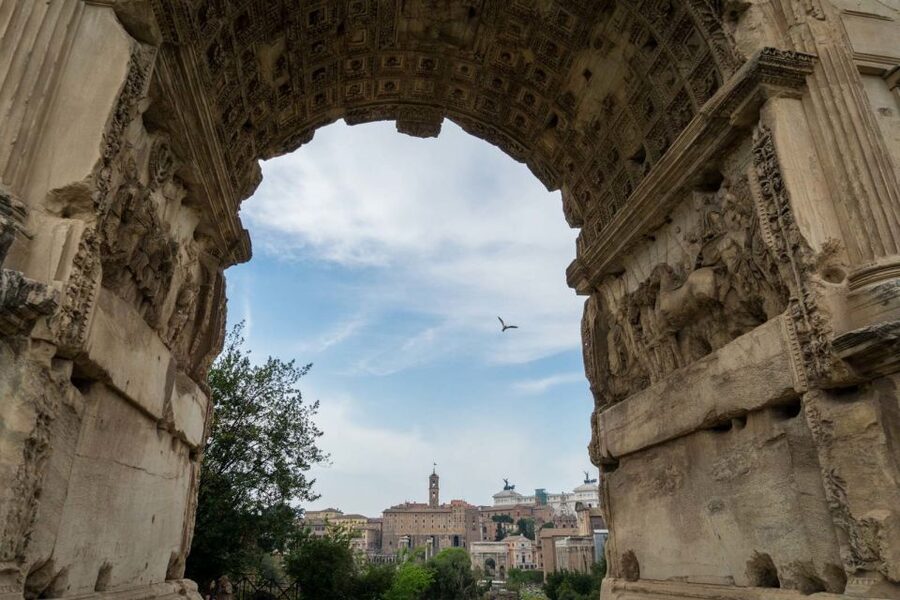
As you move through the Forum area, you’ll see and learn about major sites tied to governance and public life, including the Senate House and Curia of the Senate House. You’ll also pass by structures like the Arch of Titus and the Basilica of Maxentius, which help you understand how Rome used architecture to mark power and memory.
One classic problem at the Forum is that it can feel like a pile of stone. Here, the payoff is that the guide ties each stop to a bigger thread, including the story of the Roman Republic and its most important monuments. If you’ve ever looked at ruins and thought, I have no idea where I am, this is the part where the tour helps you get your bearings.
Arch of Constantine and the Art of Seeing the City’s Signature Moments
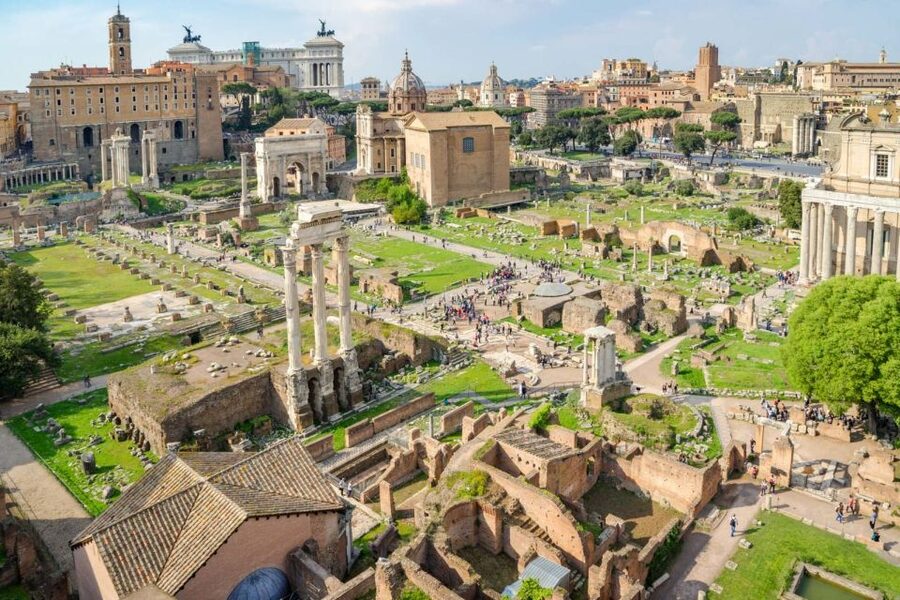
Between the biggest zones, you get smaller, quick stops that are perfect for resetting your brain and getting photos.
One of those is the Arch of Constantine, with a photo stop and a brief guided visit. Another is the Arch of Titus, again paired with photo time and guided commentary. These arches aren’t just pretty backdrops. The guide helps you connect them to Roman public messaging, where monuments were a way to project victories and legitimacy long after the event was over.
At the Basilica of Maxentius and other landmark ruins, the tour offers short guided walk segments. Those micro-stops matter because they keep you from feeling like you’re only visiting one giant site. Instead, you’re moving through a stitched-together Roman world, with each stop adding a piece to the bigger picture.
Palatine Hill: Where the Emperors Lived and You Can See Both Sides
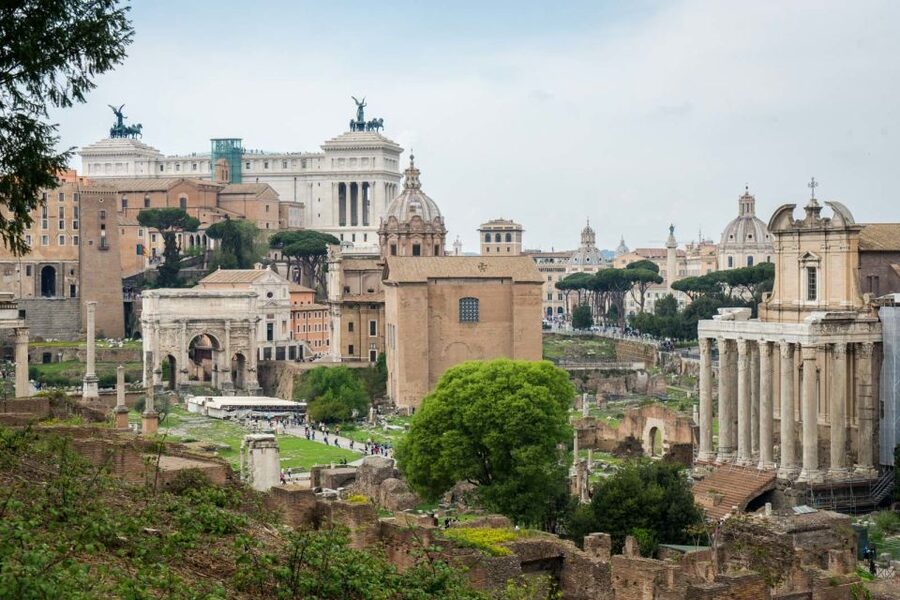
Palatine Hill is the part many people love most because it turns “Roman Empire” from a vague idea into a physical place. The tour includes guided time here, plus a walk with scenic views on the way.
You’ll see where elite emperors took residence and you’ll get views across Circus Maximus and toward the Roman Forum. That view is more than a photo moment. It helps you understand why Palatine Hill mattered: you get a sense of dominance over the city plan and a direct visual link between power and public space.
Palatine Hill also naturally introduces the reality of walking in archaeological sites: uneven ground and stairs. Even though the tour can be managed for many people, it is not wheelchair accessible. If you’re booking for someone with mobility issues, you should think about steps and the general effort of moving between levels.
Julius Caesar’s Temple Spot and the Forum’s Key Landmarks
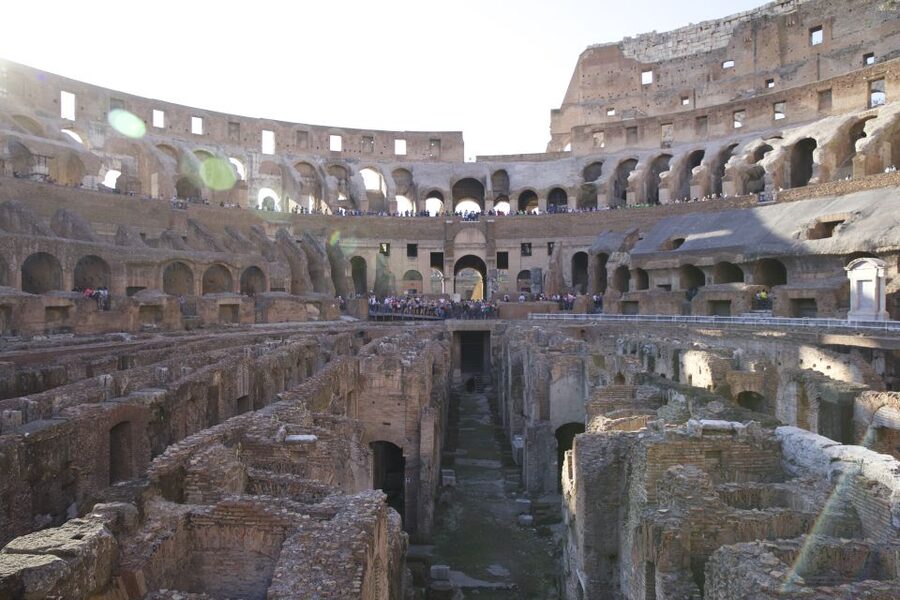
One of the most interesting stops is the Temple of Julius Caesar, described as being built in the same spot where his body was cremated. That’s the kind of detail that makes the Forum area feel personal, not generic.
The tour also includes several other specific landmarks, with time for guided explanations and photo opportunities. These include the Temple of Antoninus Pius and Faustina, the House of the Vestal Virgins (mentioned as part of the route’s broader viewing), and the Arch of Septimius Severus. Each one adds a different angle on how Rome organized religion, power, and commemoration.
You’ll also see things like the Curia of the Senate House and the Senate House area. The goal is to help you understand that the Forum wasn’t just a background. It was where the political story played out in public, and where Romans made their institutions visible through stone.
Guided Tour vs Self Audio on Your Phone
You can do this tour in two ways, and your choice should match how you like to travel.
If you book the guided tour, you get a professional, licensed tour guide who leads the group and a headset system so you can hear even at busy spots. The live guide option is offered in English (and the tour also lists multiple other languages), and the route includes fast-track entrance and guided explanation at the key stops.
If you book the self audio-guided tour, there’s no live guide. Instead, you download and use a multilingual storytelling audioguide on your smartphone. It covers 44 points of interest, in English plus several other languages, and it’s designed so you can visit at your leisure without following a group.
How to decide:
- Choose the live guide if you want a human to answer questions and keep you moving through the most important pieces.
- Choose audio if you want flexibility, quieter pacing, or you’re comfortable reading a site while listening.
Either way, don’t forget headphones and a charged smartphone is listed as important. And for the app option, the mobile device is not included, so you’ll need your own.
Value for Money: What Your $28 Really Buys
The price listed is $28 per person, and that’s not just “entry plus a story.” Here’s the value math as it’s presented: the Colosseum, Palatine Hill, and Roman Forum tickets cost 18 euros for adults. The additional amount covers the professional tour guide (if you pick the guided option), the headset system, staff support, and taxes.
That’s a meaningful difference because the real pain at the Colosseum is often the lines. Fast-track entry is included, and with headsets you reduce the frustration of crowded audio chaos. On top of that, the tour packs the key zones into a short window, which is valuable if you’re trying to keep your Rome days efficient.
In plain terms: if you hate line time and you want a structured tour that explains what you’re seeing, this is a solid value. If you’re the type who already knows your Roman landmarks and you prefer total freedom with zero guide structure, you might compare against doing it entirely on your own. But for most first-timers, paying for fast-track plus interpretation is money well spent.
When to Go and What to Wear in July, August, and Rain
This tour runs in all weather. But one warning is pretty important: the Colosseum management does not provide the possibility to amend or cancel admission tickets for rainy days. So you should plan for the fact that you might need to go even if the weather is rough.
Heat is the other real factor. In July and August, the tour lasts 2 hours instead of 2.5 to 3 hours due to excessive heat, and the itinerary may vary. If you’re visiting in summer, go early in the day and wear sun-protecting layers that comply with the site rules. Sunscreen is listed as not allowed, so plan clothing and shade instead.
What to wear is straightforward: comfortable shoes are recommended. Avoid bringing items the site won’t let through. And if you’re doing self audio, have your headphones ready before you arrive, not halfway through your walk.
Who This Tour Suits Best (and Who Should Think Twice)
This tour fits best if you want:
- the big three sites, Colosseum, Roman Forum, and Palatine Hill
- fast-track entry so you reduce line time
- a guided explanation that connects architecture to stories like gladiator combat and Roman engineering
It also works well for groups that want structure without feeling rushed. People have praised guides like George for being patient and informed, Riccardo for being accommodating, and Barbara for staying engaging. Those details matter because the Colosseum can feel overwhelming, and a good guide helps you focus.
You should think twice if you have mobility limits, because the tour is not accessible for wheelchairs and Palatine Hill involves walking and steps. You’ll also want to consider your stamina if you’re coming with any injury or balance issues, since you’re moving between several stops and levels.
Should You Book This Colosseum, Forum, and Palatine Hill Tour?
I’d book this if you want to see the Colosseum and understand it, not just photograph it. The fast-track entry is the practical win, and the way the tour connects spectacle, engineering, and politics is the emotional win.
Do it with the live guide if you like a human voice and you want help reading the ruins. Consider the self audio option if you prefer flexibility and you’re comfortable pacing yourself with a smartphone route.
If you’re short on time in Rome and you want a day that feels focused, this is a strong choice. If you dislike walking, hate crowds, or need wheelchair-friendly access, then look for an alternative plan that better matches your needs.
FAQ
How long is the Colosseum, Roman Forum, and Palatine Hill group tour?
It runs about 2.5 to 3 hours, with starting times depending on availability. In July and August, it lasts 2 hours due to excessive heat.
Does the tour include fast-track entrance to the sites?
Yes. The Colosseum, Palatine Hill, and Roman (Imperial) Forum ticket includes fast-track entrance.
What’s included if I choose the guided tour?
You get a professional, licensed English-speaking tour guide, a headset system to hear the guide, and Colosseum, Palatine Hill, and Roman Forum tickets with fast-track entrance.
What’s included if I choose the self audio-guided option?
You get a self audio-guided experience with a multilingual storytelling audioguide in English and other listed languages. The tour ticket access with fast-track entrance is included, and the audio points of interest are included while you’re there.
What do I need to bring?
Bring an ID card or passport, comfortable shoes, and a charged smartphone. Headphones are listed as needed, and pets, luggage or large bags, selfie sticks, backpacks, and sunscreen are not allowed.
Is this tour wheelchair accessible?
No. It is listed as not accessible for wheelchairs and not suitable for people with mobility impairments.
Recently reviewed around Rome
- Rome: Castelli Romani Hop-on and Hop-off Tour★ 4.9 · 32 reviews
- Rome: Food Tour near Vatican City with Wine★ 4.8 · 100 reviews
- Rome: Scavenger Hunt Self-Guided Tour★ 4.6 · 15 reviews
- Hidden Rome: Small Group E-Bike Tour with Street Food Stops★ 4.9 · 144 reviews
- Rome: Highlights Tour in Golf Cart★ 4.9 · 28 reviews
- Rome: Hop-on Hop-off Bus Tour and Colosseum Experience★ 3.4 · 163 reviews
- Rome: Guided Haunted Rome Ghost Tour with Dowsing Rods★ 4.8 · 63 reviews
- Rome: Highlights Photo Shoot for Memorable Moments★ 5.0 · 32 reviews
Colosseum Tours, compared.
Colosseum, Roman Forum & Palatine Guided Tour
Read our review →
Colosseum, Palatine Hill and Roman Forum Guided Tour
Read our review →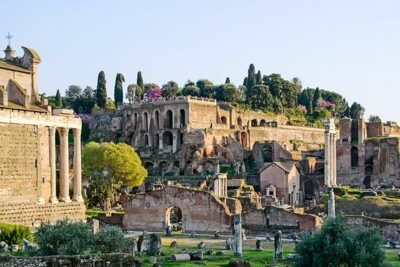
Guided Tour of Colosseum, Roman Forum & Palatine Hill
Read our review →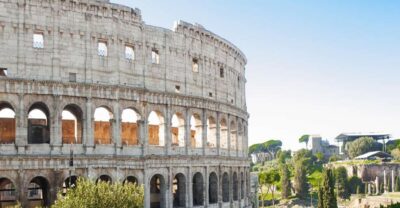
Colosseum & Forum with Audio Guide App -Optional Arena
Read our review →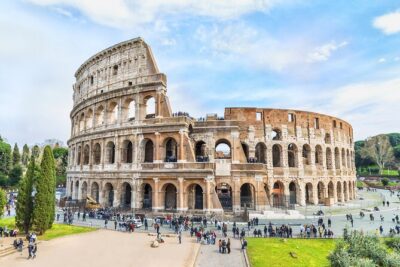
Colosseum, Roman Forum and Palatine Hill Guided Tour
Read our review →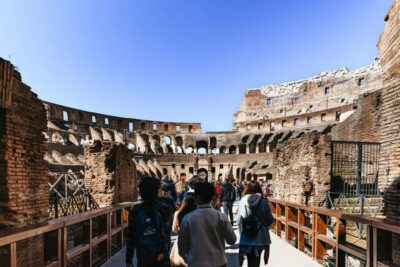
Colosseum, Forum & Palatine Hill Tour & Optional Arena
Read our review →
Colosseum, Roman Forum, Palatine with Multimedia Video
Read our review →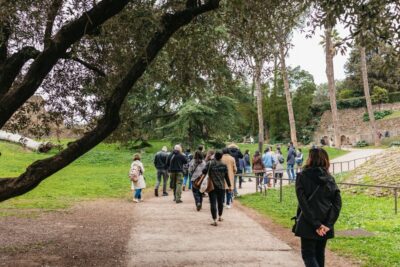
Colosseum, Palatine Hill & Roman Forum Guided Tour
Read our review →Browse the lists this tour appears in