Reviewed · TOURS
Dark Heart of Rome: Facts, Legends, and Mystery Tour
Rome gets all the attention in bright daylight, but this night walking tour shows a different city. I love the way the stories mix facts with ghostly legends in a way that actually feels fun, not forced, and I love that the route takes you off the usual checklist into places like Campo de’ Fiori, Piazza Farnese, Via Giulia, and finally Castel Sant’Angelo. Guides like Elisabetta, Serena, and Rob seem especially good at turning the evening walk into a living story, with clear English and a real sense of showmanship.
One thing to plan for: this is a walking tour on historic streets, so you’ll want solid shoes and a willingness to keep moving. Also, it is not suitable for wheelchair users or people with mobility impairments, and strollers are not allowed, so it is best for travelers who can comfortably handle uneven sidewalks and some stairs.
Key Highlights Worth Prioritizing
- Campo de’ Fiori after dark, including the square’s darker past tied to public executions
- Piazza Farnese’s fountain setting, with granite stone basins you do not really get to notice on faster tours
- Via Giulia at night, one of the first planning projects of Renaissance Rome
- Photo stops that set the mood, especially around Via del Governo Vecchio and Castel Sant’Angelo
- Castel Sant’Angelo as Hadrian’s Mausoleum, seen in its evening glow
- Guides who tell stories clearly, with English that is easy to follow and answers for your questions
Why Dark Heart of Rome Hits Different After Sunset
If you only see Rome from inside buses or between museum opening hours, you miss a huge part of the city. At night, the streets feel smaller and the details get sharper. That is exactly what this tour leans into: a 90-minute nighttime walk where Roman legends and real historical context play off each other.
The format works because it is not just spooky for spooky’s sake. You are walking through recognizable landmarks, but you are also given a lens to interpret them. Campo de’ Fiori is not presented as a pretty square, it is presented as a place tied to events that made Rome’s streets feel dangerous and public. Piazza Farnese is not just another plaza, it becomes a setting for fountains and urban design details. And when you reach Castel Sant’Angelo, you are not just admiring a silhouette on the river, you’re thinking about what it was originally built to represent.
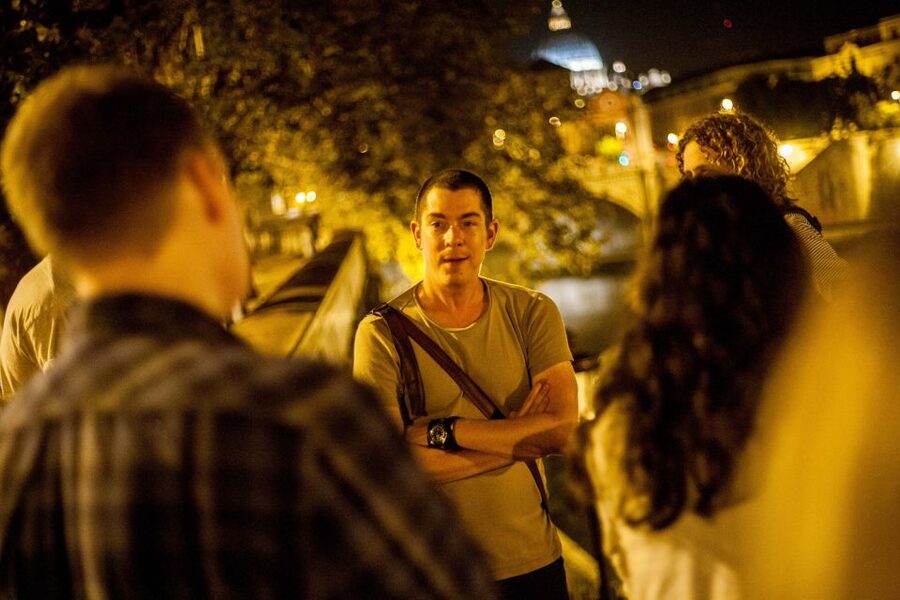
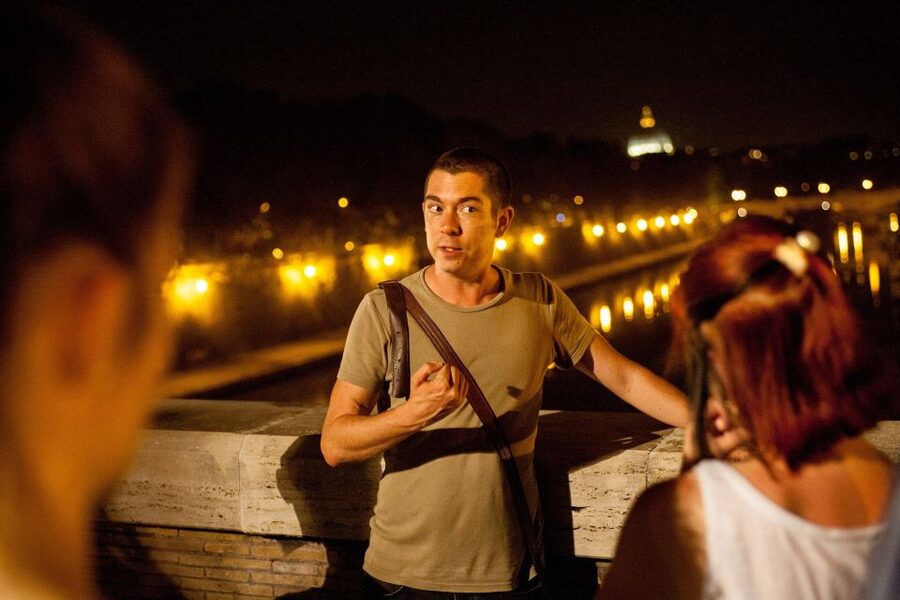
Guides are central to the experience. In the best moments, the guide’s storytelling style makes you slow down naturally, so you notice the street angles, the way sightlines open toward the Tiber, and the quiet corners where a legend feels believable. People often describe the guides as entertaining, theatrical, and very good at speaking clearly, which matters when you are walking and the group is spread out.
Other things people book around Rome:
- Vatican Museums & Sistine Chapel Tour with Optional Basilica
★ 4.3 · 67,413 reviews - Vatican Museums, Sistine Chapel & St Peter’s Basilica Guided Tour
★ 4.5 · 39,149 reviews - Rome: Colosseum, Palatine Hill and Roman Forum Guided Tour
★ 4.8 · 32,814 reviews
Meet at San Andrea della Valle, Then Walk a Story-Shaped Route
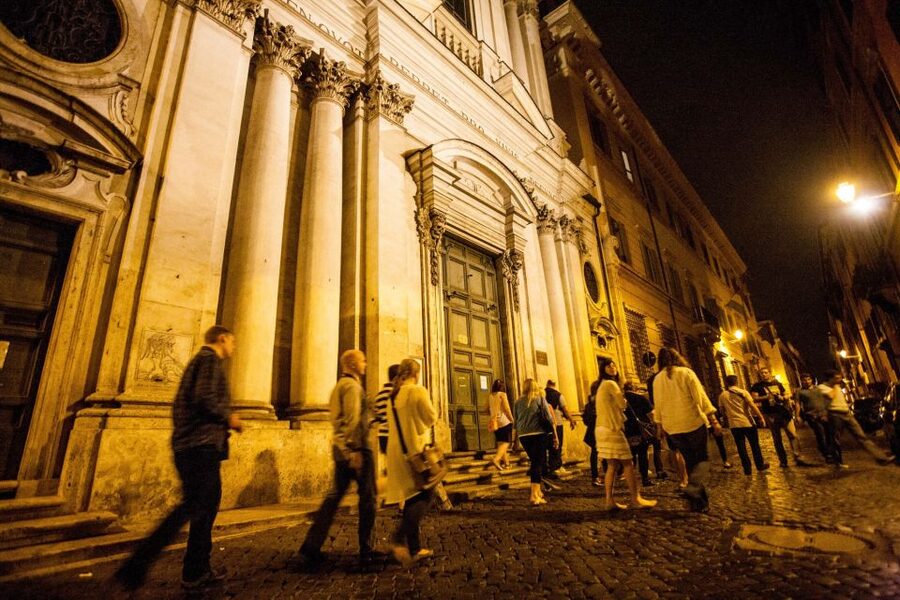
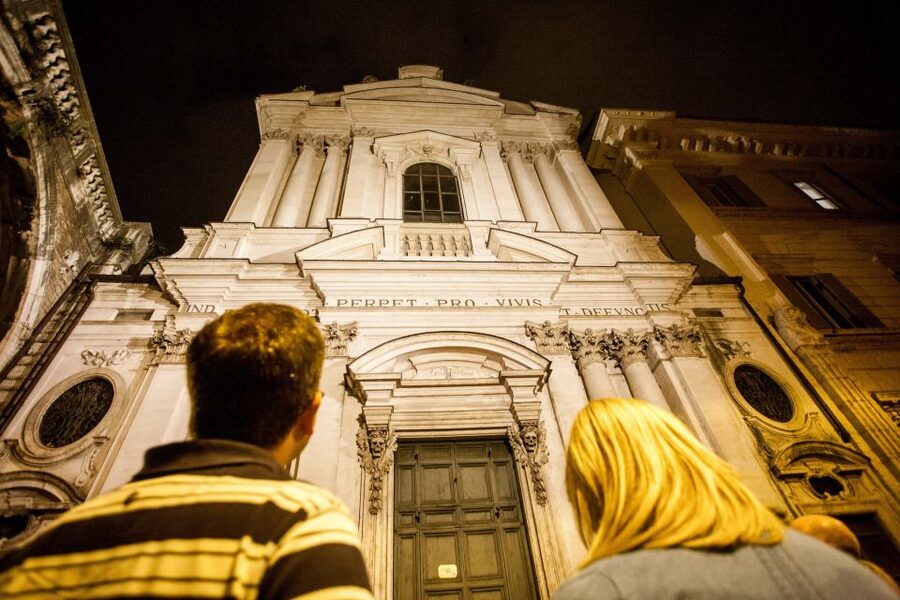
The tour starts at the steps of San Andrea della Valle Church on Corso Vittorio Emanuele II. The meeting point is about 150 meters from Largo di Torre Argentina, on the left-hand side heading toward the Tiber River. It’s near Piazza Vidoni and Piazza Sant’Andrea della Valle, and the guide wears blue attire.
Why this start location is practical: you are already in the thick of Rome’s center, so you can arrive on foot from other nearby sights. You also get oriented quickly, because the walk immediately moves you into the older street grid and toward key squares.
From there, you’ll be guided through a sequence that builds atmosphere. You start in an area connected to a major church presence, then you shift toward Campo de’ Fiori, then toward Piazza Farnese, and onward to Renaissance planning on Via Giulia. The walk continues down narrower lanes for mood, then wraps at Castel Sant’Angelo with photo stops timed for the evening light. You end at Lungotevere Castello, 50, which is a nice position if you want to keep exploring near the river afterward.
Wear matters here. Bring comfortable shoes because you are moving on uneven, historic paving. If you want the “night legends” part to feel enjoyable rather than exhausting, you’ll thank yourself for choosing support over style.
Campo de’ Fiori After Dark, Where Executions Shaped the Square
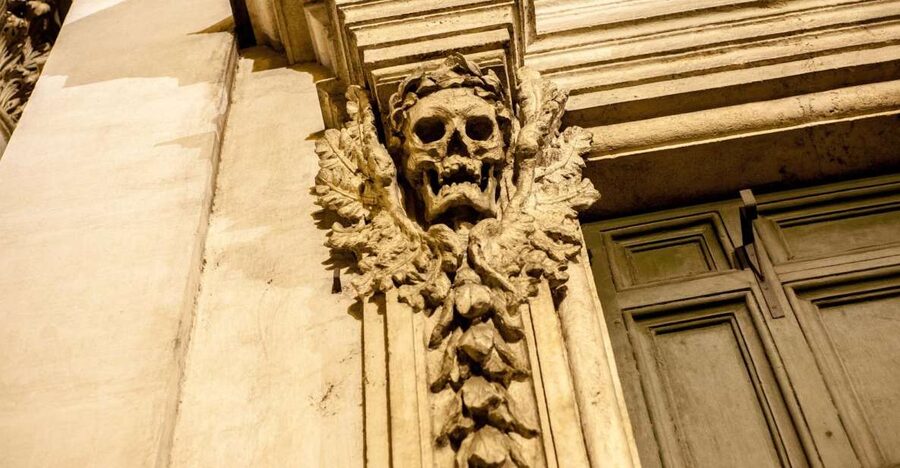
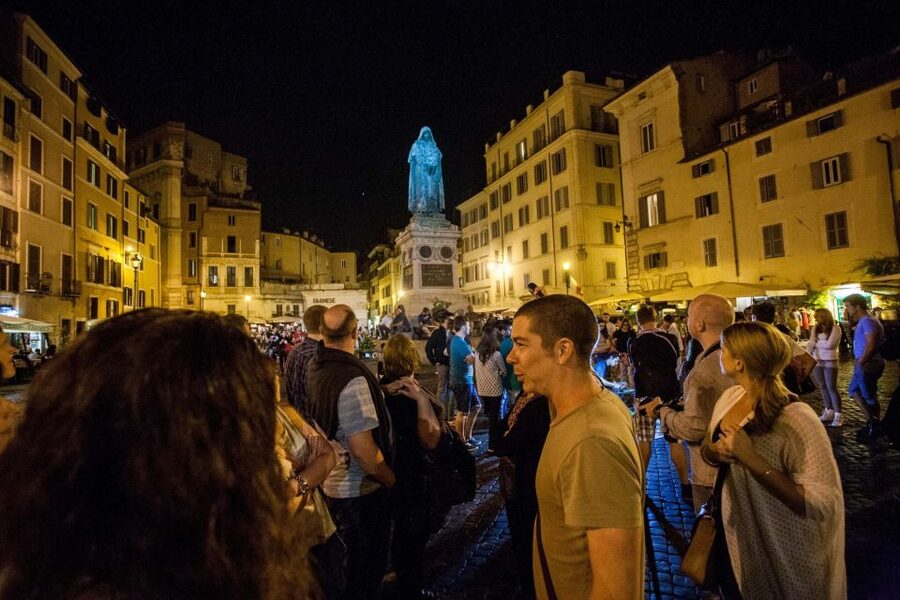
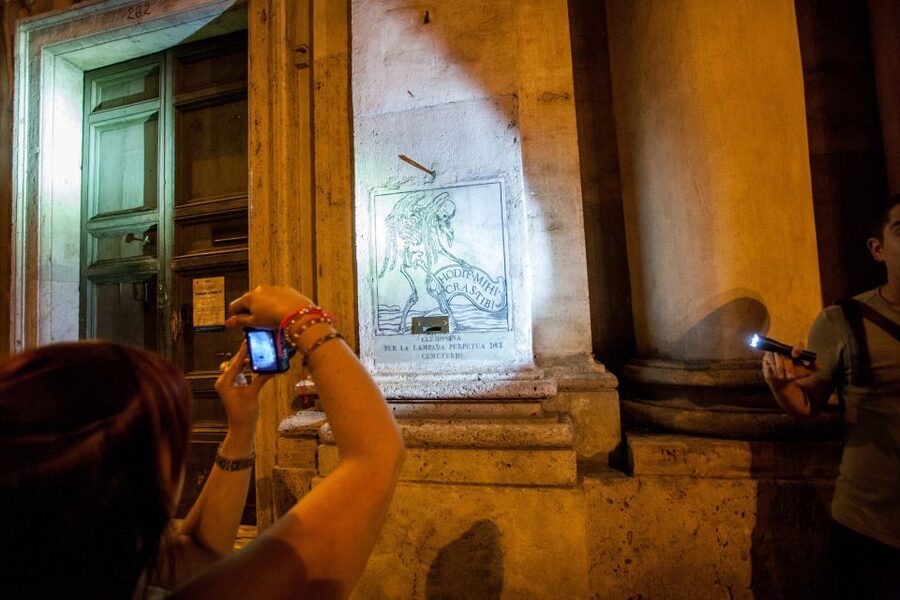
Campo de’ Fiori is one of those Roman squares where daytime visitors focus on atmosphere, street life, and views. On this tour, it is framed differently. You walk and learn about the square’s darker past, including that public executions used to take place there. That one detail changes how you interpret everything around you.
At night, the square’s layout feels more imposing. Light pools where people move, and shadows stretch where you normally expect bustle. With a guide’s stories layered over the setting, the square stops feeling like a generic stop and starts feeling like a stage where power was once made visible.
This is also a moment that helps the tour’s theme connect. The tour’s big idea is that Rome’s history is not just marble and church domes. It includes fear, spectacle, crime, punishment, and survival. Campo de’ Fiori is a strong place to start that conversation, because it is central and recognizable, but it holds a side of Rome that you would not automatically assume just by looking at it.
If you enjoy historical narratives that have an edge, you’ll likely appreciate how the tour balances what happened with how legends grew. It’s that blend that makes the evening walk memorable long after you leave the square.
Piazza Farnese and Granite Fountains You Usually Skip
Next comes Piazza Farnese. Rather than treating it like a quick photo moment, the tour has you pass by and take it in as part of a visual story. The plaza is dominated by fountains made from granite stone basins, and those material details matter because they tell you how Renaissance and later Rome shaped public spaces.
What I like about this stop in particular is that it gives variety. After Campo de’ Fiori’s heavy topic, Piazza Farnese offers a different type of atmosphere. It’s still in the historic heart of the city, but the feel shifts toward refined urban design and the kind of grandeur you associate with Rome’s elite planning.
And because this is a nighttime walk, you get a different color temperature on stone and water. You notice how surfaces reflect under evening lighting. You also get a quieter pace than many daytime circuits, so you can actually stand back and register the plaza as a space, not just a backdrop.
If you tend to overlook fountains on fast tours, this stop can recalibrate your eye. It’s short, but it encourages you to look at the texture and layout.
Same city, a completely different kind of day:
- Rome: Guided Tour of Colosseum, Roman Forum & Palatine Hill
★ 4.7 · 27,897 reviews - Rome: Colosseum & Forum with Audio Guide App -Optional Arena
★ 4.2 · 24,770 reviews - Rome: Colosseum, Roman Forum and Palatine Hill Guided Tour
★ 4.5 · 23,903 reviews - Rome: City Sightseeing Hop-on Hop-off Bus with Audioguide
★ 4.0 · 16,045 reviews
Via Giulia: One of Renaissance Rome’s First Planning Projects
Then you reach Via Giulia, and this is where the tour gives you a satisfying historical pivot. Via Giulia is described as one of the first planning projects of Renaissance Rome, and that framing matters.
Planned streets are different from leftover medieval lanes. When a guide points out planning intent, you start looking for patterns: where sightlines seem designed, how buildings and streets work together, and how the road functions like a corridor through the city. At night, those patterns can feel even more deliberate because the street is less crowded and the lights help define the route.
This is also a useful pause in the tour’s “darker” tone. The legends may continue, but you are no longer only in the realm of punishment and mystery. You’re also in the realm of how Rome reimagined itself. Renaissance Rome is often taught as art and architecture, but urban planning is part of that story too.
If you want Rome to feel more connected and less like disconnected monuments, Via Giulia does a lot of work. It is the kind of street that helps you connect what came before and what Rome became after.
Via del Governo Vecchio: A Photo Stop With Real Narrow-Street Energy
Between the bigger squares and Castel Sant’Angelo, you pass through Via del Governo Vecchio. The tour includes a guided walk here plus a photo stop. That might sound minor on paper, but in practice it can be one of the most fun parts of a night walk.
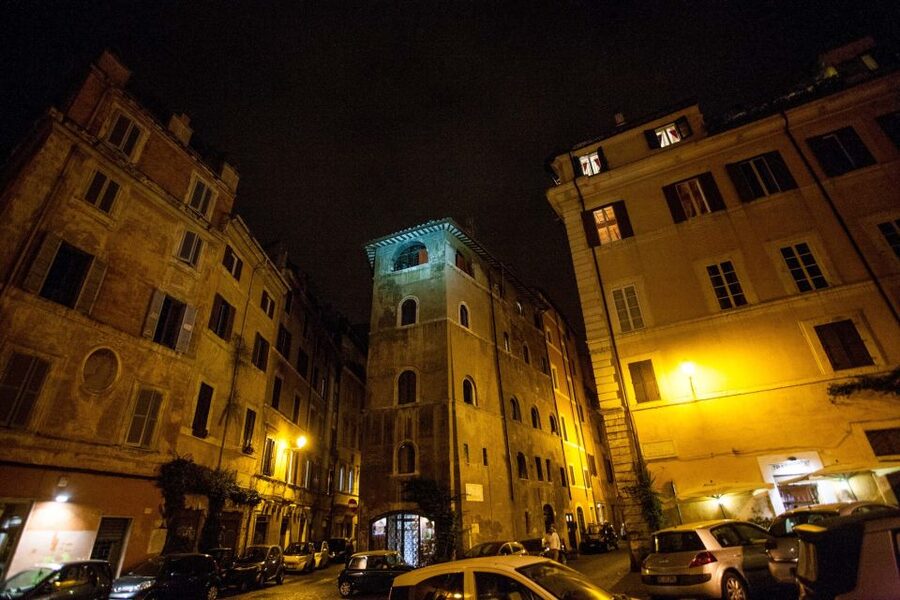
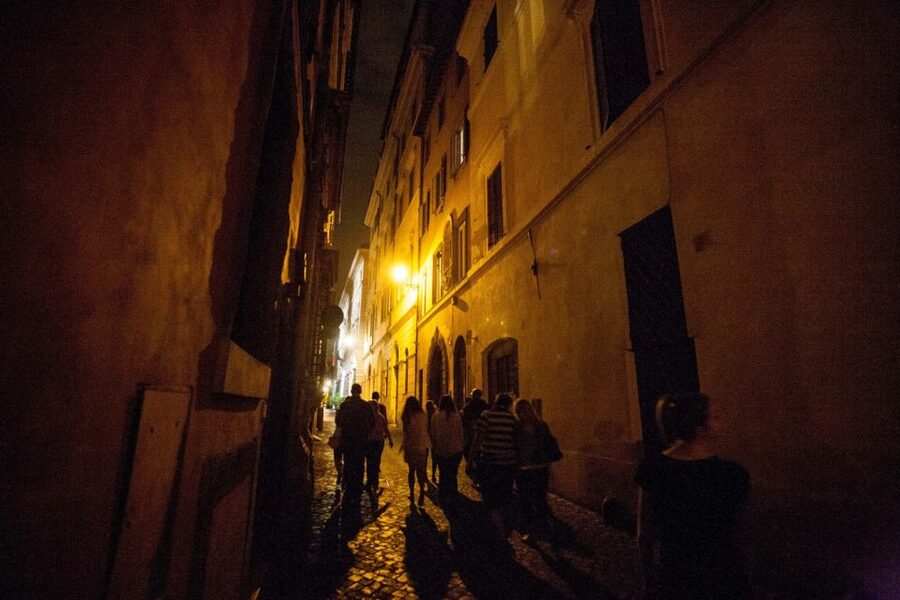
Narrow lanes and side streets are where night legends feel most believable. Even when you know you are looking at ordinary streets, the dim lighting and tight corners add tension. The tour uses this segment to shift from big landmark scale to human scale.
This is also a good moment to just absorb how Rome moves at night. You hear voices and footsteps differently in narrow streets. You notice small storefronts, doorways, and the geometry of the lane in a way you usually skip during daytime sightseeing.
If you like a tour that feels like walking through a story rather than rushing from stop to stop, this lane segment helps the pacing feel natural.
Castel Sant’Angelo at Night, Hadrian’s Mausoleum in Your View
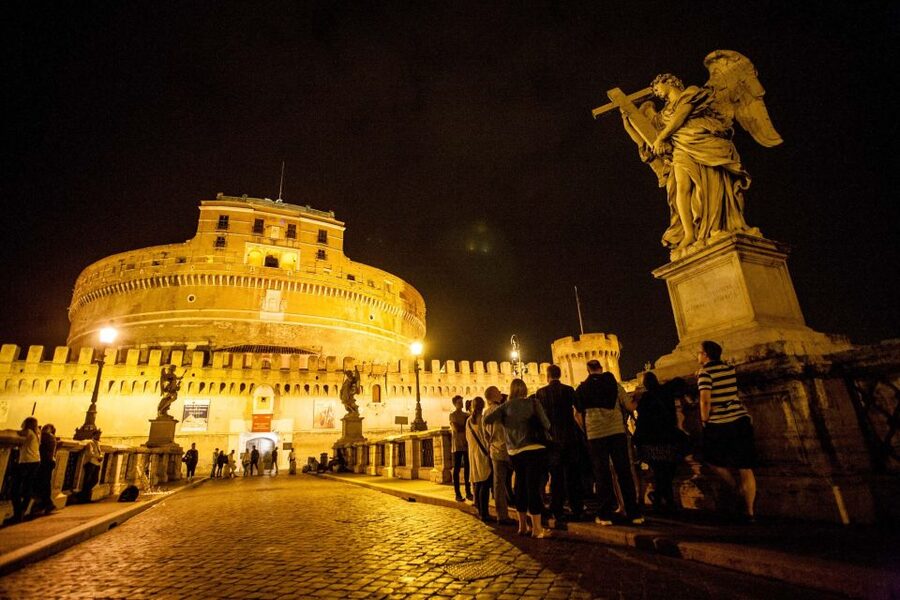
The finale brings you to Castel Sant’Angelo, with a photo stop and a guided visit. This site matters because it is connected to Hadrian’s Mausoleum, and that historical identity gives the building extra weight.
At night, Castel Sant’Angelo reads like a fortress and a symbol at the same time. The evening light helps define its massing and rooflines, and it tends to attract your eye even if you are not actively seeking it. That’s exactly what you want at the end of a “dark side” tour.
This stop also completes the tour’s theme. You started with legends tied to public events in Campo de’ Fiori. You moved through Renaissance space and planning on Via Giulia. And then you close at a monumental structure that historically served as a major marker for power and legacy.
One practical benefit of ending here: after the tour, you’re positioned along the Tiber river area. Even if you just want a slow walk or a meal nearby, it’s a comfortable place to transition into free time.
Price and Walking Time: What $14 Buys You
At $14 per person for about 1.5 hours, this tour sits in the “low-cost, high-value” category for Rome evening experiences. It is not trying to compete with museum tickets or guided art deep dives. Instead, you’re paying for a guided story walk through specific, high-impact locations that you might otherwise miss or interpret differently.
Value comes from three things:
1) A focused duration that fits into a night schedule without eating your whole evening.
2) A route that covers both dark legends and major landmarks like Castel Sant’Angelo.
3) A guide-led experience where storytelling skill is part of the product, not an extra.
In the review history, the most praised aspect is the guides. People repeatedly highlight entertaining storytelling, clear English, patience with pace, and the ability to answer questions. That matters because at night, it is easy to feel lost or left behind. When the guide speaks clearly and keeps the group moving smoothly, you get the full payoff.
Is it perfect for every type of visitor? Not always. One set of feedback notes that the tour can feel a bit fast, and that a couple of people found it rehearsed and thin on content for Rome’s larger story. If you want a heavy, academic lecture, you might prefer a different style of tour. But if you want a night walk where Rome feels alive, this price tends to make sense.
Who Should Book This Night Legends Walk (and Who Should Skip It)
This tour is a great fit if you want Rome to feel human and slightly unsettling in a good way. It suits adults and teens, and it is especially appealing if you like story-driven history. Some visitors even connected the style to true crime, which tells you the tone: darker stories, clear narrative arcs, and a guide who treats the street as a stage.
It is also a smart option if you are tired of the standard “big-ticket” sightseeing route. One common theme in the feedback is that the tour feels different from the Colosseum and Vatican approach, because it uses lesser-highlighted streets and squares.
Plan around the physical side. This is a walking tour, so you need comfortable shoes and you should be ready for uneven surfaces in an old city center. It is not suitable for wheelchair users or people with mobility impairments. Strollers are not allowed either, and baby strollers specifically are listed as not permitted.
If you are traveling with anyone who needs mobility accommodations, you’ll want to choose a different experience that matches access needs. If that’s not you, the tour’s night timing can be a plus. One reviewer specifically liked that in June, the night walk kept temperatures comfortable compared to daytime.
Should You Book Dark Heart of Rome?
I’d book this tour if you want your Rome at night to feel like a story you can walk through. The combination of Campo de’ Fiori, Via Giulia, and Castel Sant’Angelo gives you variety, and the guide-led legend style is clearly the main selling point. At $14 for about 90 minutes, it is an easy add-on that can transform how you see the city afterward.
I would skip it if you need a fully accessible route, you cannot handle walking on historic streets, or you want deep, classroom-style history with lots of stops. If you prefer slower pacing and more detailed factual coverage, you might find the experience a touch too quick or rehearsed.
But for most people looking for an entertaining night experience in Rome’s historic core, this is exactly the kind of tour that can turn an evening into a real memory.
FAQ
How long is the Dark Heart of Rome tour?
The tour duration is 1.5 hours (about 90 minutes).
Where do I meet the guide?
Meet on the steps of San Andrea della Valle Church on Corso Vittorio Emanuele II, about 150 meters from Largo di Torre Argentina on the left-hand side heading toward the Tiber River.
Is the tour offered in English?
Yes. The tour is conducted with an English-speaking live guide.
Which places does the tour pass through?
The walk includes Campo de’ Fiori, Piazza Farnese, Via Giulia, Via del Governo Vecchio (with a photo stop), and Castel Sant’Angelo (with a photo stop).
Is this tour suitable for wheelchair users or mobility impairments?
No. The tour is not suitable for guests with wheelchairs or mobility impairments.
Are strollers allowed?
No. Pushchairs or strollers are not accommodated.
What should I bring for the tour?
Bring comfortable shoes, since it is a walking tour.
How much does it cost, and what about cancellation?
The price is $14 per person. There is free cancellation up to 24 hours in advance for a full refund, and you can reserve now and pay later.
Recently reviewed around Rome
- Rome: Castelli Romani Hop-on and Hop-off Tour★ 4.9 · 32 reviews
- Rome: Food Tour near Vatican City with Wine★ 4.8 · 100 reviews
- Rome: Scavenger Hunt Self-Guided Tour★ 4.6 · 15 reviews
- Hidden Rome: Small Group E-Bike Tour with Street Food Stops★ 4.9 · 144 reviews
- Rome: Highlights Tour in Golf Cart★ 4.9 · 28 reviews
- Rome: Hop-on Hop-off Bus Tour and Colosseum Experience★ 3.4 · 163 reviews
- Rome: Guided Haunted Rome Ghost Tour with Dowsing Rods★ 4.8 · 63 reviews
- Rome: Highlights Photo Shoot for Memorable Moments★ 5.0 · 32 reviews
Tours, compared.
Vatican Museums & Sistine Chapel Tour with Optional Basilica
Read our review →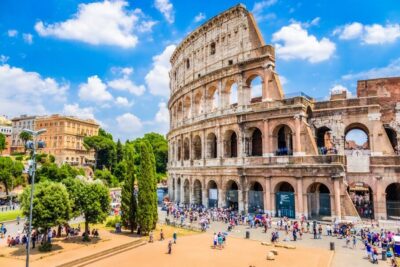
Colosseum, Roman Forum & Palatine Guided Tour
Read our review →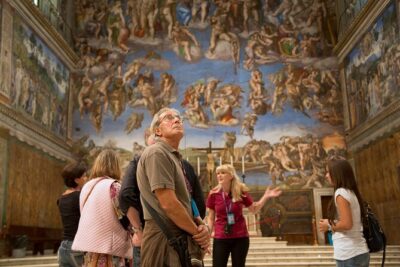
Vatican Museums, Sistine Chapel & St Peter’s Basilica Guided Tour
Read our review →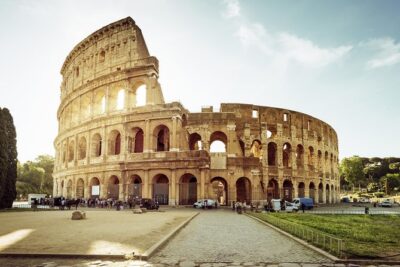
Colosseum, Palatine Hill and Roman Forum Guided Tour
Read our review →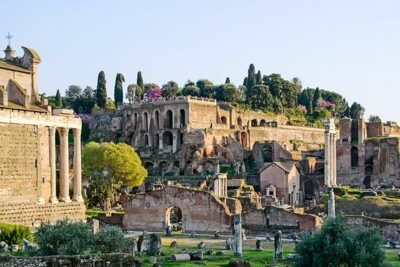
Guided Tour of Colosseum, Roman Forum & Palatine Hill
Read our review →
Colosseum, Roman Forum and Palatine Hill Guided Tour
Read our review →
Vatican Museums, Sistine Chapel & Basilica Tour
Read our review →