Reviewed · TOURS
Rome: Trevi Fountain District Underground Tour and Ice Cream
Trevi Fountain is famous above ground, but the real fun starts when you step into the underground water world beneath the district. This short tour connects the Roman engineering that fed fountains and homes to real archaeological finds you can see up close. I love the way the story is told by an archaeologist, and I like that the walk stays tight and focused on the Vicus Caprarius site rather than spreading out into a long checklist.
Two things I especially like: the tour brings the Roman water system to life with specific objects, like ancient coins and amphorae, and then it ties it to what you see at Trevi. I also appreciate the fun finish with gelato from a historic shop, where you get a voucher so you can choose what to order.
One possible drawback: the Trevi Fountain portion is brief, and you may not get that one-on-one, walk-right-up view many people imagine. If you are looking for lots of time at the fountain itself, plan to spend more time exploring nearby on your own after the tour ends.
Key things to know before you go
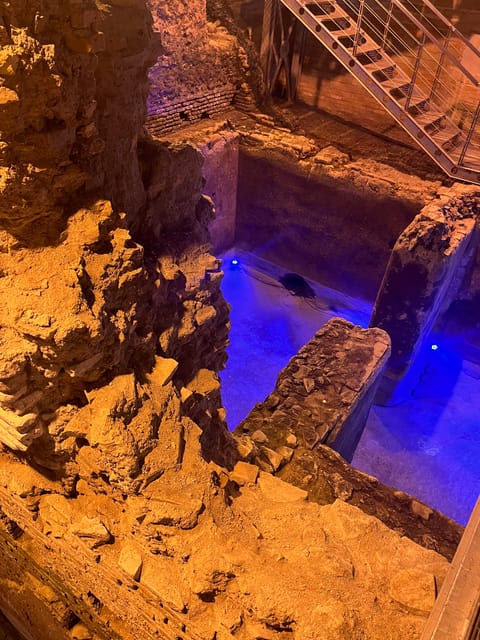
- Vicus Caprarius underground access with a guided visit that stays very close to the archaeology
- Imperial Age finds, including coins and amphorae, plus highlights like polychrome marble coverings
- A guide who explains how water worked in Roman daily life, including how it fed the Domus residence
- The Trevi stop is short but guided, with tips that help you enjoy it even in a crowded plaza
- You finish with Italian gelato at a historic shop, using a voucher rather than buying on the spot
- Expect solid pacing for a 1-hour experience, with comfortable-shoe needs and no wheelchair access
Why the Trevi Fountain district has an underground story worth 52 bucks
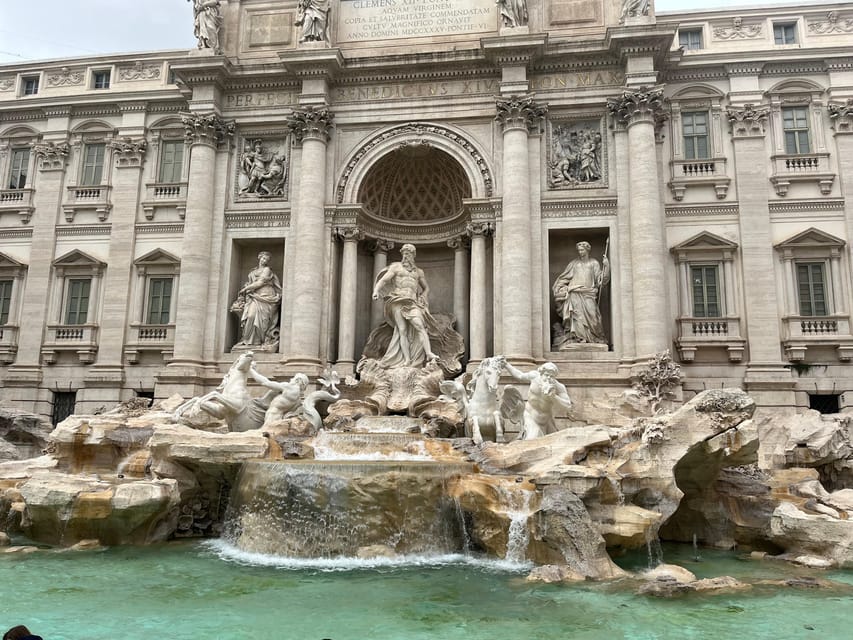
Rome does fountains loudly. This experience does them quietly, from the ground up. You start at the iconic Trevi Fountain, make the wish, and then trade the big plaza for the cooler, tighter world below street level. The payoff is perspective: you see how water was managed for centuries, and you realize the fountain is the visible tip of a much bigger system.
The value is in the combination. For $52, you are paying for access and a guided visit to the archaeological area under the Trevi district, plus a Trevi entrance ticket and gelato at the end. It is not a long multi-hour excursion, so you are not spending a whole day in transit or waiting around. You get history with momentum.
A few more Rome tours worth comparing
- Rome: Pasta Making Class with Wine, Limoncello, and Dessert
★ 4.9 · 3,177 reviews - Rome Cooking Class: Make Pizza and Pasta with Wine & Dessert
★ 4.5 · 651 reviews - Rome: City Tour by Vespa with Pictures and Sweets Tastings
★ 5.0 · 180 reviews
Price, timing, and what makes this one-hour tour feel complete
This is a 1-hour tour, so the timing is part of the product. You are not getting “just a peek.” You do the main underground site portion for about 40 minutes, and you still get a guided Trevi connection plus a gelato finish.
Here is what you should think about when judging the price:
- You are buying reserved entry and a guided explanation at the underground Vicus Caprarius area, not just wandering around.
- The gelato voucher is included, so it is one less decision you have to make at the end of a walk in the heat.
- Because the group time is short, the guide has less room for filler. That usually means you leave with a clearer understanding of what you saw, not just a blur of stops.
Meet at Vicolo del Puttarello and do the Trevi wish first
Your meeting point is Vicolo del Puttarello, 25. Arrive at least 15 minutes early so you can check in without stress. This matters here because the meeting area is in the middle of a busy pocket of Rome where foot traffic can get thick fast.
Plan to start with the Trevi Fountain moment in a relaxed way. You will get the quick guided look and context, and then you head underground. If you want a great photo, think about timing and angles, not just waiting for the crowd to thin.
Vicus Caprarius underground, coins, amphorae, and a real archaeologist at work
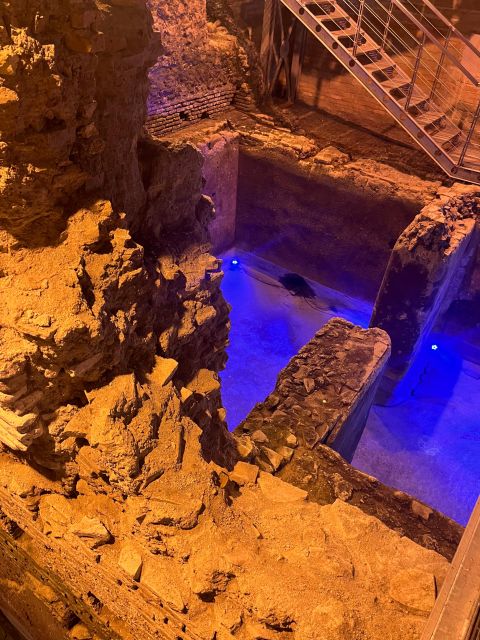
The underground portion is the heart of the tour. You enter the Vicus Caprarius area for a guided visit of about 40 minutes, and the explanation is built around what was found there.
You get a chance to see:
- Ancient coins and amphorae from the Imperial Age
- Evidence of everyday Roman life and trade, not only big monumental statues
- Excavation highlights explained in plain language, including details that help you understand why archaeologists care about small objects
What I like about this stop is that it turns “Roman ruins” into a story you can follow. The guide connects the objects to how water moved and why a neighborhood like this mattered. One review noted the tour makes it easy to grasp the underground feel of what is often described in larger, harder-to-picture terms like aqueduct history.
Also, the tour uses headsets on at least some departures. That is a practical detail because underground spaces can be echoey, and you do not want to strain your ears to catch key points.
Same city, a completely different kind of day:
- Vatican Museums & Sistine Chapel Tour with Optional Basilica
★ 4.3 · 67,413 reviews - Vatican Museums, Sistine Chapel & St Peter’s Basilica Guided Tour
★ 4.5 · 39,149 reviews - Rome: Colosseum, Palatine Hill and Roman Forum Guided Tour
★ 4.8 · 32,814 reviews - Rome: Guided Tour of Colosseum, Roman Forum & Palatine Hill
★ 4.7 · 27,897 reviews
The City of Water idea, Domus residence pools, and how Trevi’s water was managed
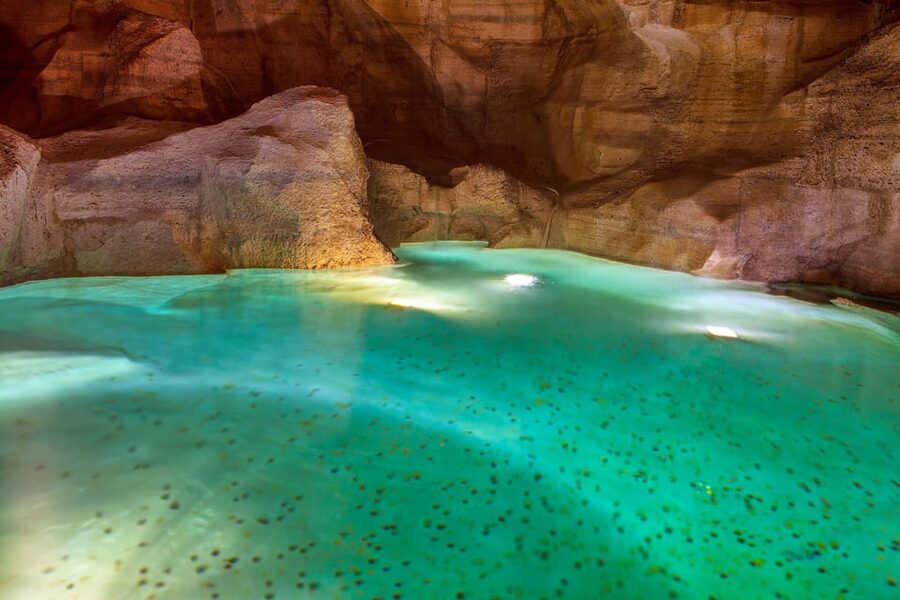
Rome loved two things: engineering and repeating a good system. In this tour, the concept you keep hearing is the area’s nickname, the City of Water. It is not just a poetic label. You learn why water mattered here, and you see how it connected to the way people lived.
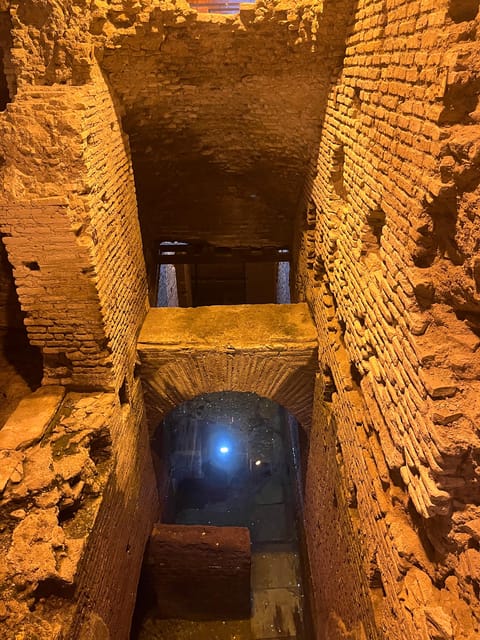
The guide explains the water flow tied to the Trevi Fountain, showing how water that feeds the fountain filters through ancient masonry in the archaeological zone. From there, it supported pipes and the pools of a luxurious Domus residence.
This is where the details get especially satisfying. You are not just told water existed. You learn what it enabled. And you hear about specific finds discovered during excavation, including:
- Polychrome marble coverings
- The famous head of Alessandro Helios
- A treasure trove of 800 coins
- A Spathеia amphora, described as an African container used to transport oil
Even if you are not a “ruins person,” these details help you build mental pictures fast. You start to see the underground area as a functioning part of Roman life, not a random basement of artifacts.
What to look for during the underground walk (and why it helps later at Trevi)
The underground site is separated into three sections of antiquarian display. That matters because it makes the visit feel organized rather than chaotic. You get to move through the story in steps, rather than trying to remember everything at once.
When you are underground, focus on two things:
- The relationship between surfaces and water management. The tour frames how masonry and water channels connect.
- How the guide links individual objects back to the same theme: this was a neighborhood shaped by water access and distribution.
This also improves your Trevi Fountain experience later. Even if the Trevi stop is short, you are not just staring at a famous scene. You understand what role water played before the Baroque monument. That is what makes the connection feel real.
Trevi Fountain stop: short guided time, better photos, and crowd reality
After the underground visit, you return to Trevi for a guided segment of about 5 minutes. That timing is quick, and it is exactly why good guides matter. You are learning the exterior story and how to interpret what you are seeing.
One practical note from the experience: guides tend to give useful photo tips for Trevi. Some guides also stay attentive about getting photos with the fountain, including allowing extra minutes if needed for that moment. If you care about photos, keep your pace flexible when the guide suggests a spot.
Also, manage expectations about how close you can get. The tour’s Trevi segment is guided, but the plaza is packed, so you likely see the fountain from within the crowd rather than having a wide-open, uncrowded approach. The upside is that you get the guided context without eating up your whole day in a line.
Gelato finale: a voucher you can actually use your way
The tour ends with Italian gelato from a historic ice cream shop near Trevi. The key practical detail is that you receive a voucher, not just a pre-paid scoop that you are stuck with. In other words, you can decide what you want once you are standing in front of the case.
That is not just convenient. It also helps if you have preferences (flavors, sweetness level, or dietary choices you may want to honor). One person mentioned the voucher approach gives you a bit more freedom to decide if it is worth it, rather than forcing the gelato purchase as part of the tour itself.
It is also a smart pacing choice. You leave the underground part, you hit Trevi while the day is still active, and then you cool down with something Rome does better than almost anywhere else.
Comfort, pace, and who should plan on this tour
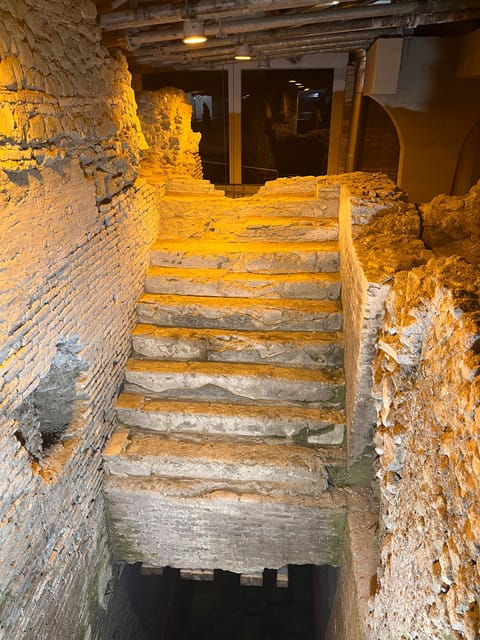
This is a walk-heavy, mostly on-site experience. Bring comfortable shoes. The underground environment can feel cooler than street level, which is a nice relief during hot stretches, and the tour duration keeps you from cooking in the sun too long.
Group size is another reason this works. Multiple people describe it as small in size, which usually means you are not constantly getting blocked and you have a better chance of hearing the guide’s details without constant jostling.
Who it fits:
- If you love Roman engineering, aqueduct stories, or how cities worked beyond monuments
- If you want a short, high-impact tour that does not eat half your day
- If you like archaeology explanations that connect artifacts to daily life
Who should skip:
- People with mobility impairments or wheelchair users, since it is not suitable for wheelchair access
Guide styles that made the difference: Carla, Erika, Noemi, Naomi, and Alessia
This tour lives or dies by the guide. And the guide names that show up again and again include Carla, Erika, Noemi, Naomi, and Alessia. People repeatedly mention guides who are friendly, humorous, and able to keep the story clear even when the setting is visually complex.
You can also take comfort in how many descriptions stress the same outcome: you leave understanding what you just saw. One review even points out how the guide helped people connect the underground finds to Roman history they had heard about elsewhere, instead of leaving you with random facts.
If you end up with one of these guide styles, you are likely to enjoy the experience more than someone who only wants a quick ticket-and-walk.
Should you book this Trevi Fountain District Underground Tour and Ice Cream?
Book it if you want something different from the usual Rome routine. This is a focused Trevi + underground water history combo, with real archaeological items, a guide who explains the why behind the finds, and a gelato finish that feels like a reward rather than an afterthought.
Skip it if:
- You mainly want lots of time in the Trevi plaza itself
- You need wheelchair-friendly access
- You prefer large, sprawling museum-style wandering rather than a short, guided, site-specific visit
For most people, this is a smart add-on to a Rome day because it gives you a fresh angle on a famous landmark. You see the city’s water story in a way that is hard to get any other way, and you still end with something delicious.
FAQ
How long is the Trevi Fountain District Underground Tour and Ice Cream?
It lasts 1 hour total.
Where is the meeting point?
You meet at Vicolo del Puttarello, 25. Arrive at least 15 minutes before your selected time.
What is included in the price?
The tour includes reserved entry ticket and a guided tour for Vicus Caprarius, Trevi Fountain access, assistance, and Italian gelato.
Is the tour offered in English?
Yes, the live tour guide speaks English.
Is it suitable for wheelchair users or people with mobility impairments?
No. It is not suitable for people with mobility impairments or wheelchair users.
Is free cancellation available?
Yes, you can cancel up to 24 hours in advance for a full refund.
Recently reviewed around Rome
- Ancient Etruscan Civilization Tour from Rome★ 5.0 · 16 reviews
- Colosseum with Arena Floor Express Guided Tour★ 3.5 · 22 reviews
- Private Tour – Ancient Ostia★ 5.0 · 42 reviews
- PRIVATE Appian Way and Lake Albano Ebike Tour with Italian Lunch★ 5.0 · 12 reviews
- Ancient Appian Way and Roman Countryside E-Bike Tour★ 4.5 · 13 reviews
- Ancient Appian Way PRIVATE Bike Tour★ 5.0 · 89 reviews
- Catacombs and Hidden Underground Rome: Small Group Max 6 People★ 5.0 · 293 reviews
- Amalfi Coast Day Trip from Rome by High-Speed Train★ 4.5 · 162 reviews
Tours, compared.

Vatican Museums & Sistine Chapel Tour with Optional Basilica
Read our review →
Colosseum, Roman Forum & Palatine Guided Tour
Read our review →
Vatican Museums, Sistine Chapel & St Peter’s Basilica Guided Tour
Read our review →
Colosseum, Palatine Hill and Roman Forum Guided Tour
Read our review →
Guided Tour of Colosseum, Roman Forum & Palatine Hill
Read our review →
Colosseum, Roman Forum and Palatine Hill Guided Tour
Read our review →
Vatican Museums, Sistine Chapel & Basilica Tour
Read our review →