Reviewed · GUIDED
Rome: San Clemente Underground and Basilica Guided Tour
Walking into San Clemente Underground is interesting because you are not looking at one era. You are stepping through layers of Rome, one stairwell at a time. I especially love the way the tour connects the sparkling gold mosaics above to the forgotten structures below. One consideration: the route is stair-heavy and you cannot use a wheelchair, so wear grippy shoes and be ready for a workout.
You will spend about 1.5 hours on a guided visit that takes you down through three underground levels. The price is $70 per person and includes the entrance fee and a live English guide, plus skipping the ticket line. It has a strong average rating of 4.9 (153 reviews), and many comments praise the guides for clear, story-driven explanations.
Key Takeaways Before You Go
- Rome’s “layer cake” is real here, with structures from multiple centuries packed under one church.
- Gold mosaics are part of the payoff, not just the underground archaeology.
- You can see the Mithraic temple at the lowest levels, including an altar area.
- The 1860 discovery story makes the ruins click, especially the role of a flood and an underground spring.
- Small-group guiding helps with questions, and guides like Luca, Gina, and Ricardo are singled out for storytelling.
- No photos inside, and plan for stairs, because the route is not designed for slow mobility.
San Clemente al Laterano: Rome’s built-in time machine
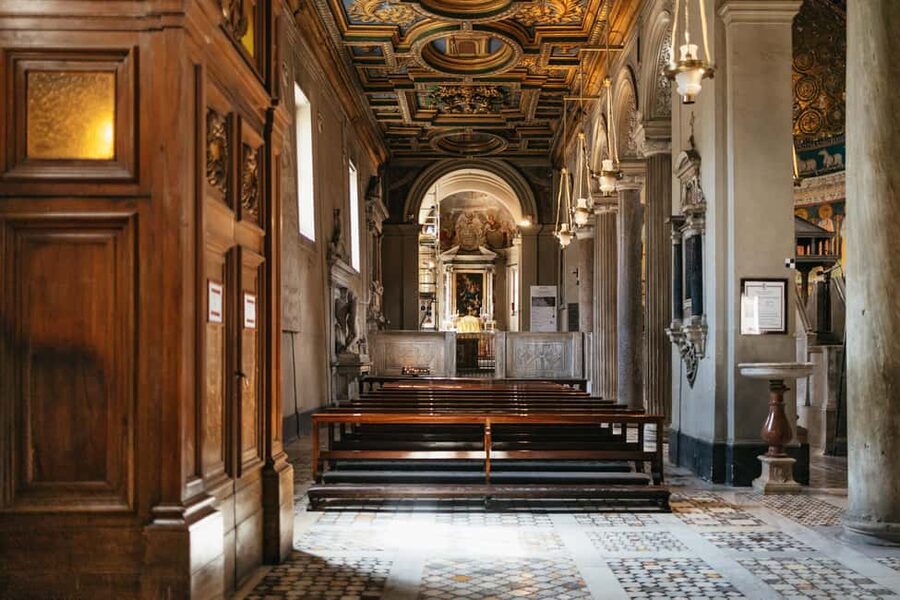
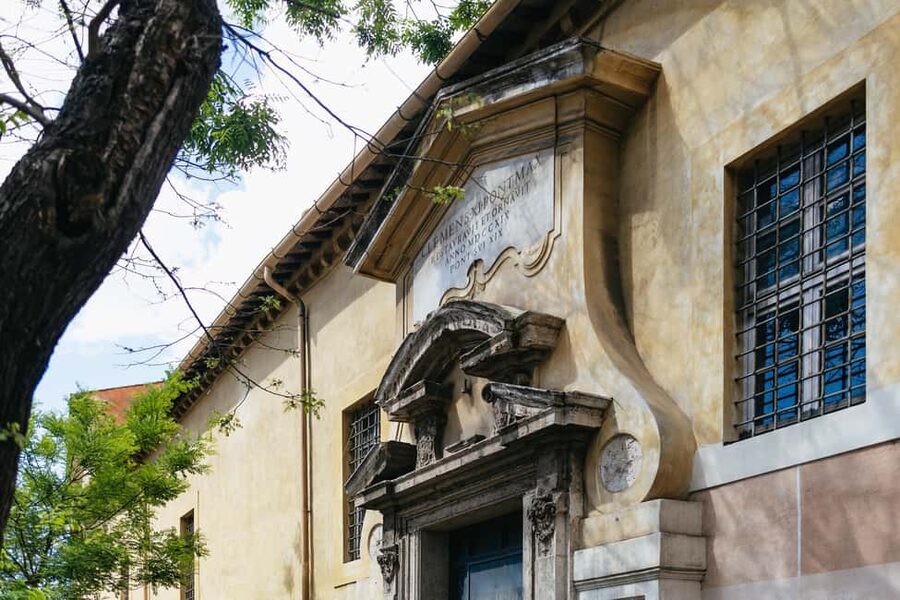
San Clemente is one of those Roman experiences where the building becomes your museum label. The 12th-century Basilica sits on top of older spaces, and the underground levels keep the past close, not behind glass.
What makes it so good is the physical scale of it all. You are literally descending into earlier streets, basements, and places of worship. It is the sort of site where you start with art and then end up thinking, okay, this is what Rome felt like as it kept rebuilding itself.
A few more Rome tours worth comparing
- Vatican Museums, Sistine Chapel & St Peter’s Basilica Guided Tour
★ 4.5 · 39,149 reviews - Rome: Colosseum, Palatine Hill and Roman Forum Guided Tour
★ 4.8 · 32,814 reviews - Rome: Guided Tour of Colosseum, Roman Forum & Palatine Hill
★ 4.7 · 27,897 reviews
Price and timing: what $70 gets you in 1.5 hours
At $70 per person for a 1.5-hour tour, this is not the cheapest thing on a Rome list. But the value is pretty solid for three reasons.
First, your ticket cost is bundled with the entrance fee. Second, you are getting a live guide in English, and the guide is doing the heavy lifting by explaining what you are seeing on each level. Third, you skip the ticket line, which matters in central Rome when time evaporates fast.
The pacing is also efficient. You are not wandering around alone for half a day and hoping you understand the layers. Instead, the tour keeps you moving through the big moments, from the basilica above to the deepest levels where the Mithraic remains show up.
Meeting at Via di S. Giovanni in Laterano, 126 (and finding it fast)
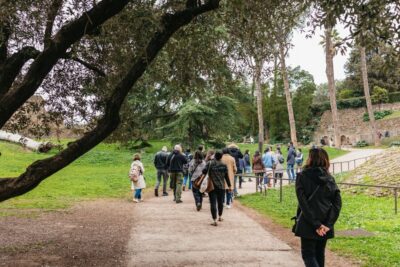
You meet at Via di S. Giovanni in Laterano, 126, right by the Basilica di San Clemente al Laterano. It is an outdoor corner location, not a shop office.
The nearest metro stop is Line B, Colosseo. If you are coming from the Colosseum area, it is an easy walk, but do not underestimate how many small streets look similar once you are turning corners.
A practical tip from real-world experience: arrive a little early and look for the group gathering near the basilica-side stairs and entrances, not at some random street-level business. One person even noted the address details were confusing, so giving yourself a 10-minute buffer is smart.
The tour route: from the 12th-century basilica down to the Mithraeum
The tour is built around one key idea: you see the same site recast again and again, like Rome upgrading its own address.
Same city, a completely different kind of day:
- Vatican Museums & Sistine Chapel Tour with Optional Basilica
★ 4.3 · 67,413 reviews - Rome: Colosseum & Forum with Audio Guide App -Optional Arena
★ 4.2 · 24,770 reviews - Rome: Colosseum, Roman Forum and Palatine Hill Guided Tour
★ 4.5 · 23,903 reviews - Rome: City Sightseeing Hop-on Hop-off Bus with Audioguide
★ 4.0 · 16,045 reviews
Stop 1: Basilica di San Clemente al Laterano (about 1 hour guided)
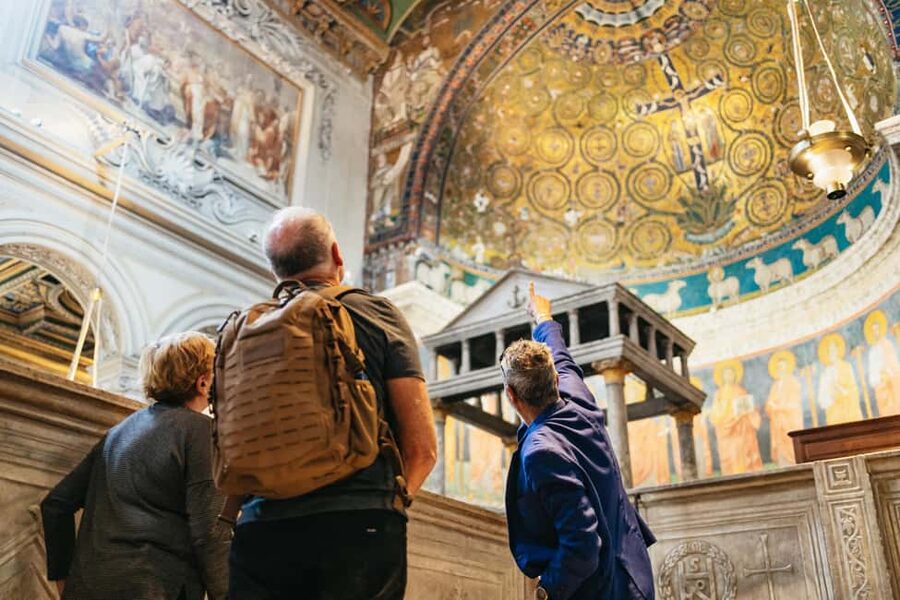
You start at the upper church, where you get your first sense of the artistic mood. This is where the gold mosaics come in, and this is also where the guide helps you understand why the later builders made certain choices.
Even if you only care about the underground part, I think this top-level start matters. It gives you a reference point. Then when you go below, you are not just staring at ruins, you are seeing how the later basilica sits over earlier worship spaces.
Stop 2: Photo stop and more viewing (about 30 minutes)
After the guided portion, you get a pause for photos and a little extra time to look around. The rules do matter here: photography is not allowed inside, so this photo time is most useful for what you can capture outside or in areas where the tour allows it.
Use this moment to slow down. Look up, read the layout in your head, and think about how the building above might cover something older.
Stop 3: The underground three levels, one staircase at a time
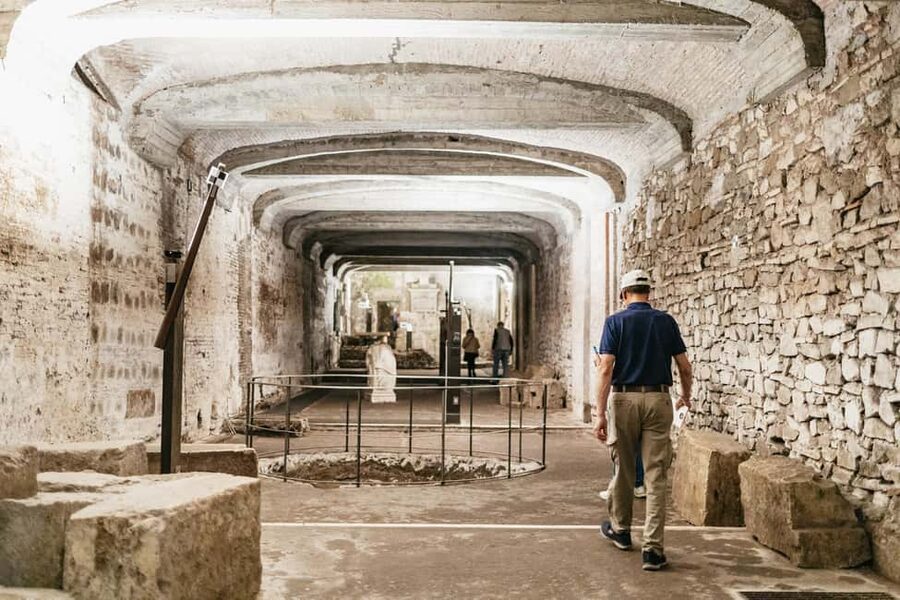
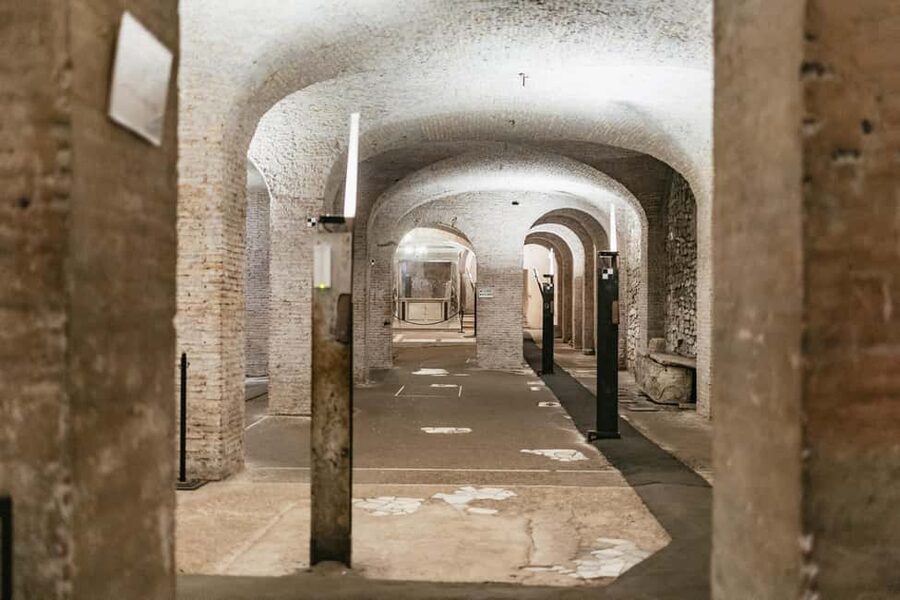
This is the main event. You descend through three underground levels, and each one changes the story.
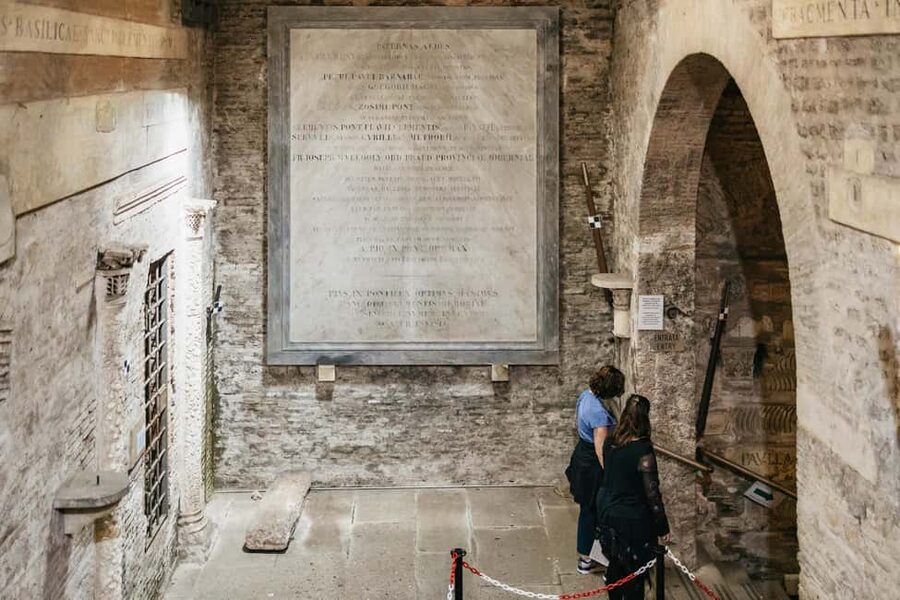
On the first underground level, you see the remains of a 4th-century Basilica that was long forgotten once the 12th-century basilica was built above it.
Next, you go further down to what feels like a history detour, even though it is crucial to the site’s identity. You can see remains of an ancient pagan Mithraic temple, including an altar area. It is a striking contrast: later Christian worship and earlier pagan ritual space occupy the same ground, separated by centuries but connected by that continuous layering of Rome.
At the lowest level, you also encounter the underground spring that played a major role in the story of discovery. This part matters because the flood and water are not just trivia. They are what literally changed the ground level enough for people to find what was hidden underneath.
As you go, you will also see traces of ancient Roman homes that were excavated and preserved. That gives the visit a different texture. It is not only monuments. You are seeing everyday architecture and how people lived before this area became a major church site.
The Mithraic temple moment
If the Mithraeum is not the highlight for you, it will be for someone in your group. Many people describe that deepest-level encounter as the moment when the tour really clicks, because it is so specific: you are not just hearing that Mithraism existed in Rome, you are seeing physical remains tied to the site.
The 1860 discovery: why a flood led you to a time capsule
A key part of the tour is the story of how the levels were discovered in 1860. The guide explains that a flood led an Irish Dominican Roman Catholic priest and archaeologist to find the levels beneath.
What I like about how the story is told is that it is not just “someone found ruins.” It is about cause and effect. Water changed what was accessible, and the underground spring was part of the chain reaction that exposed chaos beneath the surface.
So when you stand in the lowest parts of the site, it helps to understand the logic. The architecture is there, but the conditions that uncovered it were also there. That makes the site feel less like a curated exhibit and more like something that stayed hidden until the city, literally, shifted.
Gold mosaics above, ruined streets below: seeing Rome’s upgrades
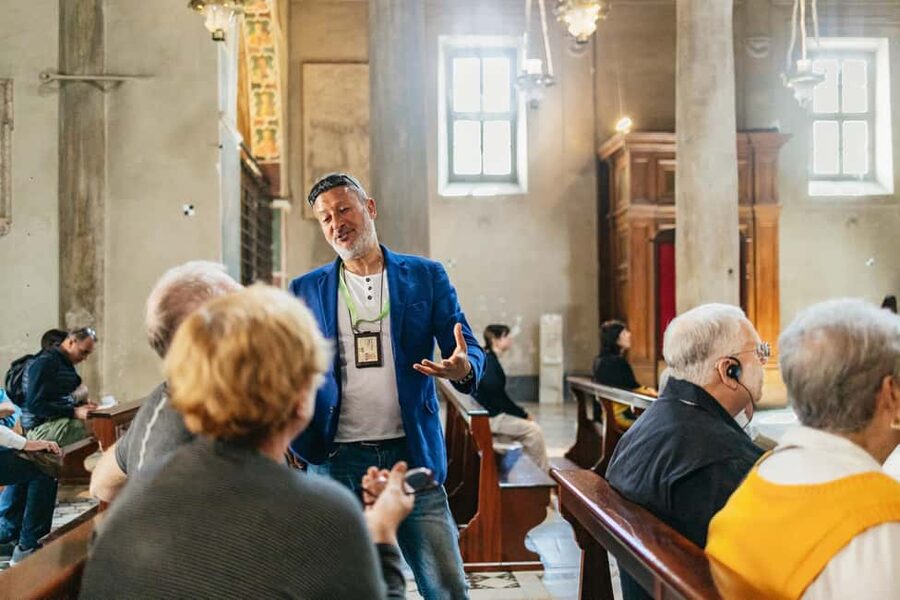
A big reason to do this tour rather than only self-guided exploring is how the guide links art to archaeology.
On top, you are in the world of the 12th century, with the Basilica di San Clemente and its famous gold mosaics. Below, you are moving through earlier layers: a 4th-century basilica, pagan ritual space, Roman home remains, and the infrastructure connected to water.
It is the “Rome builds on Rome” idea made physical. In reviews, people often compare it to a lasagna effect, and the metaphor fits. Each layer is a different time period, but you are stuck with the reality that the layers are right next to each other, not lined up like neatly labeled museum rooms.
Practical tips: stairs, clothing, cameras, and keeping your sanity
This experience is simple, but it has rules and physical constraints.
You must handle stairs
You must be able to climb and descend stairs on your own. The underground route includes uneven surfaces and stairs, so plan for a steady pace and keep one hand free when possible.
It is not suitable for people with mobility impairments or wheelchair users.
Wear comfortable shoes and layers
Wear comfortable shoes with traction. The underground levels can be cooler than outside, so layers help you stay comfortable as you move between spaces.
Dress code inside the church
Inside the church, you need shoulders and knees covered. If you show up in a tank top and shorts, you might find yourself adjusting quickly before you can start.
Cameras and photography restrictions
Cameras are not allowed, and photography inside is not allowed. Video recording is also not allowed, and you cannot bring luggage or large bags.
A simple plan: travel light, keep your hands free, and assume your best “photos” are going to be mental ones supported by the guide’s explanation.
Hearing and multiple groups
Because the site can host multiple groups in the same spaces, sound can be a factor. If you have trouble hearing at any point, speak up early so the guide can reposition or repeat key points. Arriving on time also reduces stress, since you are not trying to catch up while people are already moving through tight stairways.
Who should book this tour, and who should skip it
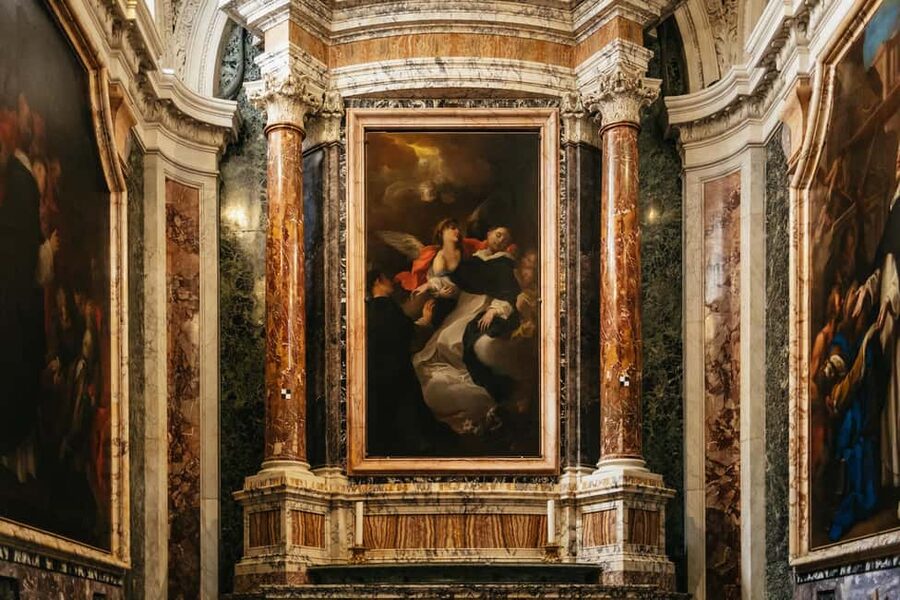
I think this is ideal if you like history that you can touch. If you enjoy architecture, you will appreciate the way one building covers multiple eras. If you like stories, the best guides connect the dots between mosaics, lost basilicas, pagan ritual space, and water-driven discovery.
This tour is less ideal if:
- you cannot manage stairs or you need a wheelchair-friendly route
- you want lots of photography indoors
- you dislike tours with timed movement through confined spaces
It is also a good choice if you want something different from Rome’s headline sites. You get the feeling of a quieter corner of the city, away from the worst crowds, even while you are inside one of Rome’s more dramatic historical settings.
Should you book? My honest recommendation
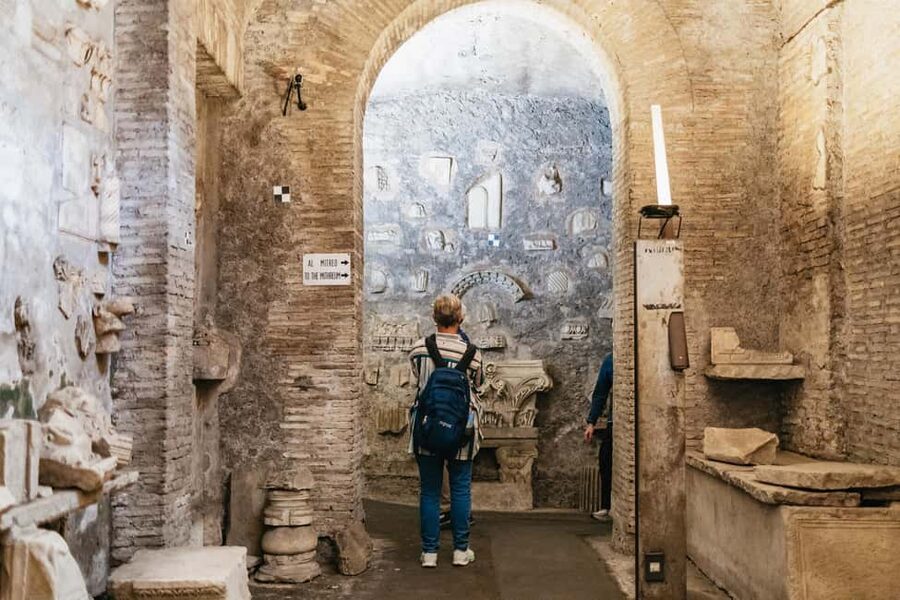
Book it if you want the most “wow per hour” you can get in Rome without bouncing between too many far-flung sites. The combination of a guided explanation, the gold mosaics above, and the Mithraic temple below is a rare mix. Plus, the $70 price makes more sense once you factor in the entrance fee, skip-the-line setup, and the fact that you are not likely to understand these layers as fast on your own.
Skip it if you know your day will fall apart on stairs, or if the camera restrictions and no-luggage rules will be a hassle for you. If you do go, wear grippy shoes, cover shoulders and knees, and get there a few minutes early so meeting point stress does not steal your excitement.
If you want a tour that feels guided in a real, human way, aim for one led by a guide with a track record like Luca, Gina, Ricardo, Eddy, Alberto, Ursus, or Sara, since many people highlight those specific names for making complex layers understandable.
FAQ
Where is the meeting point for the San Clemente Underground and Basilica tour?
Meet near San Clemente Basilica at the corner located at Via di S. Giovanni in Laterano, 126. The meeting point is an outdoor location, not an office.
How long is the tour?
The duration is 1.5 hours.
How much does the tour cost?
The price is $70 per person.
Is photography allowed inside the Basilica or underground levels?
No. Cameras are not allowed, and photography inside is not allowed. Video recording is also not allowed.
What are the dress and clothing requirements?
Inside the church, shoulders and knees must be covered. Bring comfortable shoes, and consider wearing layers because the underground levels may be cooler than outside.
Is the tour suitable for wheelchair users or people with mobility impairments?
No. The tour is not suitable for people with mobility impairments, and it is also not suitable for wheelchair users. You must be able to climb and descend stairs on your own.
Recently reviewed around Rome
- Ancient Etruscan Civilization Tour from Rome★ 5.0 · 16 reviews
- Colosseum with Arena Floor Express Guided Tour★ 3.5 · 22 reviews
- Private Tour – Ancient Ostia★ 5.0 · 42 reviews
- PRIVATE Appian Way and Lake Albano Ebike Tour with Italian Lunch★ 5.0 · 12 reviews
- Ancient Appian Way and Roman Countryside E-Bike Tour★ 4.5 · 13 reviews
- Ancient Appian Way PRIVATE Bike Tour★ 5.0 · 89 reviews
- Catacombs and Hidden Underground Rome: Small Group Max 6 People★ 5.0 · 293 reviews
- Amalfi Coast Day Trip from Rome by High-Speed Train★ 4.5 · 162 reviews
Guided, compared.
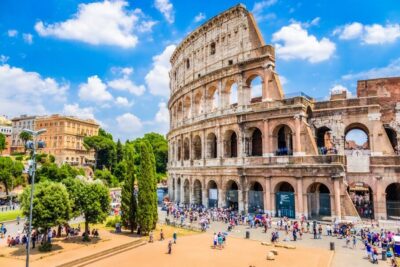
Colosseum, Roman Forum & Palatine Guided Tour
Read our review →
Vatican Museums, Sistine Chapel & St Peter’s Basilica Guided Tour
Read our review →
Colosseum, Palatine Hill and Roman Forum Guided Tour
Read our review →
Guided Tour of Colosseum, Roman Forum & Palatine Hill
Read our review →
Colosseum & Forum with Audio Guide App -Optional Arena
Read our review →
Colosseum, Roman Forum and Palatine Hill Guided Tour
Read our review →
Pantheon Fast-Track Ticket and Official Audio Guide
Read our review →