
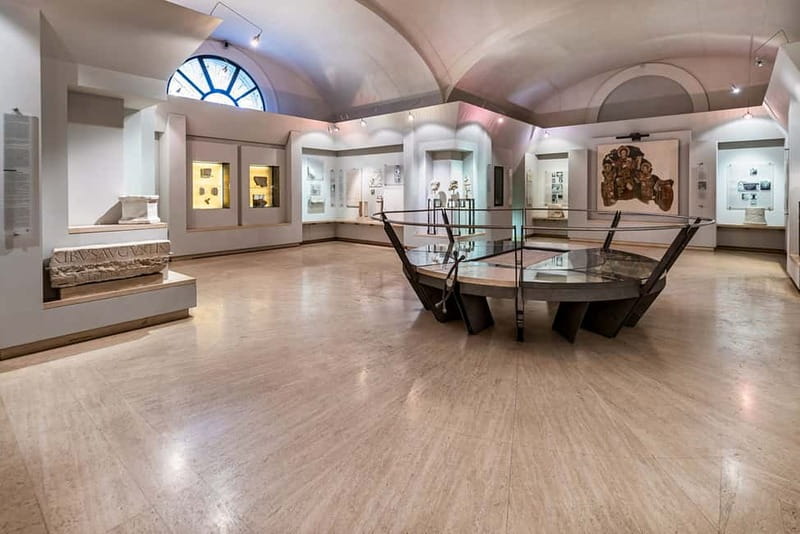
Reviewed · SELF-GUIDED TOURS
Rome: Roman House of the Celio Hill Ticket & App Audioguide
The Roman Houses of the Celio are interesting because you’re walking through an ancient neighborhood that ended up sealed underground, right beneath a major church. I love the perfectly preserved decorations and frescoes you can actually study up close, and I also like how the site shows the long shift from pagan life to Christianity in the same space. One thing to consider is timing, one reported snag is the venue closing earlier than expected, so check the hours on the day you go.
Think of this as a calm, focused counterpoint to Rome’s big-ticket ruins. I love that your visit starts at a clear street-level entrance, then drops you into an archaeological world built from real buildings, not reconstructions. Still, this is a self-guided experience with an included ticket plus a postcard, and the details say the audioguide is not included, so make sure you have the audio option you want before you arrive.
Key Highlights You’ll Care About
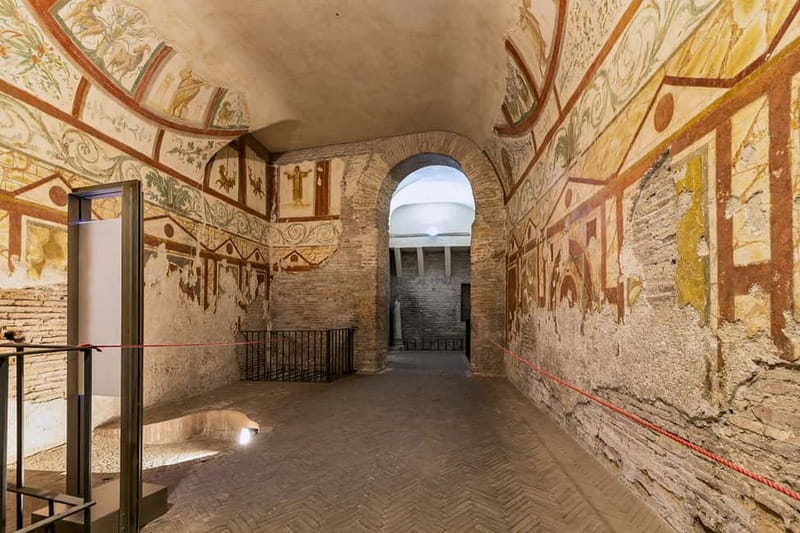
- Underground site under Saints John and Paul: you visit the archaeology right beneath the basilica area.
- Late antique frescoes in strong condition: you can spend time noticing the original decorations rather than just reading labels.
- Insula-to-domus transformation: the space shifts from workshop and warehouse use into a more elegant home during the 3rd century A.D.
- Pagan and Christian coexistence: you get a tangible sense of religious change over centuries in one location.
- Digital postcard (Pemcard): you can send a unique postcard to someone back home after your visit.
- Easy orientation for a first-timer: the site sits between the Colosseum and Circus Maximus, on the Celio hill area.
Roman Houses of the Celio, Right Under Saints John and Paul
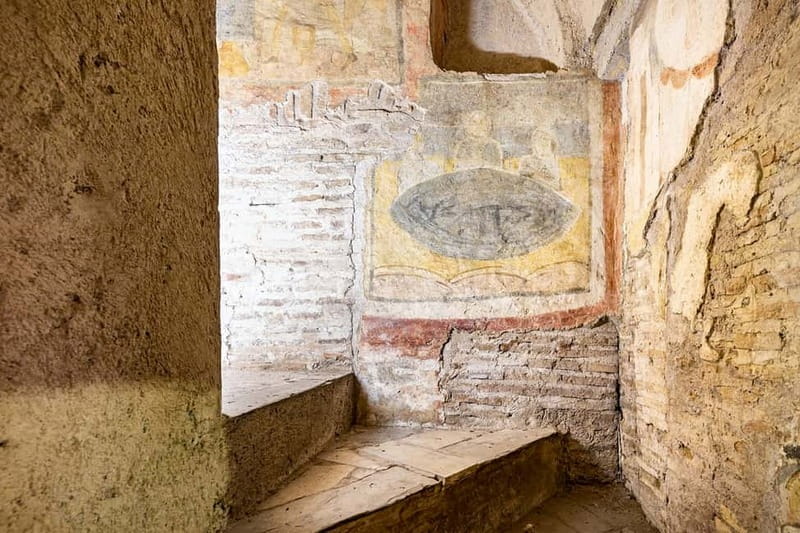
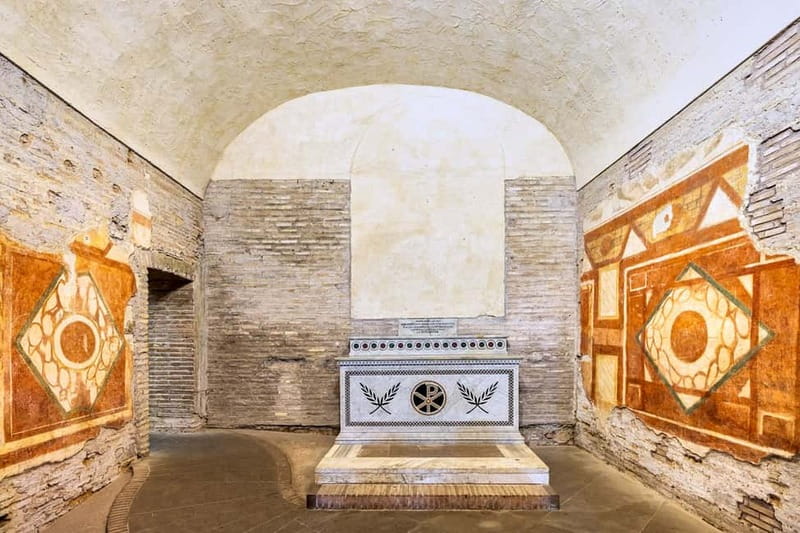
If you like Rome because it keeps revealing layers, this is for you. The Roman Houses of the Celio are an underground archaeological site located below the basilica of Saints John and Paul. That means your visit is not just about a single room. It’s about a whole complex of spaces that were reused and reinterpreted across centuries.
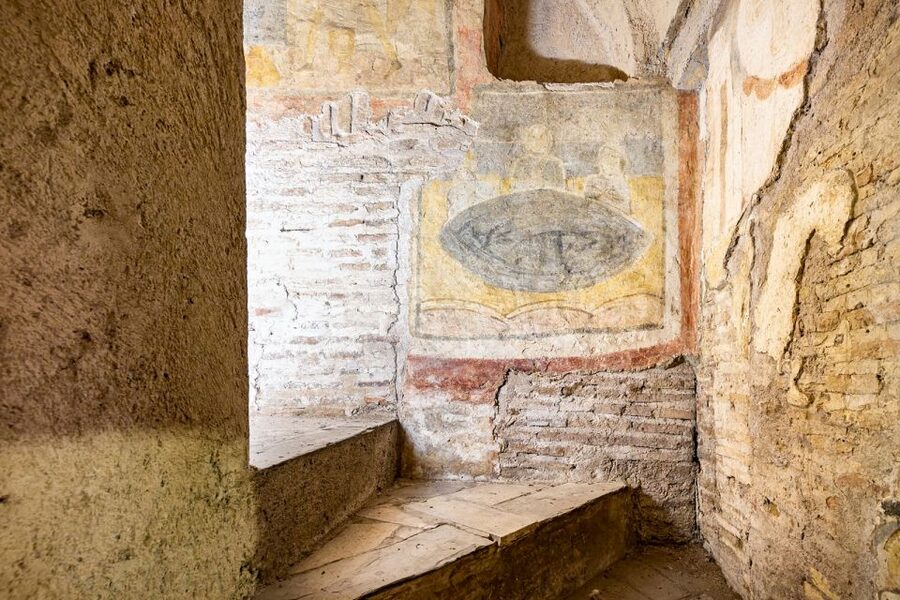
The big appeal is the state of preservation. You see original decorations and frescoes that are in unusually strong condition, not just traces. And because the site is underground, the atmosphere is different from the usual sun-baked exterior ruins. It’s a slower experience, where you can keep your eyes on details instead of fighting bright light and crowds.
Another reason I think this stop works well is its message about cultural change. This place gives you a way to picture how pagan life and Christianity could both exist within the same long-running urban fabric. You’re not learning that from a museum panel. You’re seeing it from the way the spaces were used and transformed over time.
A few more Rome tours worth comparing
- Rome: Colosseum & Forum with Audio Guide App -Optional Arena
★ 4.2 · 24,770 reviews - Rome: St. Peter’s Basilica & Dome Entry Ticket & Audio Tour
★ 4.2 · 7,537 reviews - Vatican & Sistine Chapel Ticket with Optional Audio Guide
★ 4.1 · 5,405 reviews
How to Get There: Case Romane del Celio on Clivo di Scauro
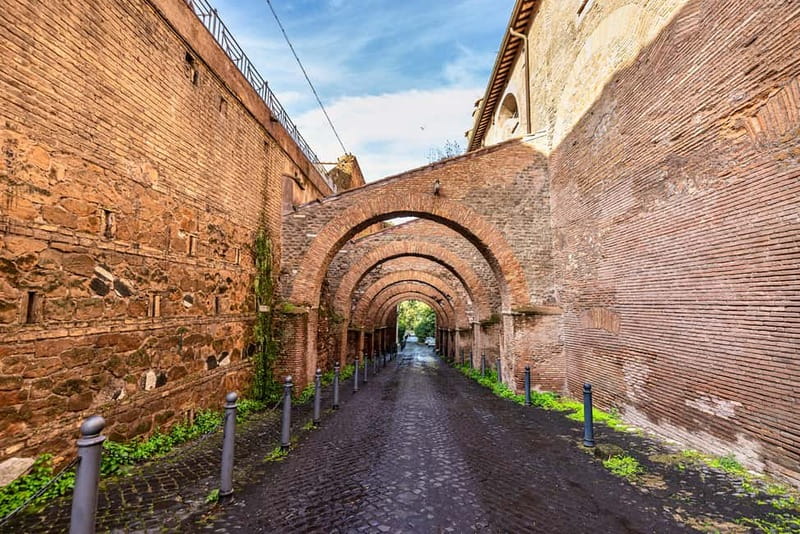
Your starting point is straightforward. Look for the Case Romane del Celio entrance on Clivo di Scauro road. That’s your meeting point.
Plan your walk based on simple landmarks. The Celio hill area is between two of Rome’s most famous sights, the Colosseum and Circus Maximus. If you’re already doing a route through that zone, this fits nicely as a side stop that doesn’t require extra bus or train travel.
One practical tip: arrive a few minutes early. The experience ends back at the meeting point, so once you’re in, you’re essentially doing a loop that returns you to where you started. No mystery exits, no long trek to another end of the city.
Ticket Value: What You Pay $11 For (and What You Don’t)
The price is $11 per person. At that cost, you’re mostly paying for access to a specific underground archaeological experience plus a digital postcard.
Here’s what’s included:
- Roman Houses of the Celio entrance ticket
- Postcard (a digital postcard, described as a unique Pemcard)
Here’s what is not listed as included:
- Audioguide
That audioguide note matters. Even though the experience title references an app audioguide, the provided details also say audioguide is not included. So before you go, make sure you know what audio option you’ll actually have. If you prefer guided storytelling, don’t assume it will be provided automatically at the door.
Is $11 worth it? For me, the math is tied to how specific the site is. You’re paying for a preserved underground complex under a basilica, with frescoes and centuries of layering in one place. If you’re already in the Colosseum to Circus Maximus area, the value is strong because you’re not spending extra money and time just to get to a remote destination.
Also, it’s rated 4.1 out of 5 from 17 reviews. That tells me most people are finding it worthwhile, even if a few details like closing time can trip you up.
Your Visit Flow Underground, From Entrance to Exit
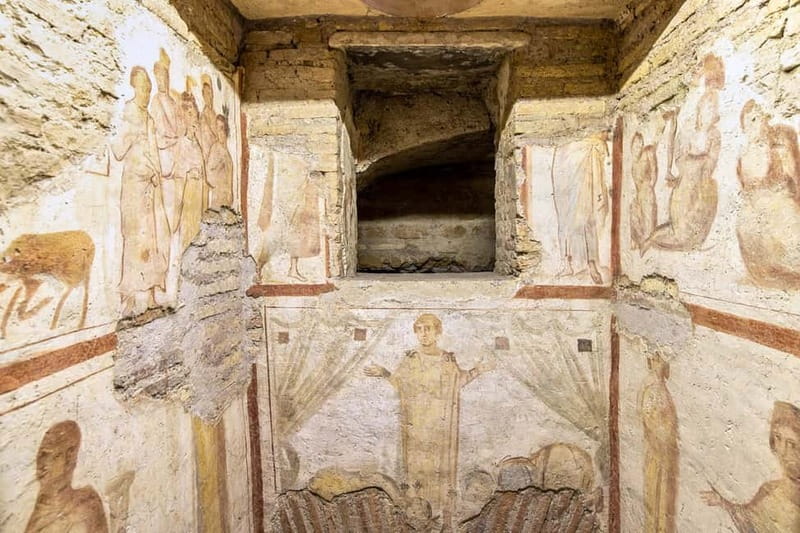
This is a ticket-based visit with a clear starting point and ending point. After you arrive at the Case Romane del Celio entrance, you’ll work through the underground rooms and corridors. The visit is valid for 1 day, and starting times depend on availability.
Because the duration and timing are controlled by starting slots, don’t plan to treat it like a “drop in anytime” stop. If you want a relaxed visit, pick a time that leaves breathing room for other sights nearby. You’ll be walking through an archaeological site, not racing between outdoor landmarks.
Wheelchair access is listed as available. That’s good for planning. If you use a wheelchair, it’s still smart to get there early enough to handle any stairs, narrow sections, or pacing issues, since underground layouts can vary.
Finally, keep your phone handy. The visit includes a postcard sending feature, so you’ll want your device ready to use during or right after your visit.
Same city, a completely different kind of day:
- Vatican Museums & Sistine Chapel Tour with Optional Basilica
★ 4.3 · 67,413 reviews - Vatican Museums, Sistine Chapel & St Peter’s Basilica Guided Tour
★ 4.5 · 39,149 reviews - Rome: Colosseum, Palatine Hill and Roman Forum Guided Tour
★ 4.8 · 32,814 reviews - Rome: Guided Tour of Colosseum, Roman Forum & Palatine Hill
★ 4.7 · 27,897 reviews
What You’ll Actually See: The Insula That Became an Elegant Domus
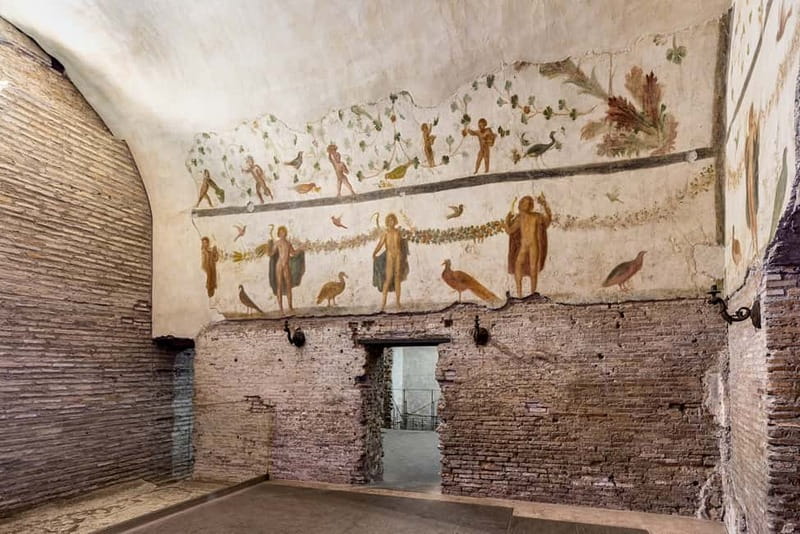
A key detail in the site is how the buildings changed over time. The spaces you walk through were originally part of a multi-storey building, an insula, with practical uses like workshops and warehouses.
Then, during the 3rd century A.D., that same overall building area was transformed into an elegant domus. That shift is more than an architectural footnote. It’s a story you can sense in the way rooms and decorations are arranged. When a neighborhood upgrades from functional spaces to home-like status, it usually means wealth, status, and changing tastes. In other words, the building reflects social change.
So when you’re in the underground rooms, try to look at it as a before-and-after. Imagine the same footprint used for daily production, then repurposed into more refined living space. The fact that the frescoes are described as late antique adds another layer: you’re not just seeing architecture, you’re seeing decoration that aligns with the later phase of the building.
This is why the site can feel more meaningful than you might expect from a smaller stop. Even if your time in Rome is limited, you’re getting a clear timeline in a place you can walk through.
Frescoes and Original Decorations: How to Look Without Overthinking It
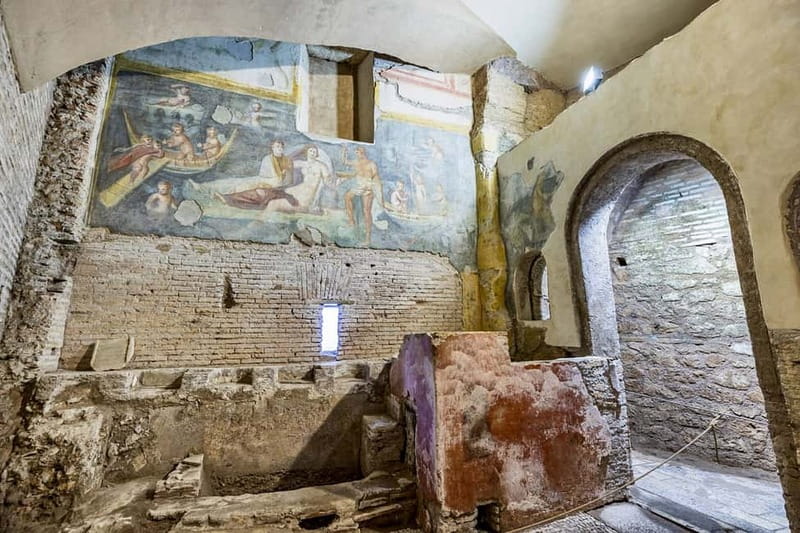
One of the best reasons to book is the well-preserved original decorations. Frescoes are often the first thing people rush past, because you feel like you need to read every label. Here, you can do better than that by using a simple approach.
Spend your time on three things:
- Condition: look for where the paint is still crisp, where colors hold up, and where sections remain readable.
- Placement: notice how the decoration relates to the space around it, like room corners or wall surfaces.
- Consistency: if multiple areas share the same style or late antique feel, that helps you understand the later domus phase.
The details you’re given mention beautiful late antique frescoes. So keep that in mind. You’re not looking for modern interpretations. You’re trying to read the visual language of the period, even if you only understand some of it.
Also, because the site is underground, lighting can make a difference. Don’t be afraid to pause and change your angle. If something looks washed out, shift positions and give your eyes a moment. You’ll often spot brushwork and composition details that you would miss if you were just walking straight through.
Paganism and Christianity in the Same Place
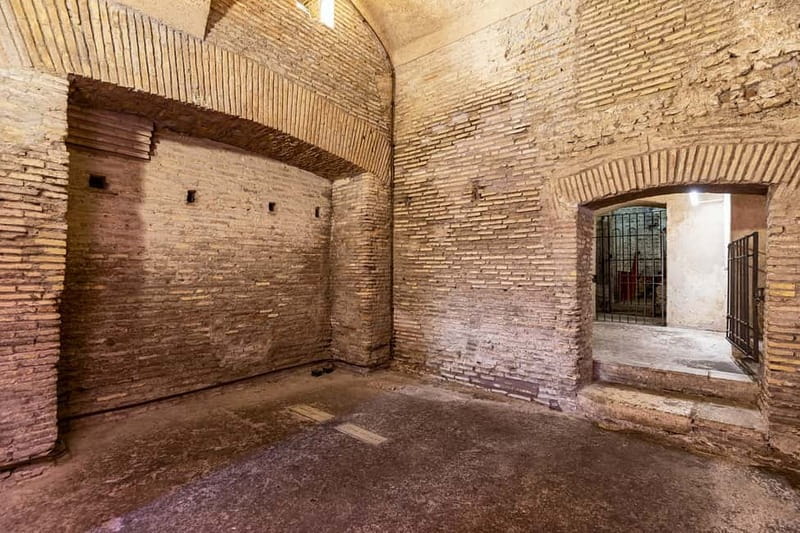
This site is described as showing the passage and coexistence of paganism and Christianity in ancient Rome. That’s a big claim, and the value is that it’s not abstract. It’s tied to the site’s long life.
Here’s how I think about it in a practical way. Rome is famous for layers, but you don’t always get a visible bridge between eras. With the Celio houses, you’re in a complex that spans multiple phases. The transition shows up in how spaces were used, repurposed, and redecorated over time.
If you’re coming from mainstream Roman ruins, you might be used to seeing pagan-era sites on one day and Christian-era sites on another. This gives you a more connected story, one building timeline that helps you picture how religious change played out gradually, not as a sudden switch.
That’s also why the location matters. The houses are right below the basilica of Saints John and Paul. The modern religious site sits above older layers, making the relationship between eras feel physical.
The Digital Pemcard Postcard You Can Send Home
The experience includes sending a unique digital postcard, described as a Pemcard. That’s a small add-on, but it’s a fun one, especially if you travel with people who want proof you actually left the hotel.
Because it’s digital, you don’t have to hunt down stamps, paper, or an envelope. You can send it to family or friends anywhere in the world. It’s also a handy way to remember what you saw without relying on memory alone.
Bring your phone charger if you’re prone to low battery. Underground sites can drain your battery faster than you expect due to screen brightness and occasional weak signal. Keep the postcard step in mind as part of your visit, not a last-minute task.
Timing Considerations: Check Closing Times Before You Trust the Clock
One review detail stands out as a real-world caution. Someone reported that the venue closes earlier than expected, specifically saying it closed at 3 instead of 4. That’s not something you should ignore if you have a tight Rome itinerary.
So here’s my advice: check the posted hours as close to the day and time of your visit as you can. Then build a buffer in your plan. If you’re also seeing nearby sights like the Colosseum or Circus Maximus, avoid scheduling something major immediately after your Celio slot.
This kind of timing issue is exactly the type that can turn a good visit into a rushed one. A 10 or 20 minute buffer can protect you from disappointment.
Who This Is Best For (and Who Should Skip It)
I think the Roman Houses of the Celio are a great fit if you want:
- Underground Rome without a huge time commitment
- A close-up look at frescoes and original decorations
- A place that connects architectural change to a broader story of Roman life
- A calm alternative to only big outdoor ruins
You might not love it as much if:
- You only want famous, loudly marketed sights and nothing quieter
- You depend on an included audioguide and don’t want to troubleshoot audio options
- You need a very flexible visit window with no set starting time
This is a good choice for couples, solo travelers who like to wander slowly, and anyone who enjoys archaeology but wants something less crowded than the biggest headline sites.
Should You Book the Roman Houses of the Celio Ticket?
If you’re already in the Colosseum and Circus Maximus area, I’d book this. For $11, you get access to a preserved underground complex under the basilica of Saints John and Paul, plus a digital postcard. The building story, the late antique frescoes, and the theme of religious change all make it feel more substantial than many add-on tickets.
However, I’d book with two cautions in mind. First, the details say the audioguide is not included, so confirm what you’ll have for audio. Second, plan around the possibility of earlier closing times, since at least one person experienced that mismatch.
Overall, if you want a meaningful Rome stop that mixes architecture, art, and cultural transition in one tight underground setting, this is a strong yes.
FAQ
Where is the meeting point for the Roman Houses of the Celio?
You should look for the Case Romane del Celio entrance on Clivo di Scauro road.
How much does the ticket cost?
The price is listed as $11 per person.
How long is the visit valid?
The ticket is valid for 1 day. Starting times depend on availability.
Is an audioguide included?
No. The details list audioguide as not included, so check what audio option you will have.
Is the site wheelchair accessible?
Yes. Wheelchair access is listed as available.
What is the cancellation and payment flexibility?
Cancellation is listed as free up to 24 hours in advance for a full refund, and there is also a reserve now & pay later option.
Recently reviewed around Rome
- Ancient Etruscan Civilization Tour from Rome★ 5.0 · 16 reviews
- Colosseum with Arena Floor Express Guided Tour★ 3.5 · 22 reviews
- Private Tour – Ancient Ostia★ 5.0 · 42 reviews
- PRIVATE Appian Way and Lake Albano Ebike Tour with Italian Lunch★ 5.0 · 12 reviews
- Ancient Appian Way and Roman Countryside E-Bike Tour★ 4.5 · 13 reviews
- Ancient Appian Way PRIVATE Bike Tour★ 5.0 · 89 reviews
- Catacombs and Hidden Underground Rome: Small Group Max 6 People★ 5.0 · 293 reviews
- Amalfi Coast Day Trip from Rome by High-Speed Train★ 4.5 · 162 reviews
Self-Guided Tours, compared.

Colosseum & Forum with Audio Guide App -Optional Arena
Read our review →
Pantheon Fast-Track Ticket and Official Audio Guide
Read our review →
Colosseum, Forum, Palatine Hill Entry & Audioguide App
Read our review →
St. Peter’s Basilica & Dome Entry Ticket & Audio Tour
Read our review →
Vatican & Sistine Chapel Ticket with Optional Audio Guide
Read our review →
Colosseum, Forum, & Palatine Hill with Audio Guide
Read our review →
Pantheon Reserved Entry Ticket with Audio Guide
Read our review →
Castel Sant’Angelo Skip-the-Line Ticket & Audio Guide
Read our review →Browse the lists this tour appears in