
Reviewed · PRIVATE TOURS
Rome: Private Capitoline Museums Tour
This private Capitoline Museums tour is interesting because it ties together Roman myth, imperial power, and the view that makes the Forum feel close enough to touch. I love how the visit starts in Capitoline Square, designed by Michelangelo, then flows into the museum like one connected story. I also love the focus on the biggest symbols, including She Wolf, plus the bronze Marcus Aurelius that anchors the experience. One possible drawback: the pace is tight, and the museum is not ideal if you have limited mobility, since not every level is served by the one elevator.
You’ll get a professional local guide, a private group, and a 2.5-hour format that is built for highlights without feeling rushed or lost in labels. The best part is how the guide helps you “fit the pieces together,” so the statues stop being random and start making sense. If you’re the type who likes stopping to read every placard, you may find yourself wanting extra time, but that is true of any museum tour that focuses on the essentials.
Key moments worth planning for:
- Michelangelo’s Capitoline Square: you begin right where the setting matters
- Oldest European public antiquities collection: designed to help the story connect
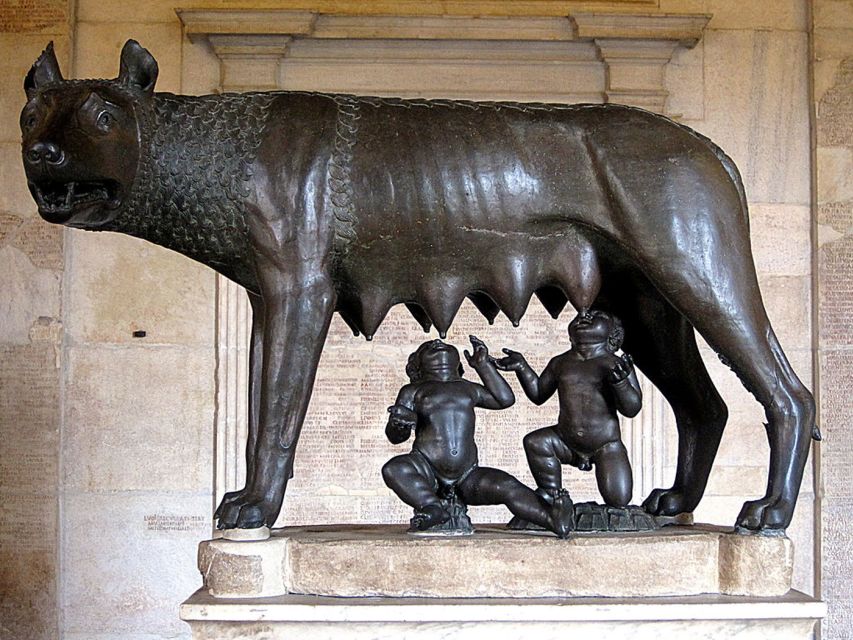
- The She Wolf: a quick hit of what Rome chose as its symbol
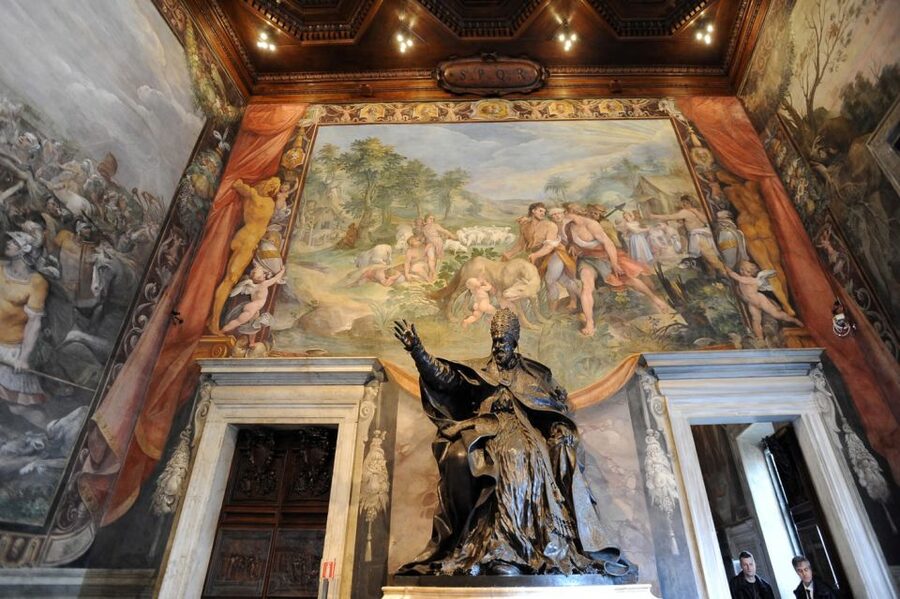
- Marcus Aurelius Exedra and the bronze statue: imperial Rome, in metal and marble
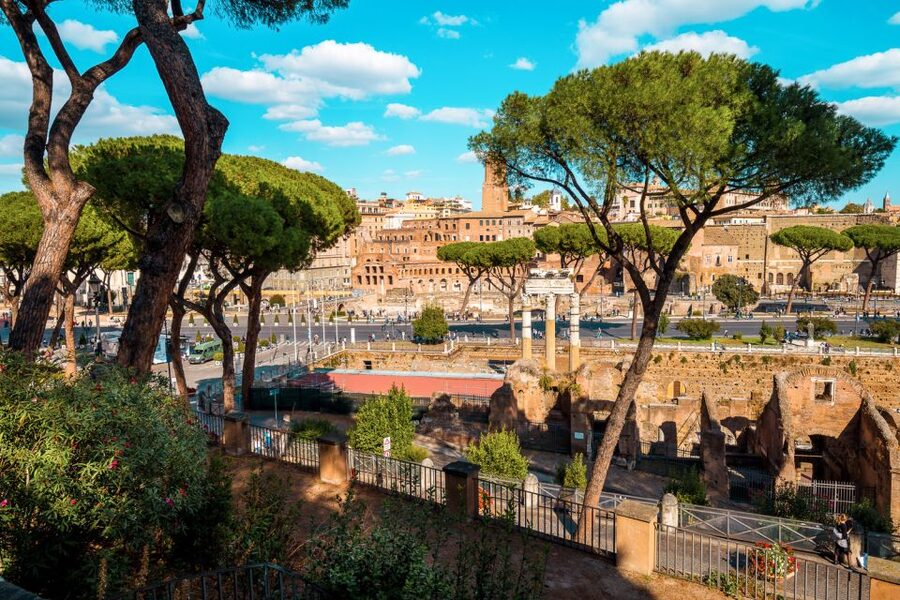
- Jupiter Temple ruins and Forum views: history plus the payoff view from the museum
Where It Really Starts: Michelangelo’s Capitoline Square and the Meeting Point
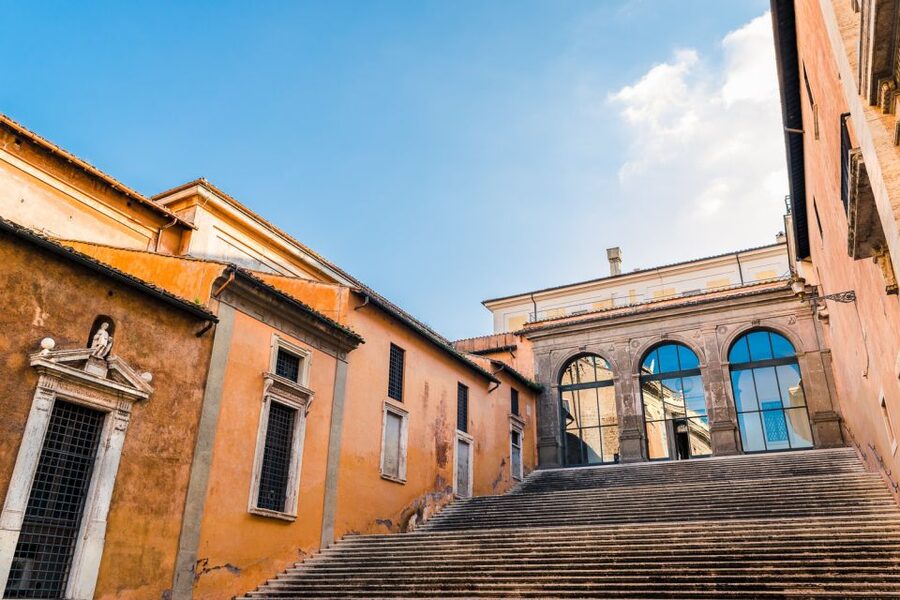
The tour begins in the middle of Capitoline Square, in front of the statue of Marcus Aurelius. That matters more than you might think, because you’re not just entering a museum. You’re stepping onto one of Rome’s most deliberate viewpoints and layouts, with the square itself doing part of the work for you.
Your guide holds a sign with your name and hands over tickets on the spot. This keeps things simple, especially if you arrive slightly early and want to get oriented fast. In practice, the square is also your warm-up. Even before you step inside, you can start spotting the geometry of the space and get a sense of why this hill and this complex became such a focal point.
If you are traveling with big bags or luggage, plan to leave them behind. Large items are not allowed, so bring only what you can comfortably keep with you during a walking tour.
The Capitoline Museums: How a “Connected Story” Changes What You Notice

Once inside, the museum is laid out for you to understand how the pieces relate. The collection dates back to Pope Sixtus IV and was created at the end of the 15th century, and that long arc is part of the charm. You’re not just looking at Roman objects, you’re also seeing how later leaders gathered and presented Roman Rome.
In a private format, the guide can adjust to your questions. That’s a big value point here because it’s easy to stand in front of statues and feel like you’re missing the thread. A good guide helps you stop at the right works, in the right order, and explains how they connect, so the museum doesn’t feel like a checklist.
Expect a heavy emphasis on marble and bronze statues. That is exactly what makes this collection feel uniquely “Roman.” The materials and craftsmanship help you see continuity: ideas about power, identity, and the city itself show up again and again.
More museums and galleries in Rome:
- Vatican Museums & Sistine Chapel Tour with Optional Basilica
★ 4.3 · 67,413 reviews - Vatican Museums, Sistine Chapel & St Peter’s Basilica Guided Tour
★ 4.5 · 39,149 reviews - Rome: Vatican Museums, Sistine Chapel & Basilica Tour
★ 4.3 · 13,872 reviews
The She Wolf Stop: Rome’s Symbol in Plain View
The She Wolf is one of those objects you hear about before you ever arrive, but the difference on this tour is context. Instead of treating it like a famous photo spot, you get the meaning of why it sits at the center of Rome’s self-image.
This is a great moment for your eyes to adjust. Early in the tour, it’s easy to feel like everything is crowded together. The guide’s highlight approach helps you slow down right where it counts, so you can actually register what the symbol is doing and why it matters to the museum’s bigger narrative.
If you like myth and identity, this stop delivers quickly. If you prefer politics and emperors, it still works, because it shows you that Rome used symbols long before you reach the imperial pieces.
Marcus Aurelius Exedra and the Bronze Statue That Anchors the Tour
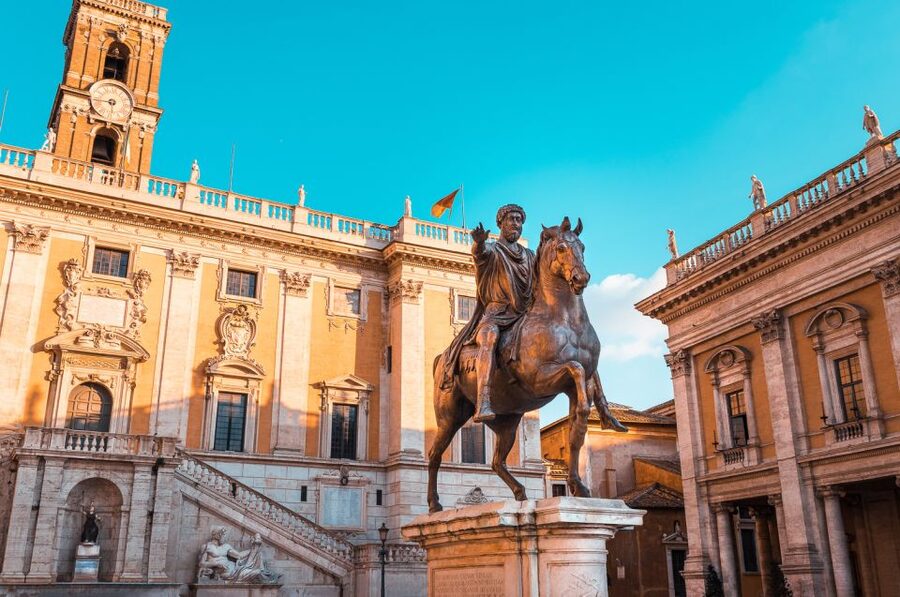
After She Wolf, the tour shifts into a more formal, imperial zone, starting with the Marcus Aurelius Exedra. This is where the museum feels especially designed, like a stage set for the right kind of attention.
You then see the bronze statue of Marcus Aurelius, which dates back to the 2nd century A.D. That date turns the statue from impressive to grounding. You’re not just looking at an art object, you’re looking at something with a long-lived presence, survived through centuries and now presented for modern eyes.
In my experience with Roman museum tours, the biggest difference between a good one and a forgettable one is whether someone helps you “read” the statue beyond appearance. Here, the guide steers you toward the highlights and keeps the story moving, so you leave knowing what you saw and why it was chosen for this museum route.
If you’re hoping for that adrenaline of, I get it now, this is one of the spots where it clicks. The private pace makes it easier to ask follow-up questions right there instead of trying to remember later.
Temples, Ruins, and the Forum Views You Came for
The tour continues to archaeological ruins tied to the ancient Capitoline Temple of Jupiter. Seeing ruins inside this kind of museum setting changes the way the stones feel. They don’t sit alone as “old rocks.” They become part of the same built environment you were looking at outside in Capitoline Square.
Then comes the best payoff: incredible views over the Roman Forum from the museum. This is the moment where you stop thinking about the collection as indoor objects and start thinking about the city as a whole system. The Forum looks different once it’s in your line of sight from the museum, because you’re no longer only imagining crowds and ceremonies. You can connect where you are to where Rome’s major drama unfolded.
This is also where rain or shine matters less, since the views are still the views. You’ll want to manage how long you linger, though. A 2.5-hour tour is designed to cover the highlights, so if you’re planning on long, slow photo time, consider pairing it with another self-guided visit later.
More private tours in Rome:
- Rome by Golf Cart Private Tour: Beyond the Landmarks
★ 5.0 · 4,361 reviews - Early Morning Vatican, Sistine, St. Peter’s Semi or Private Tour
★ 5.0 · 3,779 reviews - Rome on a Golf Cart Semi-Private Tour Max 6 with Private Option
★ 5.0 · 2,502 reviews - Rome Private Arrival Transfer: Fiumicino Airport to Hotel in Rome
★ 4.5 · 2,492 reviews
The Private Guide Experience: Why People Rate This So High
The strongest theme across the guides is energy and story control. When I look at high ratings, I look for repeatable signs of quality, like a guide who keeps the group engaged and makes the artifacts click into place.
This tour delivers that. One guide, Vincenzo, was highlighted for being high energy and extremely enthusiastic, with explanations that made Rome feel like a story rather than a stack of items. Another guide, Martina, stood out for being friendly and full of great tips about your stay in Rome, on top of the museum storytelling.
What I like about that style is practical. You don’t just hear facts. You get pointed attention, a clean route through the must-sees, and useful “what to look for next” guidance. It’s the difference between wandering and learning quickly.
2.5 Hours on the Right Track: What You Should Do Before You Go
This is a short tour for a big museum, so you should show up ready to move. I recommend arriving with at least a basic mental map of the sites you want from Rome: myth and origin (for the She Wolf), imperial power (for Marcus Aurelius), and the Forum as the key backdrop.
Because it’s private and guided, you can also use the time efficiently. If you have one question you care about, save it for the part of the tour where it fits best, like when you’re standing near the imperial statue area.
A few practical notes from how the experience is run:
- Rain or shine: dress for weather and wear shoes with grip.
- No video recording: plan to use your memory and notes if you want to capture ideas.
- One elevator, but not all levels: if you’re someone who needs elevators to reduce stairs, this can be a constraint.
The tour is not recommended for people with limited mobility, and it is not suitable for wheelchair users. Even if you can manage some stairs, the fact that the elevator does not serve all levels is the kind of detail that can turn a day sour if you find out mid-tour.
Value Check: Is $135.94 Per Person Worth It?
At $135.94 per person for a 2.5-hour private tour, this isn’t the cheapest way to see the Capitoline Museums. The value comes from what’s included: tickets, a professional local guide, and the privacy of a private group.
If you plan to come without a guide, you’d need to spend extra time trying to connect the dots on your own. Here, you get the guide to handle the hard part: sorting priorities, building context, and getting you to the pieces that make the museum feel like one coherent story. That is where the money tends to pay off, especially on a first visit.
It also helps that the tour includes the “why” behind stops like She Wolf, the bronze Marcus Aurelius, and the Forum views. Those are the moments most people want, and this tour is structured around delivering them without making you guess what to prioritize.
Not included items are straightforward: no hotel pickup or drop-off, no private transportation, and no food or drinks. In other words, you are paying for the museum experience itself, not logistics and meals.
Who This Tour Suits Best (And Who Might Prefer Another Option)
This tour is a great match if you want a guided highlights route through a museum that can feel overwhelming without help. You’ll likely love it if you like:
- clear explanations that connect objects into a bigger story
- seeing major symbols in the places they were meant to be understood
- finishing with a viewpoint that ties the museum to the Roman Forum
It may be less ideal if you:
- need wheelchair access or have mobility limits that make stairs hard
- want a slow, spend-a-long-time reading style of museum visit
- plan to arrive with large bags or expect to carry lots of items around
FAQ
How long is the Rome: Private Capitoline Museums Tour?
It lasts 2.5 hours.
Where do I meet the guide?
Meet your guide in front of the statue of Marcus Aurelius, located in the middle of Capitoline Square. The guide holds a sign with your name and issues your tickets.
Is hotel pickup or transportation included?
No. Hotel pickup and drop-off, and private transportation, are not included.
What is included in the price?
Tickets, a professional local guide, and a private tour are included.
Are video recordings allowed inside the museum?
No, video recording is not allowed.
Is the tour private?
Yes, it is a private group tour.
What languages are offered?
The live guide is available in English and Italian.
Is the tour suitable for wheelchair users?
No. It is not suitable for wheelchair users, and it is not recommended for people with limited mobility.
Should You Book This Private Capitoline Museums Tour?
Book it if you want your first Capitoline visit to feel guided, focused, and satisfying, with the big symbols and the Forum view built into one tight 2.5-hour outing. It’s also a smart choice if you care about context, because the guide approach is designed to help everything fit together.
Skip it if mobility is a major issue for you, since not all museum levels are served by the one elevator. And if you’re the type who likes to linger at every label for a long time, you might prefer a longer self-paced visit so you can set your own tempo.
Recently reviewed around Rome
- Ancient Etruscan Civilization Tour from Rome★ 5.0 · 16 reviews
- Colosseum with Arena Floor Express Guided Tour★ 3.5 · 22 reviews
- Private Tour – Ancient Ostia★ 5.0 · 42 reviews
- PRIVATE Appian Way and Lake Albano Ebike Tour with Italian Lunch★ 5.0 · 12 reviews
- Ancient Appian Way and Roman Countryside E-Bike Tour★ 4.5 · 13 reviews
- Ancient Appian Way PRIVATE Bike Tour★ 5.0 · 89 reviews
- Catacombs and Hidden Underground Rome: Small Group Max 6 People★ 5.0 · 293 reviews
- Amalfi Coast Day Trip from Rome by High-Speed Train★ 4.5 · 162 reviews
Private Tours, compared.

Rome by Golf Cart Private Tour: Beyond the Landmarks
Read our review →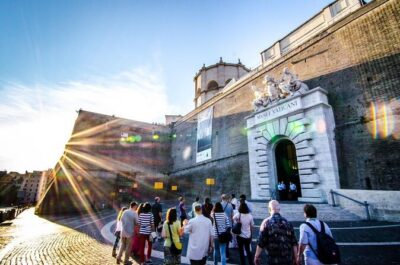
Early Morning Vatican, Sistine, St. Peter’s Semi or Private Tour
Read our review →
Rome on a Golf Cart Semi-Private Tour Max 6 with Private Option
Read our review →
Rome Private Arrival Transfer: Fiumicino Airport to Hotel in Rome
Read our review →
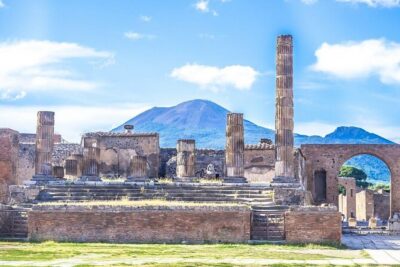
Private Pompeii, Positano & Amalfi coast Tour from Rome
Read our review →
Private Departure Transfer: Hotel to Rome Fiumicino Airport
Read our review →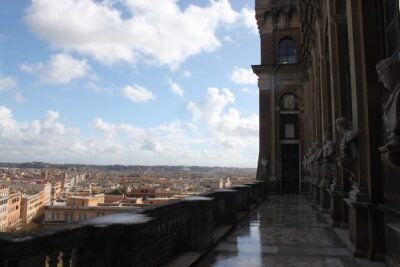
Private Vatican Highlights Guided Tour with Sistine Chapel
Read our review →Browse the lists this tour appears in