

Reviewed · JEWISH GHETTO TOURS
Rome: Jewish Ghetto Walking Tour
Rome’s Jewish Ghetto tour is interesting because it turns a small set of streets into a timeline you can walk. You’ll move from Roman-era structures to Jewish community life, and then out to Tiber Island stories tied to WWII.
I especially like how it starts at Trajan’s Column, where the neighborhood feels connected to the rest of the old city. I also like the included homemade Kosher gelato or coffee, because it gives the tour a real pause that feels local, not just sightseeing.
One drawback to consider: if you’re in Rome on Friday afternoon right before sabbath, plan timing carefully. The area and routines can feel different around that window.
Key points to know before you go

- Trajan’s Column meetup: easy starting point in the center of Rome, right where the story widens fast
- Theater of Marcellus: you’ll see a Roman landmark often described as older than the Colosseum
- Fontana delle Tartarughe: a famous Turtle Fountain stop with a love story angle
- A lived-in neighborhood feel: you’ll pass major Jewish sites and also notice the surviving bits of walls and streets
- Portico d’Ottavia: ancient architecture still used in daily life
- Tiber Island finale: WWII hospital rescue stories plus the Asclepius temple connection to a church today
Starting at Foro Traiano, 84: Getting Oriented Before You Walk
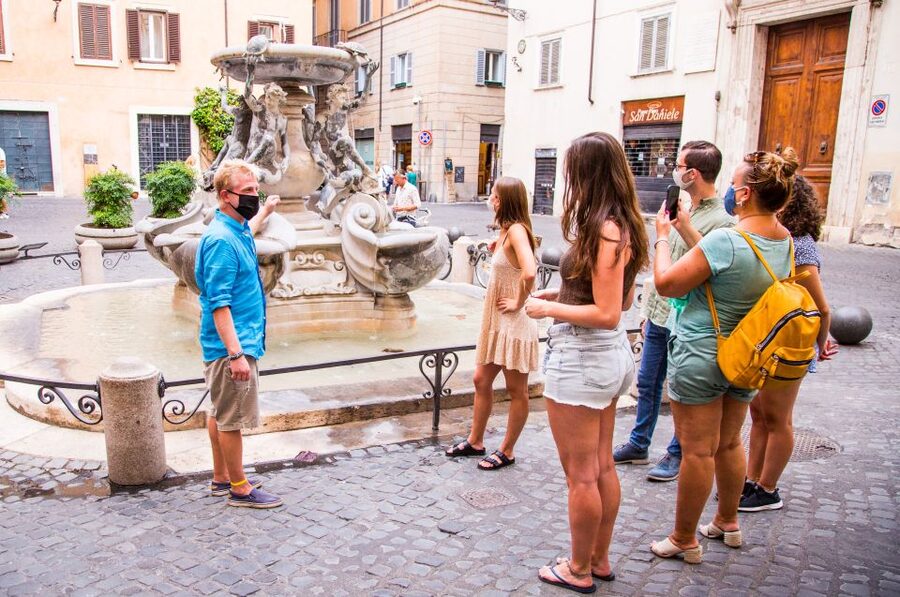
Your tour begins at Foro Traiano, 84. Look for the orange Roman Vacations sign at the meeting point, and you’ll get going from the area around Trajan’s Column. It’s a great choice because you’re already in the “center of gravity” of ancient Rome, so the later stops do not feel random.
The tour lasts 2.5 hours, and it’s a walking route built for steady viewing, not marathon pacing. That matters, because you want time to absorb stories as you pass monuments and small, specific corners of the neighborhood.
Come with comfortable shoes and a reusable water bottle. Also pack sunscreen and a hat. Rome can switch from mild to hot fast, and you’ll be outside for most of the experience.
More Jewish Ghetto tours in Rome:
- Rome: Trastevere or Jewish Quarter Street Food Tour
★ 4.8 · 3,839 reviews - Jewish Ghetto and Trastevere Tour Rome
★ 4.5 · 1,729 reviews - Jewish Ghetto and Synagogues with Jewish Roman Guide 3 Hours
★ 5.0 · 907 reviews
Theater of Marcellus: A Roman Landmark That Lifts the Whole Neighborhood
One of your first highlights is the Theatre of Marcellus, a major Roman-era structure you’ll spend time with as your guide explains what you’re looking at. This is not just a “see it from the street” stop. The tour frames the theater as part of Rome’s long architectural memory, and it helps you understand why this area matters even before the Jewish Ghetto chapter begins.
This stop is scheduled for about 20 minutes, which is enough time to notice scale and details, and still keep momentum toward the next story. If you like the idea of connecting major Rome sites into one big timeline, this is a good early hook.
Practical note: ruins and old stones can be uneven underfoot. Stay aware on the sidewalks and keep your footing steady, especially if the weather changes.
Fontana delle Tartarughe in Piazza Mattei: Love, Loss, and a Famous Twist
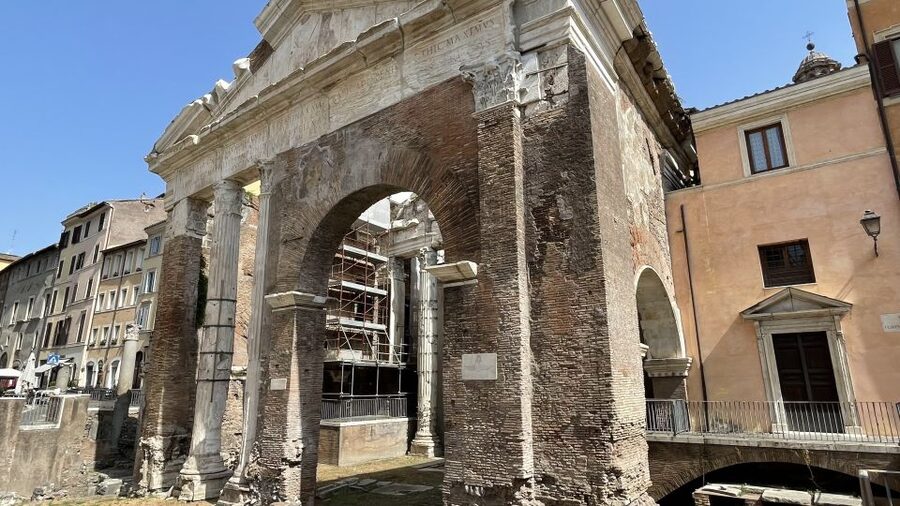
Next up is Piazza Mattei and the Turtle Fountain (Fontana delle Tartarughe). This is one of those Rome landmarks that instantly feels memorable once you learn the story attached to it. You’ll hear the famous angle about unrequited love tied to the fountain, which makes the stop more than a photo moment.
The tour time here is about 20 minutes, and that extra context is what you pay for. Without it, the fountain can look like just another pretty square. With it, you start noticing how Roman public spaces carried social and emotional meaning.
If you’re taking photos, do it early. Squares can get busy, and the guide will often move you along when it’s time for the next part of the walk. You’ll want a clear shot before the group flows.
Jewish Ghetto Streets: Walls, Resilience, and the Great Synagogue Stop
The heart of the experience is the Jewish Ghetto itself. Your guide will walk you through what this neighborhood meant over centuries, and how the city’s changing politics affected daily life. This is where the tour shifts from ancient architecture into human stories, including hardship, persistence, and community resilience.
You’ll also stop by a few major landmarks in the area, including the Great Synagogue of Rome (the tour focuses on the site as part of the route, not an inside visit). And you’ll see the last remaining piece of the wall that helped keep the Jewish community in this area for centuries. That single detail lands hard in the best way, because you can physically grasp what “enclosure” meant in the past.
Expect this segment to be emotionally direct. The tour includes stories that reach into WWII, so it is history with gravity, not just trivia. If you prefer light, funny-only tours, this may feel heavier than a typical “sights and snacks” walk.
More walking tours in Rome:
- Rome: Trastevere & Campo de Fiori Street Food Walking Tour
★ 4.9 · 2,768 reviews - Rome: Paranormal Night Walking Tour & Secret Backstreets
★ 4.9 · 1,921 reviews - Rome by Night Walking Tour – Legends & Criminal Stories
★ 4.5 · 1,003 reviews - Rome: Guided City Center Evening Sightseeing Walking Tour
★ 4.4 · 953 reviews
Portico d’Ottavia: Ancient Rome You Can Still Feel in the Present
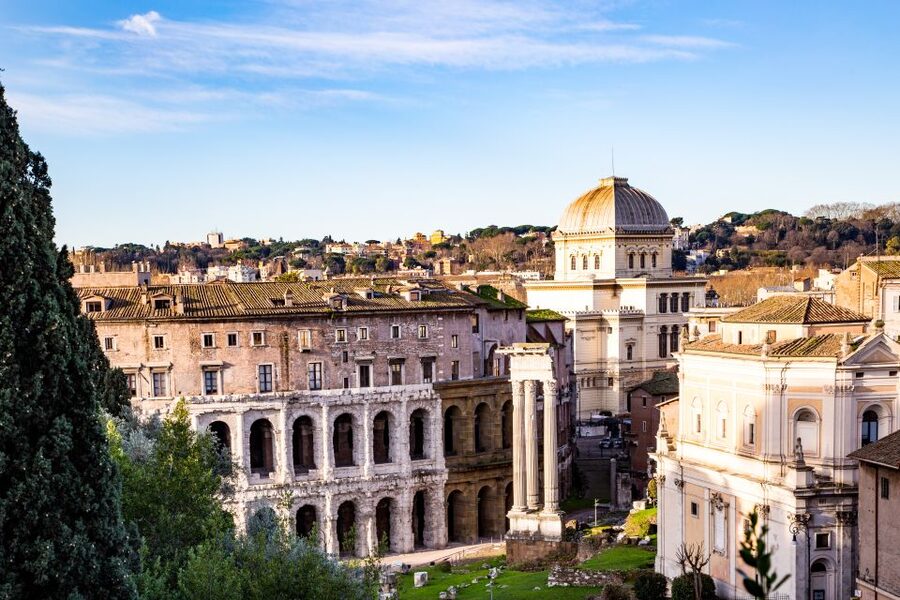
After the ghetto-focused portion, you’ll head to Portico d’Ottavia. Your guide will explain what you’re seeing and how it connects back to the older Rome that sits under so much of the city.
This stop is about 15 minutes. It’s short, but it works because Portico d’Ottavia is one of those places where the bones of Rome are visible and active at the same time. You’ll get a clear sense of why Roman architecture survived, adapted, and continued to matter beyond the emperor-era spotlight.
If you’re the type who likes to understand how people actually used spaces, this is a good match. You’re not just looking at monuments. You’re learning how old structures remained part of daily life.
Tiber Island Finale: The Oldest Working Bridge and WWII Hospital Stories
The tour ends with a crossing to Tiber Island (Isola Tiberina), preceded by a walk across the oldest functioning bridge in Rome as your guide tells the story of the crossing and what it symbolized over time.
Once you arrive on the island, the tour shifts again into layers of meaning. You’ll hear stories about a hospital saving people during WWII, which ties this route to the modern tragedy and survival history of Europe. Then there’s a second thread about Asclepius, the medical figure tied to a temple that connects to a church that exists on the site today.
This segment is about 15 minutes. It’s not long, but it’s designed to give you two complete ideas: the medical-humanitarian angle from WWII and the older medical mythology angle from antiquity. That pairing is one of the most memorable parts of the whole walk.
If you want a calm ending spot, Tiber Island can deliver. It’s a different pace from the bustle of the main streets.
Kosher Gelato (or Coffee): Food That Grounds the History
A key included moment is your stop at a gelateria for homemade Kosher gelato (or coffee, depending on what’s offered that day). This isn’t listed as a random snack break. It’s timed as part of the route so you can reset and digest the earlier history before you hit the next set of stops.
I like included food stops that are simple and relevant. Here, it fits the theme. You’re experiencing the neighborhood through its food culture, not just its monuments.
Plan to bring patience if the gelateria line is short or slow. It’s usually quick, but you are on a set 2.5-hour schedule.
Price and Value: What $65 Buys You in Two and a Half Hours

At $65 per person, this tour is priced like a focused, guide-led experience rather than an open-ended walking tour. The math is clearer once you remember what’s included: a live English-speaking guide plus Kosher gelato or coffee.
The value comes from the density of stops and the “why it matters” explanations. Theater of Marcellus, the Turtle Fountain story, ghetto walls, Portico d’Ottavia, then Tiber Island with WWII hospital stories and Asclepius. That’s a lot of Rome history packed into one route.
Also, strong reviews often highlight a key point: the guides tend to teach in a story-forward way, not just recite dates. If you’ve ever taken a tour where you feel like you’re reading a placard out loud, you’ll appreciate how different this feels. You also get good group energy for families and teens, since the storytelling approach is a practical way to keep attention.
One more small consideration: this is a walking tour. If you’re tired at the start of your day, you may feel it more than a museum tour. But if you come rested, it works.
Weather, Footwear, and the Small Details That Save Your Day
Tours run in all weather conditions, so plan like you’ll walk in sun and maybe sudden clouds. Bring an umbrella. Bring sunscreen and a sun hat. Rome sun is no joke.
Also bring clothing that can handle church entry rules if you get close to church interiors during the route. The tour notes that you should have a cover for bare shoulders inside churches.
One more practical thing that people sometimes forget: tours cannot be delayed for late arrivals, and missed tours are not refunded. That means you should arrive early enough to find the orange sign without rushing.
Who This Tour Fits Best, and Who Might Want a Different Option
This tour fits best if you want history that has layers. You’ll get Roman architecture, Jewish community life, and WWII rescue stories in one arc. It’s also a good choice if you like your guides to explain with context and small anecdotes, because the stops are framed as stories you can follow.
It’s also a strong match for mixed groups. Even if you’re not Jewish, you’ll leave with a clearer picture of how Rome’s past shows up in the streets and sites today. The route is designed to help you understand more than one era at once.
If your top goal is to go inside the Great Synagogue, plan carefully. This tour focuses on major sites along the route, but the provided details do not promise an interior visit. In that case, you might want to check whether a separate synagogue-specific option is available during your dates.
Should You Book This Jewish Ghetto Walking Tour?
Yes, I think you should book it if you want a guided walk that turns key Rome sites into a coherent story. The price includes a guide and a food stop, and you get a smart mix: Roman-era landmarks, the ghetto’s surviving wall trace, the Turtle Fountain love story, and a meaningful closing on Tiber Island with WWII and Asclepius connections.
Skip it or rethink timing if you’re traveling on Friday afternoon close to sabbath start, or if you prefer lighter, less emotionally heavy history. Otherwise, it’s a high-value way to see a quieter, intensely meaningful side of Rome.
FAQ
Where is the meeting point?
You meet at Foro Traiano, 84. Look for an orange Roman Vacations sign.
How long is the tour?
The tour runs for 2.5 hours.
What’s included in the price?
The price includes a tour guide and Kosher gelato or coffee.
Do I need comfortable shoes?
Yes. The tour is a walking route, so you should wear comfortable shoes.
What should I bring for the weather?
Bring a sun hat, umbrella, sunscreen, and a reusable water bottle. The tour proceeds in all weather.
Are there any clothing rules for church stops?
Yes. Bring a cover for bare shoulders when you are inside churches.
Recently reviewed around Rome
- Ancient Etruscan Civilization Tour from Rome★ 5.0 · 16 reviews
- Colosseum with Arena Floor Express Guided Tour★ 3.5 · 22 reviews
- Private Tour – Ancient Ostia★ 5.0 · 42 reviews
- Ancient Appian Way and Roman Countryside E-Bike Tour★ 4.5 · 13 reviews
- PRIVATE Appian Way and Lake Albano Ebike Tour with Italian Lunch★ 5.0 · 12 reviews
- Ancient Appian Way PRIVATE Bike Tour★ 5.0 · 89 reviews
- Catacombs and Hidden Underground Rome: Small Group Max 6 People★ 5.0 · 293 reviews
- Amalfi Coast Day Trip from Rome by High-Speed Train★ 4.5 · 162 reviews
Jewish Ghetto Tours, compared.

Trastevere or Jewish Quarter Street Food Tour
Read our review →
Jewish Ghetto and Synagogues with Jewish Roman Guide 3 Hours
Read our review →
Eat Like a Roman Ghetto & Campo de’ Fiori Food Tour
Read our review →
Jewish Ghetto & Piazza Navona: Food, Wine & Sightseeing Rome Tour
Read our review →
Food & Wine Tour of Campo de Fiori, Ghetto, Trastevere
Read our review →
Jewish Ghetto & Campo de Fiori by Night Food Wine Tour
Read our review →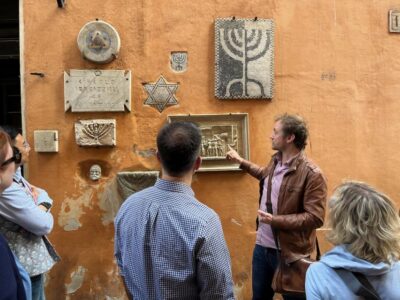
Browse the lists this tour appears in