Reviewed · GUIDED
Rome: Domus Aurea Guided Tour and Virtual Reality Experience
What makes the Domus Aurea experience worth your time is the combo of archaeology and virtual reality that helps you picture Nero’s Golden House as it once may have appeared. I especially like how the guide-led walk puts you in specific key spaces, like the Octagonal Hall and Cryptoporticus, while the Oculus VR portion turns the story into something you can actually see.
There is one consideration before you book: it can feel tight inside certain areas, and the site is around 10 degrees Celsius, so you’ll want a warm layer. If you’re prone to claustrophobia, this is not a good fit, even with the VR to break up the mood.
Key highlights at a glance
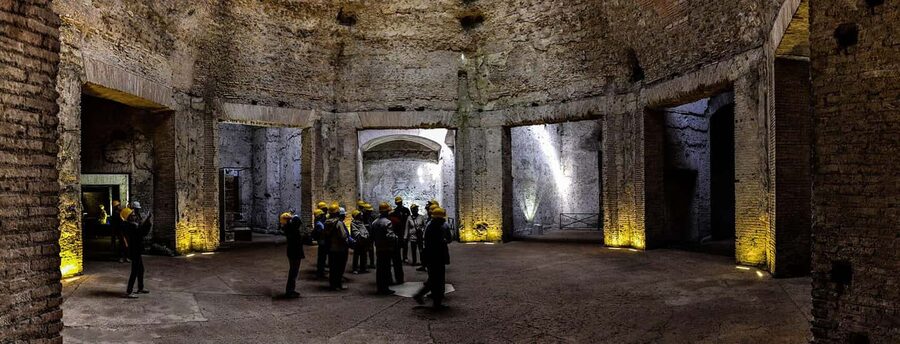
- Oculus VR experience designed to show the Golden Vault as it may have looked in Nero’s time
- 70-minute guided tour that focuses on major rooms and decorative features
- Roman painting and decorative apparatus explained in a way that actually makes sense
- Concrete as a building material gets real attention, not just a passing mention
- Stops include the Octagonal Hall, Cryptoporticus, and the Hall of Birds
- Guides often go deep on questions, with standouts like Claudia mentioned for clarity and care
Why Nero’s Golden House hits differently with VR
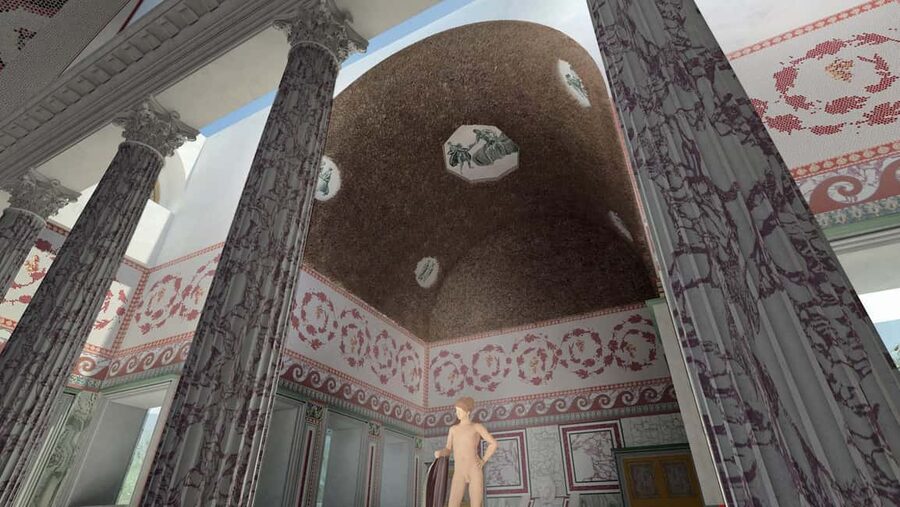
The Domus Aurea is one of those places where your brain naturally asks, so where was the roof, where were the floors, and how did this space feel back then? The guided tour answers those questions with the physical ruins in front of you, but the virtual reality part is what helps you connect the dots fast.
What I like most is that the VR is not a random “cool video.” It is aimed at showing you a specific moment in the site’s story, including the Golden Vault and how it may have looked in Nero’s era. That pairing makes the walk feel less like moving through isolated rooms and more like following a designed experience.
You also get a multisensory storytelling approach, meaning the whole event is built to be more than lecture notes and photos. And yes, the topic is inherently dramatic, since Nero is the emperor tied to wild parties and one of Rome’s most notorious reputations.
The bottom line: if you enjoy seeing ruins with context and you like using technology to picture the past, this tour makes a lot of sense for a short time in Rome.
A few more Rome tours worth comparing
- Vatican Museums, Sistine Chapel & St Peter’s Basilica Guided Tour
★ 4.5 · 39,149 reviews - Rome: Colosseum, Palatine Hill and Roman Forum Guided Tour
★ 4.8 · 32,814 reviews - Rome: Guided Tour of Colosseum, Roman Forum & Palatine Hill
★ 4.7 · 27,897 reviews
Getting started from the Colosseo metro station (and why early matters)
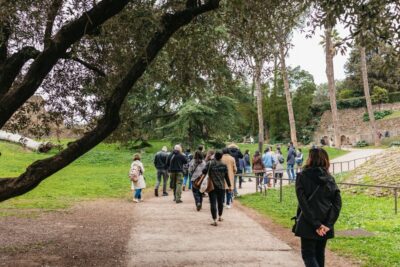
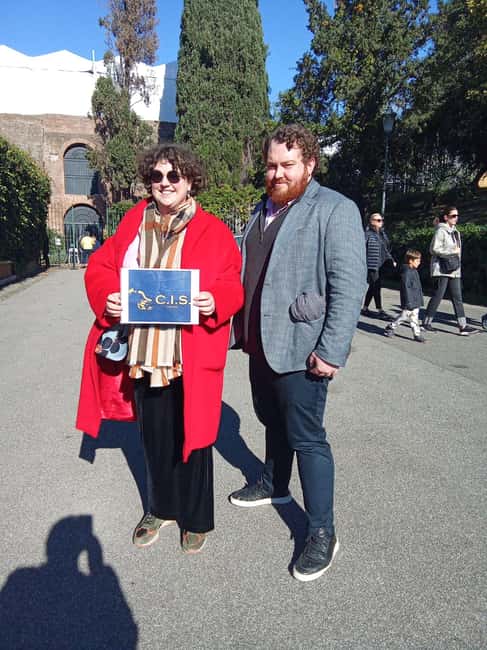
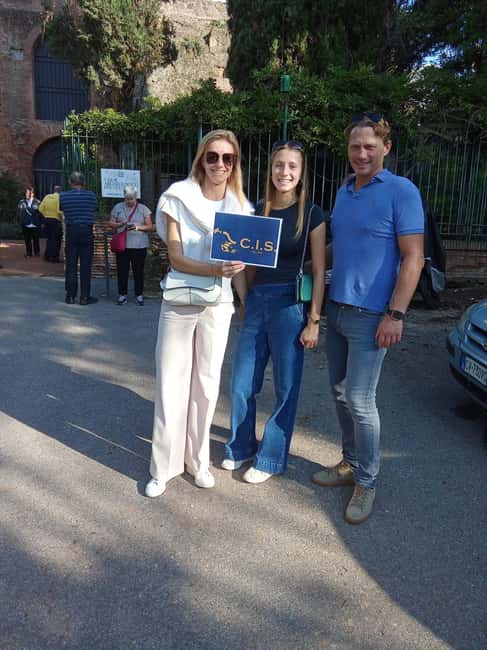
The tour starts at the Colosseo area, with the meeting point set in front of the Colosseo metro station. You’ll use the lower floor at street level, near the green kiosk. Look for staff with the C.I.S Tours sign.
Plan to arrive 20 minutes before your booked start. That isn’t “nice to have.” Tickets are nominative, meaning the names of all participants are required for tickets, and the group needs to get everyone checked in smoothly.
Also, the experience includes a skip-the-ticket-line element, so arriving on time helps you take advantage of that benefit instead of standing around waiting for the handoff.
The flow of the tour, step by step
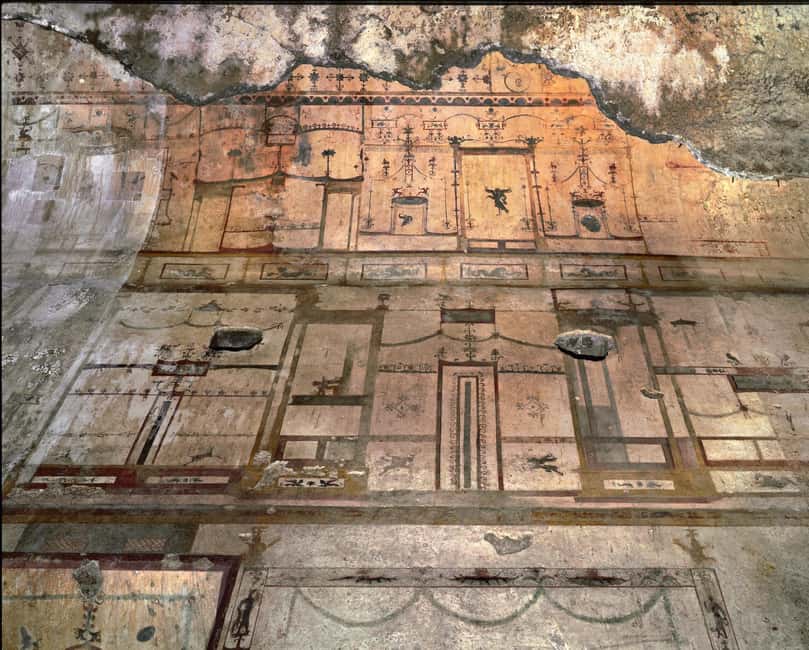
This is a 1.5 hour experience, with a guided portion of about 70 minutes, plus the Oculus VR segment integrated into the visit. In practice, the pacing matters, because you’ll be moving between areas while the guide sets context, then switching into VR to visualize what those spaces likely looked like at their height.
Here is how the event tends to feel, from your perspective:
First, you’re guided through Domus Aurea’s spaces while you learn what the complex was meant to be. You’ll also hear how Nero’s ambition shaped the project, including the idea of uniting palatine homes with large Esquiline gardens. The goal was a large dynastic residence, built to match the scale and court-life style of Hellenistic palaces.
Next, you step into VR for a focused presentation. That is the moment that tends to stick for people, because it turns “ruins and fragments” into “a room you can understand.”
Then you finish with more of the key spaces and decoration, including the areas that show off decorative apparatus connected to Roman painting.
Octagonal Hall, Cryptoporticus, and Hall of Birds
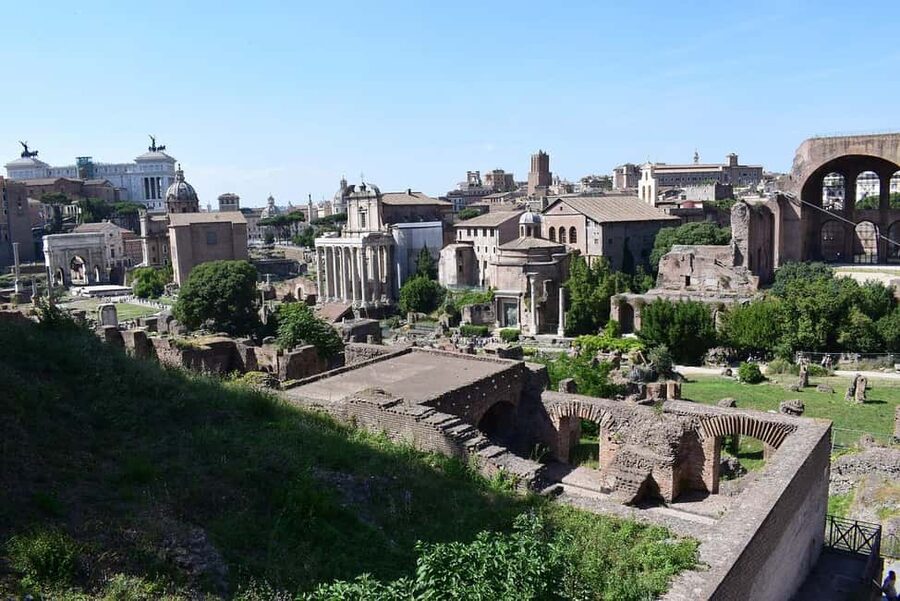
Domus Aurea is famous for its layout, so the tour’s strongest move is that it does not bounce you randomly between points. It takes you through spaces that are repeatedly named for a reason.
You can expect highlights such as:
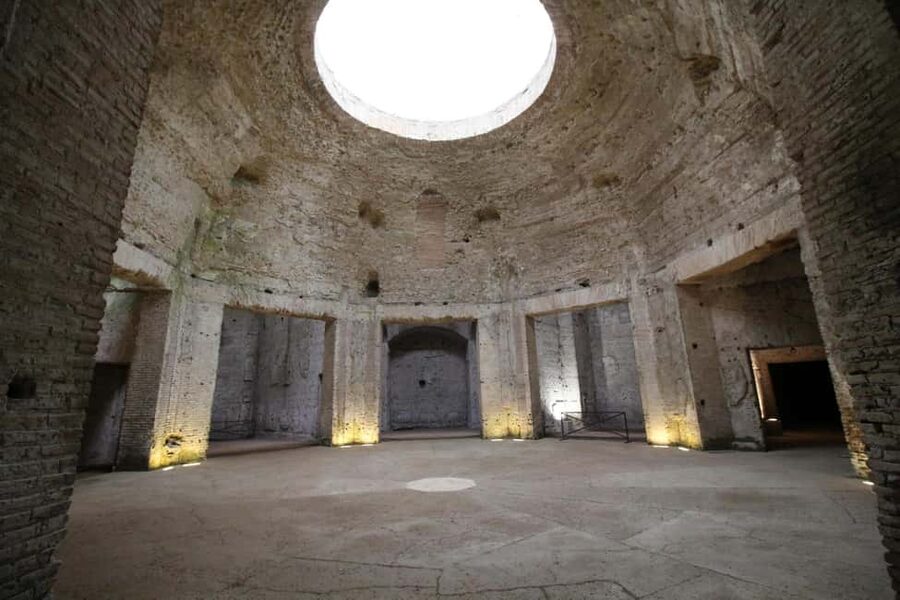
- Octagonal Hall, where the room shape and scale help you understand why people still talk about this palace complex
- Cryptoporticus, which gives you a sense of how the site was structured beyond just one showpiece room
- Hall of Birds, a space tied to its decorative identity, where the theme and decoration help the site feel lived in
Even if you only remember a few room names, the experience is designed to connect them into a single story: Nero’s grand residence, with a court-life scale that went beyond normal house living.
And because the tour focuses on what you’re seeing, you won’t feel like you are wandering without direction.
Same city, a completely different kind of day:
- Vatican Museums & Sistine Chapel Tour with Optional Basilica
★ 4.3 · 67,413 reviews - Rome: Colosseum & Forum with Audio Guide App -Optional Arena
★ 4.2 · 24,770 reviews - Rome: Colosseum, Roman Forum and Palatine Hill Guided Tour
★ 4.5 · 23,903 reviews - Rome: City Sightseeing Hop-on Hop-off Bus with Audioguide
★ 4.0 · 16,045 reviews
The Golden Vault VR moment on Oculus
This is the part that many people treat as the main event, and it’s easy to see why. The Oculus virtual reality presentation is integrated into the visit and is meant to show the Golden Vault as it likely appeared in Nero’s time.
A big value here is that the VR is not framed as a perfect “this is exactly what it looked like.” It is built around what archaeologists and historians presume based on the evidence. That keeps it from feeling like sci-fi pretending to be science.
You’ll also likely get a clearer understanding of the design logic. Ruins can be hard to “read” at first. VR helps you rebuild the missing pieces mentally so the guide’s explanations land better when you return to the physical site.
One small heads-up: sound and listening can be tricky at archaeological sites. One visitor noted the acoustics were not ideal, and that headsets might help everyone hear the guide better. In your case, your best defense is to use the audio guide and pay attention during transitions when the guide is closest.
Concrete, Roman painting, and what restoration really means
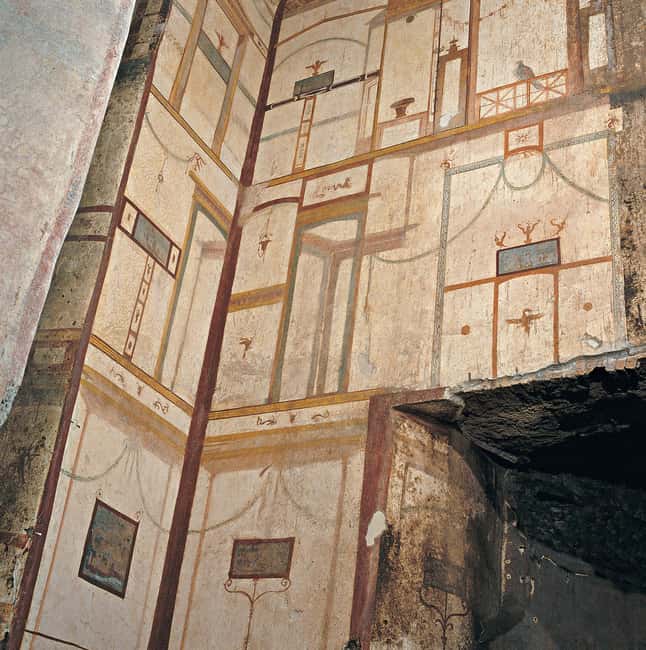
Not every Roman site lesson stays technical for the sake of it. Here, the tour brings up two key building-story ideas that you’ll probably carry with you after you leave.
First is the use of concrete. Hearing how this material figures into the construction helps you understand how Nero’s complex could aim for large, ambitious spaces.
Second is the site’s decorative apparatus and its connection to Roman painting. The Domus Aurea gets special recognition for this, and the tour gives it real airtime. You’re not just looking at walls, you’re learning what makes the decorative program distinctive.
Restoration work is also a big part of the experience. Even with careful protection, you can often sense that the site is being stabilized and interpreted, not simply displayed like a museum piece. That makes your visit feel like part of an ongoing process, which is oddly satisfying when you prefer real-world archaeology over polished replicas.
What the guide adds, and which languages you can expect
You get a live tour guide during the visit, and the available languages are Italian, English, French, and Spanish. There is also an included audio guide in those same languages.
The most praised guides tend to share two traits: they answer questions, and they slow down just enough to make the story land. Several mentions highlight guides who were friendly, answered questions patiently, and explained the VR and archaeological interpretation clearly.
One name that comes up specifically is Claudia, described as providing excellent information and being attentive. If you get a guide like her, you’ll likely enjoy the tour more because you can ask follow-ups instead of just nodding along.
Practical note: if you sometimes struggle with accents or fast pacing, it can help to keep the audio guide on and let the guide’s key points sync with what you’re seeing.
Price, value, and who this fits best for $67
At $67 per person, this is not the cheapest thing you can do near the Colosseo. But it is also not “just a ticket” pricing.
You’re paying for:
- Ticket entry to Domus Aurea
- A guided tour
- The virtual reality experience on Oculus
- Taxes and fees included
- Plus a skip-the-ticket-line benefit
That bundle is the value story. You’re not buying separate experiences and coordinating them yourself, which saves time and prevents the common Rome problem of lining up and losing your best energy.
So who should book?
This tour is a strong match if:
- you like guided context more than solo wandering
- you enjoy using VR to rebuild a place in your mind
- you want a short, high-impact Domus Aurea visit without turning it into a half-day project
It is also a great fit for first-timers to Domus Aurea, because the tour gives you clear anchors, the room names, and the major ideas like Nero’s ambition and concrete construction.
Practical tips before you go (weather, clothes, and what to leave behind)
Domus Aurea is around 10 degrees inside, so pack a jacket even if Rome feels warm when you start. Comfortable shoes matter too, since you’ll be on your feet during the guided portion.
What to bring:
- Passport or ID card
- Comfortable shoes
- A jacket
- Passport or ID card for children
What not to bring:
- Food and drinks
- Luggage or large bags
- Unaccompanied minors
One more comfort note: this tour is not suitable for wheelchair users and people with mobility impairments, and it is also not suitable for people with claustrophobia. If any of those apply, you’ll want to look for another Domus Aurea option.
If you’re sensitive to cold or tight spaces, this is exactly the kind of tour that can feel good with the right preparation, or frustrating if you go underdressed.
Should you book this Domus Aurea VR guided tour?
Book it if you want a focused Domus Aurea visit where you get both the ruins and a guided reconstruction. At $67, the combination of ticket, guide, and Oculus VR is what makes it feel like a single, coherent experience rather than separate activities you try to piece together.
Skip it if you:
- hate VR headsets or you know you get motion or discomfort with them (not stated, but if this is you, consider carefully)
- are claustrophobic, since this is listed as not suitable
- need wheelchair access, since it is not suitable for that either
If you’re on the fence, think about this simple question: do you want help building the past in your mind while you walk through it? If yes, this is one of the better ways to do it in Rome.
FAQ
Where do I meet for the tour?
Meet in front of the Colosseo metro station, on the lower floor at street level, near the green kiosk. Look for staff with the C.I.S Tours sign.
How long is the experience?
The duration is about 1.5 hours, and the guided tour portion is listed as 70 minutes. Exact starting times depend on availability.
What’s included in the $67 ticket?
Your ticket includes entry to Domus Aurea, a guided tour, the Oculus virtual reality experience, and all taxes and fees.
Is the ticket line skipped?
Yes. The activity notes that it lets you skip the ticket line.
What languages are available?
The live guide and the included audio guide are available in Italian, English, French, and Spanish.
Do I need to bring an ID?
Yes. Bring a passport or ID card. Children also need a passport or ID card.
What should I wear or bring with me?
Wear comfortable shoes and bring a jacket. The inside temperature is around 10 degrees.
Are food and drinks allowed?
No. Food and drinks are not allowed during the experience.
Can I bring luggage or large bags?
No. Luggage or large bags are not allowed.
Is it suitable for wheelchairs or for claustrophobia?
No. It is not suitable for wheelchair users, people with mobility impairments, or people with claustrophobia.
When should I arrive and how do nominative tickets work?
You are required to arrive at the meeting point 20 minutes before your booked activity. Ticket names are nominative, so you’ll need the names of all participants.
What is the cancellation policy?
You can cancel up to 3 days in advance for a 60% refund.
Recently reviewed around Rome
- Rome: Castelli Romani Hop-on and Hop-off Tour★ 4.9 · 32 reviews
- Rome: Food Tour near Vatican City with Wine★ 4.8 · 100 reviews
- Rome: Scavenger Hunt Self-Guided Tour★ 4.6 · 15 reviews
- Hidden Rome: Small Group E-Bike Tour with Street Food Stops★ 4.9 · 144 reviews
- Rome: Highlights Tour in Golf Cart★ 4.9 · 28 reviews
- Rome: Hop-on Hop-off Bus Tour and Colosseum Experience★ 3.4 · 163 reviews
- Rome: Guided Haunted Rome Ghost Tour with Dowsing Rods★ 4.8 · 63 reviews
- Rome: Highlights Photo Shoot for Memorable Moments★ 5.0 · 32 reviews
Guided, compared.

Colosseum, Roman Forum & Palatine Guided Tour
Read our review →
Vatican Museums, Sistine Chapel & St Peter’s Basilica Guided Tour
Read our review →
Colosseum, Palatine Hill and Roman Forum Guided Tour
Read our review →
Guided Tour of Colosseum, Roman Forum & Palatine Hill
Read our review →
Colosseum & Forum with Audio Guide App -Optional Arena
Read our review →
Colosseum, Roman Forum and Palatine Hill Guided Tour
Read our review →
Pantheon Fast-Track Ticket and Official Audio Guide
Read our review →